
How Small, Offline AI Models Are Transforming Rural Medical Triage
Open-source 'Small Language Models' running directly on smartphones are matching the diagnostic accuracy of massive cloud-based AI, bringing instant, privacy-preserving medical triage to off-grid clinics.
By Factlen Editorial Team
- Global Health Advocates
- Focus on the democratization of compute, celebrating how offline AI bypasses the need for expensive cloud infrastructure and broadband in developing regions.
- Open-Source Developers
- Emphasize that collaborative, transparent AI development is outpacing closed, proprietary systems in specialized tasks.
- Clinical Safety Researchers
- Prioritize the safety-oriented error profiles of these models, stressing that they must act as a 'second opinion' rather than an autonomous doctor.
What's not represented
- · Proprietary AI vendors whose market share is threatened by open-source alternatives
- · Patients receiving care guided by offline AI triage tools
Why this matters
By moving artificial intelligence out of expensive cloud data centers and directly onto offline smartphones, this technology bypasses the need for broadband internet and strict data-sharing agreements. It equips community health workers in the world's most remote regions with expert-level diagnostic tools, fundamentally democratizing access to life-saving medical triage.
Key points
- Small Language Models (SLMs) can now run directly on smartphones without an internet connection.
- These offline models match the diagnostic accuracy of massive cloud-based AI in emergency triage.
- Processing data locally mathematically guarantees patient privacy and bypasses cross-border data laws.
- Open-source medical imaging tools are now outperforming proprietary systems from major tech giants.
- This technology empowers rural health workers in regions without reliable broadband access.
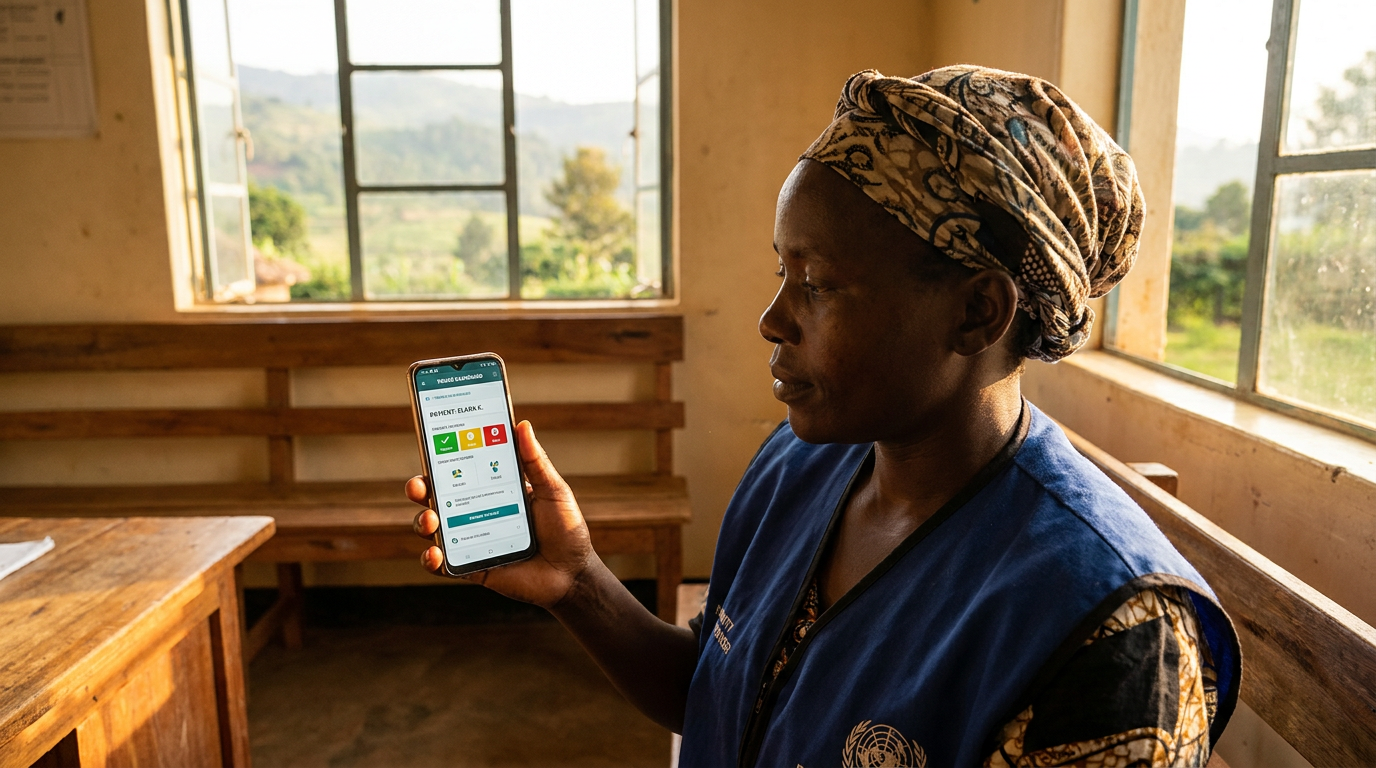
The artificial intelligence revolution in healthcare has traditionally conjured images of massive, energy-hungry data centers and multi-billion-dollar supercomputers. However, the most impactful medical AI breakthrough of 2026 is taking a decidedly different shape: it fits comfortably inside a standard Android smartphone. A new wave of highly optimized, open-source AI systems is moving diagnostic power away from the cloud and directly into the hands of frontline medical workers. This shift is quietly transforming how patient care is delivered in resource-constrained environments, proving that the future of healthcare technology does not necessarily require a broadband connection.[4]
At the center of this transformation is the rapid maturation of Small Language Models (SLMs). Unlike their massive counterparts—Large Language Models (LLMs) that boast hundreds of billions of parameters and require constant internet connectivity to function—SLMs are engineered for efficiency. Typically ranging from one to ten billion parameters, these compact models retain core natural language capabilities but are small enough to be downloaded and run locally on consumer hardware. This process, known as 'edge inference,' allows the AI to process data and generate insights directly on the device, entirely offline.[3][5]
The clinical implications of this offline capability are profound, particularly in the realm of emergency medical triage. Recent peer-reviewed evaluations have demonstrated that when these compact models are fine-tuned on specific clinical data, they can perform highly accurate patient assessments. In a comprehensive study of pediatric emergency encounters, researchers found that open-source SLMs—such as the 7-billion-parameter Qwen2.5 model—could reliably assign Emergency Severity Index (ESI) scores based on nurse-authored clinical vignettes, matching the diagnostic stability of human professionals.[1]

Remarkably, in several targeted medical benchmarks, these specialized, localized models have actually outperformed massive, proprietary cloud-based systems like GPT-4o. Clinical safety researchers note that fine-tuned SLMs exhibit a distinct 'safety-oriented error profile.' In practice, this means the models are statistically more likely to cautiously over-triage a patient rather than commit a fatal under-triage error. By focusing purely on the structured rules of medical assessment rather than attempting to be a general-purpose conversationalist, the smaller models deliver more consistent, predictable results in high-stakes environments.[1][2]
Beyond diagnostic accuracy, the localized nature of edge inference solves one of the most intractable problems in healthcare technology: patient privacy. Because the Small Language Model runs entirely on the smartphone or tablet, the patient's sensitive medical history, symptoms, and triage data never leave the room. There is no data transmitted to a third-party server, no cloud API to intercept, and no cross-border data flow. This mathematical guarantee of privacy bypasses the complex web of HIPAA and GDPR compliance that typically slows the adoption of medical AI.[4][5]
For global health advocates, this combination of offline capability and strict data privacy represents a paradigm shift for Low- and Middle-Income Countries (LMICs). In rural clinics across Sub-Saharan Africa, Southeast Asia, and remote parts of the Americas, reliable broadband internet is often a luxury. Previously, these connectivity dead-zones were entirely cut off from the benefits of the AI boom. Now, a community health worker equipped with a mid-range smartphone can access expert-level triage support and clinical decision-making tools in the middle of a power outage.[3]
The economics of open-source SLMs further accelerate this democratization of medical technology. Training a massive, general-purpose foundation model from scratch requires a 'sovereign AI' budget—often running into the billions of dollars for compute clusters alone. In contrast, taking an existing open-source SLM and fine-tuning it on a specific medical dataset costs a fraction of that amount, often just a few thousand dollars. This allows regional health ministries to exit the expensive global compute race and instead fund highly targeted, locally relevant diagnostic tools.[3]
The economics of open-source SLMs further accelerate this democratization of medical technology.
This localized approach is actively fostering grassroots innovation. Because the underlying models are open-source, developers around the world can modify them to suit the specific linguistic and cultural needs of their populations. For example, the pan-African research collective Masakhane has been building natural language processing benchmarks for dozens of indigenous African languages. By integrating these linguistic datasets with offline medical SLMs, developers ensure that the AI can understand and process triage narratives in the dialects actually spoken by the patients, rather than forcing a reliance on English.[3]
The success of open-source, offline AI is not limited to text-based triage; it is also making unprecedented strides in complex medical imaging. Researchers at Arizona State University recently unveiled Ark+, an open-source artificial intelligence tool designed specifically for chest X-ray diagnosis. Trained on publicly available datasets comprising hundreds of thousands of images from around the world, Ark+ was built to operate transparently and efficiently, offering healthcare providers a powerful diagnostic tool without the exorbitant licensing fees typically associated with proprietary medical software.[6]

In what industry observers are calling a David-versus-Goliath milestone for medical technology, the open-source Ark+ model significantly outperformed proprietary diagnostic systems developed by technology giants like Google and Microsoft. Across multiple complex thoracic conditions, including the early detection of pediatric pneumonia and tuberculosis, the open model demonstrated superior accuracy and remarkable zero-shot transfer capabilities. This breakthrough definitively proves that collaborative, open-source development can match and even exceed the performance of closed, black-box systems trained on massive, private corporate datasets, reshaping the hierarchy of medical AI.[6]
The broader medical community has welcomed these tools, emphasizing that they are designed to augment human expertise rather than replace it. In an understaffed rural clinic, an offline AI model acts as a tireless second opinion, instantly cross-referencing a patient's symptoms against vast medical literature to highlight potential red flags. By automating the routine categorization of patient acuity, these systems free up human nurses and doctors to focus their limited time and emotional energy on the patients who require immediate, hands-on life-saving interventions.[7]
As smartphone processors continue to integrate dedicated Neural Processing Units (NPUs), the capabilities of these offline models will only expand. Hardware manufacturers are explicitly designing their next generation of mobile chips to handle edge inference natively, meaning the smartphones of 2027 and beyond will be able to run even more sophisticated multimodal diagnostic models. A health worker will soon be able to point their phone's camera at a skin lesion or listen to a patient's cough, receiving instant, private, and highly accurate medical insights.[3][5]

Ultimately, the rise of Small Language Models represents a crucial course correction in the trajectory of artificial intelligence. For years, the industry's focus has been entirely on scale—building ever-larger models housed in massive, centralized data centers. While those behemoths excel at general knowledge, they remain inaccessible to the populations that arguably need technological assistance the most. By shrinking the models and moving the compute to the edge, the open-source community is ensuring that the benefits of AI are distributed equitably.[4][7]
This architectural shift hands the power back to local healthcare providers and regional health ministries. Instead of relying on expensive, recurring subscriptions to foreign cloud services, hospitals and rural clinics can download, audit, and deploy their own customized triage models. They can rigorously inspect the open-source code for biases, adjust the triage safety parameters to match local clinical guidelines, and operate with the full confidence that their patients' data remains entirely secure within the walls of their own facility, completely immune to internet outages.[2][4]
The democratization of medical AI is no longer a theoretical promise; it is actively unfolding in clinics around the world. By proving that smaller, open, and offline models can deliver world-class diagnostic accuracy, developers are rewriting the rules of healthcare technology. The most profound legacy of this era of artificial intelligence may not be the creation of an all-knowing digital oracle, but rather the quiet, reliable presence of a smart triage assistant in the pocket of every community health worker on the planet.[3][7]
How we got here
May 2023
Early research demonstrates the feasibility of compressing large language models for mobile devices.
Late 2024
Tech companies release highly capable 'small' models optimized specifically for edge inference.
Mid 2025
Open-source medical imaging models begin outperforming proprietary cloud-based systems in clinical benchmarks.
Early 2026
Peer-reviewed studies confirm that fine-tuned SLMs can safely and accurately perform emergency medical triage offline.
June 2026
Widespread deployment of offline AI triage tools accelerates across rural clinics globally.
Viewpoints in depth
Global Health Advocates
Viewing offline AI as a critical tool for health equity in developing regions.
For global health organizations, the true value of Small Language Models lies in their ability to bypass infrastructure deficits. By moving the AI to the edge, Low- and Middle-Income Countries (LMICs) no longer need to wait for ubiquitous broadband or build multi-billion-dollar sovereign compute clusters. Instead, they can immediately equip community health workers with expert-level triage tools that run on cheap, accessible Android devices, fundamentally leveling the playing field in global healthcare delivery.
Open-Source Developers
Arguing that collaborative ecosystems iterate faster and safer than closed corporate models.
The open-source community views the success of models like Ark+ and Qwen2.5 as validation of their collaborative ethos. They argue that proprietary, black-box AI systems are inherently unsuited for global healthcare because they cannot be easily audited or localized. By making the underlying code and weights freely available, open-source developers allow regional researchers to fine-tune the models for specific local dialects and endemic diseases, ensuring the technology serves niche populations rather than just the lowest common denominator.
Clinical Safety Researchers
Emphasizing the need for rigorous validation and human-in-the-loop oversight.
While celebrating the privacy benefits of offline AI, clinical safety experts maintain a cautious stance on deployment. They stress that SLMs must be rigorously fine-tuned on structured clinical vignettes to prevent fatal under-triage. Their research highlights that the safest models are those explicitly trained to exhibit a 'safety-oriented error profile'—meaning they will intentionally over-triage a borderline case. These researchers insist that offline AI must always function as a 'second opinion' to augment human judgment, never as an autonomous replacement for a trained medical professional.
What we don't know
- How quickly regulatory bodies like the FDA will establish standardized approval pathways for locally modified, open-source medical AI.
- Whether the hardware lifespan of mid-range smartphones will be significantly reduced by the intense computational demands of running edge AI daily.
Key terms
- Small Language Model (SLM)
- A highly compressed artificial intelligence model designed to run efficiently on consumer hardware like smartphones, rather than requiring massive cloud servers.
- Edge Inference
- The process of running an AI model locally on a device (the 'edge' of the network) rather than sending data back and forth to a centralized data center.
- Emergency Severity Index (ESI)
- A five-level triage algorithm used by emergency departments to categorize patients based on the acuity of their condition and the resources they will likely need.
- Zero-shot transfer
- The ability of an AI model to accurately perform a task or identify a condition that it was not explicitly trained on during its development.
Frequently asked
What is a Small Language Model (SLM)?
An SLM is a compact version of artificial intelligence that typically has between 1 and 10 billion parameters. Unlike massive models like ChatGPT, SLMs are small enough to be downloaded and run directly on a smartphone or laptop.
How can the AI work without the internet?
Through a process called 'edge inference,' the AI model's code and weights are stored locally on the device's hardware. The smartphone's own processor performs the calculations, meaning no data needs to be sent to a cloud server.
Is it safe to use AI for medical triage?
Yes, when used as a decision-support tool. Studies show that fine-tuned SLMs have a 'safety-oriented error profile,' meaning they are programmed to cautiously over-triage patients rather than risk sending a critically ill patient home.
Why is this important for rural clinics?
Many rural clinics in low- and middle-income countries lack reliable broadband internet. Offline AI allows community health workers in these areas to access expert-level diagnostic support regardless of their connectivity.
Sources
Source coverage
7 outlets
3 viewpoints surfaced







[1]arXivOpen-Source Developers
Small Language Models for Reliable and Privacy-Preserving Clinical Triage
Read on arXiv →[2]PLOS Digital HealthClinical Safety Researchers
Efficient and personalized mobile health event prediction via small language models
Read on PLOS Digital Health →[3]ICTworksGlobal Health Advocates
The Sovereign AI Escape Route: Small Models and Edge Inference
Read on ICTworks →[4]Healthcare DigitalGlobal Health Advocates
How Small Language Models are Revolutionising Healthcare AI
Read on Healthcare Digital →[5]Hugging FaceOpen-Source Developers
Running Small Language Models on Edge Devices
Read on Hugging Face →[6]Middle East HealthClinical Safety Researchers
Open-source AI tool outperforms proprietary models in chest X-ray diagnosis
Read on Middle East Health →[7]Factlen Editorial TeamClinical Safety Researchers
Synthesis by Factlen editorial team
Read on Factlen Editorial Team →


Every angle. Every day.
Get ai stories with full source coverage and perspective breakdowns delivered to your inbox.