
How Small Modular Reactors Could Rewire the Global Energy Grid
By shrinking the size of nuclear reactors and shifting to factory manufacturing, engineers hope to solve the cost and safety issues that have stalled atomic energy.
By Factlen Editorial Team
- Pragmatic Energy Analysts
- SMRs hold immense promise for grid stability, but face steep economic and timeline hurdles.
- Nuclear Industry Advocates
- SMRs are the necessary evolution of nuclear power, solving the cost and safety issues of the past.
- Environmental Skeptics
- SMRs are an expensive, unproven distraction from deploying ready-to-use renewable energy.
What's not represented
- · Local communities living near proposed SMR sites or retiring coal plants
- · Indigenous groups whose lands may be impacted by expanded uranium mining
Why this matters
As the world races to decarbonize, intermittent renewables like wind and solar need a reliable, 24/7 backup. If Small Modular Reactors can deliver on their promise of cheaper, safer, factory-built nuclear power, they could become the missing puzzle piece for a stable, zero-emission electrical grid.
Key points
- Small Modular Reactors (SMRs) generate 300 megawatts or less, roughly a third of a traditional nuclear plant.
- They are designed to be mass-produced in factories and shipped to sites, drastically reducing construction costs and delays.
- Advanced passive safety systems use natural physics like gravity to cool the reactor during emergencies without external power.
- Tech giants like Amazon and Microsoft are investing in SMRs to secure 24/7 clean energy for data centers.
- While Russia and China have operational units, broad commercial rollout in the West is expected in the 2030s.
The global push for net-zero emissions has collided with a stubborn reality: renewable energy sources like wind and solar, while increasingly cheap and abundant, are intermittent. To maintain a stable electrical grid, power operators need "firm" energy that can run 24/7, regardless of the weather. For decades, traditional nuclear power filled this role, but the industry has recently been paralyzed by massive cost overruns, decade-long construction delays, and high-profile project cancellations.[5][7]
Enter the Small Modular Reactor (SMR). Rather than building bespoke, gigawatt-scale behemoths that require thousands of on-site workers and billions in upfront capital, engineers are attempting to shrink the nuclear footprint. The SMR concept applies the principles of mass manufacturing to atomic energy, promising a future where reactors are built on assembly lines, shipped on flatbed trucks, and plugged into the grid like giant batteries.[1][3][8]
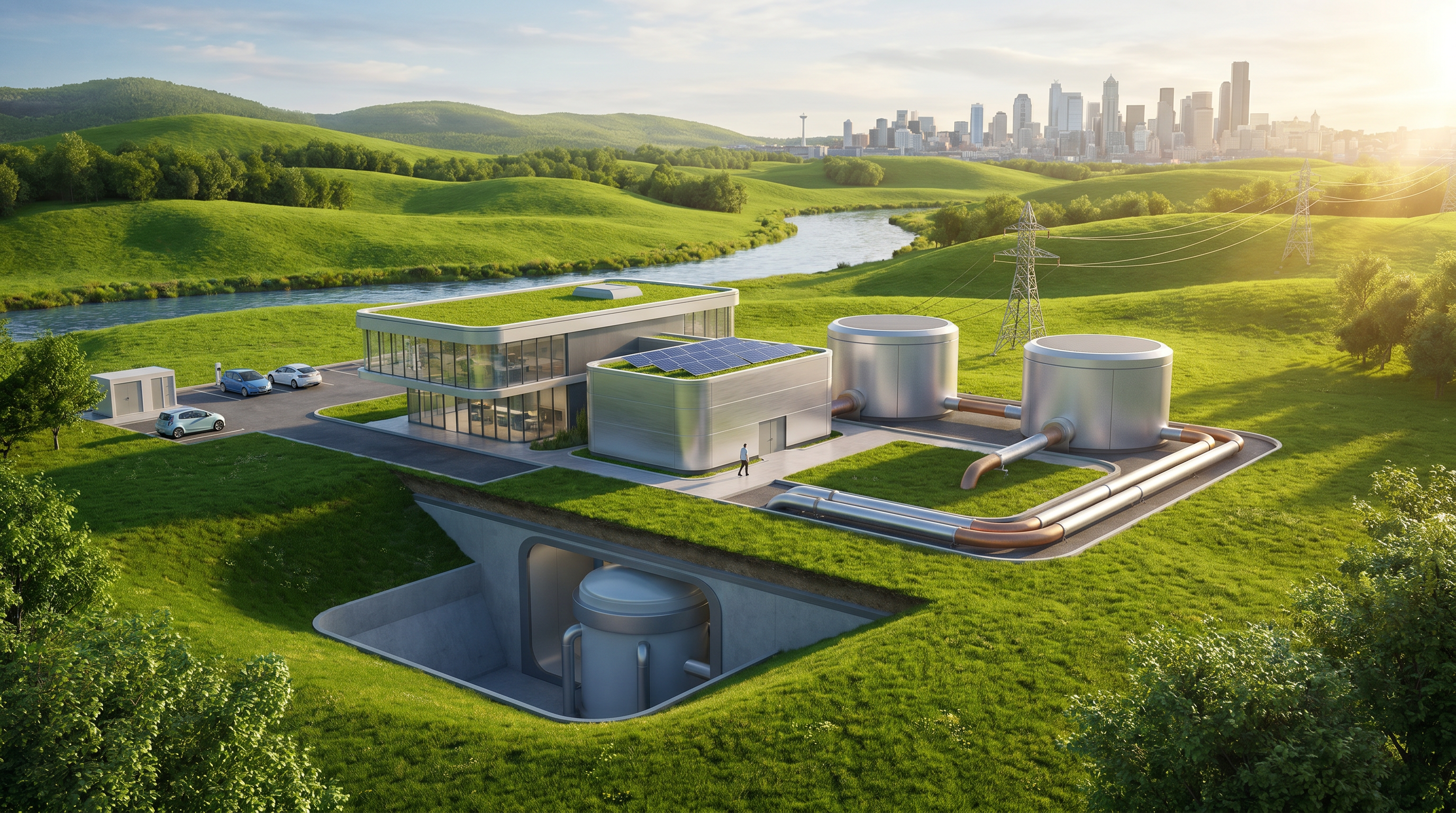
By definition, an SMR is a nuclear fission reactor with an electrical output of 300 megawatts (MWe) or less—roughly a third of the capacity of a traditional plant. While 300 MWe is "small" in the nuclear world, it is still enough to power approximately 300,000 homes. The "modular" aspect is the true innovation: major components are fabricated in a controlled factory environment and transported to the installation site, drastically reducing the complex field work that plagues conventional nuclear construction.[1][3][4]
The technology inside these smaller units varies. Most near-term SMR designs are scaled-down versions of the light-water reactors that have powered the globe for half a century, utilizing low-enriched uranium and water as a coolant. However, a new generation of advanced designs is exploring alternative coolants, including liquid metals like sodium or lead, high-temperature helium gas, and molten salts. These advanced coolants allow the reactors to operate at much higher temperatures, generating industrial-grade heat alongside electricity.[1][2][3]

Proponents argue that this shift in scale fundamentally alters the safety equation. Traditional large reactors require complex, active cooling systems powered by external electricity to prevent meltdowns during an emergency. SMRs, by contrast, increasingly rely on "passive" safety features. Because the reactor core is smaller and generates less decay heat, it can be cooled using natural physical phenomena like gravity-fed water and natural convection.[2][3][8]
In the event of a total power loss, these passive systems are designed to safely shut down and cool the reactor indefinitely without human intervention or external power—a concept the industry calls "walk-away safe." Furthermore, many SMR designs place the reactor vessel entirely underground, providing an additional layer of security against aircraft impacts, earthquakes, and extreme weather events.[1][8]
Because of these enhanced safety profiles, the nuclear industry has lobbied regulators to shrink the Emergency Planning Zone (EPZ) surrounding SMR plants. While traditional plants require a 10-mile evacuation radius, developers argue that SMRs could safely operate with an EPZ that ends at the site boundary. This regulatory shift would allow the reactors to be built much closer to population centers and industrial hubs.[1][6][8]
However, this proposal has drawn sharp criticism from environmental and safety watchdogs. Skeptics point to the lessons of the Fukushima disaster, arguing that passive systems are not infallible and that smaller containment structures could be vulnerable to hydrogen explosions. Critics also warn that deploying dozens of smaller reactors across the country could multiply the number of sites storing radioactive waste, complicating long-term disposal and security efforts.[6]
However, this proposal has drawn sharp criticism from environmental and safety watchdogs.
The most intense debate surrounding SMRs, however, is economic. For decades, the nuclear industry operated on the principle of "economies of scale"—the idea that building a larger reactor is the best way to reduce the cost of electricity per megawatt. From a pure physics standpoint, larger reactor cores are more efficient, leaking fewer neutrons and extracting more power from their fuel.[5][8]
SMR developers are betting against this conventional wisdom, relying instead on "economies of multiples." They argue that the savings achieved through factory mass-production, standardized parts, and shorter construction timelines—targeting two to three years instead of ten—will ultimately outweigh the thermodynamic efficiency of larger plants. Furthermore, a smaller price tag, estimated at roughly $1 billion for a 300 MWe unit compared to $10 billion or more for a gigawatt plant, makes SMRs vastly more attractive to private investors.[1][5][7]

Yet, the industry faces a massive "First-of-a-Kind" (FOAK) hurdle. Before economies of multiples can kick in, companies must spend billions to design the reactors, navigate grueling regulatory approvals, and build the initial manufacturing facilities. Until a robust supply chain is established and dozens of units are rolling off the assembly line, early SMRs will likely produce electricity that is significantly more expensive than both renewables and existing natural gas plants.[5][7][8]
Despite the financial risks, the potential use cases for SMRs have sparked a wave of investment from outside the traditional utility sector. Technology giants like Amazon and Microsoft, desperate for firm, zero-carbon power to run energy-hungry artificial intelligence data centers, have recently signed development deals to co-locate SMRs directly at their facilities.[4][7]
Beyond tech, SMRs are uniquely positioned to replace retiring fossil fuel infrastructure. Because of their smaller footprint, an SMR can be slotted directly into the site of a decommissioned coal plant, utilizing the existing transmission lines, cooling water infrastructure, and local workforce. This "coal-to-nuclear" transition is viewed by policymakers as a critical tool for preserving jobs in energy-dependent communities while slashing emissions.[1][2]
Additionally, the high-temperature heat generated by advanced SMR designs opens up new avenues for industrial decarbonization. Instead of just spinning turbines for electricity, the thermal energy can be piped directly into chemical plants, steel mills, and hydrogen production facilities, or used to power large-scale water desalination plants in arid regions.[1][4][5]

The global race to commercialize this technology is already underway, though Western nations are currently playing catch-up. As of early 2026, only Russia and China have successfully connected operational SMRs to their electrical grids. Russia has been operating a floating SMR, the Akademik Lomonosov, in the Arctic since 2020, while China connected its high-temperature gas-cooled SMR to the grid in 2021.[2][4]
In the United States and Europe, dozens of designs are winding their way through the licensing process. The U.S. Department of Energy has poured billions into public-private partnerships to accelerate demonstration projects, while the European Commission recently launched an SMR Industrial Alliance to coordinate supply chains and regulatory frameworks across the continent.[1][2][4]
Despite the momentum, energy analysts caution against expecting an overnight revolution. While a few demonstration projects may come online in the late 2020s, broad commercial rollout and the establishment of true factory production lines are widely viewed as a mid-to-late 2030s endeavor.[7][8]
The next decade will be a crucible for the SMR industry. If developers can successfully navigate the regulatory maze, prove their passive safety claims, and actually deliver units on time and on budget, SMRs could become the linchpin of a reliable, decarbonized global grid. If they succumb to the same cost overruns and delays that have historically plagued nuclear power, they risk becoming an expensive footnote in the energy transition.[5][6][8]
How we got here
2020
Russia begins commercial operation of the Akademik Lomonosov, a floating SMR in the Arctic.
2021
China connects its pebble-bed modular high-temperature gas-cooled SMR to the electrical grid.
Feb 2024
The European Commission launches the European SMR Industrial Alliance to accelerate supply chain deployment.
2025-2026
Major tech companies, including Amazon and Microsoft, announce investments and power purchase agreements for SMR development.
2030s
Projected timeframe for the broad commercial rollout of factory-built SMRs in Western markets.
Viewpoints in depth
Nuclear Industry Advocates
SMRs are the necessary evolution of nuclear power, solving the cost and safety issues of the past.
Industry proponents argue that traditional gigawatt-scale nuclear plants have priced themselves out of the market due to their bespoke, highly complex on-site construction. By shifting to a factory-manufacturing model, SMRs can achieve 'economies of multiples,' drastically lowering upfront capital costs and construction times. Furthermore, they emphasize that the passive safety features inherent in smaller cores make these reactors fundamentally safer, allowing them to be integrated directly into industrial sites and near population centers to provide reliable, zero-carbon baseload power.
Pragmatic Energy Analysts
SMRs hold immense promise for grid stability, but face steep economic and timeline hurdles.
Energy economists and government researchers view SMRs as a crucial tool for a fully decarbonized grid, particularly for replacing coal plants and powering heavy industry. However, they caution against viewing the technology as a near-term silver bullet. They highlight the massive 'First-of-a-Kind' costs required to establish manufacturing facilities and navigate regulatory frameworks. Until a robust order book allows for true mass production, these analysts warn that early SMRs will struggle to compete on price with established renewables and natural gas.
Environmental Skeptics
SMRs are an expensive, unproven distraction from deploying ready-to-use renewable energy.
Skeptics and environmental watchdogs argue that the climate crisis requires immediate action, and waiting for SMRs to mature in the 2030s is a dangerous delay. They contend that the billions of dollars required to subsidize SMR development would be better spent deploying existing wind, solar, and battery storage technologies. Furthermore, they reject the industry's safety claims, warning that deploying dozens of smaller reactors will multiply the number of targets vulnerable to attack and exacerbate the unresolved problem of long-term radioactive waste storage.
What we don't know
- Whether the theoretical cost savings of factory mass-production will actually materialize once the first units are built.
- How regulatory bodies will ultimately rule on the industry's push to shrink Emergency Planning Zones around SMR sites.
- Whether the supply chain for advanced reactor fuels, such as High-Assay Low-Enriched Uranium (HALEU), can be scaled up in time to meet projected demand.
Key terms
- Light-Water Reactor (LWR)
- The most common type of nuclear reactor, which uses ordinary water as both a coolant and a neutron moderator.
- Passive Safety
- Engineering designs that rely on natural physical laws, like gravity and natural convection, to cool a reactor during an emergency without needing external power.
- First-of-a-Kind (FOAK) Costs
- The high initial expenses associated with designing, licensing, and building the very first unit of a new technology before mass production begins.
- Decay Heat
- The heat generated by the radioactive decay of fission products in a nuclear reactor, which continues even after the reactor has been shut down.
- Emergency Planning Zone (EPZ)
- The designated geographic area surrounding a nuclear facility where special planning and preparedness measures are required to protect the public in case of an accident.
Frequently asked
How much power does a Small Modular Reactor produce?
SMRs are defined as producing 300 megawatts of electricity (MWe) or less. This is roughly one-third the capacity of a traditional nuclear plant, but still enough to power about 300,000 homes.
Are SMRs safer than traditional nuclear plants?
Proponents argue they are safer due to "passive" cooling systems that use gravity and natural convection to prevent meltdowns without external power. However, critics caution that smaller containment structures could still pose risks.
When will SMRs be widely available?
While Russia and China have operational units and a few Western demonstration projects are slated for the late 2020s, broad commercial deployment of SMRs is not expected until the 2030s.
Why are tech companies investing in SMRs?
Companies like Amazon and Microsoft need massive amounts of reliable, 24/7 carbon-free electricity to power their growing artificial intelligence data centers, a demand that intermittent renewables alone cannot meet.
Sources
Source coverage
8 outlets
3 viewpoints surfaced








[1]U.S. Department of EnergyPragmatic Energy Analysts
Advanced Small Modular Reactors (SMRs)
Read on U.S. Department of Energy →[2]European CommissionPragmatic Energy Analysts
Small modular reactors explained
Read on European Commission →[3]World Nuclear AssociationNuclear Industry Advocates
Small Modular Reactors
Read on World Nuclear Association →[4]Stanford UniversityPragmatic Energy Analysts
Understand Energy: Small Modular Reactors
Read on Stanford University →[5]Information Technology and Innovation FoundationPragmatic Energy Analysts
Small Modular Reactors: A Realist Approach to the Future of Nuclear Power
Read on Information Technology and Innovation Foundation →[6]Food & Water WatchEnvironmental Skeptics
Smaller Size, Same Large Problems: The Truth About SMRs
Read on Food & Water Watch →[7]ABI ResearchNuclear Industry Advocates
Small Modular Reactors: Assessing the Market
Read on ABI Research →[8]Factlen Editorial Team
Synthesis by Factlen editorial team
Read on Factlen Editorial Team →
More in energy
See all 10 stories →Advanced Geothermal
Enhanced Geothermal Systems Reach Commercial Scale as Drilling Costs Plummet
7 sources
Dual-Use Solar
How Agrivoltaics is Solving the Land-Use Conflict Between Farming and Solar Energy
8 sources
Methane Tracking
The Methane Accountability Era: How Satellites and EU Import Rules Are Forcing a Global Cleanup
8 sources

Grid Storage
Grid-Scale Battery Costs Plummet to Record Lows, Pushing Renewables Past Coal in Historic Milestone
7 sources
Every angle. Every day.
Get energy stories with full source coverage and perspective breakdowns delivered to your inbox.