
How Purpose-Built AI is Finally Solving Education's 40-Year 'Two Sigma' Problem
Recent clinical trials reveal that specialized AI tutors are delivering the massive learning gains of one-on-one human tutoring, offering a scalable solution to close the global achievement gap.
By Factlen Editorial Team
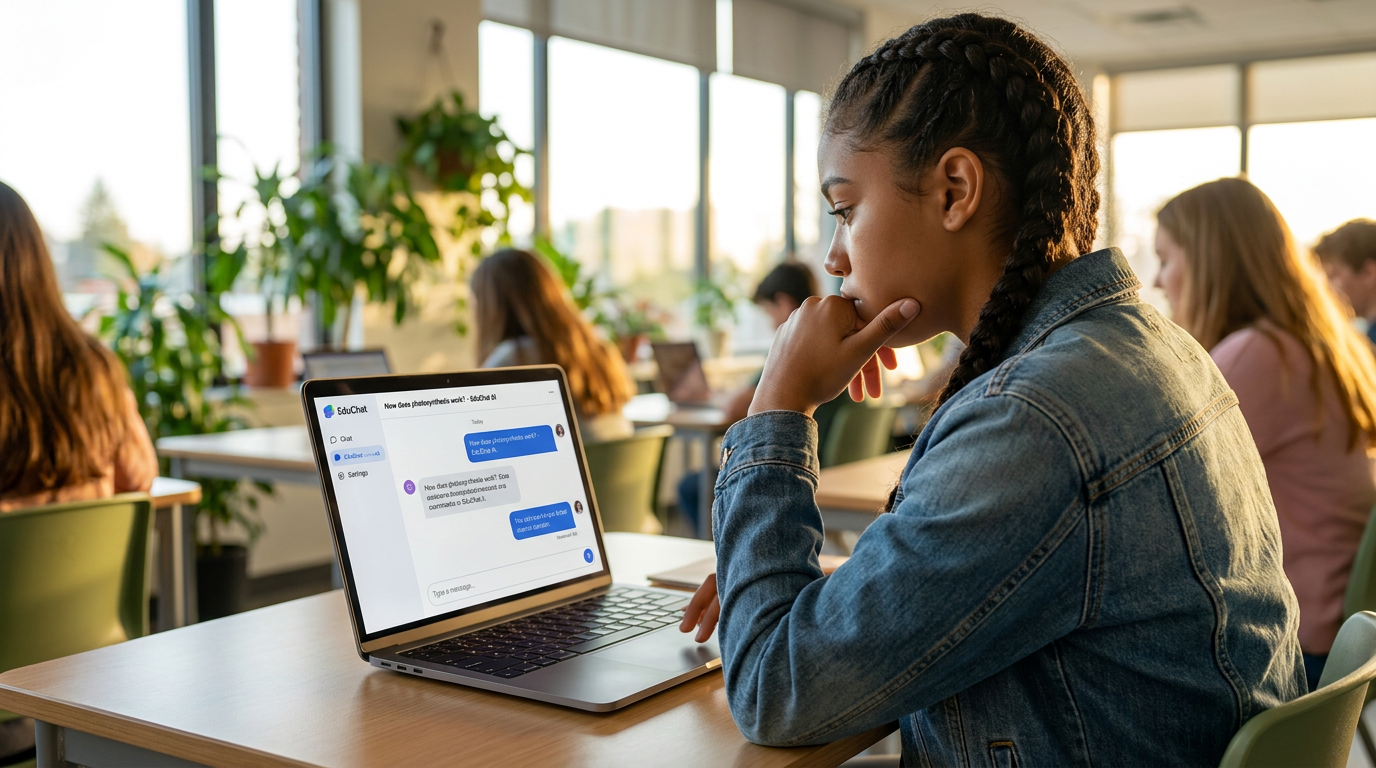
- EdTech Optimists
- Believe AI is the ultimate tool to democratize elite education and close the achievement gap.
- Pedagogical Realists
- Emphasize that only carefully engineered, purpose-built AI systems actually improve learning.
- Traditional Educators
- View AI strictly as a supplementary tool that must be paired with human oversight.
What's not represented
- · Students without reliable home broadband access
- · Special education professionals managing complex learning disabilities
Why this matters
For decades, elite one-on-one tutoring was a luxury reserved for wealthy families, leaving a structural achievement gap in public education. The proven efficacy of low-cost AI tutors means personalized, high-dosage academic support can now be democratized for every student with an internet connection.
Key points
- A 1984 study found 1-on-1 tutoring improves student performance by two standard deviations, but it was too costly to scale.
- Recent 2025 and 2026 trials show purpose-built AI tutors are finally achieving these massive learning gains.
- Generic chatbots like ChatGPT can harm learning by simply giving answers, leading to lower exam scores.
- Effective AI uses Socratic questioning and progressive disclosure to guide students through productive struggle.
- The UK government is rolling out AI tutoring to 450,000 disadvantaged students to close the achievement gap.
- AI is designed to augment human teachers, freeing them to focus on mentorship and complex problem-solving.
In 1984, educational psychologist Benjamin Bloom published a paper that would haunt the teaching profession for four decades. He discovered that students who received one-on-one tutoring performed two standard deviations better than students in conventional classrooms. In statistical terms, the average tutored student outperformed 98% of their traditionally taught peers.[5][6]
Bloom called this the "Two Sigma Problem." The challenge was not figuring out how students learn best—the cognitive science was largely settled—but rather how to deliver that elite, individualized experience at a global scale. For thirty years, digital learning chased that benchmark with video playlists, digital flashcards, and basic quizzes, but never quite closed the gap.[5]
Now, a wave of rigorous efficacy studies published in 2025 and 2026 suggests the missing ingredient has finally arrived. Purpose-built artificial intelligence tutors are demonstrating the ability to replicate the cognitive benefits of expert human tutors, delivering massive learning gains at a fraction of the historical cost.[1][7]
The most striking evidence comes from a 2025 randomized controlled trial published in Scientific Reports, which evaluated a carefully designed AI tutor in an undergraduate physics course. The AI system produced median learning gains more than double those of an active-learning control group.[3][6]
Crucially, the study recorded effect sizes ranging from 0.73 to 1.3 standard deviations—among the largest ever recorded in higher education research, and a direct strike at Bloom's elusive two-sigma benchmark. Students using the AI tutor not only achieved substantially higher post-test scores, but they did so in less time, averaging 49 minutes on task compared to 60 minutes for in-class learners.[1][3]

However, researchers are drawing a sharp line between purpose-built educational AI and generic chatbots. When students use standard generative AI tools like ChatGPT to study, they often experience a decline in retention. One randomized trial found that students relying on generic AI performed roughly 17% worse on exams.[3]
"Generic generative AI systems are optimized for task completion rather than to teach," notes an analysis by Third Space Learning. A standard chatbot will simply provide the answer to a math problem, short-circuiting the cognitive friction required for memory formation.[3][6]
"Generic generative AI systems are optimized for task completion rather than to teach," notes an analysis by Third Space Learning.
In contrast, effective AI tutors—like Khan Academy's Khanmigo or Google's LearnLM—are engineered around proven pedagogical principles. They utilize progressive disclosure, Socratic questioning, and retrieval practice. When a student makes an error, the AI does not supply the correct answer; instead, it probes the misconception and guides the learner to discover the solution themselves.[4][6]

Khan Academy's recent efficacy data illustrates the precision required to make these systems work. Over a six-month period ending in April 2026, the organization analyzed more than 15 million tutoring threads. They found that when their AI tutor was fed structured signals about a student's past performance and specific skill gaps, next-item correctness improved by a measurable 6.1%.[4]
The technology is also proving highly effective at augmenting, rather than replacing, human educators. A large-scale study by Stanford University evaluated "Tutor CoPilot," an AI system that provides real-time, expert-like suggestions to human tutors during messaging-based instructional sessions.[2]
The Stanford researchers found that the AI support was particularly beneficial for less experienced educators. Students paired with lower-rated human tutors who used the AI copilot were 9 percentage points more likely to master lesson topics compared to a control group without the AI assistance.[2]
The economic implications of these findings are reshaping national education policies. Historically, high-dosage human tutoring has been a luxury reserved for wealthy families or well-funded districts. AI tutoring interventions, by contrast, carry a marginal cost estimated at just $9 to $48 per pupil annually.[1]

Recognizing this equity unlock, the UK's Department for Education launched an ambitious initiative to trial AI tutoring tools with up to 450,000 disadvantaged students. The government's stated ambition is to use the technology to close the achievement gap for students who cannot afford private tuition.[3]
Despite the optimism, significant uncertainties remain. Educational researchers caution that AI models can still hallucinate or offer flawed pedagogical judgment in edge cases. Furthermore, qualitative studies indicate that while students appreciate the step-by-step guidance of AI, they still view it as a supplementary tool and crave the emotional support and accountability provided by human teachers.[4][6]
The consensus emerging from the 2026 data is that the classroom of the future will not be a recorded lecture with a chatbot add-on. Instead, it will be a hybrid environment where AI handles the personalized, mastery-based cognitive coaching, freeing the human teacher to act as a mentor, provocateur, and designer of complex, collaborative learning experiences.[5][7]
How we got here
1984
Educational psychologist Benjamin Bloom publishes the 'Two Sigma Problem' paper, establishing the gold standard of 1-on-1 tutoring.
Late 2022
Generative AI enters the mainstream, sparking initial fears of widespread student cheating and essay automation.
2024
Early trials reveal that generic chatbots can harm learning by providing direct answers rather than teaching concepts.
2025
Rigorous RCTs prove that purpose-built AI tutors can match the efficacy of human one-on-one tutoring in higher education.
2026
National governments, including the UK, begin rolling out AI tutoring to hundreds of thousands of disadvantaged students.
Viewpoints in depth
EdTech Optimists
Believe AI is the ultimate tool to democratize elite education and close the achievement gap.
This camp, which includes major tech platforms and equity-focused policymakers, argues that the collapse in computing costs makes one-on-one tutoring universally accessible for the first time in history. They point to the UK's massive rollout for disadvantaged students as proof that AI can scale the 'Two Sigma' benefits to underfunded districts, fundamentally leveling the academic playing field.
Pedagogical Realists
Emphasize that only carefully engineered, purpose-built AI systems actually improve learning.
Researchers and cognitive scientists in this camp warn against the blind adoption of generative AI. They highlight data showing that generic chatbots like ChatGPT can actively harm student retention by short-circuiting the productive struggle required for memory formation. For this group, the focus must remain on strict curriculum alignment, Socratic questioning, and retrieval practice rather than mere technological novelty.
Traditional Educators
View AI strictly as a supplementary tool that must be paired with human oversight.
Classroom teachers and union advocates stress that education is fundamentally a relational enterprise. While they welcome AI's ability to reduce grading workloads and provide targeted math practice, they argue that algorithms cannot replace the emotional intelligence, accountability, and mentorship of a human teacher. They advocate for models like Stanford's Tutor CoPilot, where AI augments rather than replaces human instruction.
What we don't know
- Long-term retention: Whether the massive short-term learning gains produced by AI tutors translate into multi-year knowledge retention.
- Subject limitations: While AI excels in structured subjects like math and physics, its efficacy in deeply subjective humanities courses remains less proven.
- Data privacy: How the vast amounts of cognitive and behavioral data collected by AI tutoring platforms will be regulated and protected over time.
Key terms
- Bloom's Two Sigma Problem
- The 1984 educational finding that students receiving one-on-one tutoring perform two standard deviations better than classroom peers, a benchmark that was historically too expensive to scale.
- Socratic Questioning
- A teaching method where the tutor asks guiding questions rather than providing direct answers, forcing the student to think critically and solve the problem themselves.
- Retrieval Practice
- A learning strategy that involves actively recalling information from memory to strengthen long-term retention.
- Progressive Disclosure
- An instructional technique where complex information is revealed gradually as the student demonstrates readiness, preventing cognitive overload.
Frequently asked
Will AI replace human teachers?
No. Evidence shows AI is most effective when paired with human oversight, acting as a tireless cognitive assistant rather than a replacement for a teacher's pedagogical judgment and emotional support.
Can students just use ChatGPT to learn?
Research indicates generic chatbots can actually harm learning by simply providing answers. Effective AI tutors are purpose-built to guide students through productive struggle using Socratic questioning.
Is AI tutoring only for wealthy schools?
Actually, the low marginal cost of AI tutoring (estimated around $48 per pupil annually) makes it a primary tool for closing the equity gap in underfunded districts, as seen in the UK's massive public rollout.
Sources
Source coverage
7 outlets
3 viewpoints surfaced







[1]Brookings InstitutionEdTech Optimists
Generative AI as tutor: The evidence for effectiveness
Read on Brookings Institution →[2]Stanford UniversityTraditional Educators
AI pedagogical supports and student outcomes
Read on Stanford University →[3]Third Space LearningPedagogical Realists
What Is The Current Evidence Into AI Tutoring And The Impact On Learners In School?
Read on Third Space Learning →[4]Khan AcademyPedagogical Realists
Khanmigo efficacy study results and product improvements
Read on Khan Academy →[5]University AffairsEdTech Optimists
AI changes the economics of the two-sigma problem
Read on University Affairs →[6]Scientific ReportsPedagogical Realists
Generative AI as a Solution to the 2-Sigma Problem
Read on Scientific Reports →[7]Factlen Editorial Team
Synthesis by Factlen editorial team
Read on Factlen Editorial Team →

More in education
See all 6 stories →Toolbelt Generation
The 'Toolbelt Generation': Why Gen Z is Choosing Trade Schools Over Four-Year Degrees
7 sources

AI Tutoring
The Measurable Impact of AI Tutors on College Retention: What the Evidence Shows
7 sources

College Admissions
The 'Reverse Application': How Direct Admissions is Flipping the College Process
6 sources

Direct Admissions
The Flipped College Application: How Direct Admissions is Reshaping Higher Education
8 sources
Every angle. Every day.
Get education stories with full source coverage and perspective breakdowns delivered to your inbox.