
How Mycelium Leather is Reaching Commercial Scale to Reshape Global Fashion
Bio-fabricated mycelium leather is transitioning from laboratory prototypes to commercial-scale production in 2026. By harnessing the root structures of fungi, biotech firms are providing the luxury and automotive industries with a sustainable, plastic-free alternative to animal hide.
By Factlen Editorial Team
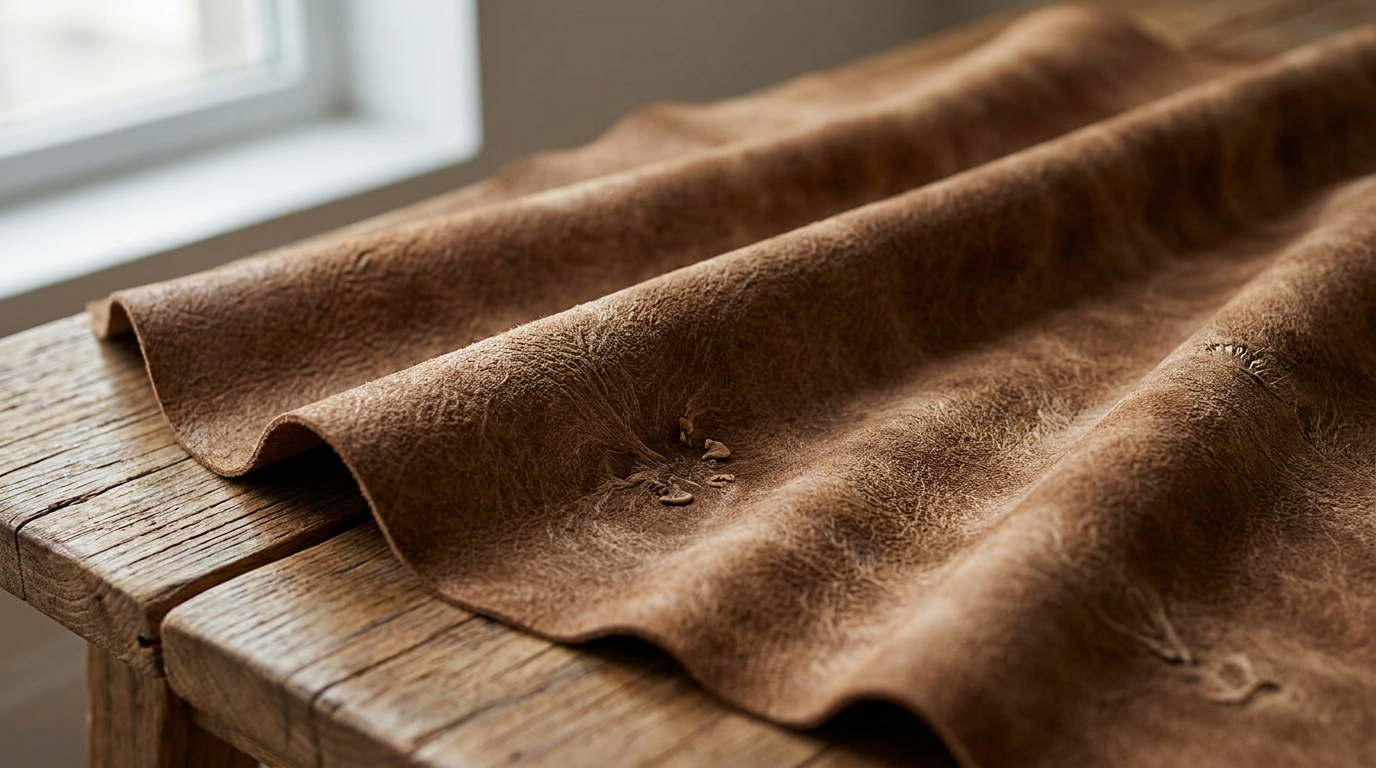
- Biotech Innovators
- Focused on engineering the biological growth process to scale production and achieve price parity with conventional textiles.
- Luxury & Apparel Brands
- Focused on integrating sustainable, animal-free materials without compromising on premium aesthetics, durability, or heritage craftsmanship.
- Circular Economy Advocates
- Focused on the drastic reduction in water use, carbon emissions, and toxic chemicals compared to animal agriculture and plastic synthetics.
What's not represented
- · Traditional cattle ranchers and leather tanneries
- · Fast-fashion consumers priced out of current bio-materials
Why this matters
The commercial scaling of mycelium leather marks the first time a fully biodegradable, lab-grown textile can genuinely compete with animal hide in durability and scale. For consumers, this means the eventual arrival of premium, plastic-free sustainable fashion that doesn't rely on livestock or toxic tanning chemicals.
Key points
- Mycelium leather is transitioning from a laboratory concept to commercial-scale production in 2026.
- The material is grown from agricultural waste in vertical farming trays over a 7 to 14-day cycle.
- It requires up to 90 percent less water than conventional leather and eliminates the use of toxic chromium tanning.
- Major luxury and sportswear brands, including Hermès and Adidas, are actively integrating the material into their product lines.
- While production capacity is expanding, achieving price parity with traditional leather remains the primary industry hurdle.
The luxury fashion industry has long relied on bovine leather as the ultimate signifier of quality, durability, and premium craftsmanship. Yet, the environmental toll of traditional leather production—spanning vast land use, immense water consumption, and heavy greenhouse gas emissions—has forced a reckoning within the sector. For years, the primary alternatives were synthetic 'vegan' leathers derived from polyurethane and PVC, which merely swapped an animal welfare problem for a plastic pollution crisis. In 2026, a fundamental shift is taking place. The industry is moving away from extractive systems and petroleum-based plastics toward regenerative, bio-fabricated textiles. At the forefront of this material revolution is mycelium leather, a grown biological fabric that has officially transitioned from a science-fair curiosity to a commercial reality.[6][8]
To understand mycelium leather, one must look beneath the surface of the forest floor. A common misconception is equating the material with mushrooms. In reality, the mushroom is merely the visible fruiting body of a much larger organism. Mycelium is the expansive, underground root-like network that supports it. If a mushroom is the apple, the mycelium is the tree and its roots combined. This network is composed of hyphae—microscopic, branching threads that naturally bind together as they grow.[4][6]
The magic of mycelium lies in its structural biomimicry. As the hyphae threads grow and intertwine, they form dense, interlocking matrices that are inherently strong, flexible, and breathable. In many ways, this microscopic architecture closely mirrors the collagen fiber networks found in animal skin. Because of this structural similarity, mycelium can replicate the tactile and performance properties of bovine leather without the need for livestock. It is a material engineered by nature, offering the exact characteristics that fashion houses have spent centuries perfecting through animal agriculture.[2][4]

Unlike animal leather or synthetic alternatives, mycelium leather is cultivated rather than manufactured. The process begins not in a factory, but in a climate-controlled vertical farming environment. The foundational ingredient is a nutrient-rich substrate, typically composed of agricultural waste products such as sawdust, hemp hurds, or corn stalks. This approach inherently supports a circular economy by upcycling low-value byproducts that would otherwise be discarded or burned. Fungal spores are introduced to this substrate in specialized growing trays.[1][5]
Over the course of the growth cycle, the environment is meticulously managed. Temperature, humidity, and airflow are strictly controlled to optimize the fungi's development. As the mycelium consumes the agricultural waste, it rapidly expands, knitting itself into a thick, uniform mat across the surface of the tray. This entire cultivation phase takes just seven to fourteen days. When contrasted with the two to three years required to raise cattle to maturity, the efficiency of bio-fabrication becomes starkly apparent.[4][5]
Once the mycelium mat reaches the desired thickness and density, it is harvested. The raw biological material then undergoes a specialized tanning and finishing process to halt the growth and lock in its physical properties. Crucially, this stage avoids the highly toxic chemicals traditionally associated with leather production. Conventional tanning relies heavily on chromium, a heavy metal that poses severe environmental and occupational health risks. Mycelium leather, by contrast, utilizes chromium-free, low-impact treatments and plant-based dyes to achieve its final texture, durability, and color.[1][4]
The environmental mathematics of this process are highly compelling for an industry under intense regulatory scrutiny. Producing a square meter of mycelium leather requires up to 90 percent less water than processing conventional bovine leather. Furthermore, because it is grown in localized, controlled environments rather than on sprawling pastures, the carbon footprint is reduced by approximately 70 to 95 percent. At the end of its lifecycle, assuming it has not been treated with synthetic coatings, the material remains fully biodegradable and can be safely composted.[4][8]

The environmental mathematics of this process are highly compelling for an industry under intense regulatory scrutiny.
For years, the primary hurdle for bio-fabricated materials was scale. Creating a beautiful prototype in a laboratory is vastly different from supplying a global supply chain. However, 2026 marks the tipping point where capacity is finally meeting demand. Leading biotechnology firms have transitioned from pilot programs to massive commercial facilities. Companies like Bolt Threads, the creators of Mylo, and MycoWorks, the developers of Reishi, have expanded their manufacturing footprints across North America and Europe, proving that vertical fungal farming can be industrialized.[1][2][7]
This scaling of infrastructure has unlocked structured adoption across the luxury sector. Hermès, a brand synonymous with the highest echelons of leather craftsmanship, set an early benchmark by partnering with MycoWorks to develop Sylvania, a proprietary mycelium material used in their travel bags. Stella McCartney, a long-time pioneer of cruelty-free fashion, has integrated mycelium into runway collections, moving beyond concept pieces to commercially available garments and accessories. When heritage houses known for their uncompromising material standards embrace a fungal alternative, it signals a permanent shift in the luxury paradigm.[2][6]
The application of mycelium is also expanding well beyond high fashion. Sportswear giants and automotive manufacturers are actively integrating the material into their product lines. Adidas has explored mycelium uppers for its iconic footwear silhouettes, while Lululemon has invested in bio-fabricated yoga mats and performance accessories. In the automotive sector, where interior durability is paramount, companies like General Motors and Mercedes-Benz are testing mycelium panels as a sustainable alternative to traditional leather seating, drawn by the material's high abrasion resistance and low weight.[1][5][7]

The economic trajectory of the sector reflects this broad commercial interest. The global market for mycelium leather, valued in the tens of millions just a few years ago, is now projected to grow at a compound annual growth rate of nearly 37 percent over the next decade. Analysts forecast that the market will expand into a multi-billion-dollar industry by the early 2030s. This rapid growth is being fueled by aggressive capital deployment, with hundreds of millions of dollars flowing into cultivation optimization and finishing technologies.[3][7]
Despite the immense progress, the industry still faces significant hurdles on the path to total market disruption. The most pressing challenge is achieving price parity. Currently, mycelium leather commands a premium, costing two to four times more than conventional bovine leather. While production costs are dropping by an estimated 30 percent annually as facilities scale, the material remains a luxury proposition. Displacing the millions of square meters of cheap leather used in fast fashion will require further breakthroughs in automated harvesting and substrate efficiency.[3][6]
Technical and aesthetic challenges also remain. While the material excels in mimicking the texture and drape of animal hide, achieving a vibrant, uniform color palette without relying on synthetic, petroleum-based dyes is an ongoing area of research. Currently, the most successful commercial applications lean heavily into natural earth tones. Additionally, ensuring consistent tensile strength across massive production runs requires precise environmental controls, as biological organisms can behave unpredictably compared to synthetic polymers.[1][2]
Regulatory tailwinds are expected to accelerate the resolution of these challenges. The European Union's upcoming Digital Product Passport initiative will soon require brands to provide transparent, verifiable data on the environmental footprint of their garments. As the hidden costs of water use, deforestation, and chemical pollution associated with traditional leather become public and quantifiable, the premium price of mycelium will increasingly be viewed as a necessary investment in compliance and brand reputation.[6][8]

Ultimately, the rise of mycelium leather represents a profound philosophical shift in how humanity interacts with the material world. It challenges the long-held assumption that premium quality requires extraction and environmental degradation. By harnessing the natural intelligence of fungal networks, the fashion and automotive industries are proving that luxury can be grown from waste, harvested in weeks, and eventually returned safely to the earth. As commercial scaling continues, bio-fabrication is poised to redefine the very fabric of the modern economy.[6][7]
How we got here
2013
MycoWorks is founded, beginning the journey to commercialize mycelium-based materials.
2018
Bolt Threads debuts the first iteration of Mylo, a mycelium leather alternative.
2021
Hermès unveils a prototype Victoria bag featuring Sylvania, a mycelium material co-developed with MycoWorks.
2024
Major biotech firms expand production capacity, opening commercial-scale vertical farming facilities.
2026
Mycelium leather reaches commercial viability, moving from limited capsule collections to broader integration in luxury and automotive markets.
Viewpoints in depth
Biotech Innovators
Focused on engineering the biological growth process to scale production and achieve price parity with conventional textiles.
For the scientists and engineers developing these materials, the primary focus has shifted from proof-of-concept to industrial scaling. Growing a perfect square meter of mycelium in a lab is fundamentally different from operating a massive vertical farm that yields millions of square meters annually. Innovators are heavily invested in optimizing the nutrient substrates and environmental controls to ensure that every batch meets strict tensile strength and uniformity standards. Their ultimate goal is to automate the harvesting process enough to drive the cost of bio-fabrication down to parity with, or even below, the cost of raising cattle.
Luxury & Apparel Brands
Focused on integrating sustainable, animal-free materials without compromising on premium aesthetics, durability, or heritage craftsmanship.
Fashion houses and automotive manufacturers view mycelium as a critical tool for meeting aggressive corporate sustainability targets and complying with upcoming regulations like the EU's Digital Product Passport. However, these brands are unwilling to compromise on performance. They require 'drop-in' replacements that can be cut, sewn, and finished using their existing manufacturing infrastructure. For this camp, the success of mycelium hinges on its ability to pass rigorous legacy tests for abrasion resistance, colorfastness, and long-term aging, ensuring that a bio-fabricated handbag lasts just as long as a traditional calfskin one.
Circular Economy Advocates
Focused on the drastic reduction in water use, carbon emissions, and toxic chemicals compared to animal agriculture and plastic synthetics.
Environmental organizations and sustainability advocates champion mycelium leather as a blueprint for the future of manufacturing. They emphasize that the material solves two problems simultaneously: it eliminates the massive greenhouse gas emissions and deforestation associated with cattle ranching, while also avoiding the microplastic pollution caused by synthetic polyurethane leathers. Furthermore, because mycelium is grown using agricultural waste and remains biodegradable at the end of its life, it represents a true closed-loop system, shifting the global economy away from extractive practices toward regenerative ones.
What we don't know
- Exactly when automated harvesting will bring the cost of mycelium leather down to parity with conventional bovine leather.
- Whether bio-fabricated materials can achieve the vibrant, synthetic-free color palettes required for mass-market fast fashion.
Key terms
- Mycelium
- The expansive, underground root-like network of fungi, distinct from the visible fruiting body (the mushroom).
- Hyphae
- The individual, microscopic filaments that make up the mycelium network and bind together to form dense, strong structures.
- Substrate
- The nutrient-rich base material, often agricultural waste like sawdust or hemp hurds, that the fungi feed on to grow.
- Biomimicry
- The design and production of materials or systems that model biological entities and processes found in nature.
- Digital Product Passport
- An upcoming European Union regulation requiring brands to digitally disclose the environmental footprint and lifecycle of their products.
Frequently asked
Is mycelium leather the same as synthetic vegan leather?
No. Most traditional vegan leathers are made from polyurethane (PU) or PVC plastics. Mycelium leather is a grown biological material that is entirely plastic-free and biodegradable.
How long does it take to grow?
The cultivation process takes between 7 and 14 days, compared to the two to three years required to raise cattle for conventional leather.
Is it as durable as animal leather?
Yes, leading mycelium materials have been engineered to meet or exceed industry benchmarks for tensile strength, flexibility, and abrasion resistance.
Will it smell like mushrooms?
No. After the harvesting and tanning process, the final material is completely odorless and behaves like a traditional premium textile.
Sources
Source coverage
8 outlets
3 viewpoints surfaced





[1]Bolt ThreadsBiotech Innovators
Mylo: Unleather made from mycelium
Read on Bolt Threads →[2]MycoWorksBiotech Innovators
Reishi: Fine Mycelium
Read on MycoWorks →[3]Persistence Market ResearchLuxury & Apparel Brands
Mycelium Leather Market Share & Forecast to 2033
Read on Persistence Market Research →[4]Circle EconomyCircular Economy Advocates
Mylo™ by Bolt Threads: leather from mushrooms
Read on Circle Economy →[5]EcovativeBiotech Innovators
Forager: Mycelium Hides and Foams
Read on Ecovative →[6]Factlen Editorial TeamCircular Economy Advocates
Synthesis by Factlen editorial team
Read on Factlen Editorial Team →[7]Material Innovation InitiativeLuxury & Apparel Brands
State of the Industry Report: Next-Gen Materials
Read on Material Innovation Initiative →[8]United Nations Environment ProgrammeCircular Economy Advocates
Fashion's environmental impact and the push for circularity
Read on United Nations Environment Programme →

More in lifestyle
See all 5 stories →Cognitive Rest
The Science of Non-Sleep Deep Rest (NSDR): How Waking Rest Restores Cognitive Function
6 sources

Neuroaesthetics
How Neuroaesthetics is Turning Interior Design into a Science of the Brain
7 sources
App Fatigue
The End of the Swipe Era: How 'Intentional Dating' and AI Are Curing App Fatigue
8 sources

Every angle. Every day.
Get lifestyle stories with full source coverage and perspective breakdowns delivered to your inbox.