
How Neuroaesthetics is Turning Interior Design into a Science of the Brain
Researchers are using neuroscience to prove that interior design choices—from room shape to lighting—measurably alter brain chemistry and reduce stress.
By Factlen Editorial Team
- Neuroarchitecture Researchers
- Focuses on the biological and neurological data behind aesthetic experiences.
- Commercial & Healthcare Designers
- Focuses on the measurable outcomes and return on investment of optimized spaces.
- Residential Wellbeing Advocates
- Focuses on the emotional and psychological benefits of neuroaesthetics in the home.
What's not represented
- · Neurodivergent Individuals
- · Low-Income Renters
Why this matters
By understanding how room shapes, lighting, and textures physically alter brain chemistry, you can design living and working spaces that actively lower stress and improve your cognitive health.
Key points
- Neuroaesthetics is the scientific study of how the brain and nervous system respond to aesthetic experiences like architecture and interior design.
- Thoughtfully designed spaces can trigger a 15 to 20 percent reduction in stress hormones like cortisol while boosting serotonin.
- The human brain is hardwired to prefer curved, organic shapes over sharp angles, which can subconsciously trigger mild alertness.
- Hospitals and commercial offices are increasingly using these principles to accelerate patient recovery times and boost employee productivity.
Have you ever walked into a room and instantly felt your shoulders drop, your breathing slow, and your mind clear? For decades, interior designers relied on intuition to create these calming environments, attributing the effect to a vague sense of "good taste." But modern neuroscience reveals that this reaction is not magic, nor is it purely subjective—it is a measurable biological response.[5][7]
Welcome to the emerging field of neuroaesthetics. Originally focused on how the brain processes fine art, the discipline has rapidly expanded into architecture and interior design. It examines how aesthetic experiences—such as light, sound, texture, and geometry—interact with our nervous system. Instead of asking what looks good, neuroaesthetics asks what a space does to the human body.[1][5][6]
The mechanism begins the moment you enter a room. Your visual cortex processes the external stimuli—analyzing light wavelengths, shape boundaries, and spatial relationships—and immediately feeds that data to the brain's emotional centers, including the amygdala and the orbitofrontal cortex. This triggers a cascade of physiological changes before you even consciously register the decor.[1][2]
The biological impacts are profound and quantifiable. Using functional magnetic resonance imaging (fMRI) and biometric sensors, researchers have documented that thoughtfully designed spaces can trigger a 15 to 20 percent reduction in stress hormones like cortisol. Simultaneously, aesthetically pleasing environments stimulate the release of serotonin and dopamine, creating the biological foundation for why certain rooms simply feel good.[1][2]

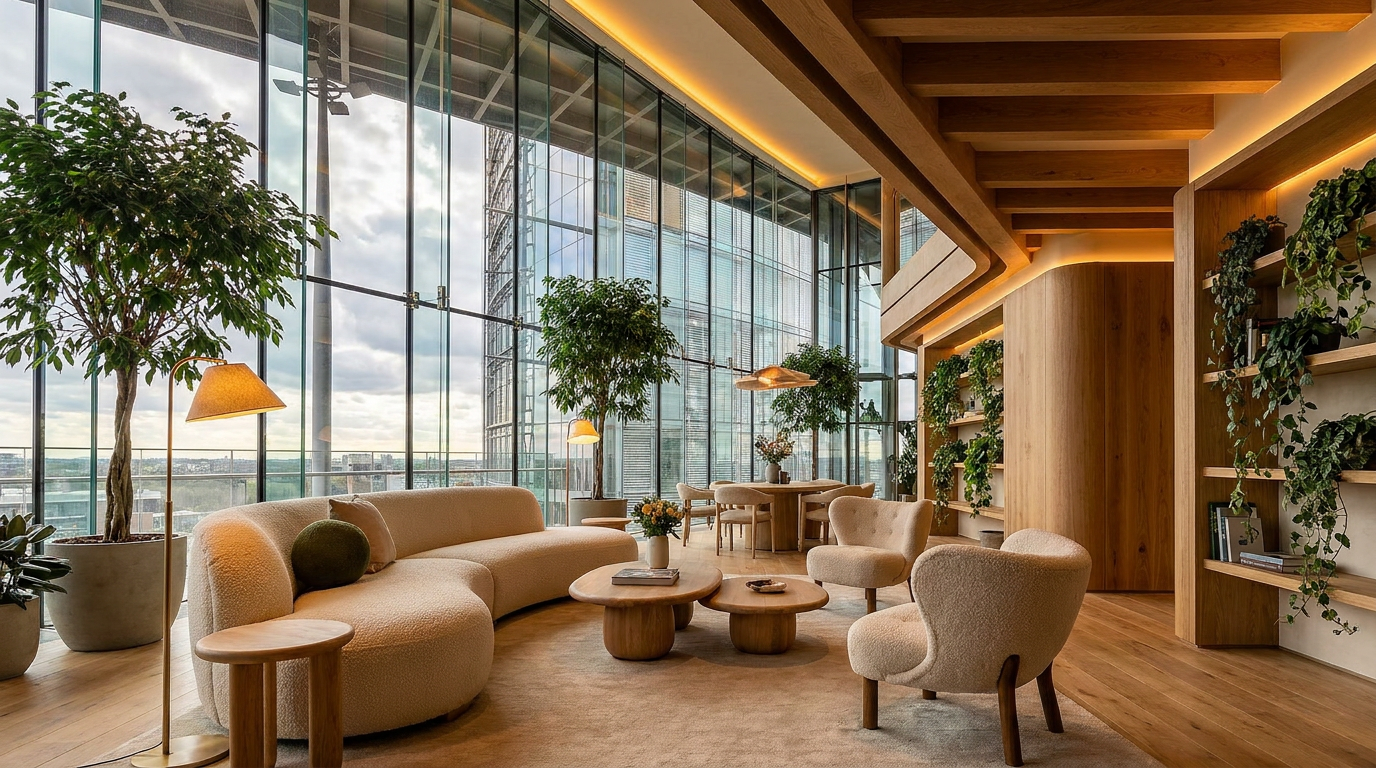
One of the most consistent findings in neuroarchitecture is the brain's preference for specific geometries. Studies show that humans are hardwired to favor curved, organic shapes over sharp angles and straight lines. Evolutionary psychologists theorize that sharp edges subconsciously signal threat, triggering mild alertness, while curvilinear spaces activate the brain regions associated with pleasure and security, calming the nervous system.[2][6]
Lighting is equally critical, serving as the primary driver of our circadian rhythms. The human biological clock evolved to respond to the dynamic shifts of the sun. Cool-toned, blue-rich light (4000 Kelvin and above) activates the sympathetic nervous system, suppressing melatonin and boosting midday alertness. Conversely, warm-toned light (2700K to 3000K) mimics firelight and sunset, cueing the parasympathetic nervous system to relax and prepare for restorative sleep.[1]
Color psychology, long treated as a soft science, is also finding validation in neuroaesthetics. The brain's response to color is not entirely cultural; it is deeply physiological. Warm hues like red and orange can physically increase heart rate and stimulate conversation, while cool tones like blue and green lower blood pressure and promote focus. Selecting a palette is essentially programming the emotional baseline of a room.[5][6]

Color psychology, long treated as a soft science, is also finding validation in neuroaesthetics.
But neuroaesthetics extends beyond the visual. The somatosensory cortex, which processes touch, plays a vital role in how we experience a space. Incorporating tactile elements like natural wood, woven fabrics, and stone creates a sense of grounding and authenticity. Research indicates that these natural textures stimulate feelings of belongingness and comfort, amplifying the emotional effects of visual beauty.[2][6]
This tactile preference ties directly into biophilic design—the practice of connecting indoor spaces to nature. The human brain is optimized for natural environments, and bringing nature indoors has a potent restorative effect. Visual access to greenery, indoor plants, or even fractal patterns that mimic nature has been shown to lower anxiety, reduce mental fatigue, and improve working memory.[2][4]
The most urgent applications of this science are unfolding in healthcare. Hospitals are moving away from sterile, boxy, fluorescent-lit corridors toward evidence-based design. Patients in rooms with ample natural light, curved architecture, and views of nature have been shown to heal faster, require less pain medication, and experience lower rates of post-operative complications.[2][4]
In the commercial sector, companies are leveraging neuroaesthetics to boost the bottom line. Workplaces that integrate biophilic elements and circadian lighting report up to a 15 percent increase in employee productivity, alongside significant drops in fatigue and absenteeism. By designing for the subconscious brain, employers can foster environments that support sustained cognitive performance and creativity.[1][2][6]

Meanwhile, in residential design, the post-pandemic era has fundamentally shifted how we view our homes. No longer just places to sleep or entertain, homes are increasingly engineered as sanctuaries for mental health. Designers are using neuroaesthetic principles to create emotional landscapes—spaces that actively care for the occupants' nervous systems in an age of chronic overstimulation.[5][6]
Despite the robust data, researchers acknowledge the inherent uncertainties in the field. Aesthetic responses are not universally uniform; they are heavily modulated by personal history, neurodivergence, and cultural background. A minimalist, monochromatic room that deeply calms one person might feel understimulating and isolating to another.[5][7]

Furthermore, scientists are still mapping the complex interactions of multisensory environments. A study from the University of Pennsylvania recently identified three key psychological dimensions of architectural interiors—coherence, fascination, and hominess—and mapped them to specific neural pathways, proving that the visual brain harbors hidden sensitivities to the spaces we build.[3]
As the science matures, neuroaesthetics is poised to become a foundational pillar of architecture and interior design. By bridging the gap between art and biology, it offers a new mandate for the built environment: spaces should not merely house us, but actively heal, support, and elevate the human mind.[1][2][5][7]
How we got here
1984
Roger Ulrich publishes a landmark study showing hospital patients recover faster with views of nature.
Early 2000s
The term 'neuroaesthetics' is coined, initially focusing on how the brain processes fine art.
2015
Major architectural studies link classroom design elements directly to student learning outcomes.
2020
Pandemic lockdowns accelerate public interest in how home environments impact mental health and stress.
2026
Neuroaesthetics becomes a foundational, evidence-based standard in commercial and residential interior design.
Viewpoints in depth
Neuroarchitecture Researchers
Focuses on the biological and neurological data behind aesthetic experiences.
This camp relies on fMRI scans, biometric sensors, and rigorous psychological testing to prove that design is not subjective. Researchers argue that the human brain has universal, hardwired responses to specific geometries, light temperatures, and natural elements, and they seek to map these reactions to specific neural pathways like the orbitofrontal cortex.
Commercial & Healthcare Designers
Focuses on the measurable outcomes and return on investment of optimized spaces.
For architects building hospitals and corporate offices, neuroaesthetics is a tool for performance. They cite evidence that biophilic design and circadian lighting directly accelerate patient healing, reduce the need for pain medication, and boost employee productivity by up to 15 percent. Their primary goal is functional optimization.
Residential Wellbeing Advocates
Focuses on the emotional and psychological benefits of neuroaesthetics in the home.
This perspective views interior design as a form of preventative mental healthcare. Advocates argue that in an era of chronic overstimulation and burnout, homes must be intentionally crafted to soothe the nervous system. They emphasize personal control over lighting, tactile comfort, and color psychology to create individualized sanctuaries.
What we don't know
- How neurodivergent brains process standard neuroaesthetic recommendations, as most baseline studies rely on neurotypical subjects.
- The exact threshold where multisensory design—combining specific lighting, textures, and biophilia—crosses from being restorative to becoming overstimulating.
Key terms
- Neuroaesthetics
- The scientific study of how the brain and nervous system respond to aesthetic experiences, such as art, architecture, and design.
- Biophilic Design
- An architectural approach that connects occupants to the natural environment through the use of plants, natural light, and organic materials.
- Circadian Lighting
- Artificial lighting designed to mimic the natural progression of sunlight throughout the day, supporting the body's internal biological clock.
- Somatosensory Cortex
- The region of the brain responsible for processing tactile information, such as touch, texture, and temperature.
- Orbitofrontal Cortex
- A brain area involved in emotional regulation and decision-making, which is highly responsive to pleasing environments.
Frequently asked
What is neuroaesthetics in interior design?
It is the application of neuroscience to interior design, using data on how the brain responds to light, color, and shape to create spaces that improve mental and physical well-being.
How do room shapes affect mood?
Research shows the brain prefers curved, organic shapes, which activate pleasure and security centers, whereas sharp angles can subconsciously trigger mild alertness or tension.
What is the best lighting for a home office?
For daytime focus, cool-toned light (4000 Kelvin and above) is best as it boosts alertness. In the evening, warm-toned light (2700K-3000K) helps the body relax.
Can interior design really improve health?
Yes. Studies in hospitals show that patients in rooms with natural light and nature views heal faster and require less pain medication.
Sources
Source coverage
7 outlets
3 viewpoints surfaced







[1]Science in DesignNeuroarchitecture Researchers
The Neuroscience of Interior Design
Read on Science in Design →[2]Pearl AcademyCommercial & Healthcare Designers
The Brain, Beauty, and Built Environments
Read on Pearl Academy →[3]University of PennsylvaniaNeuroarchitecture Researchers
Experimental Neuroarchitecture
Read on University of Pennsylvania →[4]The HustleCommercial & Healthcare Designers
How Buildings Make Us Feel
Read on The Hustle →[5]LivingetcResidential Wellbeing Advocates
Neuroaesthetics in Interior Design
Read on Livingetc →[6]Creative Office ResourcesResidential Wellbeing Advocates
Design That Feels: How Neuroaesthetics Connects Science and Intuition
Read on Creative Office Resources →[7]Factlen Editorial TeamResidential Wellbeing Advocates
Synthesis by Factlen editorial team
Read on Factlen Editorial Team →
Every angle. Every day.
Get lifestyle stories with full source coverage and perspective breakdowns delivered to your inbox.