
The End of the Swipe Era: How 'Intentional Dating' and AI Are Curing App Fatigue
Facing widespread burnout from high-volume dating apps, singles in 2026 are embracing 'slow dating' and leveraging AI assistants to foster deeper, values-based connections.
By Factlen Editorial Team
- Intentional Daters & Matchmakers
- Advocates for prioritizing values-based compatibility and emotional availability over sheer volume.
- Mental Health Professionals
- Therapists focusing on the psychological impact of digital dating and attachment styles.
- Platform Developers
- App creators attempting to balance user engagement with features that reduce ghosting.
- AI Dating Advocates
- Technologists using AI to reduce cognitive load and improve semantic matching.
What's not represented
- · Casual Daters who still prefer high-volume swiping
- · Older demographics navigating post-divorce dating apps
Why this matters
With nearly 80% of adults experiencing dating app burnout, the shift toward intentional dating offers a practical, mental-health-friendly roadmap for finding love. By prioritizing quality over quantity, singles can save time, reduce emotional exhaustion, and build more sustainable relationships.
Key points
- Nearly 80% of adults report experiencing dating app fatigue and burnout.
- Singles are shifting toward 'intentional dating,' prioritizing fewer, deeper connections.
- Apps like Hinge are introducing message limits to combat ghosting and force engagement.
- AI dating assistants are evolving to analyze semantic compatibility and shared values.
- Therapists warn that while slow dating is healthy, it can sometimes mask emotional avoidance.
For years, the digital search for love resembled a casino game. The swipe-based mechanics that revolutionized romance a decade ago prioritized volume over compatibility, training a generation of singles to treat potential partners like an endless catalog. By 2026, the house always wins, and the players are exhausted.
"Dating app fatigue" has transitioned from a cultural complaint to a measurable psychological phenomenon. Recent industry data reveals that nearly 79% of adults—including a staggering 80% of Millennials and 79% of Gen Z users—report feeling burned out by digital dating platforms. The symptoms are universal: decision paralysis, cynicism, and the emotional drain of endless small talk that rarely materializes into a real-world connection.[7]
In response to this widespread burnout, the romance landscape of 2026 is undergoing a massive correction. The defining trend of the year is "intentional dating," a deliberate rejection of high-volume swiping in favor of purpose-driven, quality-focused connections.[2][8]

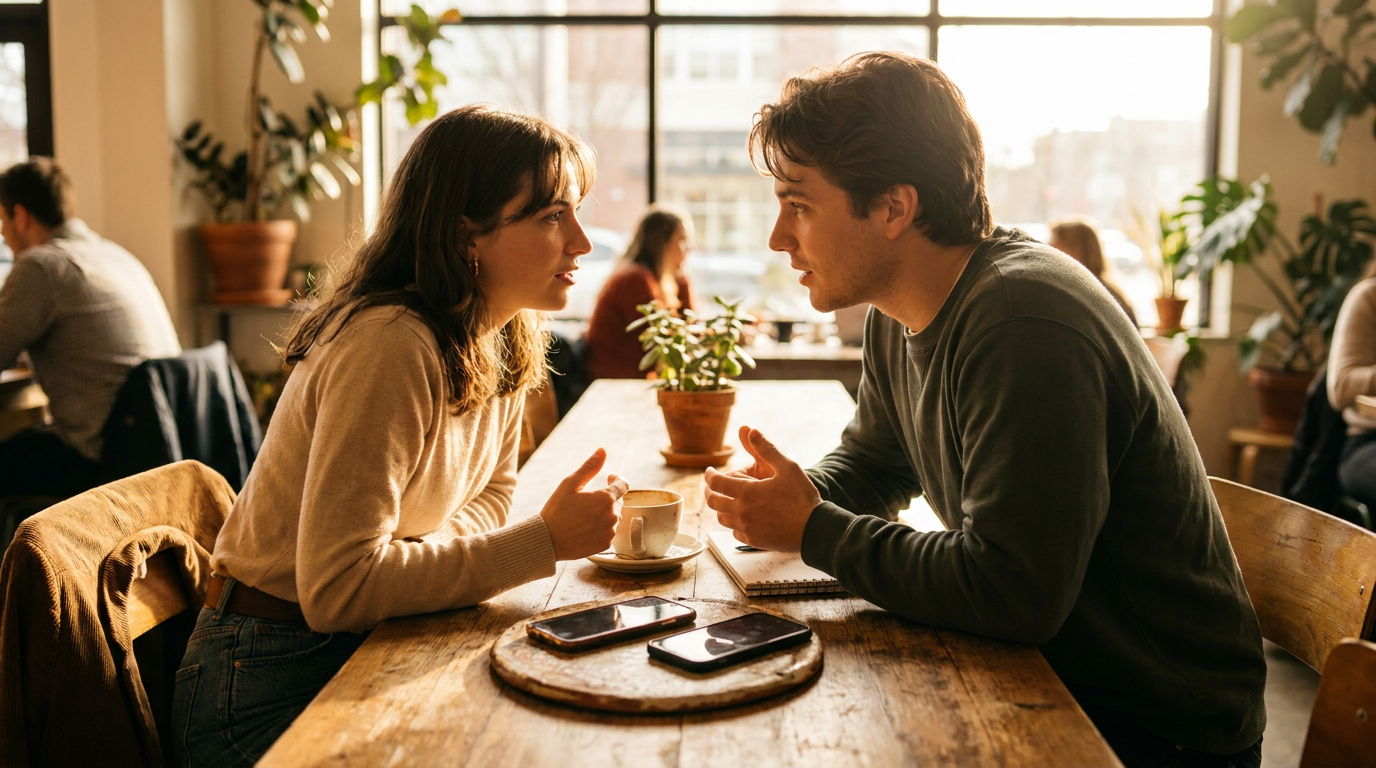
Intentional dating, often overlapping with the concept of "slow dating," fundamentally changes the pacing of modern courtship. Rather than juggling dozens of superficial chats, singles are choosing to focus on one or two connections at a time. The approach emphasizes longer conversations, delayed physical intimacy, and a rigorous upfront assessment of shared values and life goals.[2][3]
The data supports this behavioral shift. According to recent surveys of singles, 71% report they are actively looking for something meaningful, even if it takes significantly more time to find. Only a fraction are still participating in the rapid-fire hookup culture that defined the late 2010s.[8]
Matchmaking services and relationship researchers are seeing the results firsthand. Tawkify, a national matchmaking firm, reports a 25% increase in users abandoning traditional apps over the last two years. Their data indicates that singles are increasingly prioritizing emotional availability and predictability, with activity-based "micro-dates" proving 1.25 times more likely to result in a second encounter.[5]

Psychologists note that this deceleration offers genuine mental health benefits. For individuals recovering from app burnout or those with anxious attachment styles, slow dating provides a necessary buffer. It removes the pressure of instant evaluation, allowing chemistry to develop organically rather than demanding immediate sparks.[6]
However, therapists also offer a note of caution. While slow dating is a healthy recalibration for most, clinical experts warn that the terminology can sometimes be co-opted. In some cases, "taking it slow" serves as a polite, socially acceptable label for emotional avoidance or commitment-phobia, making it crucial for daters to distinguish between genuine pacing and a reluctance to define the relationship.[6]
While slow dating is a healthy recalibration for most, clinical experts warn that the terminology can sometimes be co-opted.
Recognizing that their core business model is under threat from user exhaustion, major dating platforms are actively re-engineering their interfaces to force intentionality. The era of the infinite swipe is being replaced by friction designed to foster actual conversations.
Hinge, for example, recently rolled out a feature called "Your Turn Limits" to combat ghosting and conversational hoarding. The system caps the number of unanswered messages a user can accumulate at eight. Once that limit is reached, the user must either reply to existing matches or close the conversations before they can interact with anyone new.[1]

This forced bottleneck is a direct response to internal research showing that 44% of users view a lack of responsiveness as their primary dating challenge. By artificially limiting the conversational pipeline, apps are attempting to shift user behavior from passive collecting to active engaging.[1]
Paradoxically, the most significant tool driving the intentional dating movement is artificial intelligence. While it might seem counterintuitive to use AI for authentic human connection, a new generation of dating assistants is helping singles cut through the noise and reduce the cognitive load of digital courtship.[4]
Unlike early AI tools that simply generated cheesy pickup lines, 2026's platforms—such as FlirtGen, Piercr, and Luvr AI—function more like personalized matchmakers. These systems utilize Large Language Models to perform semantic analysis on dating profiles, moving beyond basic keyword matching to understand tone, sentiment, and underlying values.[4][7]
These AI assistants help users identify "complementary friction"—the healthy balance of similarities and differences required for long-term compatibility. By analyzing a potential match's profile, the AI can highlight shared lifestyle goals or potential conversational dead-ends before a user even sends the first message.[7]

Furthermore, AI tools are being used to overcome the "blank screen" anxiety that often leads to ghosting. By suggesting context-aware conversation starters based on a match's specific interests, these assistants help users bypass tedious small talk and dive directly into the deeper, values-based discussions that intentional daters crave.[4]
The integration of AI into the dating ecosystem is not about automating romance; it is about outsourcing the exhausting administrative work of online dating. By letting algorithms handle the initial vetting and conversational prompting, singles can reserve their emotional energy for actual, face-to-face human interaction.
Ultimately, the dating landscape of 2026 represents a maturation of digital romance. The novelty of having thousands of potential partners in your pocket has worn off, replaced by a pragmatic understanding that human connection cannot be optimized through volume alone.
Whether through the use of sophisticated AI assistants, the adoption of slow-dating principles, or the return to curated matchmaking, singles are reclaiming their time and emotional bandwidth. The swipe era may be ending, but the pursuit of love is simply becoming more deliberate and, ultimately, more humane.
How we got here
2020-2021
Pandemic isolation drives a surge in video dating and slower pacing.
2022-2023
Post-pandemic freedom leads to a boom in dating app usage and high-volume swiping.
2024-2025
Widespread dating app fatigue sets in, with users reporting severe burnout and ghosting.
Early 2026
The 'intentional dating' movement goes mainstream, supported by new AI compatibility tools and app redesigns.
Viewpoints in depth
Intentional Daters & Matchmakers
Advocates for prioritizing values-based compatibility and emotional availability over sheer volume.
This camp argues that the gamification of dating apps has fundamentally broken modern courtship. By deliberately slowing down the process—focusing on one or two matches at a time and engaging in deeper conversations before meeting—they believe singles can protect their emotional energy and drastically improve their chances of finding long-term compatibility. Matchmakers emphasize that curated, high-intent environments yield far better results than algorithmic swiping.
Mental Health Professionals
Therapists focusing on the psychological impact of digital dating and attachment styles.
Psychologists view the shift toward slow dating as a necessary public health correction. They point to the severe anxiety and decision fatigue caused by endless swiping, noting that slower pacing helps individuals with anxious attachment styles self-regulate. However, they also caution that 'taking it slow' must be practiced authentically, warning that some individuals use the trend as a socially acceptable shield for commitment-phobia or emotional avoidance.
Platform Developers
App creators attempting to balance user engagement with features that reduce ghosting.
Faced with a user base that is increasingly abandoning their platforms due to burnout, developers are pivoting from engagement-at-all-costs to forced intentionality. By introducing friction—such as capping unanswered messages or limiting daily swipes—they aim to rehabilitate the reputation of dating apps. Their goal is to prove that digital platforms can still facilitate genuine connection if the architecture actively discourages bad behavior like ghosting and conversational hoarding.
What we don't know
- Whether forced-intentionality features on major apps will successfully retain burned-out users long-term.
- How the increasing reliance on AI for conversational prompting will affect face-to-face communication skills.
Key terms
- Dating App Fatigue
- A psychological state of exhaustion, cynicism, and decision paralysis caused by prolonged use of high-volume dating platforms.
- Intentional Dating
- A mindful approach to romance that prioritizes clear relationship goals, shared values, and quality connections over casual swiping.
- Slow Dating
- The practice of taking time to build an emotional connection through deep conversation before rushing into physical intimacy or commitment.
- Semantic Analysis
- The use of AI to understand the tone, sentiment, and underlying meaning of a dating profile, rather than just matching keywords.
- Micro-dates
- Short, low-pressure, activity-based meetups designed to gauge real-world chemistry without the time commitment of a traditional dinner date.
Frequently asked
What is dating app fatigue?
It is the emotional exhaustion and cynicism that results from endless swiping, superficial conversations, and frequent ghosting on digital dating platforms.
How does slow dating work?
Slow dating involves focusing on fewer matches at a time, engaging in deeper conversations to assess shared values, and delaying physical intimacy to let chemistry build naturally.
Why are dating apps adding message limits?
Platforms like Hinge are capping unanswered messages to discourage conversational hoarding and ghosting, forcing users to be more intentional with their matches.
How do AI dating assistants help?
Modern AI tools analyze profiles for deeper compatibility and suggest context-aware conversation starters, helping users bypass small talk and reduce the cognitive load of dating.
Sources
Source coverage
8 outlets
4 viewpoints surfaced








[1]NewsweekPlatform Developers
Hinge's Plan to Tackle 'Dating Burnout'
Read on Newsweek →[2]FIZZY MAGIntentional Daters & Matchmakers
Dating Life In 2026: Trends, Challenges, & Opportunities
Read on FIZZY MAG →[3]Star MagazineIntentional Daters & Matchmakers
Slow Dating Is The New Celebrity Secret
Read on Star Magazine →[4]The AI SurfAI Dating Advocates
Best AI Dating Assistant Tools 2026
Read on The AI Surf →[5]TawkifyIntentional Daters & Matchmakers
Why Intentional Dating Beats Swiping (and How to Do It!)
Read on Tawkify →[6]Gildas GarrecMental Health Professionals
Soft Dating & Slow Dating: 2026 Trends Decoded by a Therapist
Read on Gildas Garrec →[7]Luvr AIAI Dating Advocates
Overcome Dating App Fatigue: Tips to Reignite Your Dating Life
Read on Luvr AI →[8]OkCupidIntentional Daters & Matchmakers
Today's Dating is Intentional, Not Instant
Read on OkCupid →
Every angle. Every day.
Get lifestyle stories with full source coverage and perspective breakdowns delivered to your inbox.