
How AI Autofocus and Global Shutters Are Revolutionizing Cameras in 2026
Modern mirrorless cameras have evolved into computational engines, using deep learning to track subjects and new sensor architectures to completely eliminate motion distortion.
By Factlen Editorial Team
- Professional Photographers
- Value the absolute precision of global shutters and AI tracking for sports and wildlife, willing to pay a premium for zero distortion.
- Sensor Engineers
- Focused on overcoming the physical limitations of silicon, developing hybrid architectures that offer the best of both rolling and global shutters.
- Casual Enthusiasts
- Benefit most from the trickle-down of AI autofocus into budget-friendly bodies, which dramatically increases their success rate without requiring deep technical knowledge.
- Hybrid Filmmakers
- Prioritize the elimination of rolling shutter for video, but remain cautious about the dynamic range trade-offs of early global shutter sensors.
What's not represented
- · Smartphone Photographers
- · Vintage Camera Purists
Why this matters
For anyone buying a camera in 2026, the criteria have fundamentally changed. The shift from mechanical parts to AI-driven computational sensors means entry-level cameras can now track fast-moving subjects with a precision that outpaces the most expensive professional gear from just a decade ago.
Key points
- Major manufacturers have completely shifted their focus to mirrorless systems, ending the era of the DSLR.
- Deep learning autofocus now uses neural networks to instantly recognize and track specific subjects like eyes, faces, and vehicles.
- AI-powered tracking has increased the 'keeper rate' for moving subjects to over 95 percent, up from 60-70 percent on older DSLRs.
- Global shutter sensors capture the entire frame simultaneously, completely eliminating the 'jello effect' distortion seen in fast motion.
- Engineers are developing hybrid sensors that can switch between global and rolling shutters to maximize both motion freezing and dynamic range.
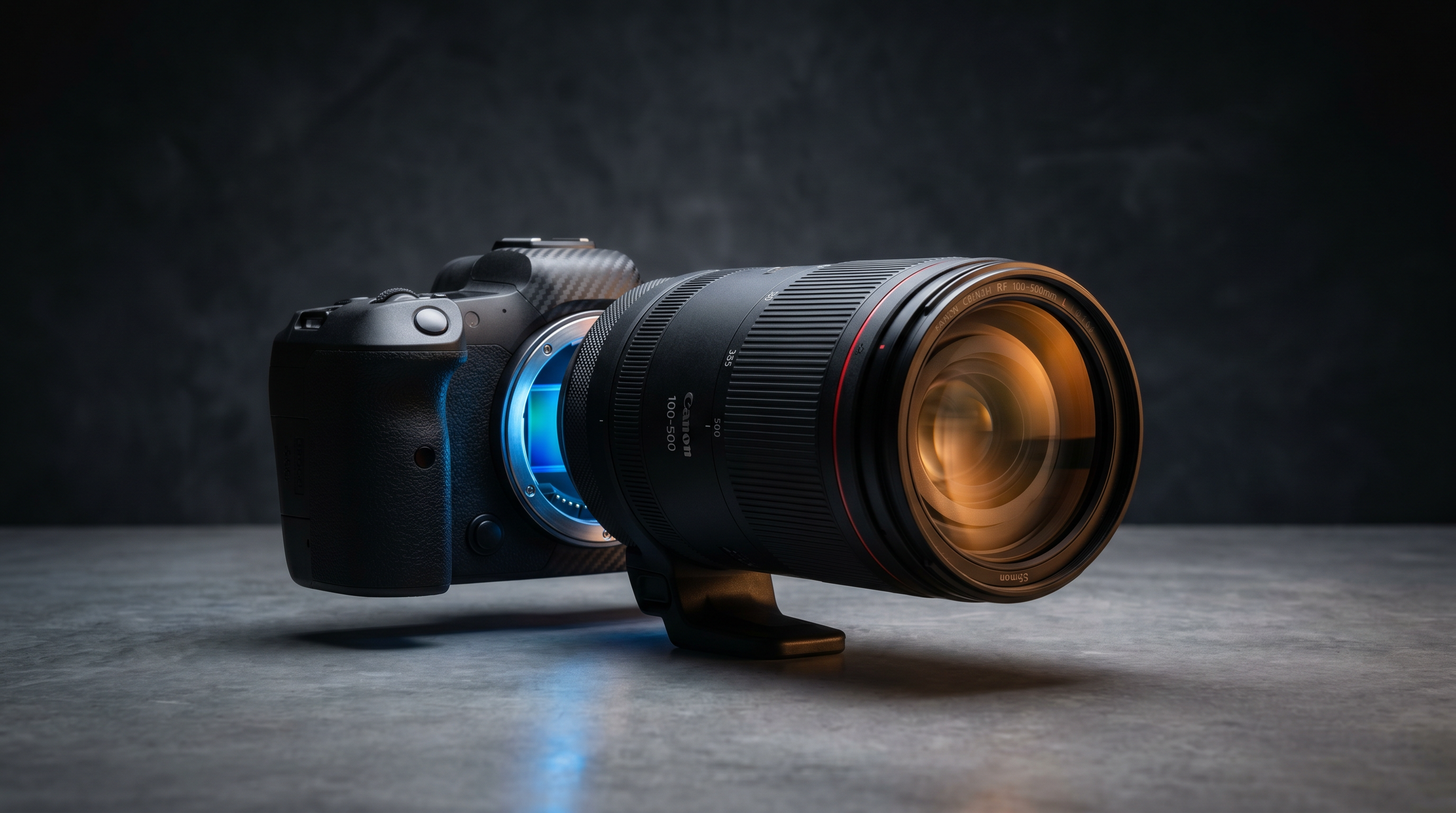
The era of the traditional digital single-lens reflex (DSLR) camera is officially drawing to a close, but the mirrorless systems replacing them in 2026 are no longer functioning merely as digital film planes. Instead, they have evolved into sophisticated computational engines that actively interpret the world before the shutter is ever pressed. The transition away from mechanical mirrored systems is now complete, with every major manufacturer shifting their research, development, and lens roadmaps entirely to mirrorless platforms. This industry-wide pivot has resulted in a generational leap in how cameras capture light and motion. Rather than relying on the photographer to manually calculate complex exposure and tracking variables in real time, modern camera bodies are leveraging advanced silicon and artificial intelligence to handle the heavy lifting. The result is a fundamental transformation of the medium, where the technical barriers to entry are plummeting, and the definition of what a camera can achieve is being rewritten.[2][8]
The most significant and immediate shift for everyday photographers is the arrival of Deep Learning Autofocus. For decades, camera autofocus relied on phase or contrast detection—a system that essentially looked for the sharpest edge or highest contrast within a designated box on the screen. While effective for stationary subjects, it required the photographer to manually keep that tiny box perfectly aligned over a moving target. Today's AI autofocus completely discards that paradigm. Powered by dedicated neural processing units, these modern systems are trained on millions of reference images before they ever leave the factory. Instead of merely hunting for contrast, the camera's processor actually recognizes specific subjects within the frame. It can instantly identify a bird's eye, a racecar's helmet, an airplane cockpit, or a human face, locking onto the subject seamlessly and maintaining that focus even if the subject turns away or is temporarily obscured by an obstacle.[4]
This computational approach allows for highly advanced predictive tracking, a feature that feels almost like science fiction in practice. The autofocus system continuously analyzes the trajectory, speed, and behavior of a moving subject—such as a cheetah sprinting or a gymnast mid-flip—and anticipates exactly where it will be in the next fraction of a second. By predicting the movement, the camera ensures the focus motor is already in the correct position before the mechanical shutter even fires. Manufacturers are pushing this integration between human and machine even further with features like "Eye Control AF," prominently featured in flagship models such as the Canon EOS R5 Mark II. This system utilizes an array of infrared sensors located inside the electronic viewfinder to track the photographer's own pupil. By simply looking at a subject in the frame, the photographer commands the camera to instantly shift the focus point to that exact location, merging human intent with artificial intelligence.[1][4]
The real-world results of this deep learning integration are staggering, fundamentally altering the success rate for both professionals and hobbyists. Modern mirrorless AI systems now routinely achieve a "keeper rate"—the percentage of photos that are sharply in focus and usable—of 95 percent or higher when tracking fast-moving subjects. This stands in stark contrast to the 60 to 70 percent accuracy that was typical of older, top-tier DSLR phase-detection systems. For a wedding photographer capturing a bride walking down the aisle, or a wildlife enthusiast tracking an eagle in flight, this increased reliability means less time culling blurry photos and a near guarantee that the decisive moment is captured perfectly. The camera handles the complex, split-second math of tracking and motion compensation, allowing the user to focus entirely on the artistic elements of composition, framing, and timing.[2]

The real-world results of this deep learning integration are staggering, fundamentally altering the success rate for both professionals and hobbyists.
But artificial intelligence is only half of the 2026 camera revolution; the other half is happening at the foundational silicon level with the advent of the "global shutter." To understand the magnitude of the global shutter, one must first understand the critical flaw it fixes: the "rolling shutter." Traditional CMOS image sensors read light sequentially, scanning line-by-line from the top of the frame to the bottom. When shooting fast motion—like a swinging golf club, a spinning airplane propeller, or a rapidly panning video—this line-by-line scan causes the dreaded "jello effect." Because the subject moves while the sensor is still in the process of reading the frame, straight lines appear warped, sheared, or slanted. This distortion has plagued digital video and silent electronic photography for over a decade, forcing creators to compromise on shutter speed or panning techniques.[3][6]
Sony engineers shattered this long-standing limitation with the release of the Alpha 9 III, the world's first full-frame mirrorless camera equipped with a global shutter image sensor. Unlike a rolling shutter, a global shutter exposes and reads every single pixel on the sensor simultaneously. This instantaneous readout completely eliminates rolling shutter distortion, freezing motion perfectly in time. A golf club remains perfectly straight, and panning video remains flawlessly geometric. Furthermore, this simultaneous readout prevents the ugly banding artifacts caused by flickering artificial LED lights, and allows flash synchronization at any shutter speed—a massive boon for studio and portrait photographers. By removing the bottleneck of sequential scanning, the global shutter also enables mind-bending continuous shooting speeds, allowing flagship models to capture full-resolution RAW images at up to 120 frames per second without any viewfinder blackout.[6]

However, the global shutter currently comes with inherent engineering trade-offs. Because the architecture requires complex circuitry behind every individual pixel to store the electrical charge simultaneously, first-generation global sensors traditionally suffer from slightly lower dynamic range and higher noise in low-light conditions compared to their rolling shutter counterparts. But the industry is already racing to solve this compromise through innovative silicon design. Nikon has recently filed patents for a hybrid image sensor architecture that can seamlessly switch between global and rolling shutter modes depending on the specific needs of the scene. This hybrid design routes electrical charges through different microscopic pathways, allowing a camera to use a rolling shutter to maximize dynamic range for a sunset landscape, and then instantly switch to a global shutter for a high-speed sports sequence where motion distortion is the primary risk.[3]
This concept of on-demand shutter switching is not merely theoretical; companies like STMicroelectronics have already introduced similar hybrid CMOS sensors for industrial and mobile applications, proving that adaptive silicon is viable and likely to define the next generation of consumer cameras. Crucially, these sweeping advancements in AI and sensor technology are no longer restricted to professionals spending thousands of dollars on flagship bodies. The technology is rapidly trickling down to the broader consumer market. Entry-level and mid-range cameras, such as the Canon EOS R10 and Nikon Z50II, now feature the exact same advanced AI subject-recognition algorithms found in their professional counterparts, making high-end tracking accessible on a budget. Ultimately, the mirrorless cameras of 2026 represent a fundamental shift in the medium: they are active, intelligent collaborators that ensure the technical mechanics of photography never stand in the way of a great image.[1][5][7]

How we got here
Early 2010s
Mirrorless cameras begin gaining traction, though DSLRs maintain a significant advantage in autofocus speed.
2018-2020
Major manufacturers pivot heavily to full-frame mirrorless systems, introducing early versions of eye-tracking autofocus.
Late 2023
Sony releases the Alpha 9 III, the world's first full-frame mirrorless camera equipped with a global shutter.
2024-2025
Deep learning AI autofocus becomes standard across flagship models, pushing subject tracking accuracy above 95 percent.
2026
AI tracking trickles down to entry-level cameras, while engineers patent hybrid sensors that switch between global and rolling shutters.
Viewpoints in depth
Professional Photographers
For working pros shooting sports or wildlife, the shift to AI autofocus and global shutters is strictly about reliability.
Professional photographers argue that a 95 percent keeper rate and zero rolling shutter distortion directly translates to more usable images and less time culling bad shots. For those whose livelihoods depend on capturing a split-second moment—like a sprinter crossing a finish line or a bird diving for prey—the high cost of flagship bodies is easily justified by the guarantee that the camera will not miss the shot.
Sensor Engineers
The engineering camp views the current state of cameras as a transitional phase toward fully adaptive silicon.
Engineers acknowledge the dynamic range penalties of first-generation global shutters and are actively developing hybrid sensors to solve the problem. Their ultimate goal is a computational architecture that dynamically switches readout modes based on the scene's specific lighting and motion, offering the absolute best of both rolling and global shutters without requiring the user to choose.
Casual Enthusiasts
For hobbyists and beginners, the focus is on how this technology democratizes high-quality photography.
This camp values how AI subject detection removes the steepest part of the photography learning curve. They argue that trickling this tech down to sub-$1,000 cameras allows everyday users to focus on art, composition, and lighting, rather than fighting with technical settings and focus points just to get a sharp image of their children or pets.
What we don't know
- It remains unclear how quickly hybrid global-rolling sensors will become affordable enough for entry-level consumer cameras.
- The long-term impact of AI automation on the skill development of beginner photographers is still being debated within the industry.
Key terms
- Deep Learning Autofocus
- An autofocus system powered by neural networks that has been trained on millions of images to instantly recognize and track specific subjects like eyes, faces, and vehicles.
- Rolling Shutter
- A method of image capture where the sensor reads light sequentially line-by-line, which can cause fast-moving objects to appear warped or slanted.
- Global Shutter
- A sensor architecture that exposes and reads every pixel simultaneously, perfectly freezing motion without any distortion.
- Phase-Detection
- A traditional autofocus method that splits incoming light into pairs of images and calculates the distance needed to align them, effectively finding the sharpest contrast.
- Keeper Rate
- The percentage of photos taken during a shoot that are sharply in focus and usable.
Frequently asked
What is the difference between a DSLR and a mirrorless camera?
A DSLR uses a mechanical mirror to reflect light into an optical viewfinder. A mirrorless camera removes this mirror, exposing the sensor directly to light and using a digital screen for the viewfinder.
What is a global shutter?
A global shutter is a sensor technology that captures the entire image simultaneously, rather than scanning it line-by-line. This completely eliminates motion distortion, known as the jello effect.
Does AI autofocus work on animals?
Yes. Modern deep learning autofocus systems are trained to specifically recognize and track the eyes, faces, and bodies of various animals, including dogs, cats, and birds in flight.
Are global shutter cameras worse in low light?
Currently, first-generation global shutters can have slightly lower dynamic range and more noise in low light compared to traditional rolling shutters, though engineers are developing hybrid sensors to solve this.
Sources
Source coverage
8 outlets
4 viewpoints surfaced








[1]DPReviewProfessional Photographers
The 9 Best mirrorless cameras in 2026
Read on DPReview →[2]Amateur PhotographerProfessional Photographers
The best mirrorless cameras in 2026: these are my top choices for photography and video
Read on Amateur Photographer →[3]Digital Camera WorldHybrid Filmmakers
Nikon's amazing hybrid global and rolling image sensor offers best of both worlds
Read on Digital Camera World →[4]Fstoppers
So What Exactly Is AI Autofocus?
Read on Fstoppers →[5]CrutchfieldCasual Enthusiasts
Best mirrorless cameras for 2026
Read on Crutchfield →[6]Sony GroupSensor Engineers
Engineers Pioneer a New Era of Full-frame Mirrorless Interchangeable Lens Cameras, Alpha 9 III, Equipped with Global Shutter Full-Frame Image Sensor
Read on Sony Group →[7]STMicroelectronicsSensor Engineers
New CMOS Sensor Switches Between Global and Rolling Shutter on Demand
Read on STMicroelectronics →[8]Wikipedia
Mirrorless camera
Read on Wikipedia →

More in shopping
See all 52 stories →E-Bike Tech
The 2026 E-Bike Buying Guide: Motors, Batteries, and Finding Your Perfect Ride
8 sources

EV Transition
EV vs. PHEV in 2026: The Complete Cost and Lifestyle Comparison
7 sources

E-Bike Tech
The 2026 E-Bike Buying Guide: Motors, Batteries, and the New Safety Rules
8 sources

Audio Tech
Solid-State MEMS Speakers Are Replacing Traditional Headphone Drivers
7 sources
Every angle. Every day.
Get shopping stories with full source coverage and perspective breakdowns delivered to your inbox.