
How AI and Bioacoustics Are Decoding Nature to Save Ecosystems
Scientists are deploying artificial intelligence and vast networks of acoustic sensors to monitor endangered species, predict illegal logging, and decode complex animal communication.
By Factlen Editorial Team

- Bioacoustics Researchers
- Focus on using AI to decode animal communication, track populations, and prove the cognitive complexity of wildlife.
- Conservation Technologists
- Prioritize real-time threat detection and edge computing to actively defend ecosystems from human encroachment.
- Open-Source Advocates
- Advocate for making AI models and ecological datasets freely available to democratize global conservation efforts.
What's not represented
- · Indigenous communities managing the monitored land
- · Policymakers regulating AI deployment
- · Commercial logging entities
Why this matters
By translating the continuous noise of the natural world into actionable data, AI allows conservationists to protect ecosystems in real-time and proves the profound cognitive complexity of wildlife, potentially reshaping environmental law.
Key points
- Traditional biodiversity monitoring is being replaced by AI-powered acoustic sensors that can process terabytes of environmental audio.
- Edge computing devices placed in forest canopies can detect chainsaws and vehicles, alerting rangers to illegal logging before it happens.
- Machine learning models can accurately identify dozens of species in dense jungles and even recognize individual animals, like lions, by their unique vocal signatures.
- Interdisciplinary projects are using advanced natural language processing to decode the complex, phonetic communication structures of sperm whales.
The natural world is undergoing a silent crisis, but the ecosystems themselves are anything but quiet. For decades, traditional biodiversity monitoring has relied on human observation—a slow, labor-intensive process that requires scientists to physically trek through dense jungles or dive into deep oceans to count species. This analog approach simply cannot keep pace with the modern rate of habitat loss and extinction. Today, however, a profound shift is occurring in conservation science. Researchers are abandoning the clipboard in favor of the microphone, deploying vast networks of acoustic sensors to capture the continuous, chaotic symphony of the wild.[1]
This emerging field, known as bioacoustics, has historically been bottlenecked by the sheer volume of data it produces. A single network of forest microphones can record terabytes of audio in a matter of weeks, capturing every rustling leaf, falling raindrop, and insect chirp. Human ears could never parse this ocean of noise in a single lifetime. The breakthrough has arrived in the form of artificial intelligence. By training advanced machine learning models on massive libraries of ecological audio, scientists can now isolate and identify specific sounds with unprecedented speed and accuracy, transforming raw noise into actionable ecological data.[1][3]
The mechanism driving this revolution relies on a combination of rugged hardware and sophisticated software. Organizations like Rainforest Connection have developed "Guardian" devices—solar-powered acoustic sensors, often built from upcycled smartphones, that are strapped high in the forest canopy. These devices operate continuously, capturing all ambient sound within a three-square-kilometer radius. Because transmitting raw audio from remote jungles via satellite is prohibitively expensive, these sensors utilize edge computing. The AI models run directly on the device's internal processors, analyzing the soundscape locally and only transmitting a signal when a specific acoustic trigger is detected.[8]

The immediate application of this technology is real-time threat detection. Illegal logging, which accounts for up to 90 percent of deforestation in tropical rainforests, is often a precursor to broader ecological collapse. The Guardian system is trained to recognize the mechanical whine of chainsaws, the rumble of unauthorized vehicles, and the sharp crack of gunshots. When the AI detects these anomalies, it pings local rangers with precise GPS coordinates. In some cases, the algorithms have become so refined that they can detect the subtle sounds of logging scouts moving through the brush, allowing authorities to predict and intercept illegal operations up to five days before a single tree is felled.[8]
Beyond policing human activity, AI bioacoustics is fundamentally changing how scientists track wildlife populations. In dense tropical environments where visual observation is nearly impossible, acoustic monitoring provides a comprehensive census. Researchers at the University of Copenhagen recently deployed AI models in dense tropical forests, successfully identifying 34 out of 39 target bird and frog species solely by their calls. This unprecedented success rate proves that passive acoustic monitoring can map biodiversity in hard-to-reach environments without ever disturbing the habitat or requiring stressful catch-and-release studies.[4]
The technology is advancing past simple species identification, moving into the realm of individual recognition. In a landmark study by the University of Exeter, researchers placed acoustic collars on lions and deployed fifty microphones across Tanzanian and Zimbabwean reserves. The AI analysis revealed that lions possess a much more complex vocal repertoire than previously understood, including a deep, uniform "intermediate roar" that consistently follows their primary call. By analyzing these acoustic signatures, the deep learning model achieved over 95 percent accuracy in identifying individual lions, while also extracting data on the animal's age and gender.[7]

This capability to track individuals by voice is a paradigm shift for anti-poaching and population management. It allows conservationists to monitor the movement of specific apex predators across vast territories without the need for invasive GPS darting. As the AI models ingest more data, they are continuously refined, learning to filter out background noise and isolate the unique vocal fingerprints of endangered species, from the roar of a Tanzanian lion to the song of a Hawaiian honeycreeper.[3][7]
This capability to track individuals by voice is a paradigm shift for anti-poaching and population management.
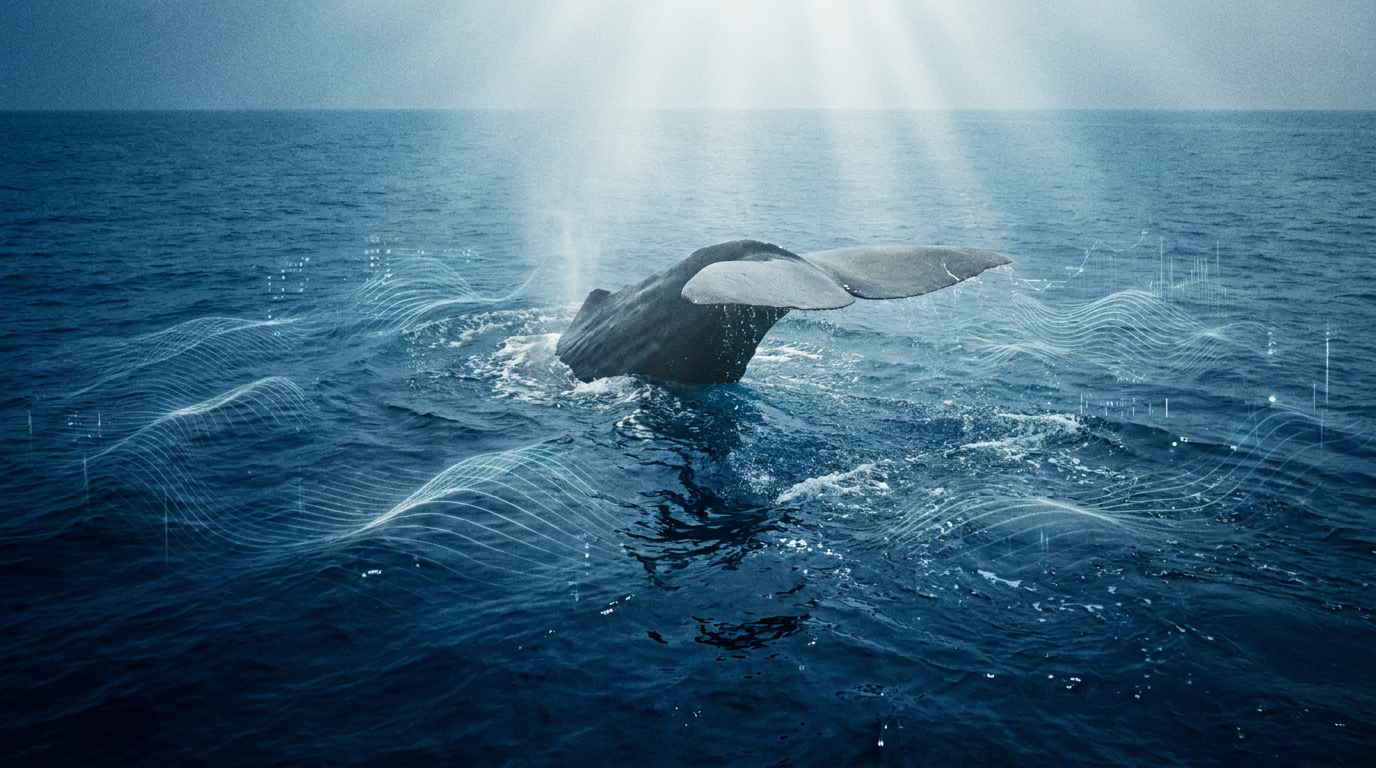
Perhaps the most ambitious application of AI bioacoustics is the attempt to decode complex animal communication. Project CETI (Cetacean Translation Initiative) is an interdisciplinary effort combining marine biology, robotics, and linguistics to understand the language of sperm whales. Sperm whales possess the largest brains on Earth and live in highly sophisticated, matriarchal societies. They communicate in the pitch-black depths of the ocean using rapid sequences of clicks known as codas. Until recently, the structure and meaning of these codas remained a profound mystery.[6]
To gather the necessary data, Harvard robotics engineers designed specialized, non-invasive bio-loggers. These devices adhere to the whales via suction cups and feature synchronized, high-bandwidth hydrophones capable of recording multi-channel audio, depth, and movement. Unlike legacy tags, these bio-loggers can differentiate between multiple whales speaking simultaneously by measuring the exact origin of the sound. The resulting datasets are massive, providing the raw material needed for advanced natural language processing algorithms to search for structural patterns.[5]
The results have been groundbreaking. By feeding this acoustic data into machine learning models, the CETI team recently published evidence of a "sperm whale phonetic alphabet." The AI identified 156 distinct codas and their basic components, revealing a structured communication system akin to human phonetics, complete with variations resembling vowels and diphthongs. The models even captured the highly synchronized acoustic coordination of a whale pod during the birth of a new calf. While scientists caution that this is not a direct translation into human concepts, it proves that cetacean communication possesses a complex, rule-based grammar.[6]

The implications of decoding animal communication extend far beyond academic curiosity. The Earth Species Project (ESP), a nonprofit research initiative, has developed NatureLM-audio, the first large-scale audio language model tailored specifically for animals. ESP is using this technology to address urgent conservation crises, such as the plight of the Hawaiian crow. The species is extinct in the wild, surviving only in captive breeding programs. Conservationists fear that these captive birds may have lost critical elements of their cultural vocabulary. By using AI to analyze historical recordings and current vocalizations, researchers hope to ensure that reintroduced populations still know how to communicate effectively in their natural habitat.[9]
The rapid advancement of these tools is being fueled by a commitment to open-source collaboration. Recognizing that the biodiversity crisis is a global emergency, major tech entities are democratizing their AI models. Google DeepMind recently released Perch, a versatile bioacoustics model trained on a vast range of mammals, birds, and amphibians, making it freely available to researchers worldwide. Similarly, the Cornell Lab of Ornithology, backed by a $1.8 million grant from the Bezos Earth Fund, is developing next-generation AI sensors specifically for the Global South, ensuring that the most threatened biodiversity hotspots have access to state-of-the-art monitoring.[2][3]
Despite the immense promise, the field of AI bioacoustics faces significant hurdles. The hardware must survive in the world's most unforgiving environments—from the crushing pressure of the deep ocean to the suffocating humidity of the Amazon—where battery life and solar efficiency are constant struggles. Furthermore, AI models are only as good as their training data. In regions with poorly documented biodiversity, the algorithms can struggle to differentiate between rare species or may hallucinate false positives when confronted with unfamiliar anthropogenic noise.[1][4]
There are also profound legal and philosophical questions emerging from this research. If AI can prove that animals possess complex languages, cultures, and individual identities, it could fundamentally alter their legal standing. Programs like NYU's More Than Human Life (MOTH) are already using the data generated by Project CETI to advocate for the legal rights of marine mammals, arguing that their sophisticated social structures warrant unprecedented environmental protections.[6]

Ultimately, the fusion of artificial intelligence and bioacoustics represents a transition from human-centric observation to a posture of deep listening. By 2030, researchers envision a global network of acoustic sensors providing a real-time dashboard of the planet's ecological health. We are entering an era where the forest can literally call for help, and for the first time in human history, we finally have the technology to understand the message.[1][8]
How we got here
2013
Rainforest Connection is founded, pioneering the use of upcycled smartphones as solar-powered acoustic guardians in the canopy.
2020
Project CETI launches as an interdisciplinary initiative to decode sperm whale communication using advanced machine learning.
2024
Researchers successfully use AI to identify 34 out of 39 species in dense tropical forests, proving the viability of passive acoustic monitoring.
2025
The Earth Species Project develops NatureLM-audio, the first large-scale audio language model tailored specifically for animal vocalizations.
2026
Project CETI publishes evidence of a sperm whale phonetic alphabet, revealing highly structured, rule-based communication.
Viewpoints in depth
Conservation Technologists
Focus on deploying edge computing and AI to halt illegal logging and poaching in real-time.
For technologists and field engineers, the primary value of bioacoustics lies in actionable, real-time intervention. Groups like Rainforest Connection view the forest as a data-rich environment that can be actively defended. By processing audio on the edge—directly on the sensors—they bypass the need for massive cloud bandwidth in remote areas. Their focus is less on decoding animal language and more on identifying the mechanical acoustic signatures of human encroachment, such as chainsaws and vehicles, allowing rangers to intercept threats before ecological damage occurs.
Bioacoustics Researchers
Focus on decoding animal communication, population counting, and understanding complex social structures.
Academic researchers and marine biologists approach AI as a tool to unlock the fundamental mysteries of animal behavior. Initiatives like Project CETI and the Earth Species Project are using large language models to parse the intricate grammar of whale codas and bird calls. For this camp, the goal is to prove that animals possess structured languages, individual identities, and cultural vocabularies. They argue that proving the cognitive complexity of these species is the key to securing stronger legal protections and fundamentally shifting how humans relate to the natural world.
Open-Source Advocates
Focus on democratizing AI models and datasets so local communities and global scientists can collaborate freely.
A growing coalition of data scientists and philanthropic organizations warns against the privatization of conservation technology. They argue that the algorithms and datasets required to monitor global biodiversity must remain open-source. By releasing models like DeepMind's Perch to the public and funding capacity-building in the Global South, this camp aims to ensure that indigenous tribes, local park rangers, and underfunded research institutions have the same access to state-of-the-art AI as well-funded Western universities.
What we don't know
- Whether AI models trained in one ecosystem can reliably generalize to entirely different, undocumented habitats without hallucinating false positives.
- How the legal system will respond if AI definitively proves that certain animal species possess complex languages and cultural identities.
- Whether captive animals, such as the Hawaiian crow, can successfully relearn their species' natural acoustic vocabulary once reintroduced to the wild.
Key terms
- Bioacoustics
- The scientific study of sound production, dispersion, and reception in animals, used to monitor ecosystem health.
- Edge Computing
- Processing data directly on the device (like a forest sensor) rather than sending it all to a central cloud, saving battery and bandwidth.
- Hydrophone
- A specialized underwater microphone used to record marine life, such as whale vocalizations.
- Coda
- A distinct pattern of clicks used by sperm whales to communicate, analogous to words or phonemes in human language.
- NatureLM-audio
- A large-scale artificial intelligence language model specifically tailored to analyze and decode animal vocalizations.
Frequently asked
How does AI identify animals just from sound?
Machine learning models are trained on massive libraries of audio recordings, learning to isolate specific frequencies and patterns to distinguish individual species, much like voice recognition software.
Can this technology stop poachers?
Yes. Systems like Rainforest Connection's Guardians can detect the sound of chainsaws, vehicles, or gunshots and send real-time alerts to local rangers before major damage occurs.
Are scientists actually translating whale language?
While not a direct translation into human words, researchers have used AI to discover a phonetic alphabet in sperm whale clicks, revealing a highly complex, structured communication system.
What happens if a captive species forgets how to communicate?
Conservationists worry captive animals may lose their cultural vocabulary. AI is being used to study species like the Hawaiian crow to ensure reintroduced populations still know how to communicate in the wild.
Sources
Source coverage
9 outlets
3 viewpoints surfaced









[1]Factlen Editorial TeamOpen-Source Advocates
Synthesis by Factlen editorial team
Read on Factlen Editorial Team →[2]SDG NewsConservation Technologists
Bezos Earth Fund Awards $1.8M to Cornell Lab for AI Bioacoustics
Read on SDG News →[3]Google DeepMindOpen-Source Advocates
How AI is helping advance the science of bioacoustics to save endangered species
Read on Google DeepMind →[4]University of CopenhagenBioacoustics Researchers
AI identifies species more accurately and efficiently than ever before
Read on University of Copenhagen →[5]Harvard UniversityBioacoustics Researchers
Harvard engineers build open-source bio-logger for sperm whales
Read on Harvard University →[6]Project CETIBioacoustics Researchers
The Discovery of the Whale Phonetic Alphabet Using AI
Read on Project CETI →[7]AivancityBioacoustics Researchers
Recognizing a lion by the sound of its voice: AI ushers in a new era for wildlife
Read on Aivancity →[8]Rainforest ConnectionConservation Technologists
Developing acoustic monitoring systems to prevent illegal deforestation
Read on Rainforest Connection →[9]Earth Species ProjectBioacoustics Researchers
Pioneering AI Technology in Bioacoustics
Read on Earth Species Project →
Every angle. Every day.
Get environment stories with full source coverage and perspective breakdowns delivered to your inbox.