
How Adaptive AI Tutors Are Rewiring Online Education
Generative AI platforms are moving beyond simple chatbots to function as personalized, Socratic tutors. By combining adaptive algorithms with strict pedagogical guardrails, these systems aim to replicate the benefits of one-on-one instruction at scale.
By Factlen Editorial Team
- Educational Technologists
- Advocates who view AI as the key to scaling personalized learning.
- Classroom Educators
- Teachers focused on the practical realities of classroom integration.
- Privacy & Ethics Advocates
- Researchers and policymakers concerned with data security and algorithmic bias.
What's not represented
- · Students from underfunded districts lacking the hardware or internet access to utilize AI tutors.
- · Parents concerned about the increase in screen time required for AI-driven homework.
Why this matters
For decades, the high cost of one-on-one tutoring has locked millions of students out of personalized academic support. If adaptive AI can deliver even a fraction of a human tutor's effectiveness, it could fundamentally close global achievement gaps and change how homework is done.
Key points
- AI tutors use the Socratic method to guide students through problems rather than providing direct answers.
- Adaptive algorithms analyze student performance in real-time to customize the difficulty of subsequent questions.
- Recent studies show AI math tutors yield a 0.2 standard deviation improvement in student learning.
- Optimizing response latency is critical for keeping students engaged in natural, conversational learning.
- UNESCO and other organizations stress the need for strict data privacy regulations in AI education.
In 1984, educational psychologist Benjamin Bloom published a paper that would haunt the education sector for decades. He identified the "two sigma problem," demonstrating that students who received one-on-one tutoring performed two standard deviations better than their peers in traditional classroom settings. In practical terms, the tutored students outperformed 98% of the students who only received standard group instruction. For forty years, this finding represented the holy grail of education: a proven method to drastically improve student outcomes that was economically impossible to scale. Providing a dedicated human tutor for every single student was simply too expensive for any public education system to sustain.[2]
In 2026, the landscape of online learning is attempting to finally solve Bloom's problem through the application of generative artificial intelligence. The adoption of these tools has been staggering; according to recent industry data, 62% of higher education students now use generative AI at least weekly for their studies, research, and administrative work. However, the real breakthrough in educational technology is not the proliferation of general-purpose chatbots. Instead, it is the rise of purpose-built, adaptive AI tutors designed specifically to replicate the pedagogical strategies of expert human educators.[7]
The fundamental distinction between an answer engine and a true AI tutor lies in the implementation of strict pedagogical guardrails. General large language models, such as the default version of ChatGPT, are designed to fulfill user requests as quickly and comprehensively as possible. If a student pastes a complex calculus problem into a standard chatbot, the system will immediately output the complete solution, often showing its work step-by-step. While this is highly efficient for a student trying to finish an assignment before a midnight deadline, it entirely bypasses the cognitive struggle and active problem-solving required for actual learning to occur.[3]
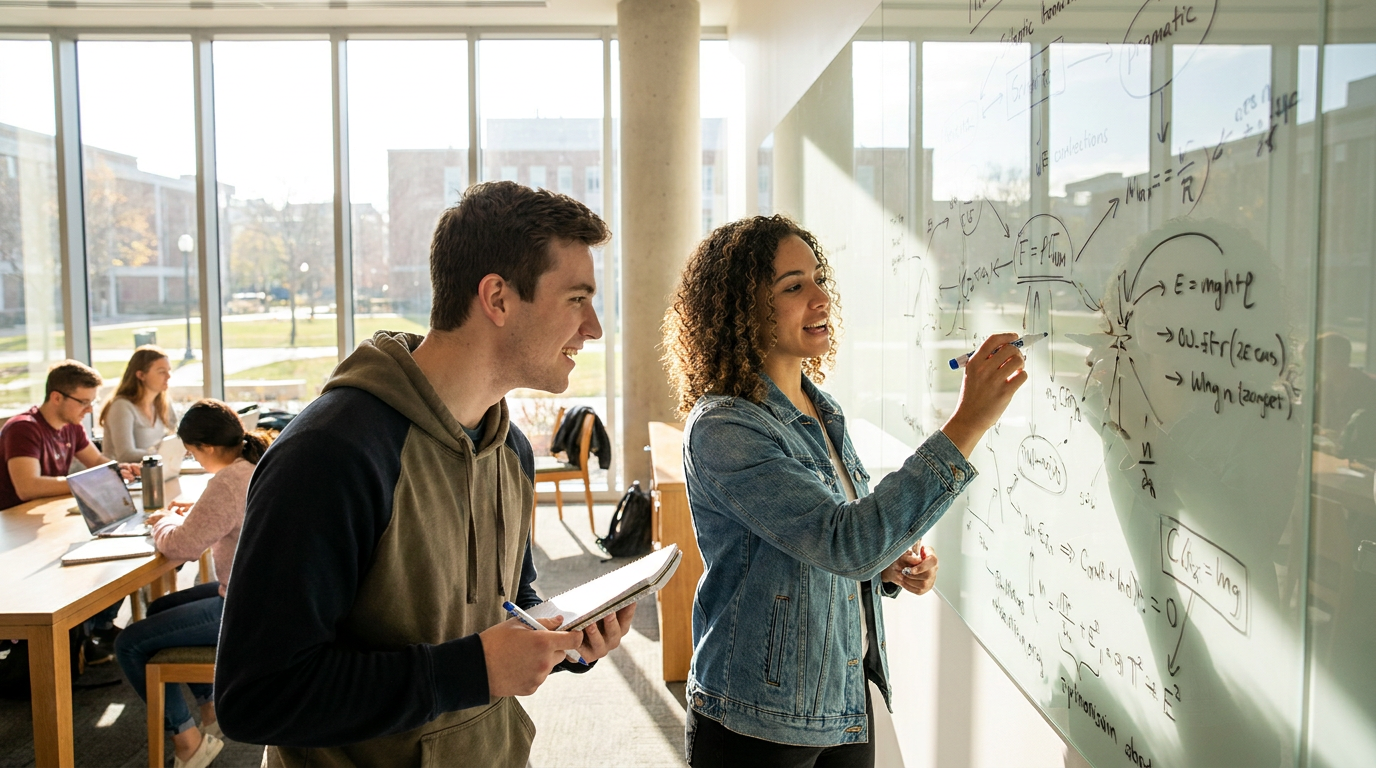
Purpose-built AI tutors, such as Khan Academy's Khanmigo, operate on a fundamentally different philosophy rooted in the Socratic method. When a student asks one of these specialized systems for the answer to a question, the AI is explicitly programmed to refuse. Instead, the system asks the student what they have already tried, identifies exactly where they are stuck in the process, and nudges them forward one conceptual step at a time. This intentional friction is designed to mirror how a human teacher would guide a student at a whiteboard.[3][8]

This Socratic interaction forces a process known as active recall, a cognitive mechanism that is proven to build stronger neural pathways than passively reading a provided solution. By requiring the student to articulate the next logical step—such as identifying a common denominator before adding two fractions—the AI ensures that the student is actually processing the mechanics of the problem. Educational researchers note that this method is critical for independent learning transfer, ensuring that the student can still solve similar problems when the AI assistance is removed during a closed-book exam.[2][3]
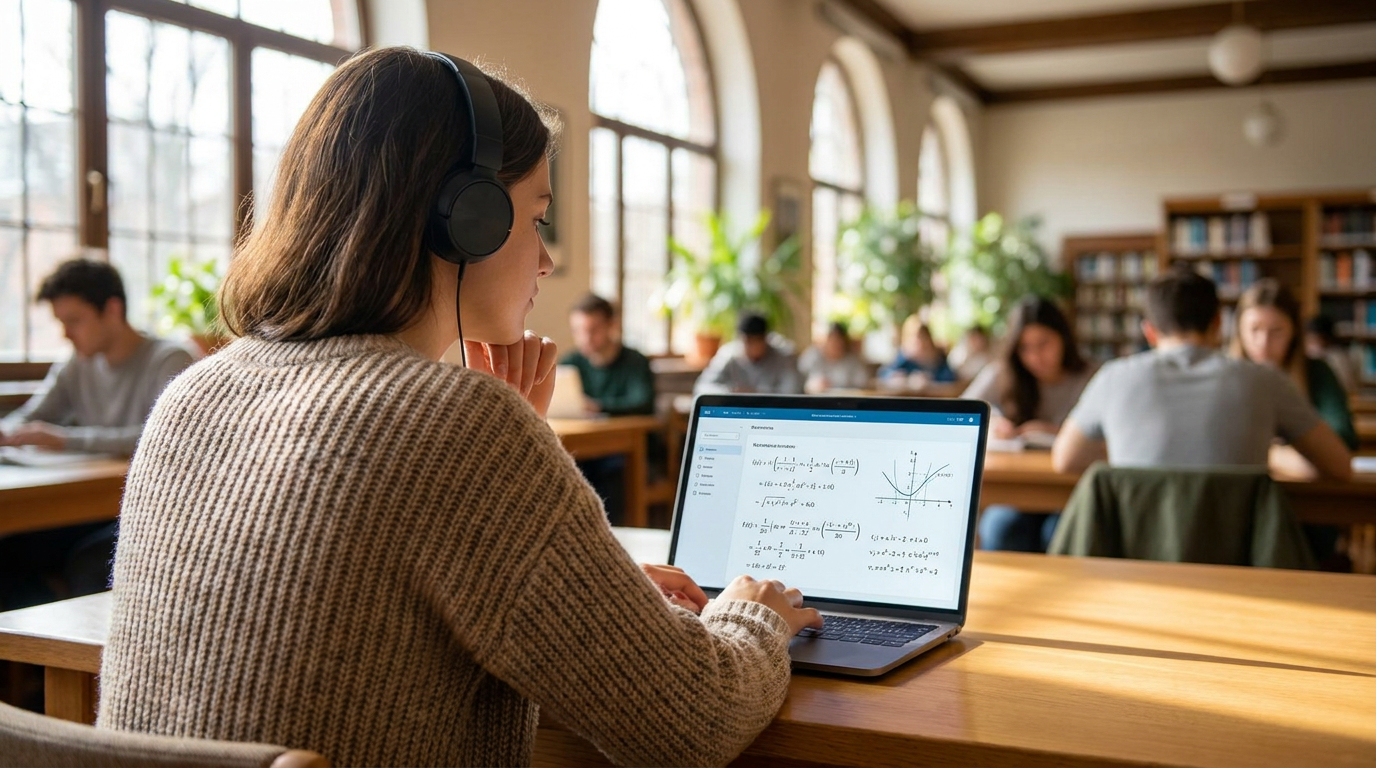
Beyond these conversational guardrails, modern AI tutors rely heavily on adaptive learning algorithms to customize the broader educational pathway for each individual user. These algorithms operate on a continuous, real-time loop of data collection, modeling, and instructional adjustment. Rather than forcing every student through the exact same sequence of generic curriculum, the software dynamically reshapes the lesson plan based on the learner's immediate performance. This ensures that the time spent studying is highly optimized, focusing entirely on the specific areas where the student needs the most support.[4]
As a student interacts with the learning platform, the system meticulously tracks a variety of data points, including response times, quiz scores, and overall engagement levels. Machine learning models then analyze these behavioral patterns to identify specific knowledge gaps and predict future areas of difficulty. For example, if a student consistently answers geometry questions correctly but struggles repeatedly with algebraic equations, the algorithm will dynamically adjust the upcoming content to provide targeted algebraic practice, temporarily pausing the geometry modules.[5]
Machine learning models then analyze these behavioral patterns to identify specific knowledge gaps and predict future areas of difficulty.
This mechanism, known as question-level adaptive testing, means that no two students will ever experience the exact same assessment or practice session. The difficulty of each subsequent question is tailored directly based on the accuracy of the previous answer. This adaptive design prevents advanced students from becoming bored with material they have already mastered, allowing them to accelerate their progress. Simultaneously, it ensures that struggling students receive the foundational review they desperately need before moving on to more complex topics, reducing academic frustration.[5]

To make these systems effective, software engineers have had to focus heavily on the invisible mechanics of the AI interactions, particularly regarding response latency. Educational researchers have found that keeping students actively engaged requires the AI to feel like a natural, fluid conversation. If a student has to wait several seconds for the AI to process a math problem and generate a response, their focus drifts, and the illusion of a seamless tutoring session is broken.[1]
In early 2026, developers at leading educational nonprofits ran large-scale product tests across millions of tutoring threads to optimize this exact metric. By switching their underlying math agents to faster models and instructing the AI to produce more concise, targeted responses, platforms were able to reduce wait times by over three seconds. This significant reduction in latency has proven critical for maintaining a student's cognitive momentum during complex, multi-step problem-solving sessions, ensuring that the technology does not get in the way of the learning process.[1]
Another major breakthrough in adaptive design involves providing the AI with a comprehensive summary of a student's recent problem-solving history. When the AI tutor is contextually aware of which specific problems a student recently missed, it can proactively surface prerequisite skills for a brief review before introducing a harder concept. In recent large-scale trials, this contextual awareness improved "next-item correctness"—the rate at which a student correctly answers the subsequent problem entirely on their own without any AI assistance—by a measurable 3.4%.[1]

Despite these impressive technical advancements, AI tutors are not yet achieving Bloom's elusive two-sigma benchmark of doubling student performance. A recent Stanford and NBER study examining students using AI for math practice found a statistically significant improvement of 0.2 standard deviations over control groups. While this represents highly meaningful progress that translates to real academic gains for thousands of students, it highlights that artificial intelligence is currently functioning as a powerful supplement to, rather than a total replacement for, expert human instruction.[2]
Furthermore, the integration of AI tutors solves only one side of the complex educational equation: individual student practice. Teachers still spend an average of 7.3 hours per week creating differentiated instructional materials, worksheets, and formal assessments for their classes. AI tutors are highly effective at guiding a student through a homework assignment or a practice module, but they do not automatically generate the structured, overarching curriculum that teachers need to lead a cohesive classroom environment day after day.[2]
There are also persistent ethical and technical challenges that educational developers must navigate as these tools scale. Generative AI models are still prone to occasional "hallucinations," where they confidently present incorrect or logically flawed information to the user. In subjects like mathematics, physics, or coding, where precision is absolute, relying on a standard language model is insufficient. To combat this, platforms utilize behind-the-scenes "math agents" that must constantly verify the AI's output, ensuring absolute accuracy before the message is ever shown to the student.[1][8]

Data privacy remains a paramount concern for school districts, administrators, and parents alike. Global organizations like UNESCO have issued comprehensive guidance emphasizing the urgent need for strict national regulations to protect student data and establish age limits for independent interactions with AI platforms. Because adaptive systems require vast amounts of highly personal learning data—tracking exactly how and when a student struggles—to function effectively, securing this sensitive information against commercial misuse or unauthorized access is a critical infrastructure challenge for the decade ahead.[6]
Looking ahead, the capabilities of AI tutors are rapidly expanding into rich, multimodal interactions that go far beyond text-based chat. Newer systems deployed in 2026 can process complex image inputs, allowing students to upload pictures of handwritten geometry problems, historical documents, or scientific diagrams for real-time collaborative feedback. This visual capability bridges the gap between digital interfaces and traditional pen-and-paper homework, making the AI tutor far more versatile across different subjects and accommodating students who learn better through visual representation.[8]
Ultimately, the goal of adaptive AI in education is not to automate the teacher, but to automate the personalization of practice and academic support. By providing every student with a patient, responsive, and Socratic guide that adapts to their unique learning pace, the online learning ecosystem is taking a significant step forward in educational equity. While Bloom's two-sigma benchmark remains an aspirational goal, the technology is already making high-quality, individualized tutoring a universal standard rather than an exclusive luxury reserved for the wealthy.[9]
How we got here
1984
Benjamin Bloom publishes the 'two sigma' problem, showing the massive benefits of 1-on-1 tutoring.
Mar 2023
Khan Academy launches Khanmigo, an early generative AI tutor built on GPT-4.
Sep 2023
UNESCO releases its first global guidance on the ethical use of generative AI in education.
Early 2026
Major platforms deploy faster math agents, significantly reducing AI response latency.
Viewpoints in depth
Educational Technologists
Advocates who view AI as the key to scaling personalized learning.
This camp argues that AI tutors are the only viable mechanism to deliver one-on-one instruction to millions of students globally. They point to the Socratic guardrails and adaptive algorithms as proof that AI can foster genuine critical thinking rather than just providing shortcuts, viewing the technology as a generational leap in educational equity.
Classroom Educators
Teachers focused on the practical realities of classroom integration.
While many teachers welcome tools that help students practice independently, they caution against viewing AI as a complete educational solution. They emphasize that AI tutors do not reduce the heavy burden of curriculum design and lesson planning. Furthermore, they stress that human educators provide the emotional support, mentorship, and motivation that an algorithm cannot replicate.
Privacy & Ethics Advocates
Researchers and policymakers concerned with data security and algorithmic bias.
This group highlights the risks of feeding vast amounts of student performance data into proprietary machine learning models. Citing guidelines from organizations like UNESCO, they argue for strict regulations on data privacy, age-appropriate guardrails, and transparent audits to ensure that adaptive algorithms do not inadvertently reinforce learning biases or penalize disadvantaged students.
What we don't know
- Whether AI tutors can eventually achieve the full 'two-sigma' (two standard deviations) improvement seen with human tutors.
- The long-term impact of AI reliance on students' foundational memory and independent problem-solving skills.
- How effectively schools will protect highly sensitive student learning data from commercial exploitation.
Key terms
- Two Sigma Problem
- An educational phenomenon where students receiving one-on-one tutoring perform two standard deviations better than classroom-taught peers.
- Socratic Method
- A teaching approach that relies on asking guiding questions to stimulate critical thinking, rather than giving direct answers.
- Adaptive Learning
- Educational technology that uses algorithms to adjust the pace and difficulty of content based on a learner's real-time performance.
- Next-Item Correctness
- A metric measuring whether a student correctly answers the very next problem independently after receiving AI tutoring.
- Response Latency
- The amount of time a student waits between submitting a question and receiving a reply from the AI tutor.
Frequently asked
Will AI tutors just give students the answers to their homework?
No. Purpose-built AI tutors are programmed with pedagogical guardrails that refuse to give direct answers, instead asking guiding questions to help the student solve it themselves.
Are AI tutors meant to replace human teachers?
No. AI tutors are designed to assist with individual student practice and homework, while teachers remain essential for curriculum design, classroom instruction, and emotional support.
How do adaptive algorithms customize learning?
They track a student's correct and incorrect answers in real-time, adjusting the difficulty of upcoming questions to target specific knowledge gaps.
Is student data safe with these AI platforms?
Data privacy is a major concern. Organizations like UNESCO recommend strict national regulations to protect student data, though current protections vary by platform and school district.
Sources
Source coverage
9 outlets
3 viewpoints surfaced








[1]Khan AcademyEducational Technologists
How We Study What Works: Improving Khanmigo's Effectiveness
Read on Khan Academy →[2]EduGeniusClassroom Educators
Khanmigo vs EduGenius: Solving Different Problems in Education
Read on EduGenius →[3]AI Native StudentClassroom Educators
Khanmigo vs ChatGPT: The Honest 2026 Review
Read on AI Native Student →[4]Structural LearningEducational Technologists
Adaptive Learning in Education: A Guide to Personalized Teaching
Read on Structural Learning →[5]CourseraEducational Technologists
What Is Adaptive Learning? A Guide to Personalized Education
Read on Coursera →[6]UNESCOPrivacy & Ethics Advocates
Guidance for generative AI in education and research
Read on UNESCO →[7]QSPrivacy & Ethics Advocates
Generative AI in Higher Education Report
Read on QS →[8]Education WeekClassroom Educators
Developing the Khan Academy's AI Tutor
Read on Education Week →[9]Factlen Editorial TeamEducational Technologists
Synthesis by Factlen editorial team
Read on Factlen Editorial Team →
Every angle. Every day.
Get education stories with full source coverage and perspective breakdowns delivered to your inbox.