
Iran Reportedly Closes Strait of Hormuz Again, Threatening Global Economic Relief
Just days after a framework peace deal sent oil prices tumbling, renewed threats to close the Strait of Hormuz have reignited fears of a global energy shock and surging inflation.
By Factlen Editorial Team
- Shipping & Logistics Industry
- Focused on the physical reality of maritime bottlenecks and supply chain recovery.
- Global Macroeconomists
- Focused on the long-term structural damage to global growth and inflation.
- Energy Markets & Traders
- Focused on sentiment and the rapid pricing of best-case scenarios.
What's not represented
- · Developing nations disproportionately affected by the resulting spike in food and fertilizer prices.
- · Renewable energy advocates viewing the crisis as a catalyst for accelerating the transition away from fossil fuels.
Why this matters
The Strait of Hormuz facilitates 20% of the world's oil supply and a massive portion of global LNG. A sustained closure threatens to trigger a global recession, spike inflation, and significantly raise the cost of gasoline, food, and manufactured goods for everyday consumers.
Key points
- Iran reportedly closed the Strait of Hormuz on June 20, citing Israeli military operations, though U.S. officials deny a complete shutdown.
- The closure threatens a fragile U.S.-Iran peace framework that had recently brought Brent crude prices down to $82 per barrel.
- The strait facilitates 20% of globally traded oil and 80 million tonnes of LNG annually, making it a critical economic chokepoint.
- Analysts warn a prolonged disruption could push oil toward $200 per barrel, potentially triggering a global recession by late 2026.
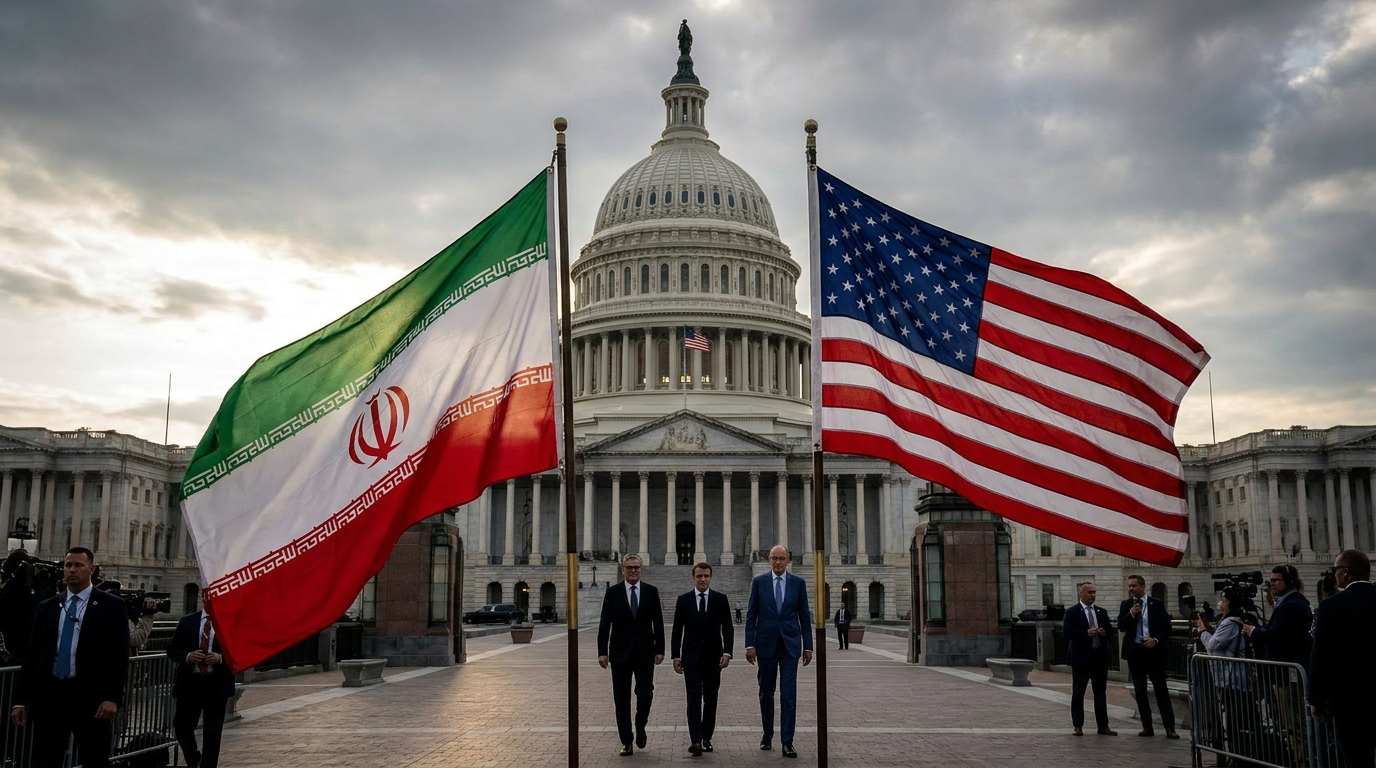
Just days after global markets breathed a collective sigh of relief over a framework peace agreement, the global economy's most critical maritime chokepoint is once again in jeopardy. On June 20, 2026, Iran reportedly moved to close the Strait of Hormuz, citing continued Israeli military operations in Lebanon as the catalyst for the renewed blockade. The sudden reversal threatens to unravel weeks of delicate diplomatic negotiations and immediately reignited fears of a devastating global energy shock. For the global economy, which had only just begun to price in a return to normalized trade flows, the whiplash serves as a stark reminder of the fragility of the current geopolitical landscape and the outsized influence this narrow waterway holds over global inflation and growth.[1]
The situation on the water remains highly volatile and shrouded in conflicting reports, creating a dense fog of uncertainty for global shipping conglomerates and energy markets. While Iran's joint military command officially announced the closure of the strait to commercial traffic, United States officials swiftly pushed back, denying that the waterway was entirely shut. This discrepancy has left maritime insurers and fleet operators scrambling to assess the true physical risk to their vessels. The lack of clarity regarding whether the strait is completely impassable or merely operating under severe restrictions has paralyzed decision-making in corporate boardrooms, as companies weigh the immense financial risks of sending billion-dollar cargoes into a contested military zone.[1][2]
Adding a layer of economic brinkmanship to the already volatile situation, former President Donald Trump warned that the United States might impose heavy tolls on vessels transiting the strait if the fragile peace negotiations collapse entirely. This unprecedented threat introduces a new variable into global supply chain calculus. If implemented, such tolls would fundamentally alter the economics of seaborne trade, effectively acting as a massive tax on global energy consumption. Shipping analysts warn that the cost of these tolls would inevitably be passed down the supply chain, ultimately hitting everyday consumers in the form of higher prices at the gas pump and increased costs for manufactured goods, further complicating the inflation fight for central banks worldwide.[2]
To understand the sheer scale of the economic threat, one must look at the staggering volume of trade that relies on the Strait of Hormuz. It is widely considered the single most consequential maritime chokepoint on earth, serving as the only sea passage from the Persian Gulf to the open ocean. Roughly 20 percent of all globally traded oil—amounting to more than 11 million barrels per day of crude and condensate—must pass through this narrow waterway between Iran and Oman. When this artery is severed, the global energy grid loses a volume of supply that cannot be easily replaced by strategic reserves or increased production from other regions, making the global economy uniquely vulnerable to disruptions in this specific geographic location.[5]

The economic stakes extend far beyond crude oil. The strait is also a critical, irreplaceable artery for natural gas and global agriculture. Approximately 80 million tonnes per annum of liquefied natural gas (LNG), representing roughly 20 percent of the entire global supply, relies on the route to reach buyers in Asia and Europe. Furthermore, the waterway facilitates the transport of massive quantities of urea and ammonia fertilizers, which are exported from Gulf nations and are absolutely essential for global food production. A sustained blockade threatens to trigger severe fertilizer shortages ahead of the Northern Hemisphere's planting season, which could severely depress crop yields and send global food prices spiraling upward in the coming years.[5][6]
The global economy is already deeply bruised from the strait's effective blockade earlier in 2026, providing a grim preview of what a renewed closure might entail. During the first 100 days of the initial conflict, the energy market experienced what analysts described as the largest supply disruption in history. Brent crude spiked to a staggering $138 per barrel, driving a massive surge in headline inflation across developed and emerging markets alike. This sudden energy shock forced central banks, including the Federal Reserve, to abruptly rethink their interest rate trajectories, abandoning planned rate cuts in favor of maintaining restrictive monetary policies to prevent the energy-driven inflation from becoming permanently embedded in the broader economy.[6]
The macroeconomic damage from that initial 100-day shock has already been quantified by major international financial institutions. The fallout forced the International Monetary Fund to downgrade its 2026 global growth forecast by 0.2 percentage points, warning of increased risks of debt distress in vulnerable nations. Similarly, the OECD projected that global GDP growth would slow significantly to 2.8 percent. Asian economies, which are highly dependent on seaborne crude and LNG imports from the Gulf, have been particularly exposed to the price shocks. Countries like South Korea, India, and Thailand faced surging power prices, widening budget deficits, and skyrocketing transport costs that severely strained everyday consumers and industrial sectors.[6]
The macroeconomic damage from that initial 100-day shock has already been quantified by major international financial institutions.
The immense economic pressure had briefly subsided in mid-June, offering a fleeting moment of optimism for global markets. Following the announcement of a comprehensive memorandum of understanding between the United States and Iran, energy prices experienced a dramatic relief rally. Brent crude tumbled from its crisis peaks down to $82 a barrel, while wholesale natural gas prices dropped by roughly 6 percent. Equity markets in Asia surged on the news, and policymakers expressed hope that the global economy might avoid the worst-case recessionary consequences that had been predicted during the darkest days of the blockade. For a few days, it appeared the crisis had been averted.[3][4]

However, energy analysts quickly warned that the mid-June price drop was almost entirely sentiment-driven, rather than a reflection of improved physical realities on the water. Markets were aggressively front-running the prospective reopening of the strait, pricing in a best-case scenario for the normalization of trade flows. In doing so, traders largely ignored the immense logistical hurdles and lingering geopolitical tensions that remained unresolved. The rapid sell-off of the geopolitical risk premium left the market highly vulnerable to exactly the kind of whiplash experienced on June 20, demonstrating how financial markets can often detach from the physical constraints of global supply chains during periods of intense diplomatic negotiation.[3]
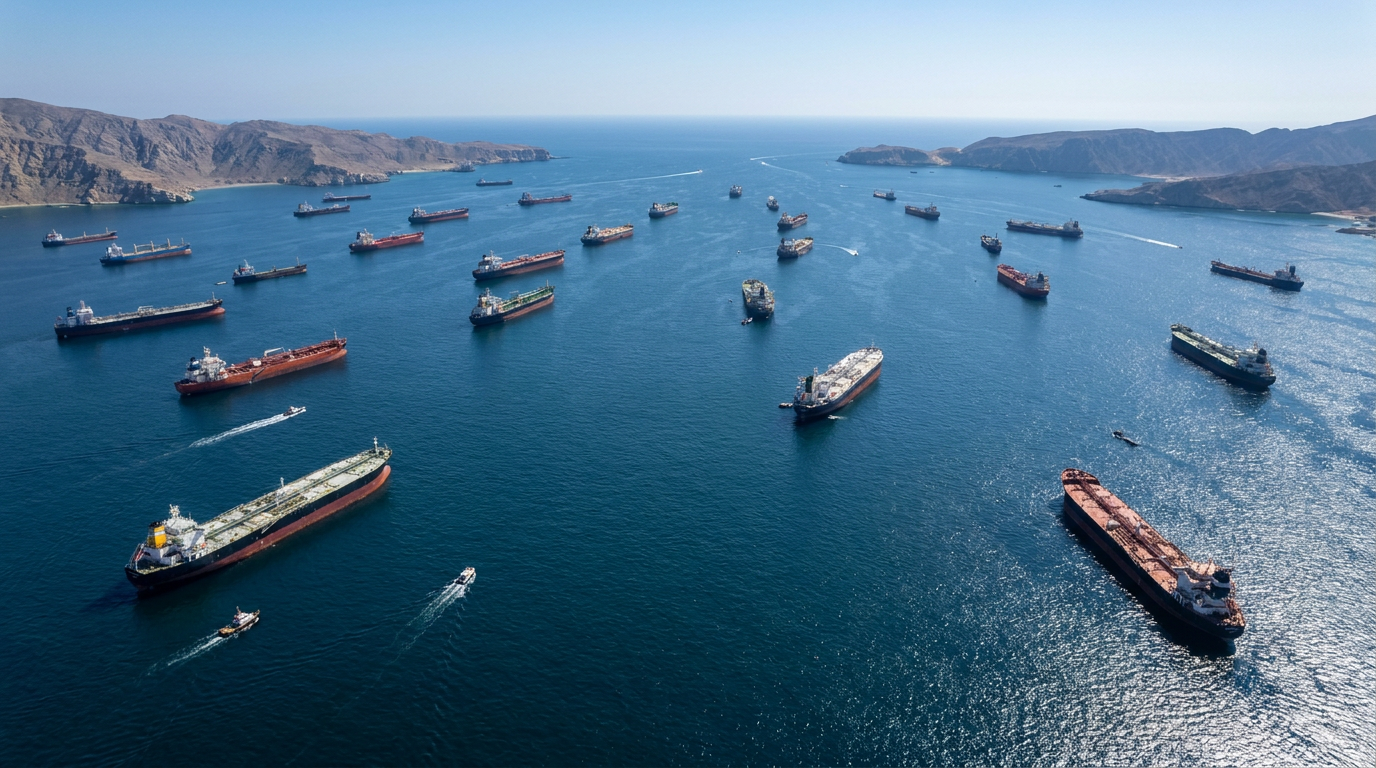
Even if a lasting ceasefire is ultimately achieved and the renewed closure proves temporary, the physical process of normalizing energy flows will take months to execute. The logistics sector faces a monumental backlog. An estimated 500 commercial vessels are currently stranded, waiting for safe passage to exit the Gulf. Furthermore, the delicate process of sweeping the maritime channel to ensure it is entirely free of naval mines is expected to take several weeks at a minimum. Shipping authorities caution that a return to full, pre-conflict traffic volumes is realistically a 2027 story, requiring sustained peace and a massive coordinated effort by international maritime coalitions.[3][4]
Adding to the upward pressure on prices, global buyers are expected to race to the market to refill heavily depleted emergency crude stockpiles as soon as the physical flow of oil resumes. During the blockade, nations tapped deeply into their strategic reserves to prevent domestic fuel shortages. The impending surge in demand to replenish these buffers is likely to keep oil prices elevated between $80 and $90 a barrel through the remainder of the year. This dynamic ensures that even under a peaceful resolution, consumers and businesses will not see a full return to the lower pre-war energy costs anytime soon, maintaining a baseline level of inflationary pressure.[4]
If the renewed closure holds and the fragile peace deal collapses into an "extended disruption" scenario, energy analysts warn the consequences for the global economy could be catastrophic. Under a prolonged blockade that stretches through the end of 2026, models indicate that Brent crude could approach an unprecedented $200 per barrel. This would occur despite a projected massive drop in global oil demand, as the sheer volume of shut-in production overwhelms any reduction in consumption. Such a price shock would likely trigger a severe global recession, destroying demand across multiple industrial sectors and forcing a painful, rapid contraction in global economic activity.[5]

The economic pain of an extended disruption would extend rapidly from unrefined crude to essential refined products. Analysts project that diesel and jet fuel prices could surge toward $300 per barrel in major global refining centers by the end of the year. This would effectively cripple global aviation and freight transport networks, exponentially increasing the cost of moving goods around the world. The resulting supply chain paralysis would mirror the worst days of the pandemic-era logistics crisis, but with the added burden of astronomical fuel costs, leading to widespread corporate bankruptcies in the transport sector and severe shortages of consumer goods.[5]
Interestingly, despite the massive disruption earlier in the year, oil prices did not reach the $150 to $300 worst-case predictions that were widely modeled before the conflict began. Understanding why the market absorbed the shock better than expected requires looking at how global trade adapts under extreme duress. The muted price action was partly due to the fact that oil futures markets price in anticipated future supply, not just current physical shortages. When diplomatic backchannels remained open, the market consistently priced in the probability of a resolution, preventing the kind of runaway panic buying that characterized the oil shocks of the 1970s.[7]
The other major factor preventing a catastrophic price spike was aggressive, immediate demand destruction and the rapid shifting of global trade flows. For instance, as prices rose, China slashed its inbound oil shipments by roughly 40 percent in May 2026 relative to the prior year. This massive contraction in demand from the world's largest energy importer was large enough to offset a significant portion of the barrels lost to the Hormuz disruption. This demonstrates a crucial economic mechanism: at a certain price point, major economies simply stop buying, creating a natural ceiling for commodity prices even during severe supply disruptions.[7]

The global economy now hangs delicately in the balance of the ongoing negotiations in Geneva and the military posturing in the Gulf. A quick resolution to the renewed tensions could limit the recessionary impact primarily to the Middle East, allowing global GDP to broadly return to its pre-conflict trajectory by the fourth quarter of 2026. This optimistic path relies entirely on the immediate lifting of the blockade and the successful navigation of the logistical backlog, allowing central banks to finally pivot away from crisis-management mode and focus on engineering a soft landing for the global economy.[5]
Conversely, a sustained closure through the summer and into the fall would likely trigger a shallow global recession in the second half of 2026. This scenario would embed higher inflation into the global economy for years to come, forcing businesses to permanently and expensively restructure their supply chains away from the Persian Gulf. The era of relying on a single, vulnerable maritime chokepoint for a fifth of the world's energy may be coming to an end, accelerating investments in clean technology and alternative trade routes, but exacting a massive economic toll in the transition.[5]
How we got here
Early 2026
The Strait of Hormuz is effectively blockaded amid regional conflict, sending Brent crude to $138 per barrel.
April 2026
The IMF downgrades its global growth forecast by 0.2 percentage points due to the energy shock.
June 15, 2026
A framework peace deal is announced, causing oil prices to tumble to $82 a barrel.
June 20, 2026
Iran reportedly closes the strait again, and the U.S. threatens tolls, throwing the peace deal into doubt.
Viewpoints in depth
Energy Markets & Traders
Focused on sentiment and the rapid pricing of best-case scenarios.
Commodity markets are highly forward-looking, often pricing in the anticipation of future supply rather than current physical shortages. When the U.S.-Iran memorandum of understanding was announced, traders aggressively sold off the geopolitical risk premium, driving crude down to $82 a barrel. This camp argues that as long as diplomatic resolution appears credible, prices will remain capped, even if the physical waterway experiences temporary disruptions.
Shipping & Logistics Industry
Focused on the physical reality of maritime bottlenecks and supply chain recovery.
For maritime operators, diplomatic signatures mean little until the water is safe. The logistics sector emphasizes that clearing the estimated 500 stranded vessels and sweeping the channel for naval mines will take weeks, if not months. They argue that the market is severely underestimating the friction of restarting aging oilfields and normalizing global energy flows, warning that a return to pre-conflict traffic volume is realistically a 2027 story.
Global Macroeconomists
Focused on the long-term structural damage to global growth and inflation.
Economists view the Hormuz disruption not just as an energy crisis, but as a broad macroeconomic shock. The blockade has already forced the IMF to downgrade global growth forecasts and pushed food prices to a three-year high due to fertilizer supply chain disruptions. This camp warns that even a 'quick peace' will leave lasting scars, as businesses permanently restructure supply chains away from the Gulf and central banks maintain higher interest rates to combat embedded inflation.
What we don't know
- Whether the strait is currently fully impassable or if commercial vessels are still transiting under severe restrictions.
- How long it will take to clear the estimated 500 stranded vessels and sweep the channel for naval mines once peace is secured.
- If the U.S. will follow through on threats to impose transit tolls if the peace negotiations collapse.
Key terms
- Strait of Hormuz
- A narrow waterway between Iran and Oman that serves as the only sea passage from the Persian Gulf to the open ocean.
- Brent Crude
- The primary pricing benchmark for crude oil worldwide, used to price two-thirds of the world's internationally traded crude oil supplies.
- LNG (Liquefied Natural Gas)
- Natural gas that has been cooled to a liquid state for easier and safer storage and transport, crucial for global energy grids.
- Demand Destruction
- A permanent or long-term downward shift on the demand curve for a commodity, often triggered by a sustained period of high prices.
Frequently asked
Why is the Strait of Hormuz so important to the economy?
It is the world's most critical energy chokepoint, handling roughly 20% of globally traded oil and 20% of global liquefied natural gas (LNG) supply.
How did the closure affect oil prices?
During the initial 100-day blockade in early 2026, Brent crude peaked at $138 per barrel. Prices briefly fell to $82 after a peace deal was announced, but remain highly volatile.
What happens if the peace deal fails?
Energy analysts warn that an extended disruption could push oil prices toward $200 per barrel by the end of 2026, potentially triggering a global recession.
Why haven't prices gone even higher?
A combination of demand destruction—such as China reducing oil imports—and market expectations of a swift resolution have kept prices below worst-case scenario models.
Sources
Source coverage
7 outlets
3 viewpoints surfaced







[1]CNBCGlobal Macroeconomists
Iran reportedly closes Strait of Hormuz again, casting shadow over nuclear talks
Read on CNBC →[2]ForbesShipping & Logistics Industry
Trump Says U.S. May Impose Tolls In Strait Of Hormuz If Peace Deal Fails
Read on Forbes →[3]Al JazeeraEnergy Markets & Traders
Brent crude drops to lowest price since early March before signing of framework deal to end US-Israel war on Iran
Read on Al Jazeera →[4]The GuardianShipping & Logistics Industry
Markets welcome US-Iran peace deal but prices may stay high as buyers race to refill depleted emergency crude stockpiles
Read on The Guardian →[5]Wood MackenzieGlobal Macroeconomists
Strait Talking: Iran War Scenarios and the Future of Energy
Read on Wood Mackenzie →[6]Zero Carbon AnalyticsGlobal Macroeconomists
Fallout from the war is slowing global economic growth
Read on Zero Carbon Analytics →[7]Discovery AlertEnergy Markets & Traders
Understanding why oil prices are below $100 after the Strait of Hormuz closure
Read on Discovery Alert →

Every angle. Every day.
Get business stories with full source coverage and perspective breakdowns delivered to your inbox.