
The Constitutional Collision Over AI: Federal Deregulation Meets State-Level Crackdowns
The US regulatory landscape for artificial intelligence has fractured into a high-stakes legal battle, with the federal government suing to preempt a record wave of state-level AI safety and bias laws.
By Factlen Editorial Team
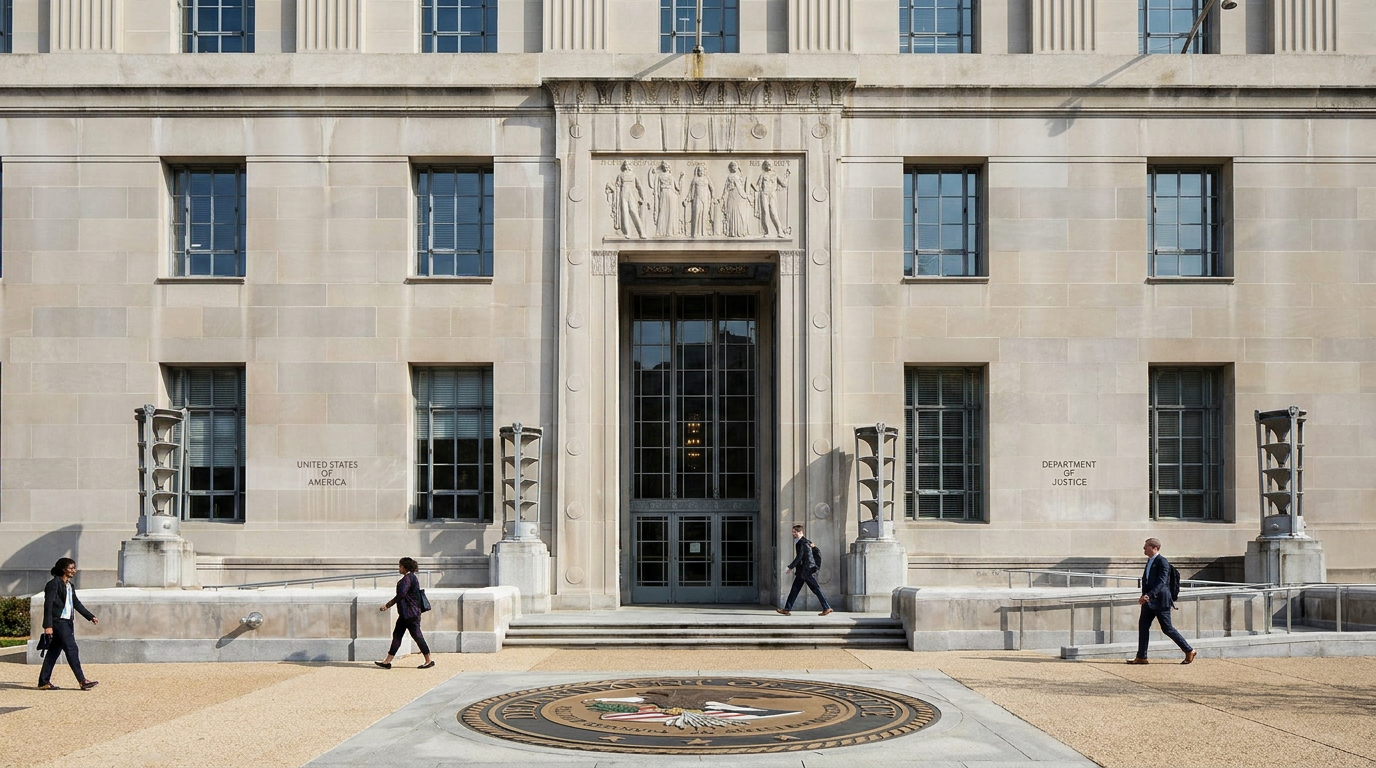
- Federal Deregulators
- Argue that a fragmented patchwork of state laws harms US competitiveness and that AI should be governed by a minimally burdensome national standard.
- State Consumer Protectors
- Maintain that in the absence of federal consumer protections, states must regulate automated decision-making and deepfakes to prevent algorithmic harm.
- Frontier AI Developers
- Advocate for targeted, binding federal safety testing for catastrophic risks, rather than broad deregulation or fragmented state laws.
- Enterprise Deployers
- Focused on the legal and operational risks of navigating conflicting federal and state mandates regarding AI bias and transparency.
What's not represented
- · Civil rights organizations advocating for algorithmic fairness
- · Open-source AI developers affected by state liability laws
Why this matters
This jurisdictional war dictates the future of American tech compliance. If the federal government successfully preempts state laws, companies will face a permissive, deregulated national market; if states win, enterprises must navigate fifty different sets of algorithmic bias and consumer protection rules.
Key points
- The DOJ has launched an AI Litigation Task Force to challenge state AI laws in federal court.
- The White House's March 2026 framework demands states stop regulating AI development and developer liability.
- States introduced over 1,500 AI bills by early 2026, focusing heavily on automated decision-making and deepfakes.
- Enterprise deployers face a compliance paradox, caught between state mandates and federal preemption.
- Some frontier AI developers are paradoxically calling for stricter, binding federal safety testing.
The defining dynamic of United States artificial intelligence policy in mid-2026 is a constitutional collision. Rather than coalescing around a unified national strategy, the regulatory landscape has fractured into a high-stakes legal war between a deregulatory federal executive branch and hyper-active state legislatures.[7]
At the center of this dispute is the White House's March 2026 "National Policy Framework for Artificial Intelligence" and the Department of Justice's newly formed AI Litigation Task Force. The federal government has initiated an unprecedented campaign to dismantle state-level AI protections, arguing that a fragmented regulatory environment threatens American technological dominance.[1][2][4]
This clash represents a fundamental test of federalism in the digital age. The current political administration is deploying executive orders and courtroom strategies to preempt local laws, while states continue to pass sweeping regulations targeting algorithmic bias, deepfakes, and automated decision-making.[2][7]
The primary federal claim is that a state-by-state patchwork of AI laws imposes an unconstitutional burden on interstate commerce and stifles innovation. The White House framework explicitly calls on Congress to enact a "minimally burdensome national standard" and to preempt state laws that dictate AI development or developer liability.[1][2][4]
Evidence of this regulatory fragmentation is robust and accelerating. By March 2026, 45 states had introduced a staggering 1,561 distinct AI-related bills, completely eclipsing the legislative volume seen in previous years. Federal officials argue that compliance with fifty discordant frameworks is impossible for domestic tech companies.[1][2]

To combat this, Executive Order 14365, signed in late 2025, activated the federal enforcement machinery. The DOJ's AI Litigation Task Force, launched in January 2026, is actively contesting state laws in open court using constitutional preemption theories, marking a shift from paper threats to active litigation.[2][3]
The White House framework specifically demands that states refrain from governing three core areas: the fundamental development of AI models, the use of AI for activities that would otherwise be lawful, and the liability of AI developers for unlawful third-party conduct involving their systems.[4]
Conversely, state lawmakers claim that federal inaction and aggressive deregulation necessitate urgent local intervention. State attorneys general and legislators argue that the lack of a comprehensive federal AI statute leaves citizens entirely vulnerable to algorithmic discrimination, privacy violations, and synthetic media.[3][5][7]
The evidence for the state-level push lies in the aggressive rollout of laws targeting Automated Decision-Making Technologies (ADMT). These are AI systems used in high-impact, consequential areas such as housing approvals, employment screening, and healthcare diagnostics, where algorithmic bias can cause immediate material harm.[3]
The evidence for the state-level push lies in the aggressive rollout of laws targeting Automated Decision-Making Technologies (ADMT).
Colorado recently passed SB 26-189, repealing and replacing its 2024 AI Act with an entirely new, stringent regulatory regime focused on ADMT. Simultaneously, the California Privacy Protection Agency expanded its regulations, requiring businesses to complete exhaustive privacy impact assessments before deploying ADMT and mandating a 15-day response window for consumer opt-out requests.[3]

Other states are targeting highly specific algorithmic harms that the federal framework ignores. Illinois enacted the Wellness and Oversight for Psychological Resources Act, banning AI systems from making independent therapeutic decisions, while New York mandated strict disclosures for the use of synthetic performers in advertising.[3][5]
Legal analysts warn that this federal preemption strategy creates an impossible compliance paradox for enterprise deployers. Businesses integrating AI into their operations are caught in a jurisdictional crossfire, forced to choose between violating state consumer protection laws or running afoul of federal deregulatory mandates.[2][7]
For example, a state may legally require an organization to actively mitigate algorithmic bias in its hiring software. However, new federal postures, including reversed stances by the Federal Trade Commission, increasingly brand that same bias mitigation effort as deceptive or an infringement on free expression.[2]
To counter this federal trend, states are digging in. Illinois recently passed legislation explicitly banning any effort to displace disparate impact analysis from its state anti-discrimination laws, highlighting the direct, intentional legislative combat between the two levels of government.[2]

Complicating the narrative is the stance of frontier AI developers. While the federal government pushes broad deregulation under the guise of protecting the industry, some leading AI executives are paradoxically asking for stricter, binding federal oversight.[6][7]
Anthropic CEO Dario Amodei published a highly influential framework in 2026 arguing that the industry must move beyond the basic transparency laws passed in 2025. Amodei contends that the catastrophic risks associated with frontier models are now clear enough to warrant serious, binding regulation at the federal level.[6]
Amodei's proposal calls for mandatory third-party testing for specific, high-consequence threats: cybersecurity vulnerabilities, biological weapons capabilities, and the loss of control over autonomous AI systems. He suggests that a specialized government agency should have the power to block the deployment of models that fail these critical safety audits.[6]

This developer-led push for targeted safety regulation sharply contrasts with the White House's blanket deregulatory approach, suggesting that the industry itself recognizes the need for a baseline of federal safety standards to maintain public trust and prevent catastrophic failures.[6][7]
The ultimate resolution of this regulatory civil war rests with the federal judiciary. The DOJ's preemption arguments against state AI laws remain largely untested in open court, and legal scholars are deeply divided on whether the Commerce Clause can legitimately invalidate state-level algorithmic bias and privacy protections.[2][7]
Until the Supreme Court issues a definitive ruling or Congress manages to pass a unifying, comprehensive AI statute, the landscape will remain volatile. Enterprise deployers and AI developers must navigate a treacherous legal environment where compliance with state law may invite federal litigation, and adherence to federal guidelines may result in state-level sanctions.[2][3][4][7]
How we got here
December 2025
The White House issues Executive Order 14365, directing agencies to challenge onerous state AI laws.
January 2026
The Department of Justice launches its AI Litigation Task Force to contest state regulations in court.
March 2026
The White House releases the National Policy Framework for AI, explicitly calling for the preemption of state laws.
May 2026
Colorado passes SB 26-189, overhauling its AI regulatory regime in direct defiance of federal deregulatory pressure.
Viewpoints in depth
Federal Deregulators
Argue that a fragmented patchwork of state laws harms US competitiveness.
The federal executive branch, led by the White House and the DOJ, views state-level AI regulation as an existential threat to American technological dominance. They argue that forcing domestic AI developers to comply with fifty different sets of rules regarding bias, transparency, and liability creates an unconstitutional burden on interstate commerce. Their strategy relies on aggressive litigation to preempt these laws, pushing instead for a 'minimally burdensome' national standard that prioritizes rapid innovation and deployment over preemptive safety constraints.
State Consumer Protectors
Maintain that states must regulate automated decision-making to prevent algorithmic harm.
State attorneys general and legislators argue they are stepping into a dangerous regulatory vacuum left by federal inaction. From their perspective, AI systems are already making highly consequential decisions about citizens' housing, employment, and healthcare. Without robust state laws like Colorado's SB 26-189 or California's ADMT regulations, consumers have no recourse against algorithmic discrimination or the proliferation of deepfakes. They view the federal preemption push not as a defense of innovation, but as a corporate shield against accountability.
Frontier AI Developers
Advocate for targeted, binding federal safety testing for catastrophic risks.
Leading AI labs, such as Anthropic, occupy a unique middle ground. While they generally oppose fragmented state-by-state liability laws, they also reject the federal government's blanket deregulatory stance. Executives like Dario Amodei argue that the sheer power of frontier models necessitates mandatory, third-party federal testing for extreme risks like biological weapons creation and cybersecurity breaches. They are actively lobbying for a specialized federal agency with the authority to block the deployment of models that fail these critical safety audits.
What we don't know
- How the Supreme Court will ultimately rule on the constitutionality of federal preemption regarding state AI laws.
- Whether Congress will intervene to pass a unifying federal AI statute that resolves the jurisdictional conflict.
- How enterprise companies will practically manage compliance when state and federal mandates directly contradict each other.
Key terms
- Preemption
- A legal doctrine where federal law supersedes and invalidates conflicting state laws.
- Automated Decision-Making Technologies (ADMT)
- AI systems used to automate or significantly influence consequential decisions in areas like employment, finance, and healthcare.
- Frontier Models
- The most advanced, highly capable AI systems that push the boundaries of current technology and require massive computational resources.
- Disparate Impact
- A legal theory of discrimination where a policy or algorithm disproportionately harms a protected group, even if there was no intentional bias.
Frequently asked
Why is the federal government suing states over AI laws?
The Department of Justice argues that state AI regulations create an 'onerous' patchwork that violates the Commerce Clause and harms US global competitiveness.
What are Automated Decision-Making Technologies (ADMT)?
ADMT refers to AI systems used to make or significantly influence consequential decisions about individuals, such as hiring, loan approvals, and housing applications.
What is the White House National Policy Framework for AI?
Released in March 2026, it is a federal strategy that pushes for deregulation, preempts state AI laws, and asks Congress to establish a uniform, minimally burdensome national standard.
Are AI developers against all regulation?
No. Some leading developers, like Anthropic, are actively calling for binding federal regulation and mandatory third-party testing specifically for catastrophic risks like biological weapons and cybersecurity.
Sources
Source coverage
7 outlets
4 viewpoints surfaced







[1]The White HouseFederal Deregulators
National Policy Framework for Artificial Intelligence
Read on The White House →[2]Epstein Becker GreenEnterprise Deployers
How Is U.S. AI Regulation Evolving? What Should Businesses Be Paying Attention To?
Read on Epstein Becker Green →[3]JD SupraState Consumer Protectors
U.S. AI Regulation, Enforcement, and Litigation: Mid-2026 Update
Read on JD Supra →[4]Center for Security and Emerging TechnologyFederal Deregulators
Unpacking the White House National Policy Framework for AI
Read on Center for Security and Emerging Technology →[5]Transparency CoalitionState Consumer Protectors
State AI Legislation Tracker: June 2026
Read on Transparency Coalition →[6]AnthropicFrontier AI Developers
Moving Beyond Transparency to Binding AI Regulation
Read on Anthropic →[7]Factlen Editorial TeamEnterprise Deployers
Synthesis by Factlen editorial team
Read on Factlen Editorial Team →

Every angle. Every day.
Get ai stories with full source coverage and perspective breakdowns delivered to your inbox.