
The Science of Hydroxyapatite: How a NASA-Pioneered Mineral is Challenging Fluoride's 70-Year Reign
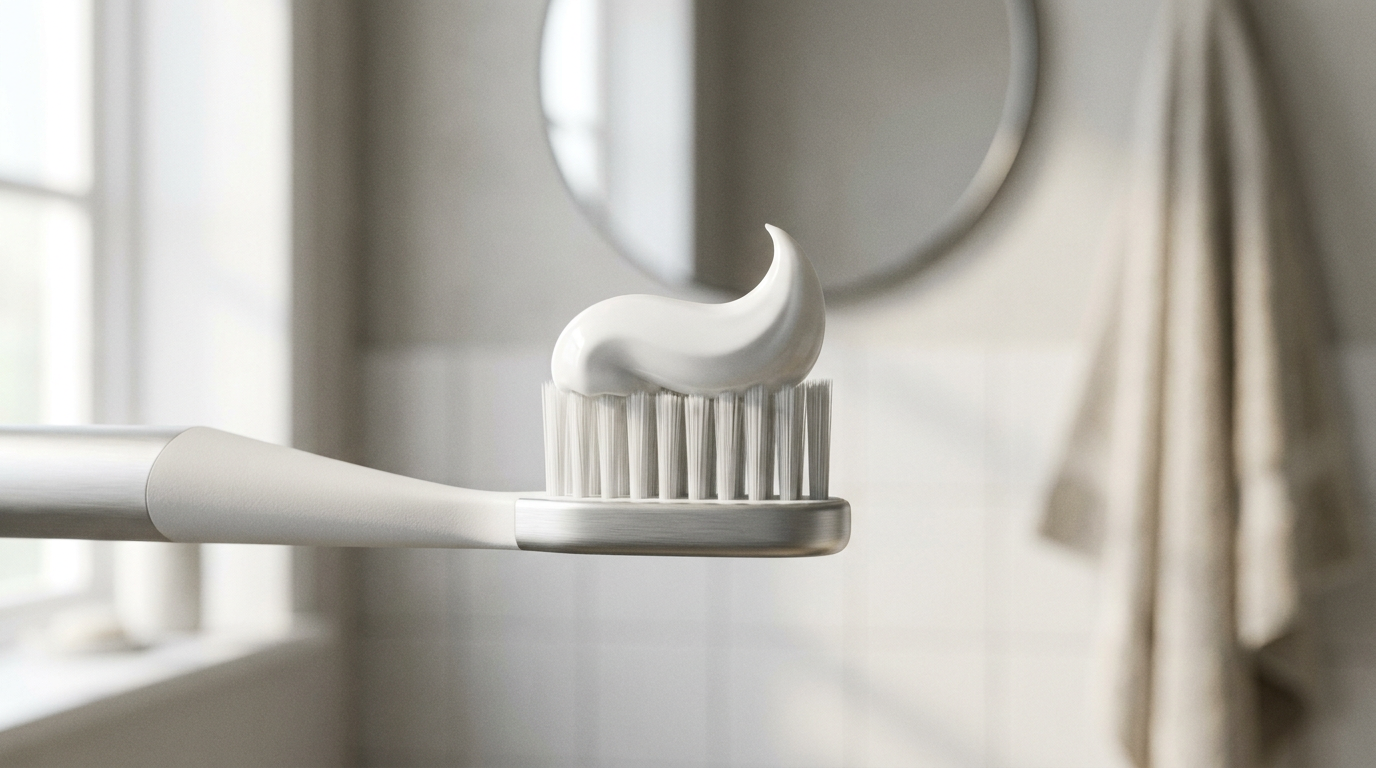
Hydroxyapatite, the exact mineral that naturally makes up human teeth, is emerging as the first scientifically validated, non-toxic alternative to fluoride for cavity prevention and enamel repair.
By Factlen Editorial Team
- Biomimetic Advocates
- Argue that repairing teeth with their natural mineral building blocks is a safer, highly effective alternative to chemical treatments.
- Clinical Researchers
- Focus on empirical trial data demonstrating that hydroxyapatite achieves statistically equivalent remineralization rates to fluoride.
- Traditional Dental Establishment
- Maintain that fluoride remains the gold standard for cavity prevention due to seven decades of population-level efficacy data.
- Regulatory Watchdogs
- Monitor the safety of engineered nanoparticles, ensuring that only biocompatible, rod-shaped structures are approved for consumer use.
What's not represented
- · Dental Insurance Providers
- · Water Fluoridation Advocates
Why this matters
For decades, consumers seeking fluoride-free toothpaste had to settle for products that cleaned teeth but offered no active cavity protection. The clinical validation of hydroxyapatite means there is now a highly effective, non-toxic alternative that safely rebuilds enamel—a breakthrough for young children, people with severe tooth sensitivity, and those seeking biocompatible health solutions.
Key points
- Hydroxyapatite is the natural mineral that makes up 97% of human tooth enamel.
- Clinical trials show it is statistically equivalent to fluoride in remineralizing early cavities.
- Unlike fluoride, hydroxyapatite physically rebuilds the tooth rather than chemically altering it.
- It is highly effective at reducing tooth sensitivity by plugging exposed dentinal tubules.
- Because it is non-toxic, it poses no risk of dental fluorosis if swallowed by children.
For more than seven decades, a single mineral has reigned supreme in the world of oral care. Fluoride, introduced into water supplies in the 1940s and toothpastes in the 1950s, is widely considered one of the greatest public health achievements of the twentieth century. It drastically reduced global cavity rates and became the undisputed gold standard for dental professionals worldwide.
But a quiet revolution is currently taking place in the toothpaste aisle. A compound called hydroxyapatite—the exact mineral that naturally makes up human teeth and bones—is emerging as the first scientifically validated, highly effective alternative to fluoride.
The rise of hydroxyapatite represents a broader shift toward "biomimetic" dentistry. Rather than introducing foreign chemicals to alter the tooth's structure, biomimetics seeks to repair the body using its own natural building blocks, offering a seamless integration with human biology.
To understand how hydroxyapatite works, it helps to understand what it is. Human tooth enamel is the hardest substance in the body, and it is composed of roughly 97 percent hydroxyapatite, a complex crystalline structure of calcium and phosphate.
The synthetic version of this mineral was actually pioneered by NASA in the 1970s. Astronauts returning from zero-gravity environments were experiencing significant losses of bone and tooth density. NASA developed synthetic hydroxyapatite to help restore their skeletal and dental mass. In the 1980s, a Japanese company acquired the patent and launched the first commercial hydroxyapatite toothpaste, though it has only recently gained global traction.[4][5]
The mechanisms of fluoride and hydroxyapatite are fundamentally different. When you brush with fluoride, the chemical reacts with the natural hydroxyapatite in your teeth to form a new compound called fluorapatite. This new layer is highly resistant to the acidic byproducts of oral bacteria, effectively shielding the tooth from decay.

Hydroxyapatite, on the other hand, takes a direct replacement approach. Because it is chemically identical to the tooth's natural structure, the microscopic particles physically bind to the enamel. They fill in microscopic fissures, scratches, and early areas of decay, literally rebuilding the tooth from the outside in.
For years, the dental establishment viewed fluoride-free toothpastes with deep skepticism, often dismissing them as ineffective cosmetic products. However, a wave of recent, rigorous clinical trials has forced a widespread reevaluation of that stance.
For years, the dental establishment viewed fluoride-free toothpastes with deep skepticism, often dismissing them as ineffective cosmetic products.
A landmark double-blind study published in the British Dental Journal compared a 10 percent hydroxyapatite toothpaste to a standard 500 ppm fluoride toothpaste in children. The researchers found no statistically significant difference in remineralization rates or lesion depth reduction. The hydroxyapatite was officially deemed "non-inferior" to fluoride.[1]
This was followed by an 18-month randomized clinical trial published in Frontiers in Public Health, which tracked adult patients. Once again, the hydroxyapatite toothpaste proved statistically equivalent to a standard 1,450 ppm fluoride toothpaste in preventing new cavities, proving its efficacy across all age groups.[2]

Beyond cavity prevention, hydroxyapatite has shown remarkable efficacy in treating dentinal hypersensitivity. Sensitivity occurs when the protective enamel wears away, exposing microscopic channels in the underlying dentin that lead directly to the tooth's nerve.
Traditional sensitivity toothpastes often use potassium nitrate to numb the nerve, or stannous fluoride to partially block the channels. Nano-hydroxyapatite particles, because of their minuscule size, penetrate deeply into these dentinal tubules and physically plug them with natural mineral crystals, offering rapid and long-lasting relief.[3][4]
The safety profile of hydroxyapatite is one of its most compelling advantages, particularly for pediatric dentistry. Young children frequently swallow toothpaste, and excessive ingestion of fluoride during tooth development can lead to dental fluorosis—a cosmetic condition that causes white spots or streaking on the enamel.[3][4]
Because hydroxyapatite is a naturally occurring biomaterial, it is completely non-toxic. If swallowed, it simply dissolves in the stomach's acidic environment, breaking down into basic calcium and phosphate that the body naturally processes. This makes it an ideal solution for toddlers and individuals with fluoride allergies or systemic health concerns.

However, the transition to hydroxyapatite has not been without regulatory friction. In the United States, the Food and Drug Administration (FDA) currently only recognizes three specific forms of fluoride as active anti-cavity ingredients. As a result, hydroxyapatite toothpastes cannot legally print "anti-cavity" on their labels in the U.S., even if clinical trials support the claim.[6]
There has also been debate regarding the "nano" in nano-hydroxyapatite. To be effective, the particles must be small enough to integrate into the enamel. But engineered nanoparticles behave differently in the body than larger compounds, prompting regulatory scrutiny.
In 2023, the European Commission's Scientific Committee on Consumer Safety (SCCS) conducted a rigorous review of nano-hydroxyapatite. They concluded that rod-shaped nanoparticles are entirely safe for use in oral care products at concentrations up to 10 percent. However, they advised against needle-shaped nanoparticles due to potential cellular toxicity concerns. Reputable dental brands exclusively use the safe, rod-shaped variant.[8]
Despite the promising data, traditional public health officials and organizations like the American Dental Association continue to champion fluoride as the undisputed gold standard. Their argument is rooted in scale: fluoride has over 70 years of population-level data proving its efficacy, cost-effectiveness, and safety when used correctly.[3][6]
For now, consumers are left to weigh the options. Fluoride remains the most heavily researched, widely available, and affordable defense against tooth decay. But for those seeking a biocompatible alternative, struggling with severe sensitivity, or managing the brushing habits of a toddler, hydroxyapatite is no longer just a holistic trend—it is a clinically validated science.[7]
How we got here
1970s
NASA develops synthetic hydroxyapatite to help astronauts restore bone and tooth density lost during zero-gravity space missions.
1980
Japanese company Sangi Co. acquires the patent and launches the world's first commercial hydroxyapatite toothpaste.
2019
The British Dental Journal publishes a landmark trial proving 10% hydroxyapatite is 'non-inferior' to fluoride in remineralizing early cavities.
2023
The European Commission's SCCS officially rules that rod-shaped nano-hydroxyapatite is safe for consumer oral care products.
Viewpoints in depth
Biomimetic Dentistry Advocates
Proponents argue that repairing teeth with their natural mineral building blocks is a safer, highly effective alternative to chemical treatments.
Advocates for biomimetic dentistry view hydroxyapatite as a paradigm shift in oral care. Rather than relying on fluoride to chemically convert the tooth surface into a synthetic, acid-resistant shield, they argue it is biologically superior to supply the tooth with the exact calcium and phosphate crystals it naturally loses every day. This camp heavily emphasizes the safety profile of the mineral, pointing out that the elimination of fluorosis risk makes it the definitive choice for pediatric dentistry and holistic health.
Traditional Dental Establishment
Mainstream dental organizations maintain that fluoride remains the gold standard for cavity prevention due to seven decades of population-level efficacy data.
While acknowledging the promising clinical trials surrounding hydroxyapatite, traditional public health officials and organizations like the ADA are hesitant to dethrone fluoride. They argue that fluoride's track record is unmatched in modern medicine, with over 70 years of longitudinal data proving its cost-effectiveness and ability to reduce decay on a massive, population-wide scale. From this perspective, while hydroxyapatite is a welcome addition to the dental toolkit, it lacks the decades of generational proof required to become the primary recommendation.
Regulatory & Safety Watchdogs
Health regulators monitor the safety of engineered nanoparticles, ensuring that only biocompatible structures are approved for consumer use.
Regulatory bodies like the European Commission's SCCS take a cautious approach to the 'nano' aspect of nano-hydroxyapatite. Because nanoparticles are small enough to penetrate cell membranes, regulators differentiate strictly based on particle morphology. They have cleared rod-shaped nanoparticles as entirely safe for oral care, as they mimic the body's natural structures, but have raised red flags regarding needle-shaped particles, demanding strict manufacturing oversight to protect consumer health.
What we don't know
- Whether long-term, population-level data over several decades will match the cavity-reduction rates achieved by community water fluoridation.
- If the FDA will eventually update its monographs to allow hydroxyapatite products to carry official 'anti-cavity' labeling in the United States.
Key terms
- Hydroxyapatite
- A naturally occurring crystalline mineral made of calcium and phosphate that forms the primary structure of human bones and teeth.
- Biomimetics
- The practice of creating materials or processes that mimic biological entities and natural mechanisms found in the human body.
- Remineralization
- The natural repair process where essential minerals like calcium and phosphate are deposited back into the tooth enamel to reverse early decay.
- Dentinal Tubules
- Microscopic channels in the tooth's underlying dentin layer that, when exposed, allow hot and cold stimuli to reach the nerve and cause pain.
- Fluorosis
- A cosmetic condition causing white spots or streaks on teeth, resulting from the overconsumption of fluoride during childhood tooth development.
Frequently asked
Can I use both fluoride and hydroxyapatite?
Yes. Many dental professionals recommend using them together, as they work through different mechanisms. Some modern toothpastes now formulate both ingredients into a single product for dual protection.
Is nano-hydroxyapatite safe to swallow?
Yes. Because it is a naturally occurring biomaterial, it dissolves harmlessly in stomach acid into basic calcium and phosphate, making it exceptionally safe for children who swallow toothpaste.
Why doesn't my hydroxyapatite toothpaste say 'anti-cavity'?
In the United States, the FDA currently only recognizes specific forms of fluoride as official 'anti-cavity' active ingredients. Hydroxyapatite products cannot legally use that specific phrase on U.S. packaging, despite clinical trials supporting their efficacy.
Does hydroxyapatite help with sensitive teeth?
Yes. The microscopic particles physically plug the exposed dentinal tubules that lead to the tooth's nerve, providing rapid and long-lasting relief from hot and cold sensitivity.
Sources
Source coverage
8 outlets
4 viewpoints surfaced








[1]British Dental JournalClinical Researchers
Comparative efficacy of a hydroxyapatite and a fluoride toothpaste for prevention and remineralization of dental caries in children
Read on British Dental Journal →[2]Frontiers in Public HealthClinical Researchers
Caries-preventing effect of a hydroxyapatite-toothpaste in adults: a 18-month double-blinded randomized clinical trial
Read on Frontiers in Public Health →[3]WebMDTraditional Dental Establishment
Hydroxyapatite Toothpaste: Benefits and Safety Considerations
Read on WebMD →[4]GoodRx HealthBiomimetic Advocates
Hydroxyapatite Toothpaste vs. Fluoride: Which Is Better for Your Teeth?
Read on GoodRx Health →[5]Dental TribuneBiomimetic Advocates
Toothpaste with hydroxyapatite provides promising results, study shows
Read on Dental Tribune →[6]Today's RDHTraditional Dental Establishment
Nano-Hydroxyapatite Varnish: Does Research Support Caries Prevention Efficacy and Safety?
Read on Today's RDH →[7]Factlen Editorial TeamBiomimetic Advocates
Synthesis by Factlen editorial team
Read on Factlen Editorial Team →[8]European Commission SCCSRegulatory Watchdogs
Opinion on Hydroxyapatite (nano)
Read on European Commission SCCS →

Every angle. Every day.
Get health stories with full source coverage and perspective breakdowns delivered to your inbox.