
Vance and Iranian Delegation Open Nuclear Talks in Switzerland Amid Strait of Hormuz Threats
Vice President JD Vance has arrived in Switzerland for the first direct U.S.-Iran nuclear negotiations since April, launching a 60-day diplomatic window. The high-stakes talks occur as Iran threatens to close the Strait of Hormuz in response to Israeli strikes in Lebanon, while Donald Trump suggests the U.S. could eventually impose tolls on the critical waterway.
By Factlen Editorial Team
- U.S. Administration & Diplomats
- Focuses on utilizing the 60-day negotiation window to de-escalate the conflict and secure nuclear concessions.
- Iranian Leadership
- Leverages control over the Strait of Hormuz to pressure the U.S. and Israel, framing actions as responses to Israeli strikes.
- Global Energy Markets
- Deeply concerned about the potential closure of the Strait of Hormuz, which would strand massive volumes of global energy.
- U.S. Conservative Opposition
- Emphasizes aggressive posturing and leveraging U.S. power to control maritime chokepoints rather than ceding leverage to Iran.
What's not represented
- · European Energy Consumers
- · Omani Government Officials
Why this matters
The Strait of Hormuz is the world's most critical energy chokepoint, handling a quarter of global seaborne oil and a fifth of liquefied natural gas. The success or failure of these talks will directly dictate global energy prices, inflation rates, and the trajectory of the broader Middle East conflict.
Key points
- Vice President JD Vance has arrived in Switzerland to launch a 60-day window of direct nuclear negotiations with Iran.
- The talks are overshadowed by Iran's threat to close the Strait of Hormuz in retaliation for Israeli strikes in Lebanon.
- The Strait of Hormuz is a critical chokepoint, handling 25% of global seaborne oil and 20% of liquefied natural gas.
- Former President Donald Trump suggested the U.S. might eventually impose its own tolls on the strait under a new memorandum of understanding.
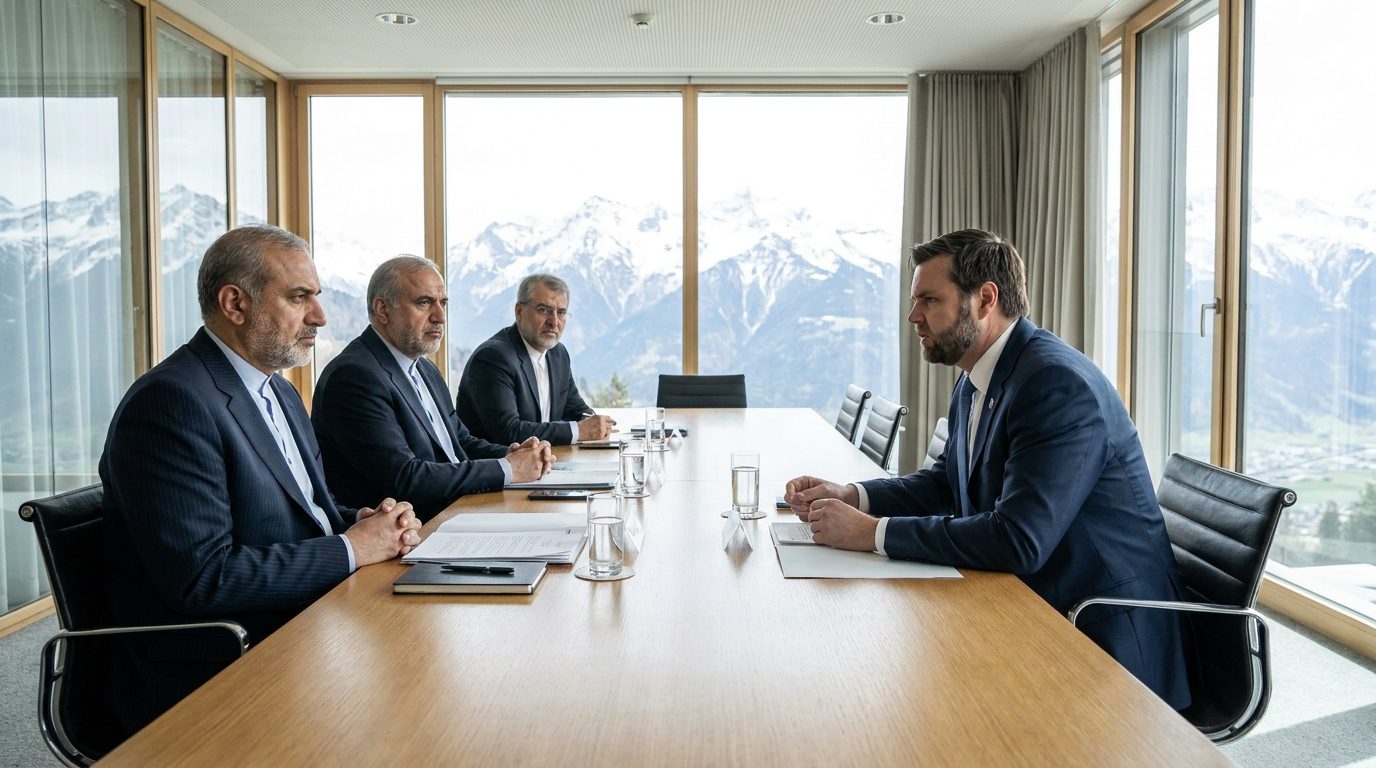
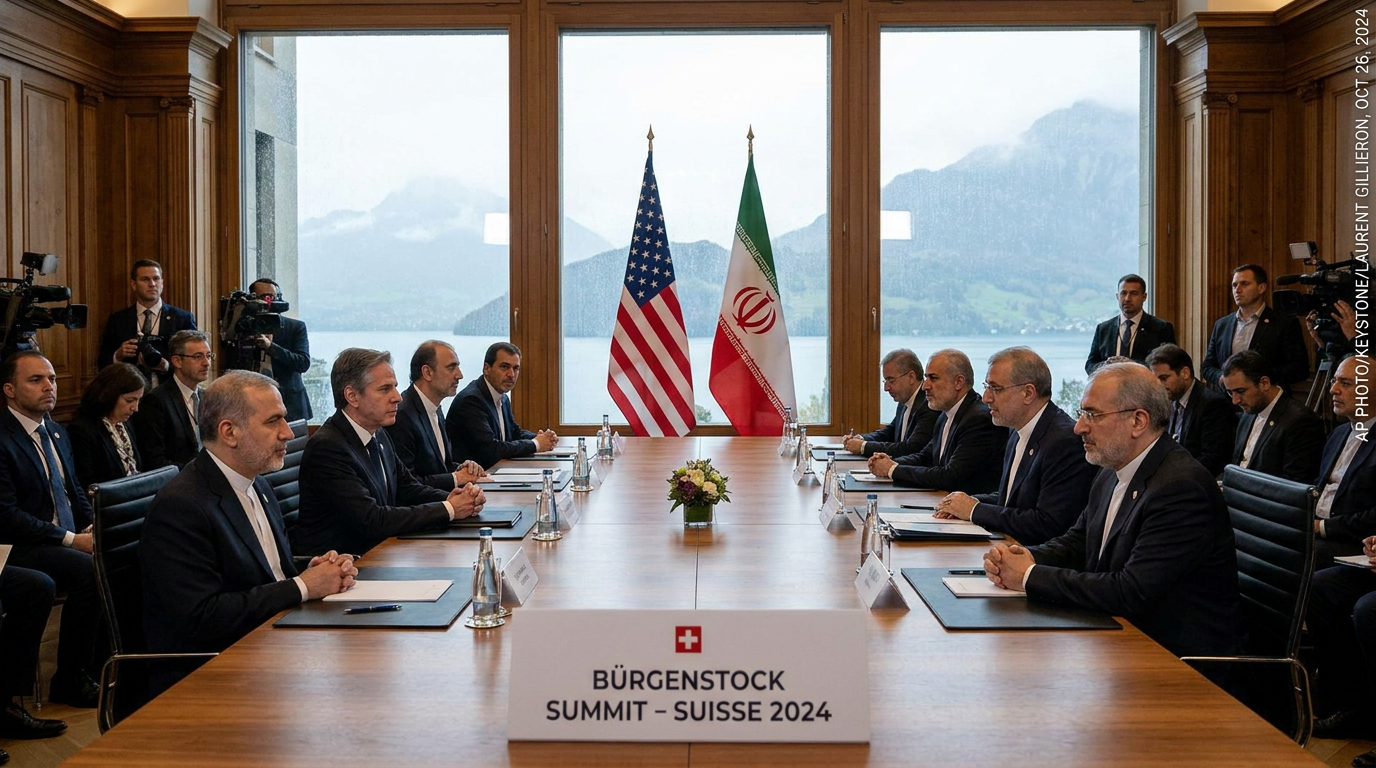
Vice President JD Vance arrived at the Bürgenstock ski resort in Switzerland on Saturday, initiating a critical new phase of direct nuclear negotiations with Iran. The high-altitude summit marks the first face-to-face diplomatic engagement between Washington and Tehran since the Islamabad summit collapsed in April.[1][2]
The arrival of the Iranian delegation sets the clock ticking on a newly established 60-day negotiation window. Both sides are attempting to forge a workable nuclear framework after months of escalating regional hostilities that have repeatedly threatened to spill into a broader, uncontainable conflict.[1][2]
However, the diplomatic proceedings are already being overshadowed by severe geopolitical brinkmanship. As Vance touched down in Europe, Iranian officials announced their intent to shut down the Strait of Hormuz, directly linking the threat to recent Israeli military operations.[1][2]
Tehran claims the closure is a necessary retaliation for what it describes as Israeli ceasefire violations in Lebanon, where recent strikes reportedly killed 16 people. By leveraging the strait, Iran is effectively holding the global economy hostage to force Washington to rein in its primary Middle Eastern ally.[2]

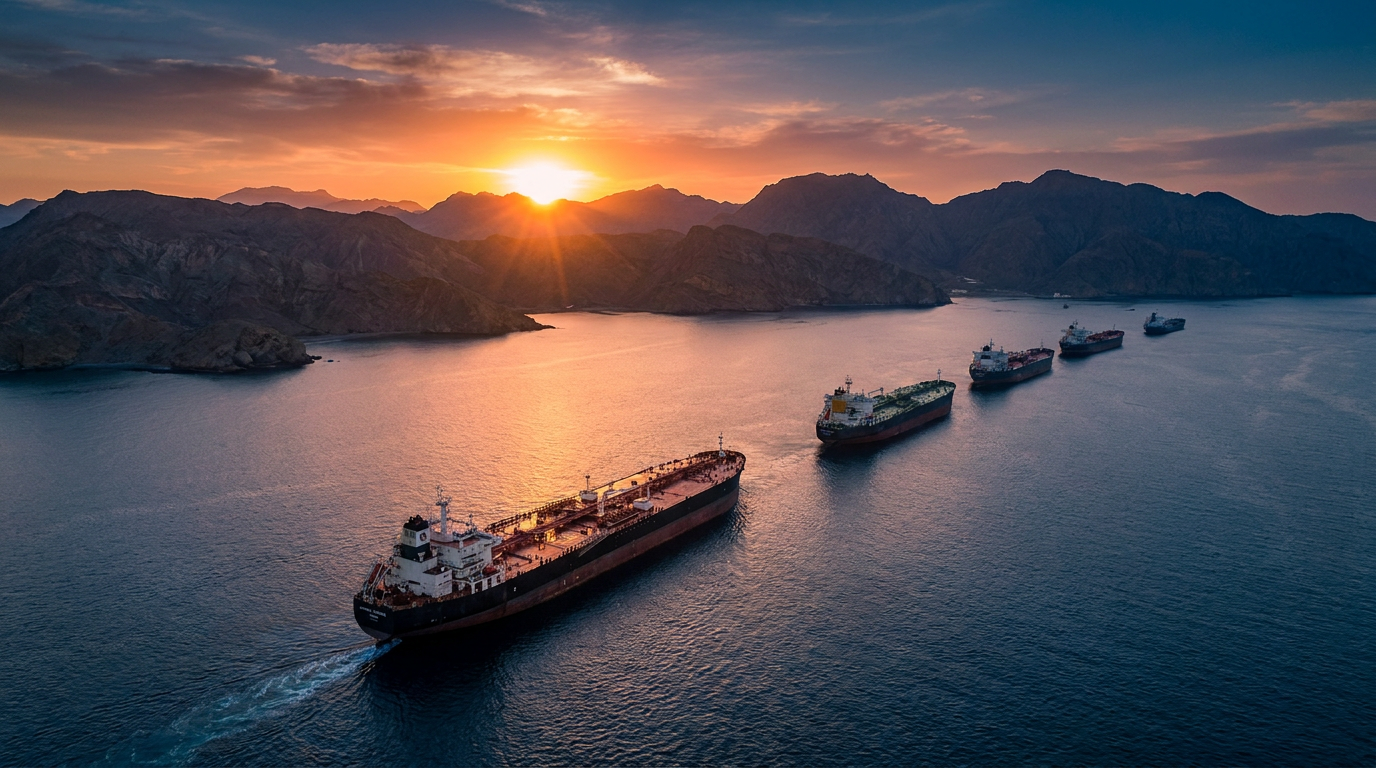
The Strait of Hormuz is arguably the most vital maritime chokepoint on the planet. Measuring just 21 to 60 miles wide, the waterway separates the Arabian Peninsula from Iran, connecting the oil-rich Persian Gulf to the Gulf of Oman and the open ocean.[6]
The economic stakes of a closure are staggering. According to the U.S. Energy Information Administration, approximately 25 percent of the world's seaborne oil trade passes through these narrow shipping lanes, destined primarily for Asian and European markets.[5]
Beyond crude oil, the strait is the irreplaceable artery for global liquefied natural gas (LNG). Roughly 20 percent of the world's LNG exports—including the vast majority of shipments from Qatar and the United Arab Emirates—rely entirely on the Strait of Hormuz to reach buyers.[5]
Beyond crude oil, the strait is the irreplaceable artery for global liquefied natural gas (LNG).
There are virtually no viable alternative routes for this volume of energy. The EIA notes that while Saudi Arabia and the UAE possess limited pipeline capacity to bypass the strait, a prolonged closure would strand millions of barrels of oil and trigger a massive supply shock in the global gas market.[5]

The threat is not strictly theoretical. The Council on Foreign Relations notes that the ongoing 2026 conflict has already severely disrupted maritime traffic, with commercial vessels increasingly hesitant to navigate waters heavily monitored by Iranian naval forces and asymmetric fast-attack craft.[4]
Iran's geographic advantage in the strait is absolute. The shipping lanes run perilously close to the Iranian coastline and several heavily militarized islands controlled by Tehran, allowing Iranian forces to easily mine the waters or harass commercial tankers with anti-ship missiles.[4][6]
Complicating Vance's diplomatic mission is the volatile domestic political environment back in the United States. Former President Donald Trump injected himself into the crisis over the weekend, vowing that Iran would not be permitted to charge tolls for vessels transiting the strait.[3]
In a highly unusual twist, Trump suggested that the United States itself might eventually impose tolls on the waterway. His comments referenced a "US-Iran memorandum of understanding" that reportedly leaves the door open for tolling arrangements after the initial 60-day negotiation period concludes.[3]

The suggestion that Washington might seek to financially capitalize on a Middle Eastern geographic chokepoint represents a radical departure from decades of U.S. naval doctrine, which has historically focused on guaranteeing freedom of navigation and the uninterrupted flow of global commerce.[7]
For Vice President Vance, the Bürgenstock summit requires navigating an impossibly narrow diplomatic channel. He must secure verifiable concessions on Iran's nuclear program while simultaneously managing the fallout from Israel's northern front and the domestic political pressure generated by Trump's unorthodox proposals.[1][7]
How we got here
April 2026
The Islamabad summit between the U.S. and Iran collapses, leading to a freeze in direct diplomatic engagement.
Early June 2026
Regional hostilities escalate, culminating in deadly Israeli strikes in Lebanon.
June 20, 2026
Iran threatens to close the Strait of Hormuz in retaliation for the strikes in Lebanon.
June 21, 2026
Vice President JD Vance and the Iranian delegation arrive in Switzerland, launching a 60-day negotiation window.
Viewpoints in depth
The U.S. Administration's view
The administration views the 60-day window as a critical opportunity to de-escalate regional tensions and secure nuclear concessions.
U.S. diplomats are attempting to compartmentalize the nuclear negotiations from the broader regional conflict. By engaging directly in Switzerland, the administration hopes to establish a framework that prevents Iran from weaponizing its nuclear program, while simultaneously using the talks to walk Tehran back from its threats to close the Strait of Hormuz.
The Iranian Leadership's view
Tehran is leveraging its geographic control over the Strait of Hormuz to force the U.S. to restrain Israeli military operations.
Iranian officials view the nuclear talks and the regional conflict as inextricably linked. By threatening the global energy supply through the Strait of Hormuz, Tehran aims to create intolerable economic pressure on Western nations. Their calculus is that the U.S. will ultimately force Israel to halt its operations in Lebanon and Gaza to prevent a catastrophic spike in global energy prices.
Global Energy Markets' view
Energy analysts and commodity traders are deeply alarmed by the prospect of a prolonged closure of the world's most vital maritime chokepoint.
Market analysts stress that there is no viable alternative to the Strait of Hormuz. While some pipeline capacity exists, it cannot replace the 20 million barrels of oil and massive volumes of LNG that transit the strait daily. Traders warn that even a temporary disruption or a sharp increase in insurance premiums due to Iranian harassment could trigger a severe global supply shock and reignite inflation.
What we don't know
- Whether the U.S. can successfully pressure Israel to halt its operations in Lebanon to appease Iranian negotiators.
- How global energy markets will react if the 60-day negotiation window closes without a binding agreement.
- The specific legal and logistical mechanisms the U.S. would use if it attempted to impose tolls on the Strait of Hormuz.
Key terms
- Strait of Hormuz
- A narrow waterway between Iran and Oman that connects the Persian Gulf to the open ocean, serving as the world's most important oil chokepoint.
- Liquefied Natural Gas (LNG)
- Natural gas that has been cooled to a liquid state for easier and safer storage and transport, heavily reliant on maritime shipping.
- Islamabad Summit
- A previous round of direct U.S.-Iran negotiations held in April 2026 that failed to produce a lasting agreement.
- Memorandum of Understanding (MOU)
- A non-binding agreement between two or more parties outlining the terms and details of an understanding, including requirements and responsibilities.
Frequently asked
Why is JD Vance in Switzerland?
Vice President Vance is at the Bürgenstock ski resort to launch a 60-day window of direct nuclear negotiations with an Iranian delegation.
Why is Iran threatening to close the Strait of Hormuz?
Tehran claims it will close the critical waterway in retaliation for recent Israeli military strikes in Lebanon, which reportedly killed 16 people.
How much oil goes through the Strait of Hormuz?
Approximately 25 percent of the world's seaborne oil trade and 20 percent of global liquefied natural gas (LNG) exports pass through the strait.
Did Donald Trump say the U.S. would charge tolls in the strait?
Yes, former President Trump suggested that under a 'US-Iran memorandum of understanding,' the United States might impose tolls on vessels transiting the strait after the initial 60-day negotiation period.
Sources
Source coverage
7 outlets
4 viewpoints surfaced




[1]AxiosU.S. Administration & Diplomats
Vance travels to Switzerland for nuclear talks with Iran
Read on Axios →[2]Al JazeeraIranian Leadership
Iran war live: Vance heads to Switzerland; Israel kills 16 in Lebanon
Read on Al Jazeera →Trump vows Iran will not charge Strait of Hormuz tolls, but says US might
Read on Al Jazeera →[4]Council on Foreign RelationsGlobal Energy Markets
The Strait of Hormuz: A U.S.-Iran Maritime Flash Point
Read on Council on Foreign Relations →[5]U.S. Energy Information AdministrationGlobal Energy Markets
World Oil Transit Chokepoints: Strait of Hormuz
Read on U.S. Energy Information Administration →[6]BritannicaGlobal Energy Markets
Strait of Hormuz
Read on Britannica →[7]Factlen Editorial TeamU.S. Conservative Opposition
Synthesis by Factlen editorial team
Read on Factlen Editorial Team →
More in news politics
See all 6 stories →Child Nutrition
Fact Check: What the Evidence Actually Says About Universal Free School Meals
7 sources

Strait of Hormuz
Iran Claims Strait of Hormuz Closed as US Peace Talks Begin in Switzerland
8 sources
Strait of Hormuz
Why the Strait of Hormuz Is Back at the Center of US-Iran Peace Talks
9 sources
US-Iran Diplomacy
US and Iran Open Nuclear Talks in Switzerland Amid Strait of Hormuz Threats
8 sources
Every angle. Every day.
Get news politics stories with full source coverage and perspective breakdowns delivered to your inbox.