
Why the Strait of Hormuz Is Back at the Center of US-Iran Peace Talks
Iran threatened to re-close the critical Strait of Hormuz over ongoing Israeli strikes in Lebanon, testing a fragile US-Iran ceasefire just as delegations arrive in Switzerland for high-stakes peace talks.
By Factlen Editorial Team
- US Administration
- Focused on securing nuclear oversight and maintaining open shipping lanes while leveraging the 60-day window.
- Iranian Government
- Views the Lebanon ceasefire as an inextricable part of the MOU and demands immediate economic relief.
- Regional Mediators
- Prioritizing de-escalation and bridging the trust deficit to prevent a return to open warfare.
- Global Energy Markets
- Highly sensitive to the Strait of Hormuz and pricing in a risk premium due to the threat of closures.
What's not represented
- · Lebanese Civilians
- · European Energy Importers
Why this matters
The Strait of Hormuz handles roughly 20% of the world's oil consumption. Any disruption immediately spikes global energy prices, threatening to reignite inflation and derail the fragile US-Iran diplomatic breakthrough just as high-stakes peace talks begin.
Key points
- Iran threatened to re-close the Strait of Hormuz, citing Israeli military operations in Lebanon as a ceasefire violation.
- US Central Command denied the closure, stating that 55 commercial vessels successfully transited the waterway on Saturday.
- US Vice President JD Vance and Iranian delegates arrived in Switzerland to begin technical peace talks.
- The negotiations aim to finalize a permanent peace deal within a 60-day window established by a preliminary MOU.
- Global oil prices spiked to $82 per barrel amid fears of a prolonged disruption to the critical energy chokepoint.
The fragile ceasefire between the United States and Iran faced its first major stress test this weekend as Iran's military command announced it was re-closing the Strait of Hormuz to commercial shipping. The sudden declaration threatened to sever a critical maritime chokepoint that handles roughly one-fifth of the world's daily oil consumption, sending immediate shockwaves through global energy markets. The escalation comes at a highly sensitive moment, occurring just hours before high-level American and Iranian delegations were scheduled to convene in Switzerland for technical peace talks aimed at cementing a permanent end to the recent conflict.[1][2][7]
Tehran explicitly tied its threat to the ongoing conflict in the Levant, citing Israeli military operations against Hezbollah in southern Lebanon as a direct violation of the newly signed Memorandum of Understanding (MOU). The 14-point preliminary agreement, signed by President Donald Trump and Iranian President Masoud Pezeshkian, reportedly includes provisions for a comprehensive regional ceasefire. Iranian military officials argued that the United States had failed to enforce this clause, prompting the closure of the strait as a "first step" in retaliation for what they described as relentless breaches of the truce by Israeli forces.[2][5][7]
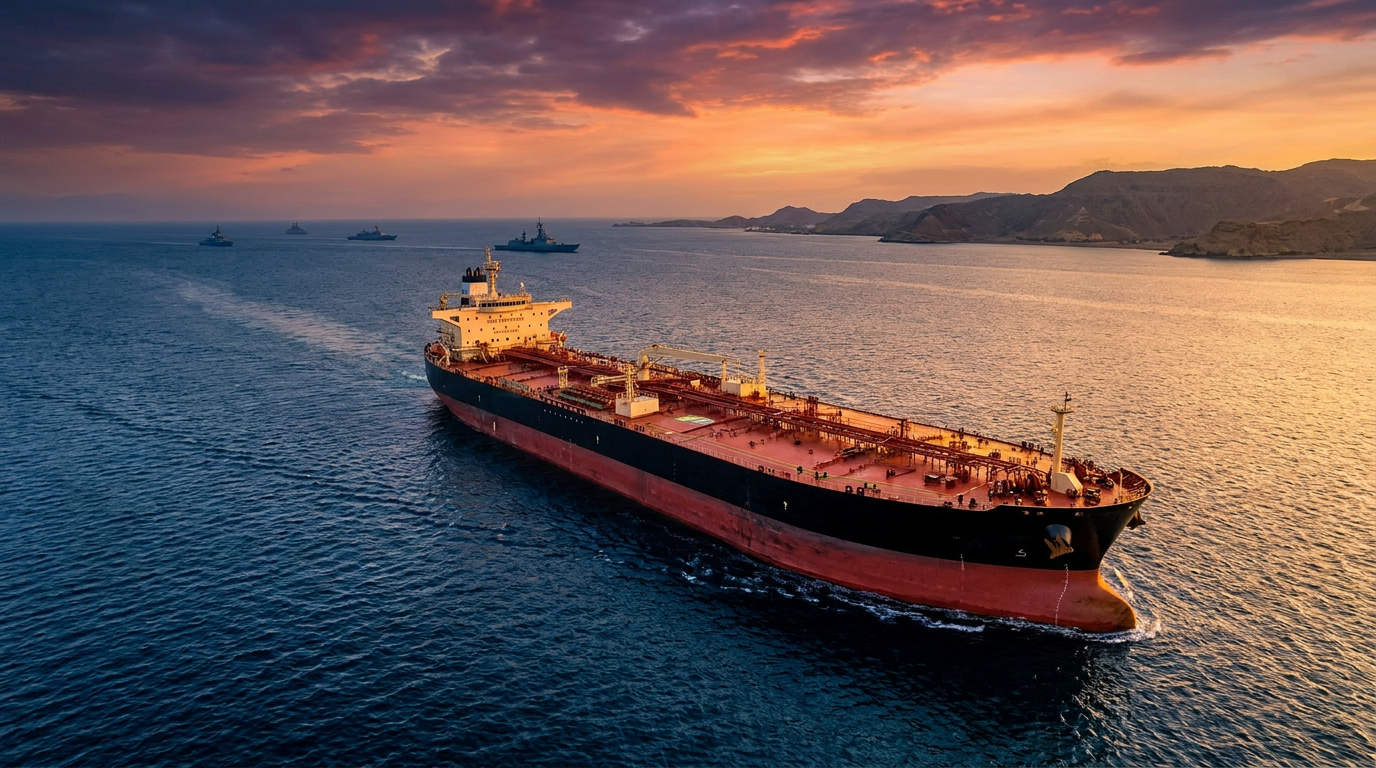
Despite the stark Iranian declaration, the United States military forcefully denied that the vital waterway had been shut down. United States Central Command (CENTCOM) issued a statement asserting that safe passage through the international corridor remained completely intact. According to Navy Captain Tim Hawkins, 55 commercial vessels carrying more than 17 million barrels of oil successfully transited the Strait of Hormuz on Saturday without incident. The Pentagon emphasized that American naval forces remain present and highly vigilant in the region to ensure that the terms of the ceasefire agreement are honored and that global shipping is not impeded.[1][8]
The conflicting narratives over the status of the strait triggered immediate volatility in global financial sectors. Crude oil prices jumped sharply on perpetual futures marketplaces, with the international Brent crude benchmark rising to $82 per barrel. The sudden price spike reflects deep-seated trader anxiety over the potential loss of the world's most important energy transit route. Analysts warn that even a temporary or partial blockade of the Strait of Hormuz could rapidly deplete global oil inventories, which are already sitting at multi-decade lows, and reignite inflationary pressures across Western economies.[4][9]

President Trump escalated the diplomatic rhetoric further on Saturday, issuing a stark warning regarding the future of the waterway. Taking to social media, the president threatened that the United States might impose its own tolls on commercial vessels transiting the Strait of Hormuz if a final, comprehensive peace deal is not reached within the 60-day window established by the MOU. Trump stated that any such fees would serve as compensation for the American military acting as the "Guardian Angel" of the Middle East, adding a new layer of complexity to the already fraught negotiations.[3][5][8]
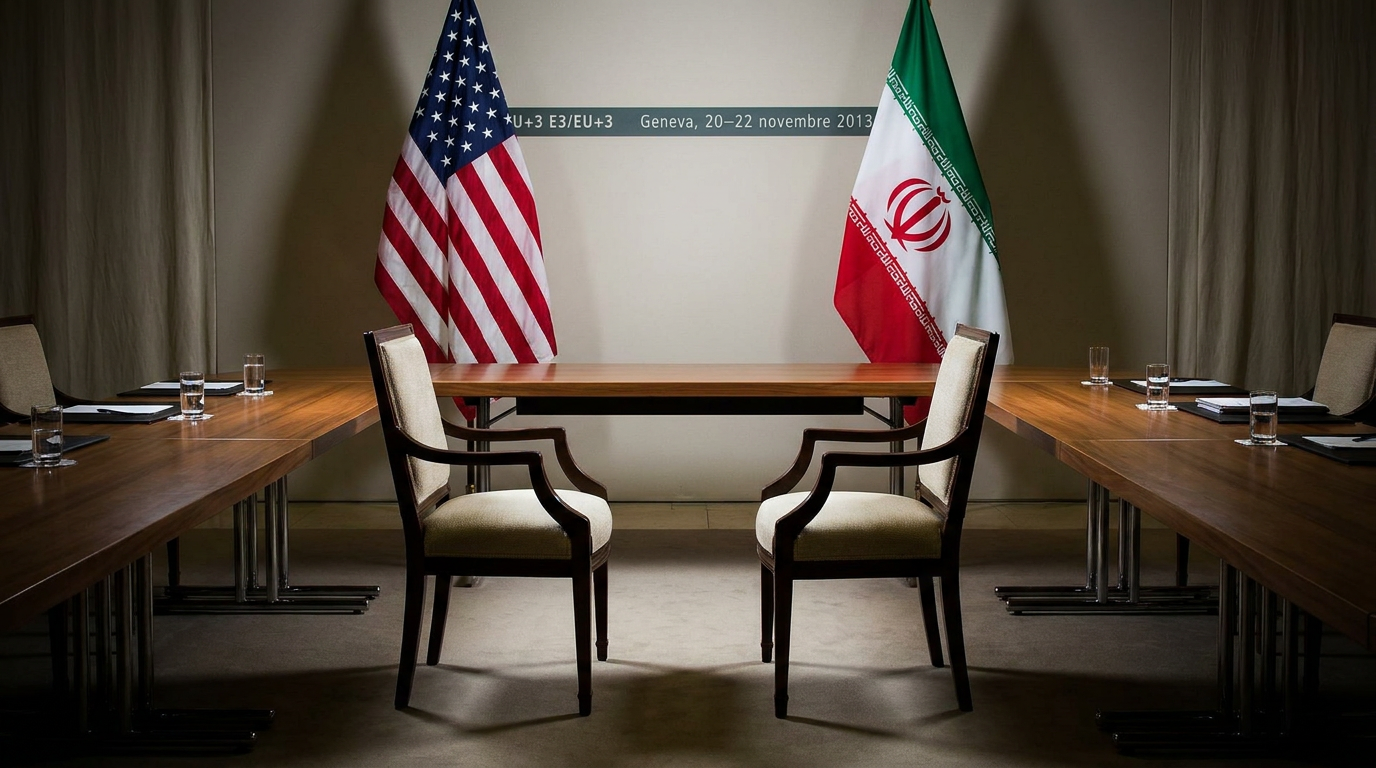
Against this volatile and high-stakes backdrop, senior diplomatic delegations converged on the Bürgenstock Resort in Switzerland to salvage the diplomatic framework. United States Vice President JD Vance departed Washington on Saturday afternoon to lead the American negotiating team. Speaking to reporters before boarding Air Force Two, Vance acknowledged the friction but expressed optimism that the technical talks could stabilize the fragile ceasefire and prevent a return to open warfare.[1][3][6]
Against this volatile and high-stakes backdrop, senior diplomatic delegations converged on the Bürgenstock Resort in Switzerland to salvage the diplomatic framework.
In Switzerland, Vance joins United States special envoys Jared Kushner and Steve Witkoff, who arrived earlier in the weekend to lay the groundwork for the technical discussions. The vice president outlined two primary objectives for the American delegation: securing concrete progress on monitoring Iran's nuclear program and finalizing the parameters of the Lebanon ceasefire. The talks represent the first face-to-face negotiations since the 12-day war, marking a critical pivot from military confrontation to complex diplomatic bargaining.[2][3][8]
The Iranian delegation, which arrived in Zurich late Saturday, is led by Parliament Speaker Mohammad Bagher Ghalibaf and Foreign Minister Abbas Araghchi. Their presence, alongside senior officials from Iran's central bank and oil ministry, underscores Tehran's urgent domestic priorities. The Iranian government is heavily focused on securing immediate sanctions relief and unfreezing billions of dollars in foreign assets held in countries like Qatar. Rebuilding Iran's war-torn economy, particularly its heavily damaged petrochemical and steel industries, hinges entirely on the success of these negotiations.[5][6][7]

The delicate negotiations are being heavily mediated by regional partners, primarily Pakistan and Qatar. Pakistani Prime Minister Shehbaz Sharif and senior Qatari diplomats have stepped in to keep the talks on track after initial delays caused by the military flare-up in Lebanon. These intermediaries are playing a crucial role in bridging the deep deficit of trust between Washington and Tehran, facilitating indirect communications and helping to draft the technical annexes required to implement the broad 14-point MOU.[2][5][8]
A central and highly volatile sticking point in the talks remains the linkage between the bilateral United States-Iran agreement and the broader regional conflict involving Israel. The MOU reportedly calls for an end to hostilities in Lebanon, but neither the Israeli government nor Hezbollah are signatories to the pact. This dynamic has allowed the conflict in the Levant to act as a constant spoiler, with Tehran demanding that Washington exert maximum pressure on Israeli Prime Minister Benjamin Netanyahu to halt military operations.[1][5]
The situation on the Israel-Lebanon border remains highly unstable, directly threatening the progress in Switzerland. Over the weekend, the Israel Defense Forces reported that Hezbollah fired more than 50 projectiles at its positions overnight. In response, Hezbollah accused Israeli forces of advancing into Lebanese territory and violating the spirit of the ceasefire. The ongoing exchange of fire highlights the immense difficulty of enforcing a regional peace settlement when key combatants are operating outside the formal diplomatic framework.[2][3]

Beyond the immediate regional security concerns, the technical talks in Switzerland are expected to address the critical issue of nuclear oversight. A primary demand from the United States is the immediate return of International Atomic Energy Agency (IAEA) inspectors to Iranian nuclear facilities, including the Fordow and Natanz enrichment plants. Restoring this oversight, which was severed during the recent conflict, is considered a non-negotiable prerequisite for the United States to authorize the release of frozen Iranian funds and lift the blockade on Iranian ports.[6]
As the two-month negotiation window officially opens, the geopolitical stakes could not be higher. A successful settlement in Switzerland has the potential to reshape Middle Eastern security architecture, stabilize global energy markets, and provide a blueprint for long-term de-escalation. However, a collapse in the talks—driven by miscalculations in the Strait of Hormuz or further violence in Lebanon—risks plunging the region back into open conflict, triggering a severe global energy crisis, and unraveling the fragile diplomatic progress achieved thus far.[6][8]
How we got here
Feb 2026
US and Israel launch joint strikes on Iran, beginning the war.
Mid-June 2026
President Trump and Iranian President Pezeshkian sign a 14-point Memorandum of Understanding to halt the war.
June 20, 2026
Iran announces the closure of the Strait of Hormuz, citing Israeli strikes in Lebanon.
June 21, 2026
US and Iranian delegations begin technical peace talks in Bürgenstock, Switzerland.
Viewpoints in depth
US Administration's View
The US is focused on securing Iran's nuclear program and maintaining open shipping lanes while leveraging the 60-day window.
Washington views the technical talks in Switzerland as the critical mechanism to enforce the 14-point MOU. The primary US objectives are restoring IAEA inspections at Iranian nuclear facilities and ensuring the uninterrupted flow of global energy through the Strait of Hormuz. The administration maintains that the strait remains open and has threatened to impose its own tolls if a comprehensive agreement is not reached.
Iranian Government's View
Tehran views the Lebanon ceasefire as an inextricable part of the MOU and demands immediate economic relief.
Iranian leadership argues that ongoing Israeli military operations against Hezbollah in southern Lebanon constitute a direct violation of the ceasefire framework. By threatening to close the Strait of Hormuz, Tehran is applying maximum pressure on the US to rein in Israel. In Switzerland, the Iranian delegation is prioritizing the unfreezing of billions in foreign assets and the lifting of sanctions to rebuild its war-torn economy.
Global Energy Markets
Energy traders are highly sensitive to the Strait of Hormuz and remain skeptical of the ceasefire's durability.
The mere threat of a Strait of Hormuz closure sent immediate shockwaves through global markets, spiking Brent crude to $82 per barrel. Analysts and traders are pricing in a significant risk premium, fearing that any collapse in the Swiss negotiations could instantly sever access to 20% of the world's oil supply and reignite global inflation.
What we don't know
- Whether Israeli Prime Minister Benjamin Netanyahu will agree to halt military operations in Lebanon to preserve the US-Iran deal.
- How quickly IAEA inspectors will be allowed to return to Iranian nuclear facilities if a final agreement is reached.
- Whether the US will actually impose tolls on the Strait of Hormuz if the 60-day negotiation window expires without a deal.
Key terms
- Strait of Hormuz
- A narrow waterway connecting the Persian Gulf to the Gulf of Oman, serving as the world's most important oil transit chokepoint.
- Memorandum of Understanding (MOU)
- A preliminary agreement outlining the framework for the 60-day ceasefire and ongoing negotiations between the US and Iran.
- IAEA
- The International Atomic Energy Agency, the UN watchdog responsible for monitoring Iran's nuclear facilities.
- CENTCOM
- United States Central Command, the military command responsible for US operations in the Middle East.
Frequently asked
What is the Strait of Hormuz?
A critical maritime chokepoint between Iran and Oman that handles roughly 20% of the world's daily oil consumption.
Why did Iran threaten to close it?
Tehran cited ongoing Israeli military operations in Lebanon as a violation of the US-Iran ceasefire agreement, using the strait as leverage.
Who is mediating the peace talks?
Qatar and Pakistan are serving as the primary mediators between the US and Iranian delegations in Switzerland.
What is the 60-day MOU?
A preliminary Memorandum of Understanding signed by the US and Iran, establishing a two-month window to negotiate a permanent peace deal and nuclear agreement.
Sources
Source coverage
9 outlets
4 viewpoints surfaced









[1]Washington PostUS Administration
As Iran cited Israel's attacks in Lebanon as the reason it would close the strait again, Vice President JD Vance departed for Switzerland for more peace talks
Read on Washington Post →[2]CBS NewsUS Administration
What to know about the Iran war today: The Strait of Hormuz will be closed again
Read on CBS News →[3]Fox NewsUS Administration
Vance travels to Switzerland for talks as Iran negotiators arrive
Read on Fox News →[4]Al JazeeraIranian Government
Iran war live: Vance heads to Switzerland; Israel kills 16 in Lebanon
Read on Al Jazeera →[5]PBSRegional Mediators
U.S. and Iranian negotiators head to Switzerland for talks on interim agreement
Read on PBS →[6]RFE/RLGlobal Energy Markets
US-Iran Talks Revived As Vance Heads To Switzerland For High-Stakes Push
Read on RFE/RL →[7]Iran InternationalIranian Government
Iran says it will close Strait of Hormuz to shipping
Read on Iran International →[8]Japan TimesRegional Mediators
Geneva – A new round of negotiations over the Middle East war was set to kick off Sunday
Read on Japan Times →[9]BenzingaGlobal Energy Markets
Crude Oil Price Pops As Iran Closes Strait Of Hormuz
Read on Benzinga →

More in news politics
See all 10 stories →Strait of Hormuz
Iran Moves to Block Strait of Hormuz as US Delegation Arrives in Switzerland for Emergency Talks
8 sources
Strait of Hormuz
US and Iran Open High-Stakes Peace Talks in Switzerland as Strait of Hormuz Crisis Deepens
8 sources

Voting Systems
Fact Check: Does Ranked-Choice Voting Actually Reduce Political Polarization?
6 sources

U.S.-Iran Relations
Vance Heads to Switzerland for Iran Peace Talks as Tehran Threatens to Close Strait of Hormuz
7 sources
Every angle. Every day.
Get news politics stories with full source coverage and perspective breakdowns delivered to your inbox.