
H5N1 Bird Flu Reaches Mainland Australia, Prompting 'Wildlife Emergency' Declarations
Mainland Australia has confirmed its first case of the highly pathogenic H5N1 avian influenza, meaning the virus has now reached every continent. Environmental groups are urging the Albanese government to deploy a $200 million resilience package to prevent catastrophic losses among native species.
By Factlen Editorial Team
- Conservation Advocates
- Views the virus as an existential threat to native biodiversity and demands urgent, large-scale ecological funding.
- Federal & Agricultural Authorities
- Prioritizes biosecurity, agricultural protection, and managing the outbreak through established government frameworks.
- Scientific & Health Experts
- Focuses on genomic surveillance, the 'One Health' approach, and preventing public panic.
- International Observers
- Monitors Australia's response as the final continent to face the global H5N1 panzootic.
What's not represented
- · Commercial poultry farmers who face potential economic devastation if the virus breaches agricultural biosecurity.
- · Local Indigenous land management groups who steward the affected coastal regions.
Why this matters
Australia's unique ecosystem has been the last global holdout against a virus that has decimated wildlife populations worldwide. If H5N1 establishes itself in native bird and mammal populations, it could trigger mass mortality events and push already endangered species toward extinction, while also threatening the nation's multi-billion-dollar poultry industry.
Key points
- Mainland Australia has recorded its first confirmed case of the highly pathogenic H5N1 bird flu in a migratory seabird.
- The detection means the deadly avian influenza strain has now officially reached every continent on Earth.
- Conservation groups are demanding a $200 million emergency resilience package to protect vulnerable native species from potential extinction.
- The federal government maintains there is no evidence the virus has breached commercial poultry or agricultural systems.
- Public health experts emphasize that the immediate risk of human infection remains exceptionally low.
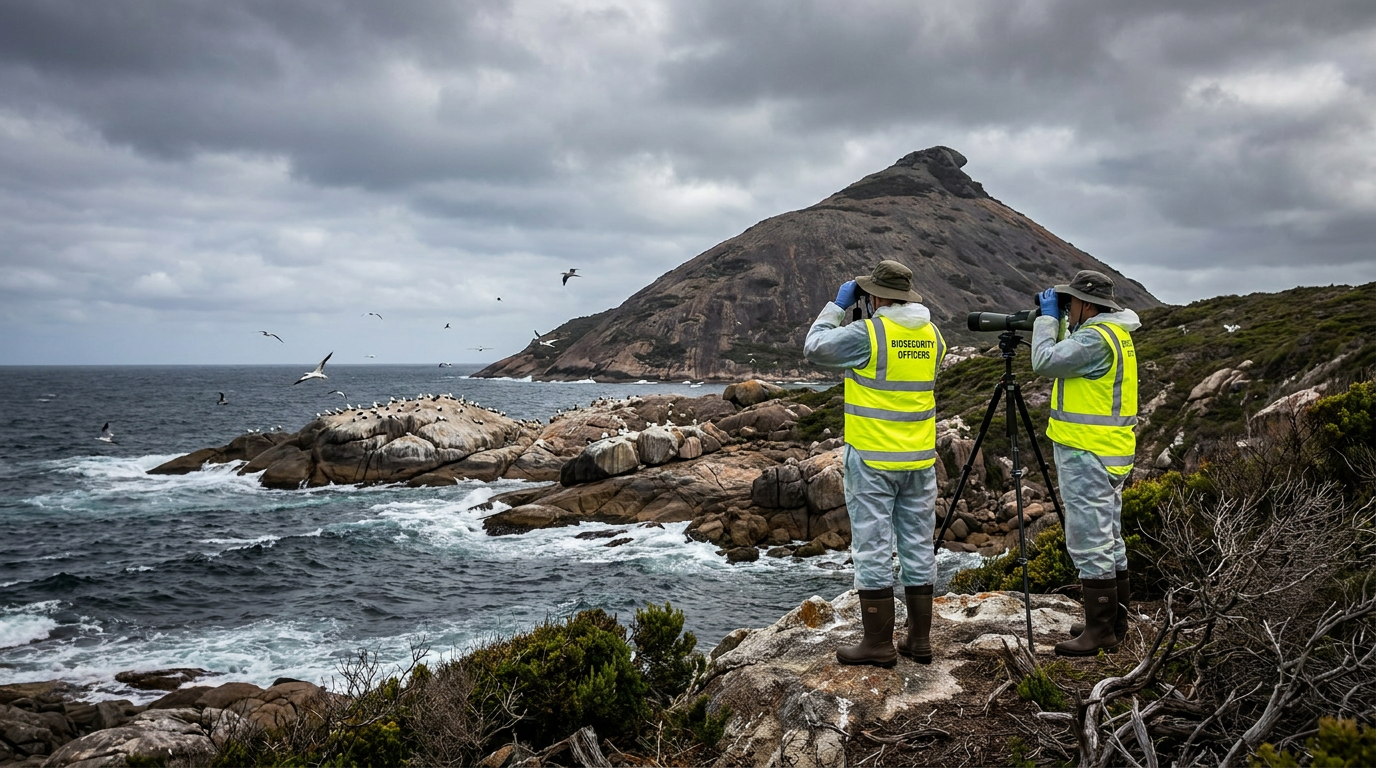
The highly pathogenic H5N1 avian influenza has officially reached mainland Australia, breaching the final continental stronghold against a virus that has devastated global wildlife. Testing by the CSIRO's Australian Centre for Disease Preparedness confirmed the deadly strain in a migratory brown skua found dead at Cape Le Grand National Park near Esperance in Western Australia. The discovery marks a critical biosecurity threshold for the nation, which had spent years preparing for the inevitable arrival of the pathogen. Authorities immediately isolated the area, but the confirmation signals a new and dangerous chapter for Australia's unique ecosystems.[6][7]
A second sick bird—a giant petrel found in the same isolated coastal area—has also tested positive for an H5 strain, with confirmatory testing currently underway at federal laboratories. The arrival of the virus in Western Australia marks a grim global milestone: H5N1 is now officially present on every continent on Earth. For years, Australia watched from afar as the clade 2.3.4.4b variant swept across the Northern Hemisphere and South America, hoping its geographic isolation and strict border controls could hold the line. That line has now fallen.[1][2][3][7]
'This is concerning,' Prime Minister Anthony Albanese told reporters in Sydney on Saturday, pledging that his government would do 'whatever we can to restrict any spread.' Agriculture Minister Julie Collins echoed the sentiment during a televised address from Canberra, noting that while the incursion is sobering, 'we all knew that we couldn't be bird-flu free forever.' The federal government is now activating its emergency response frameworks, coordinating with state authorities in Western Australia to monitor shorelines and assess the immediate perimeter of the infection zone.[3][4]

For Australia's conservation community, the confirmation is the realization of a worst-case scenario. The Invasive Species Council (ISC) and the Australian Marine Conservation Society (AMCS) immediately called on the Albanese government to deploy a $200 million national wildlife resilience package over the next two years. Conservationists argue that the government's existing biosecurity focus, which heavily prioritizes protecting commercial agriculture, must be urgently expanded to include massive ecological interventions. They warn that without immediate funding, local jurisdictions will lack the resources to manage mass mortality events or protect vulnerable habitats.[5]
'Whether this particular outbreak is contained or not, the threat is no longer theoretical,' said ISC Chief Executive Jack Gough. 'This is a genuine wildlife emergency and it must be treated as such with emergency funding to increase efforts to protect wildlife populations.' Gough and other environmental advocates stress that the window for purely preventative action has now closed. The national focus must immediately shift to rapid emergency response, safe carcass removal to prevent secondary scavenging transmission, and the active protection of critical breeding colonies across the coastline.[2][5]
'Whether this particular outbreak is contained or not, the threat is no longer theoretical,' said ISC Chief Executive Jack Gough.
Experts warn that Australia's unique and highly endemic fauna are uniquely vulnerable to the pathogen. The virus poses an existential threat to species like the endangered Australian sea lion, black swans, and coastal raptors, which have no natural immunity to the disease. Kate Millar, chief executive of BirdLife Australia, warned the incursion could be 'the beginning of a long fight to protect birds and wildlife in Australia,' raising the specter of possible extinctions if the virus takes hold in dense, interconnected native populations.[2][8]

The H5N1 clade 2.3.4.4b has caused unprecedented ecological damage since 2021, killing millions of wild birds and tens of thousands of mammals globally. Its ability to cross species barriers has alarmed scientists, with the virus devastating elephant seal colonies in South America and recently infecting dairy cattle across the United States. The virus had previously edged closer to the Australian mainland, having been detected on the sub-Antarctic territory of Heard Island in late 2025, where it caused mass mortalities among elephant seal pups and penguins.[3][4][8]
Federal and state authorities are now racing to contain the fallout and map the true extent of the incursion. The Western Australia Department of Primary Industries and Regional Development is leading intensive on-ground surveillance to determine if the virus has spread further into local wildlife populations around the Esperance region. Specialized surveillance teams are sweeping local beaches, estuaries, and wetlands, actively testing other migratory and resident birds to understand whether the infected brown skua was an isolated carrier or simply the visible tip of a much broader ecological outbreak.[6][7]
Crucially, there is currently no evidence that the virus has entered Australia's poultry or agricultural systems, nor are there any signs of mass mortality events on the mainland. The federal government has previously invested over $113 million to strengthen biosecurity and preparedness, including tightening farm protocols, vaccinating vulnerable captive species, and war-gaming outbreak scenarios. Agriculture officials are working closely with commercial farmers across the country to ensure that strict biosecurity perimeters are maintained, protecting a multi-billion-dollar domestic industry that remains highly susceptible to the rapid spread of avian influenza.[3][4][7]

Public health officials are emphasizing that while the virus is highly lethal to avian species, the immediate risk to the general human population remains exceptionally low. Human infections are incredibly rare and typically require close, prolonged contact with infected animals or heavily contaminated environments. Australia's newly formed Centre for Disease Control is monitoring the situation closely, ensuring that national human influenza programs and strategic stockpiles of antivirals are ready should the virus mutate, though virologists repeatedly stress there is currently no evidence of sustained human-to-human transmission anywhere in the world.[3][8]
'The confirmation of H5N1 on mainland Australia is a biosecurity threshold, not a public-health panic point,' noted Associate Professor Vinod Balasubramaniam, a molecular virologist analyzing the outbreak. 'The scientific test is how quickly Australia can convert this first detection into genomic intelligence, ecological containment and public trust.' Experts across the scientific community agree that the most effective defense is a comprehensive 'One Health' approach, integrating veterinary, agricultural, and human health data to track the virus's evolution in real-time and prevent further cross-species spillover.[8]
Authorities are urging the public to remain highly vigilant but cautious as the situation develops along the coast. Anyone who encounters sick or dead birds, or unusual behavior in marine mammals, is strictly instructed not to touch or handle the animals. Instead, residents should take photographs from a safe distance and immediately contact the national Emergency Animal Disease Hotline. As Australia braces for the inevitable ecological impact, the coming weeks will determine whether the nation can successfully mitigate the damage of a virus that has already reshaped the natural world.[6][8]
How we got here
2021 - 2024
The highly pathogenic H5N1 clade 2.3.4.4b spreads rapidly across the Northern Hemisphere, devastating wild bird and mammal populations.
Late 2025
H5N1 is detected on the Australian sub-Antarctic territory of Heard Island, causing mass mortalities among elephant seals.
June 14, 2026
A sick migratory brown skua is found at Cape Le Grand National Park in Western Australia.
June 19, 2026
CSIRO testing confirms the brown skua died of H5N1, marking the first mainland case in Australia.
June 20, 2026
Conservation groups declare a 'wildlife emergency' and demand a $200 million federal resilience package.
Viewpoints in depth
Federal and Agricultural Authorities
Focused on biosecurity, protecting the poultry industry, and managing the incursion with existing preparedness frameworks.
For government officials, the primary objective is containment and economic protection. Agriculture Minister Julie Collins and the Department of Agriculture are prioritizing surveillance to ensure the virus does not breach the multi-billion-dollar poultry industry. Having anticipated the virus's eventual arrival, the government points to its $113 million investment in biosecurity, arguing that established national response arrangements and war-gamed scenarios mean Australia is well-prepared to manage the agricultural risks.
Conservation and Wildlife Advocates
Viewing the incursion as an existential ecological crisis requiring massive emergency funding.
Groups like the Invasive Species Council and BirdLife Australia argue that the government's current biosecurity focus is insufficient for protecting native fauna. They emphasize that H5N1 is no longer just an agricultural problem but a 'wildlife emergency' capable of causing extinctions among species with no natural immunity, such as the Australian sea lion. These advocates are demanding a $200 million resilience package specifically targeted at ecological conservation, arguing that the cost of inaction will be catastrophic biodiversity loss.
Public Health and Virology Experts
Emphasizing genomic surveillance and the 'One Health' approach while reassuring the public.
Scientific experts view the arrival of H5N1 as a critical test of Australia's disease monitoring capabilities. Virologists stress that while the virus is a pandemic among animals, the immediate risk to human health remains negligible. Their focus is on rapid genomic sequencing, ecological containment, and cross-disciplinary collaboration between veterinary, agricultural, and human health sectors—a strategy known as 'One Health'—to ensure the virus does not mutate into a broader public health threat.
What we don't know
- Whether the infected brown skua was an isolated carrier or if the virus has already established itself in local wildlife populations.
- How severely the H5N1 strain will impact unique Australian species that possess no natural immunity.
- Whether the federal government will approve the $200 million emergency funding requested by conservation advocates.
Key terms
- H5N1
- A highly pathogenic strain of avian influenza (bird flu) that causes severe respiratory disease and high mortality rates in birds, and increasingly, mammals.
- Endemic Species
- Plants or animals that exist only in one geographic region, making them particularly vulnerable to novel diseases.
- Biosecurity
- Measures taken to prevent the introduction and spread of harmful organisms, such as viruses, to human, animal, or plant life.
- One Health
- A collaborative approach that recognizes the interconnectedness of human health, animal health, and the shared environment.
Frequently asked
Is it safe to eat chicken and eggs in Australia?
Yes. Authorities have confirmed that the virus has not entered Australia's poultry or agricultural systems, and commercial food supplies remain safe.
Can humans catch H5N1 bird flu?
Human infections are extremely rare and typically only occur after close, prolonged contact with infected animals. The general public is at very low risk.
What should I do if I see a sick bird?
Do not touch or handle the animal. Take a photo or video from a safe distance and report it to the Emergency Animal Disease Hotline at 1800 675 888.
Sources
Source coverage
8 outlets
4 viewpoints surfaced







[1]Fox NewsInternational Observers
H5N1 bird flu confirmed in Australia for the first time, meaning virus has now reached every continent
Read on Fox News →[2]The GuardianConservation Advocates
Australia news live: arrival of H5N1 bird flu a 'genuine wildlife emergency', experts say
Read on The Guardian →[3]SBS NewsInternational Observers
Australia detects first mainland case of H5N1 bird flu
Read on SBS News →[4]CBC NewsInternational Observers
Australia will do everything it can to curb the spread of H5N1 bird flu
Read on CBC News →[5]Invasive Species CouncilConservation Advocates
$200 million wildlife resilience package urgently needed as H5N1 bird flu reaches mainland Australia
Read on Invasive Species Council →[6]Government of Western AustraliaFederal & Agricultural Authorities
Australia records first case of H5 bird flu in migratory seabird on WA south coast
Read on Government of Western Australia →[7]Australian Department of AgricultureFederal & Agricultural Authorities
H5 bird flu confirmed in Australia
Read on Australian Department of Agriculture →[8]SciMexScientific & Health Experts
Expert Reaction: H5N1 bird flu confirmed on mainland Australia
Read on SciMex →

More in news politics
See all 5 stories →Strait of Hormuz
Iran Threatens Strait of Hormuz Closure as US and Iranian Delegations Arrive in Switzerland for Emergency Talks
7 sources

Geneva Summit
U.S. and Iranian Delegations Open High-Stakes Peace Talks in Switzerland
6 sources

Digital Provenance
Fact-Checking the AI Election: The Evidence Behind Deepfake Detection and Content Watermarking
8 sources

Every angle. Every day.
Get news politics stories with full source coverage and perspective breakdowns delivered to your inbox.