
Education Department Transfers Civil Rights and Special Ed Oversight to DOJ and HHS
The Trump administration is moving core civil rights and special education functions out of the Department of Education, using interagency agreements to functionally dismantle the agency.
By Factlen Editorial Team
- The Administration
- Argues that moving functions to HHS and DOJ reduces bureaucracy, improves efficiency, and fulfills the promise to scale back federal micromanagement of education.
- Civil Rights & Disability Advocates
- Warns that fracturing oversight will weaken enforcement, dilute special education coordination, and leave vulnerable families navigating multiple agencies.
- Congressional Democrats
- Views the interagency agreements as an illegal executive overreach designed to dismantle a cabinet department without the required congressional approval.
What's not represented
- · State-level education superintendents who must now coordinate with three federal departments instead of one.
Why this matters
This move fundamentally alters how the federal government enforces student civil rights and manages special education funding, forcing schools and families to navigate new federal bureaucracies. It represents the most significant step yet in the executive branch's effort to bypass Congress and functionally close a Cabinet-level department.
Key points
- The Education Department is transferring its civil rights and special education offices to the DOJ and HHS.
- The moves are being executed via interagency agreements, bypassing the need for congressional approval.
- The administration says the shift will reduce bureaucracy and align resources with specialized agencies.
- Advocates warn the fractured oversight will weaken civil rights enforcement and special education services.
- Democratic lawmakers have condemned the transfers as an illegal dismantling of a Cabinet department.
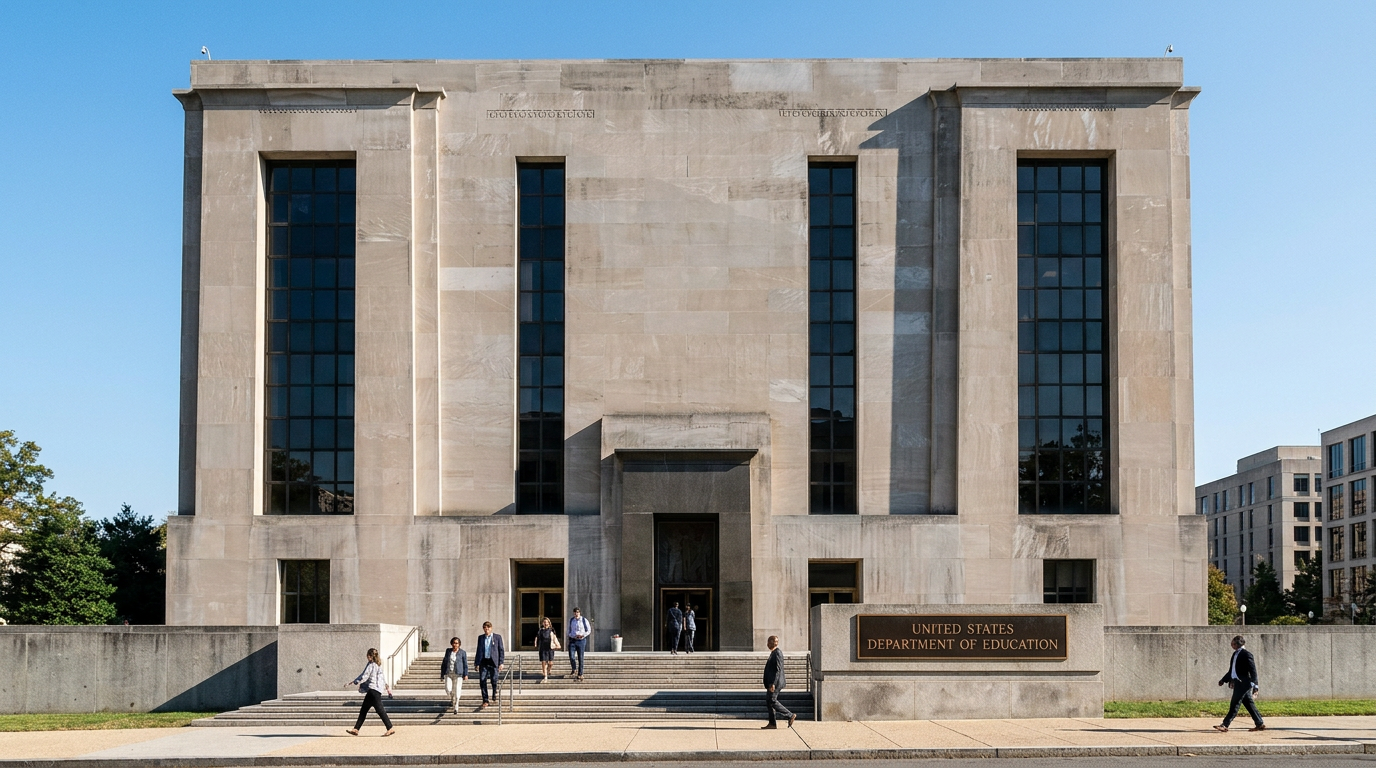
The Trump administration has announced the transfer of the Department of Education's civil rights enforcement and special education oversight to other federal agencies, marking the most significant step yet in its ongoing effort to dismantle the 46-year-old Cabinet department.[1][2]
Through new "interagency agreements" unveiled Tuesday, the Office of Special Education and Rehabilitative Services (OSERS) will shift its core grant-management functions to the Department of Health and Human Services (HHS). Concurrently, the Office for Civil Rights (OCR) will transfer its investigative and enforcement duties to the Department of Justice (DOJ).[1][3]
Because formally abolishing the Department of Education requires an act of Congress—which has not materialized despite the president's campaign promises—the administration is relying on these interagency agreements to functionally hollow out the agency. To date, 14 such agreements have been signed, relocating over 100 K-12 and higher education programs to departments like Labor and Treasury.[1][4][5]

Education Secretary Linda McMahon framed the transfers as a necessary measure to "scale back federal micromanagement" and align responsibilities with the agencies best equipped to handle them. HHS Secretary Robert F. Kennedy Jr. stated the partnership will cut bureaucratic barriers and better support individuals with disabilities by integrating education programs with existing health and human services.[3][6]
At the DOJ, the Civil Rights Division—led by Acting Attorney General Todd Blanche and Trump appointee Harmeet Dhillon—will now evaluate, investigate, and resolve complaints of discrimination and harassment in schools. While the Education Department will technically retain statutory leadership over civil rights policy, it will rely heavily on the DOJ's findings to reach administrative resolutions or pursue judicial enforcement.[2][3][5]
On the special education front, HHS will take over the administration of grants authorized under the Individuals with Disabilities Education Act (IDEA), which serves over 8.2 million students and commands a $15.5 billion budget for early intervention and K-12 services. Federal officials insist that students' statutory protections, including the right to a free appropriate public education, remain entirely intact.[6][7]

Federal officials insist that students' statutory protections, including the right to a free appropriate public education, remain entirely intact.
Disability rights and civil rights organizations have fiercely condemned the moves. Advocates argue that separating special education from general education oversight sends a damaging message and forces families to navigate a fractured federal bureaucracy to secure mandated services. Critics, including the National Women's Law Center, warn that dismantling the OCR infrastructure will erode protections for millions of students facing racial, sexual, or disability-based discrimination.[1][4][6]
The transfers are also facing intense political pushback. Democratic lawmakers, including Sen. Patty Murray and Sen. Tammy Baldwin, have characterized the interagency agreements as an illegal circumvention of Congress, arguing the executive branch cannot unilaterally reassign a federal agency's core functions just because it lacks the votes to abolish it.[4]

As OSERS and OCR begin turning over their duties, the transition is expected to face significant logistical hurdles and likely legal challenges. McMahon has indicated she eventually plans to ask Congress to permanently codify these transfers, a move that would cement the functional closure of the department.[1][4]
How we got here
1980
The U.S. Department of Education officially begins operations as a Cabinet-level agency.
2024
President Trump campaigns on a promise to close the Department of Education and return oversight to the states.
2025-2026
The administration signs over a dozen interagency agreements moving K-12 and higher education programs to other departments.
June 16, 2026
The administration announces the transfer of the Office for Civil Rights and the Office of Special Education.
Viewpoints in depth
The Administration's View
The transfers are a necessary step to reduce federal micromanagement and improve government efficiency.
Administration officials, including Education Secretary Linda McMahon and HHS Secretary Robert F. Kennedy Jr., argue that the Department of Education has become an unnecessary bureaucratic middleman. By transferring special education to HHS—which already handles early childhood programs like Head Start—and civil rights enforcement to the DOJ's specialized legal teams, they believe the government can deliver better outcomes. They maintain that no statutory rights are being altered, and that the moves simply fulfill a promise to streamline federal oversight and return educational autonomy to states and local communities.
Advocates' View
Fracturing the department will severely weaken protections for vulnerable students and dilute civil rights enforcement.
Disability rights and civil rights organizations view the interagency agreements as a deliberate attempt to undermine federal protections. They argue that students do not experience discrimination in silos, and that separating special education from general education oversight will make it harder to ensure schools are complying with the law. Organizations like the National Women's Law Center warn that dismantling the Office for Civil Rights' dedicated infrastructure will lead to massive delays in resolving complaints of racial, sexual, and disability-based discrimination, leaving families to chase accountability across multiple federal agencies.
Congressional Democrats' View
The executive branch is illegally bypassing Congress to destroy a Cabinet department.
Democratic lawmakers argue that the administration's use of interagency agreements is a blatant circumvention of the legislative branch. Because only Congress has the constitutional authority to abolish a federal agency, critics like Sen. Patty Murray and Sen. Tammy Baldwin contend that functionally hollowing out the department by transferring its core duties and budget is illegal. They warn that scattering education programs across the government creates chaos for states and school districts, and they have signaled potential legislative or legal action to halt the transfers.
What we don't know
- Whether federal courts will intervene to block the interagency agreements if sued by advocacy groups or states.
- How the Department of Justice will handle the existing backlog of Title IX and civil rights complaints transferred from the Education Department.
- If Congress will eventually vote to codify these transfers or attempt to reverse them in future budget cycles.
Key terms
- Interagency Agreement (IAA)
- A written contract between two federal agencies that allows one to perform services or manage programs on behalf of the other.
- Office for Civil Rights (OCR)
- The sub-agency historically responsible for enforcing federal civil rights laws, including Title IX, in schools and colleges that receive federal funding.
- Individuals with Disabilities Education Act (IDEA)
- The federal law ensuring that students with disabilities are provided with a Free Appropriate Public Education tailored to their individual needs.
- Office of Special Education and Rehabilitative Services (OSERS)
- The office that oversees federal special education grants and vocational rehabilitation programs.
Frequently asked
Is the Department of Education officially closed?
No. Only Congress can formally abolish a federal agency. However, the administration is using interagency agreements to transfer its core functions elsewhere, functionally dismantling it.
Will special education funding or rights change?
Federal officials state that statutory rights under the Individuals with Disabilities Education Act (IDEA) remain unchanged, though advocates worry that fractured oversight will make it harder for families to secure those rights.
Who will handle civil rights complaints in schools now?
The Department of Justice's Civil Rights Division will take over the evaluation, investigation, and resolution of complaints regarding discrimination and harassment in educational settings.
Sources
Source coverage
7 outlets
3 viewpoints surfaced







[1]The Washington PostCivil Rights & Disability Advocates
Education Department moves special education, civil rights to other agencies
Read on The Washington Post →[2]Education Week
Education Dept. Outsourcing Special Ed., Civil Rights in Fresh Wave of Moves
Read on Education Week →[3]U.S. Department of EducationThe Administration
U.S. Department of Education Announces Additional Partnerships to Strengthen Coordination for Individuals with Disabilities Programs, Bolster Civil Rights Enforcement
Read on U.S. Department of Education →[4]The 19thCongressional Democrats
Education Department changes are leaving millions of vulnerable students at risk
Read on The 19th →[5]Higher Ed DiveCongressional Democrats
Education Department moves civil rights enforcement to DOJ
Read on Higher Ed Dive →[6]Disability ScoopCivil Rights & Disability Advocates
Trump Admin Moves Special Ed Out Of Education Department
Read on Disability Scoop →[7]K-12 Dive
Education Dept to outsource special ed, civil rights functions
Read on K-12 Dive →


Every angle. Every day.
Get news politics stories with full source coverage and perspective breakdowns delivered to your inbox.