
AI Discovers New Class of Antibiotics Hidden Inside Disease-Causing Prions
A deep-learning platform has identified bacteria-killing molecules concealed within the proteins responsible for fatal brain diseases, opening a surprising new frontier in the fight against drug-resistant superbugs.
By Factlen Editorial Team
- Computational Biologists
- Emphasize the unprecedented ability of deep learning to parse millions of molecular structures and find therapeutic patterns invisible to human researchers.
- Infectious Disease Experts
- Focus on the urgent clinical need for entirely new classes of antibiotics to combat the escalating global crisis of antimicrobial resistance.
- Evolutionary Biologists
- Intrigued by the biological implication that neurodegenerative proteins may have originally evolved as part of the body's ancient innate immune defense system.
What's not represented
- · Pharmaceutical Industry Executives
- · Patients with Drug-Resistant Infections
Why this matters
Antimicrobial resistance is one of the most urgent threats to global public health, threatening to make routine surgeries and minor infections deadly again. By using AI to find new antibiotics in places human researchers never thought to look, science is gaining a critical advantage in the evolutionary arms race against superbugs.
Key points
- An AI platform scanned 19.3 million protein fragments to find new antibiotics.
- Researchers discovered bacteria-killing molecules hidden inside disease-causing prions.
- The new candidates, called 'prionins,' successfully treated drug-resistant infections in mice.
- The treatment matched the efficacy of existing drugs without causing weight loss or toxicity.
- The discovery provides a crucial new weapon against the growing threat of superbugs.
For decades, prions have been viewed almost exclusively through the lens of devastation. These misfolded proteins are infamous for causing rare, incurable, and fatal neurodegenerative conditions, such as Creutzfeldt-Jakob disease in humans and "mad cow" disease in cattle. They are the ultimate biological villains, destroying brain tissue with relentless efficiency. But a new artificial intelligence breakthrough has flipped that narrative, revealing that these deadly proteins may also harbor a hidden superpower: the ability to kill drug-resistant superbugs.[2][3]
Researchers at the University of Pennsylvania’s Perelman School of Medicine have used a deep-learning platform to scan millions of protein fragments, discovering a new class of antibiotic candidates concealed within prions. The findings, published in Nature Microbiology, point to a surprising new reservoir for drug discovery at a time when the global pipeline for new antibiotics has largely stalled.[1][2][3]
The discovery arrives at a critical moment. Antimicrobial resistance (AMR) is rapidly eroding the foundations of modern medicine. The World Health Organization and the Centers for Disease Control and Prevention have repeatedly warned that without new classes of antibiotics, routine medical procedures—from cesarean sections to joint replacements—could soon carry life-threatening risks of infection. Pathogens are evolving to survive our current drugs faster than pharmaceutical companies can invent new ones.[4][5]
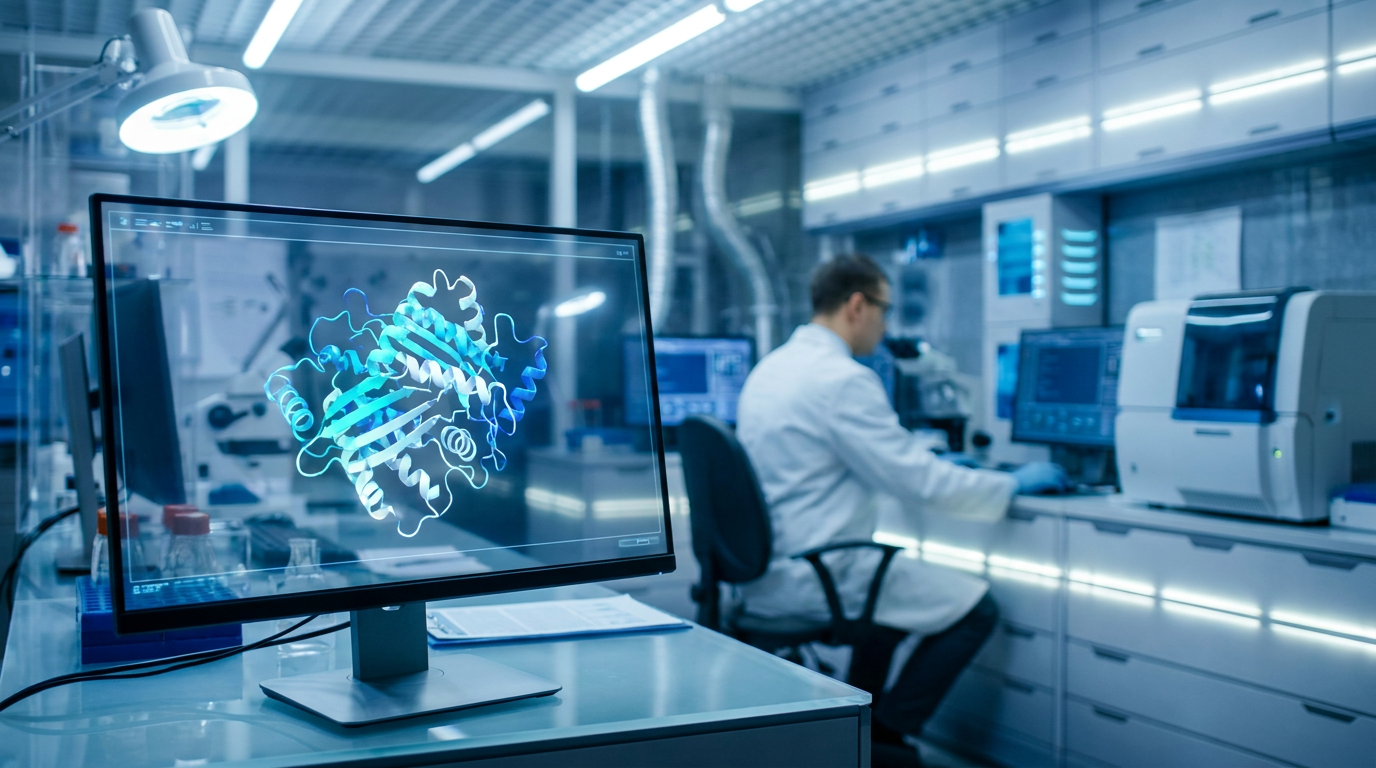
To find entirely new molecular weapons, the Penn team deployed an AI platform named APEX 1.1. Instead of tweaking existing antibiotic structures—a strategy that often yields drugs bacteria can quickly outsmart—the researchers asked the AI to look inward, scanning the human body's own proteins for hidden antimicrobial properties. They focused specifically on prions and prion-like proteins, an area of biology previously ignored by infectious disease researchers.[1][6][7]

The scale of the computational search was staggering. APEX 1.1 analyzed 19.3 million short peptide fragments derived from 2,897 different prion and prion-like proteins. The AI was trained to recognize the subtle structural patterns that allow a molecule to pierce and destroy bacterial cell walls. In a matter of days, the system sifted through the massive dataset and flagged 1,179 highly promising candidate peptides, which the researchers dubbed "prionins."[1][2][3]
APEX 1.1 analyzed 19.3 million short peptide fragments derived from 2,897 different prion and prion-like proteins.
But predictions on a computer screen do not cure infections. The true test of any AI-generated drug candidate is whether it actually works in living tissue. The researchers synthesized several of the top-ranked prionins in the laboratory and tested them against Acinetobacter baumannii, a notoriously difficult-to-treat pathogen that frequently causes severe hospital-acquired infections and is highly resistant to multiple antibiotics.[1][5][8]
The results bridged the gap between digital prediction and biological reality. In a standard mouse model of skin infection, the AI-discovered prionins successfully reduced bacteria levels. Their bacteria-killing efficacy was comparable to polymyxin B, a powerful "last-resort" antibiotic currently used in clinics. Crucially, the mice treated with the new peptides showed no signs of toxicity or treatment-related weight loss.[1][2][3]

"This is where the story becomes more than a computer screen," noted Marcelo D. T. Torres, the study's co-first author. "The AI search gave us a short list of candidates, but the important point is that many of those molecules worked in the lab, and two worked in an animal infection model. That is what makes this a discovery platform, not just a prediction exercise."[1][3]
Beyond the immediate promise of new drugs, the research raises profound evolutionary questions. Why would proteins associated with severe neurodegeneration contain fragments capable of fighting off bacteria? Biologists have long suspected a hidden link between the brain's misfolding proteins and the body's ancient innate immune system. Earlier studies had hinted that fragments of amyloid-beta—the protein implicated in Alzheimer's disease—could neutralize microbes in a petri dish.[1][2][8]
The APEX 1.1 platform has now systematically proven this link at scale, demonstrating that prion-like proteins are rich with antimicrobial sequences. Some evolutionary biologists theorize that these proteins may have originally evolved as a defense mechanism against brain infections, only to become destructive when they misfold and aggregate later in life. The AI has effectively allowed scientists to isolate the beneficial, immune-defending fragments while leaving the disease-causing structure behind.[2][6][8]

This breakthrough exemplifies a broader shift in how the pharmaceutical industry is operating in 2026. For decades, drug discovery was a manual, serendipitous process—researchers would screen thousands of soil samples or synthetic compounds in physical labs, hoping for a hit. Today, generative AI models and deep-learning platforms are simulating billions of molecular interactions in silicon, shrinking the initial discovery phase from years to months.[7][8]
The next step for the Penn researchers is to optimize the two successful prionins for human clinical trials, a process that involves tweaking their chemical structures to ensure they are stable in the bloodstream and safe for human organs. Simultaneously, the team plans to point their APEX platform at other classes of human proteins, searching the rest of the proteome for more hidden cures that have been hiding in plain sight.[1][3][6]
How we got here
Early 2000s
Scientists begin noting that fragments of proteins linked to Alzheimer's disease exhibit mild antimicrobial properties in petri dishes.
2020-2024
The World Health Organization repeatedly warns that the pipeline for new antibiotics is insufficient to combat rising antimicrobial resistance.
June 2026
University of Pennsylvania researchers publish findings showing their AI platform successfully identified and validated new antibiotics hidden within prions.
Viewpoints in depth
Computational Biologists
Emphasize the unprecedented ability of deep learning to parse millions of molecular structures and find therapeutic patterns invisible to human researchers.
For computational biologists, the discovery of prionins is a validation of AI's ability to fundamentally alter the speed and scope of scientific discovery. Traditional drug screening relies heavily on physical testing and human intuition, which inherently limits the number of compounds that can be evaluated. By using deep learning to scan 19.3 million peptide fragments in a matter of days, researchers can explore biological spaces that were previously too vast to comprehend. This perspective argues that AI is no longer just a tool for optimizing existing drugs, but a necessary engine for uncovering entirely novel mechanisms of action that human researchers would never have thought to investigate.
Infectious Disease Experts
Focus on the urgent clinical need for entirely new classes of antibiotics to combat the escalating global crisis of antimicrobial resistance.
Public health officials and infectious disease specialists view this breakthrough through the lens of a ticking clock. Antimicrobial resistance is rendering many of our most reliable drugs useless, turning routine infections into life-threatening crises. Because bacteria evolve so rapidly, simply modifying existing antibiotics only provides a temporary fix. This camp stresses that finding an entirely new class of antimicrobial agents—especially ones derived from human proteins that bacteria have not yet adapted to—is critical for maintaining the safety of modern medical procedures, from chemotherapy to joint replacements.
Evolutionary Biologists
Intrigued by the biological implication that neurodegenerative proteins may have originally evolved as part of the body's ancient innate immune defense system.
Beyond the immediate medical applications, evolutionary biologists are fascinated by what this discovery reveals about human biology. Prions and amyloid proteins are almost exclusively known for their destructive role in neurodegenerative diseases. However, the fact that these same proteins contain highly effective bacteria-killing sequences suggests they may have originally evolved as a primitive immune defense mechanism for the brain. This perspective suggests that neurodegeneration might be a tragic side effect of an ancient biological system designed to protect the central nervous system from infection, opening up new avenues for understanding diseases like Alzheimer's and Creutzfeldt-Jakob.
What we don't know
- It remains unclear exactly how these prionins will perform in human clinical trials, which are still years away.
- Researchers do not yet know if bacteria will be able to quickly develop resistance to this new class of human-derived peptides.
- The exact evolutionary reason why disease-causing prions contain these immune-defending fragments is still a subject of scientific debate.
Key terms
- Antimicrobial Resistance (AMR)
- The ability of bacteria and other microbes to evolve and survive the drugs designed to kill them, making infections harder to treat.
- Antimicrobial Peptide
- Small proteins that are part of the innate immune response and have the ability to kill bacteria by disrupting their cell walls.
- Proteome
- The entire set of proteins that is, or can be, expressed by a genome, cell, tissue, or organism at a certain time.
- Innate Immunity
- The body's first line of defense against pathogens, built into our genetic code and present from birth.
Frequently asked
What are prions?
Prions are misfolded proteins known for causing fatal neurodegenerative diseases, such as 'mad cow' disease. Researchers have now discovered that fragments of these proteins also contain bacteria-killing properties.
What is the APEX 1.1 platform?
APEX 1.1 is a deep-learning artificial intelligence system used by researchers to scan millions of protein fragments and predict which ones have the structural ability to destroy bacteria.
Will this cure antibiotic resistance immediately?
No. While discovering a new class of antibiotics is a massive breakthrough, these newly identified molecules must still undergo years of optimization and human clinical trials before they can be prescribed to patients.
What is Acinetobacter baumannii?
It is a highly drug-resistant species of bacteria that often causes severe, difficult-to-treat infections in hospital settings. The new AI-discovered antibiotics successfully reduced infections caused by this pathogen in animal models.
Sources
Source coverage
8 outlets
3 viewpoints surfaced








[1]News-MedicalEvolutionary Biologists
AI discovers hidden antibiotic candidates inside disease-causing prions
Read on News-Medical →[2]Nature MicrobiologyComputational Biologists
Deep learning identifies antimicrobial peptides within prion and prion-like proteins
Read on Nature Microbiology →[3]University of PennsylvaniaEvolutionary Biologists
New antibiotic candidates for drug-resistant bacteria may reside inside prions
Read on University of Pennsylvania →[4]World Health OrganizationInfectious Disease Experts
Antimicrobial resistance
Read on World Health Organization →[5]Centers for Disease Control and PreventionInfectious Disease Experts
Antibiotic Resistance Threats in the United States
Read on Centers for Disease Control and Prevention →[6]STATInfectious Disease Experts
In the hunt for new antibiotics, AI points researchers toward an unlikely source: prions
Read on STAT →[7]Fierce BiotechComputational Biologists
UPenn's AI platform uncovers 'prionins' to fight superbugs
Read on Fierce Biotech →[8]Factlen Editorial TeamEvolutionary Biologists
Synthesis by Factlen editorial team
Read on Factlen Editorial Team →


Every angle. Every day.
Get ai stories with full source coverage and perspective breakdowns delivered to your inbox.