
The Rise of the 'Analog Bag' and Slow Media: Why Millions Are Going Offline for Entertainment
Driven by digital fatigue and algorithmic burnout, a massive viral trend is pushing young adults toward 'analog bags,' slow media, and cozy gaming to reclaim their attention.
By Factlen Editorial Team

- Digital Minimalists
- Advocate for replacing screen time with physical, tactile hobbies to repair attention spans.
- Cozy Gaming Advocates
- Argue that digital spaces can be therapeutic if designed for emotional safety and relaxation.
- Cultural Analysts
- Focus on how digital fatigue is forcing a structural shift in marketing and media consumption.
What's not represented
- · Social Media Platform Executives
- · Traditional Competitive Gamers
Why this matters
As screen time reaches historic highs, this shift toward tactile hobbies and low-stress media offers a proven, accessible blueprint for protecting mental health and rebuilding attention spans in a hyper-connected world.
Key points
- The 'analog bag' trend encourages carrying physical crafts and puzzles to replace doomscrolling.
- Searches for offline activities like needlepoint and watercolor have surged by 160 percent.
- 'Brainrot' and algorithmic fatigue are driving a desperate need for single-tasking and mental clarity.
- The digital 'cozy gaming' market is booming as a parallel low-stress entertainment option.
- Paradoxically, social media platforms like TikTok are the primary discovery engines for these offline hobbies.
In early 2026, a peculiar aesthetic began dominating the very digital platforms it was designed to escape. Across TikTok and Instagram, millions of young users started showing off their "analog bags"—curated totes filled with film cameras, crochet hooks, crossword puzzles, and physical journals. The explicit goal of this viral movement is simple: to have something tangible to reach for when the urge to endlessly scroll strikes. It represents a striking cultural pivot. After years of escalating screen time and algorithmic immersion, a significant portion of Generation Z and Millennials are actively seeking ways to physically disconnect from their devices.[1][2]
This phenomenon, often affectionately dubbed the return of "grandma hobbies," has transformed screen-free creativity from a niche interest into a mainstream digital detox strategy. The numbers behind this shift are not subtle. Recent search data indicates a 160 percent spike in queries for analog hobbies, with needlepoint, watercolor painting, and puzzle-solving leading the charge. Retailers and trend forecasters note that shoppers are increasingly hunting for activities that feel grounding and personal, rather than performative. It is a measurable economic shift toward products that demand physical engagement and single-tasking, moving away from the ephemeral nature of digital consumption.[1][4]
To understand the mechanism driving this analog flight, one must look at the current state of digital entertainment and the rise of what younger demographics call "brainrot." This self-aware term is used to describe the hyper-fast, nonsensical, and overstimulating content that currently dominates short-form video feeds. Platforms have optimized their algorithms to deliver constant micro-doses of dopamine, often utilizing split-screen videos that pair a narrative clip with unrelated, high-stimulation gameplay footage—like someone cutting kinetic sand or playing mobile games—just to retain a viewer's fracturing attention.[5][6]

This relentless digital environment has taken a measurable neurological toll. Media theorists and psychologists point out that the attention economy is designed to extract engagement at the cost of mental clarity, leaving many users experiencing profound attention fatigue. The constant ping of notifications, algorithm-driven feeds, and the pressure to remain perpetually online create a state of ambient anxiety. For a generation that has grown up entirely within this ecosystem, the exhaustion is palpable. They are not just bored; they are overstimulated to the point of burnout, prompting a desperate craving for activities that require a slower, more deliberate pace.[4][5][6]
Analog hobbies function as a neurological reset mechanism against this backdrop of digital exhaustion. When a person engages in knitting, origami, or building a miniature model, they are forced to slow their brain down and focus on a single, tactile task. The hands are occupied, the sensory feedback is physical, and the reward is a tangible object rather than a digital metric. Experts in mindfulness argue that these activities provide a necessary digital sanctuary, allowing the nervous system to regulate itself. The friction of the physical world—the texture of yarn, the smell of paint—anchors the mind in the present moment.[2][6]
Analog hobbies function as a neurological reset mechanism against this backdrop of digital exhaustion.
This desire for deliberate engagement extends beyond physical crafts into a broader cultural movement known as "slow media." Slow media advocates for content that prioritizes depth over speed, respecting the audience's attention rather than demanding it. It is a direct rejection of viral, fast-paced content in favor of long-form podcasts, thick print magazines, and even hours-long videos of train rides through snowy landscapes. Consumers are actively choosing quality over quantity, seeking out media experiences that they can control and savor, rather than being swept away by an algorithmic current that dictates their consumption minute by minute.[4][6]
Interestingly, this craving for low-stress engagement has birthed a massive parallel trend within the digital realm itself: the explosion of "cozy gaming." While traditional video games often rely on high-stakes competition, violence, or intense twitch-reflexes, the cozy game genre focuses entirely on emotional safety, community building, and relaxation. Titles that emulate the serene, low-pressure environments of farming simulators, town-building, or puzzle-solving adventures have surged in popularity. These games offer a digital sanctuary that mimics the soothing, single-tasking nature of analog crafts, proving that the desire for slowness transcends the physical-digital divide.[3][6]
The economics of the cozy gaming sector underscore just how powerful this shift has become. The global online cozy game market reached an estimated $973 million recently and is projected to climb past $1.4 billion by the early 2030s. Developers are increasingly pivoting away from the "mascot horror" and viral jump-scare models of the past decade, focusing instead on creating "comfort characters" and environments that foster long-term parasocial loyalty. Players are looking for digital spaces where they can spend hundreds of hours unwinding, rather than seeking a quick adrenaline spike, fundamentally altering how indie studios approach game design.[3][6]

However, the analog revival and the push for slow media are not without their paradoxes. The most glaring irony is that the movement is heavily fueled by the very platforms it seeks to counteract. TikTok and YouTube are the primary discovery engines driving the popularity of offline hobbies, with creators sharing stitching tutorials, aesthetic journaling videos, and cozy craft hauls. This creates a cyclical tension for the user: they must log on to learn how to log off. Social platforms serve as the doorway back into the real world, but they constantly threaten to pull the user back into the scroll.[1][2]
Furthermore, the trend has rapidly commercialized, leading to what some critics call the "cemetery of hobbies." The aesthetic appeal of the analog bag often encourages rampant consumerism, prompting people to buy expensive new leather totes, specialized imported journals, and elaborate craft kits they may never actually use. The paradox is evident: it has never been easier to discover a new offline passion, yet it has never been harder to sustain the attention required to master it. When the hobby becomes more about purchasing the right gear for a social media post than the act of creation itself, the mental health benefits quickly evaporate.[1][2][6]

Despite these contradictions, the marketing and media industries are being forced to adapt to this durable shift in consumer behavior. Brands are realizing that chasing fleeting viral moments on TikTok is increasingly failing with a demographic that actively resists always-on culture. Forward-thinking companies are rewriting their playbooks to focus on physical community spaces, sponsoring analog events, and investing in high-quality, tangible products. They recognize that meaningful engagement now requires substance and a respect for the consumer's desire to disconnect, rather than just adding to the overwhelming digital chatter.[4][6]
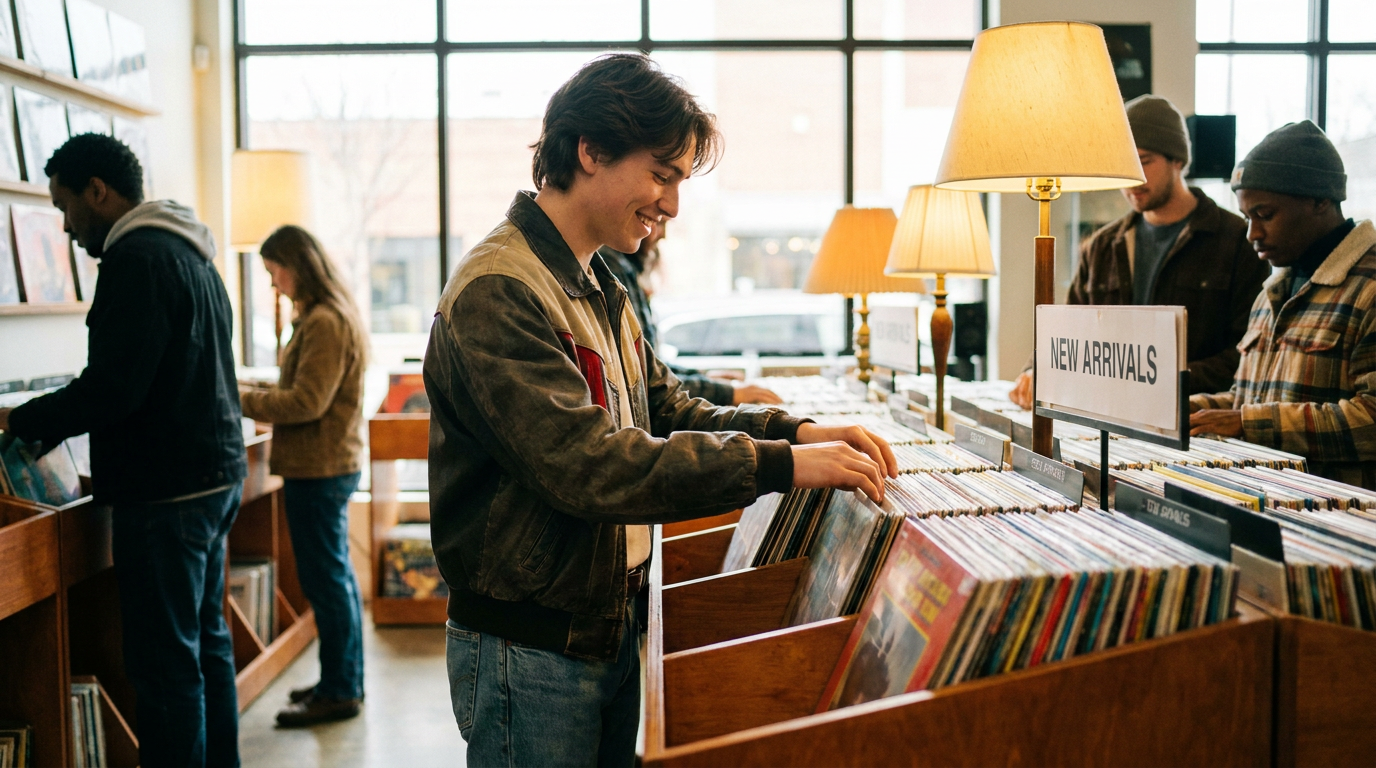
Ultimately, the analog revival is not a luddite rejection of the internet, but rather a sophisticated upgrade to how people manage their digital lives. It is a deliberate, hands-on effort to reclaim agency over attention and protect mental space. Whether it is through collecting physical media like vinyl records, spending an evening in a low-stakes cozy game, or simply carrying a crossword puzzle on the subway, the goal remains the same. In an increasingly loud and hyper-connected world, millions are finding that the ultimate luxury is simply the ability to slow down and focus on one thing at a time.[1][4][6]
How we got here
Early 2020s
Pandemic lockdowns trigger a massive initial surge in screen time and digital dependency.
2024
The global cozy gaming market reaches nearly $1 billion as players seek low-stress digital environments.
Late 2025
The term 'brainrot' enters mainstream lexicon to describe the fatigue caused by hyper-fast, algorithmic content.
Early 2026
The 'analog bag' trend goes viral on TikTok, driving a 160% spike in searches for traditional crafts.
Viewpoints in depth
Digital Minimalists
Advocate for replacing screen time with physical, tactile hobbies to repair attention spans.
This camp argues that the only way to truly recover from algorithmic fatigue is to sever ties with the digital feed entirely during leisure time. They point to the neurological benefits of single-tasking and tactile feedback—such as the feeling of yarn or the smell of paint—as essential for regulating the nervous system. For minimalists, the analog bag isn't just an aesthetic; it is a necessary survival tool against an attention economy designed to extract every spare second of human focus.
Cozy Gaming Advocates
Argue that digital spaces can be therapeutic if designed for emotional safety and relaxation.
Unlike strict minimalists, this group believes that technology itself is not the enemy, but rather the hyper-competitive and viral-driven design of modern platforms. They champion games like farming simulators and town-builders that offer low-stakes, community-focused environments. By providing a digital sanctuary where players can unwind for hundreds of hours without fear of jump-scares or toxic competition, they argue that cozy games deliver the same psychological relief as physical crafts.
Cultural Analysts
Focus on how digital fatigue is forcing a structural shift in marketing and media consumption.
Media theorists and market researchers view the analog revival as a massive market correction. They note that younger demographics are actively resisting hollow, fast-paced content, forcing brands to abandon cheap virality. This camp emphasizes that the future of engagement lies in 'slow media'—long-form podcasts, physical community spaces, and high-quality tangible products that respect a consumer's time and desire for deliberate, meaningful interaction.
What we don't know
- Whether the analog revival is a permanent behavioral shift or just another fleeting aesthetic trend that will fade.
- How major social media platforms will adapt their algorithms if a critical mass of users successfully curtails their screen time.
Key terms
- Analog Bag
- A curated tote filled with non-digital items like journals, crafts, and puzzles, designed to be used instead of a smartphone.
- Brainrot
- A slang term describing the chaotic, hyper-fast, and overstimulating content that dominates short-form video feeds.
- Slow Media
- A movement advocating for content consumption that prioritizes depth, focus, and deliberation over speed and virality.
- Cozy Gaming
- A video game genre focused on emotional safety, relaxation, and community building rather than high-stakes competition.
Frequently asked
What exactly is an analog bag?
It is a bag packed with screen-free activities—such as a physical book, a crossword puzzle, knitting supplies, or a film camera—that you reach for when you feel the urge to scroll on your phone.
Why are 'grandma hobbies' becoming so popular?
Younger generations are experiencing profound digital fatigue and are turning to tactile, single-tasking activities like crochet and needlepoint to slow their brains down and relieve anxiety.
Are cozy games considered part of this trend?
Yes. Even though they are digital, cozy games like farming simulators offer a low-stress, 'slow media' experience that provides similar mental health benefits to physical crafts.
Sources
Source coverage
6 outlets
3 viewpoints surfaced






[1]HOLADigital Minimalists
Millennial and Gen-z moms are turning to grandma'-inspired crafts: Here's why everyone should do the same
Read on HOLA →[2]Harper's BazaarDigital Minimalists
El regreso de los hobbies analógicos en la era del doomscrolling
Read on Harper's Bazaar →[3]Intel Market ResearchCozy Gaming Advocates
Online Cozy Game Market Outlook 2025-2032
Read on Intel Market Research →[4]Mediaplus GroupCultural Analysts
How digital disconnect and the rise of slow media is rewriting the Gen-Z marketing playbook
Read on Mediaplus Group →[5]ScreenwiseCultural Analysts
Brainrot, Aura, and '6-7': Decoding the TikTok Trends Your Kids Are Repeating
Read on Screenwise →[6]Factlen Editorial TeamCultural Analysts
Synthesis by Factlen editorial team
Read on Factlen Editorial Team →
Every angle. Every day.
Get entertainment stories with full source coverage and perspective breakdowns delivered to your inbox.