
The Science of Psychobiotics: How Gut Bacteria Shape Mental Health
Emerging research in nutritional psychiatry reveals that the trillions of microbes in the human digestive tract directly influence brain chemistry, stress resilience, and mood. By targeting the gut-brain axis with specific diets and 'psychobiotics,' scientists are unlocking new, accessible tools for managing mental health.
By Factlen Editorial Team
- Microbiome Researchers
- Focus on isolating specific bacterial strains and mapping the precise biochemical pathways that influence the brain.
- Nutritional Psychiatrists
- View dietary interventions as a foundational pillar of mental health care, alongside therapy and medication.
- Clinical Skeptics
- Emphasize the need for larger, long-term human trials and caution against the commercial hype of over-the-counter probiotic supplements.
What's not represented
- · Gastroenterologists treating physical gut disorders
- · Commercial supplement manufacturers
Why this matters
For decades, mental health treatment has focused almost exclusively on the brain. Understanding that the gut microbiome actively shapes mood and anxiety opens up accessible, everyday dietary interventions that anyone can use to build stress resilience and support their psychological well-being.
Key points
- The gut-brain axis is a bidirectional communication network linking the digestive tract to the central nervous system.
- An estimated 90% of the body's serotonin, a key mood-regulating neurotransmitter, is produced in the gut.
- Psychobiotics are live microorganisms and prebiotic fibers that confer measurable mental health benefits.
- Recent clinical trials show gut-targeted interventions can significantly reduce symptoms of depression and anxiety.
- Experts emphasize that dietary changes should complement, not replace, traditional psychiatric treatments.
The phrase "gut feeling" is no longer just a metaphor. Over the past decade, the scientific understanding of mental health has undergone a quiet revolution, moving beyond the confines of the skull to the trillions of microorganisms residing in the human digestive tract. What was once considered fringe science has now moved to the forefront of clinical research, revealing that the bacteria in our stomachs are in constant, complex dialogue with our brains.[6]
This paradigm shift has given rise to a burgeoning medical discipline known as "nutritional psychiatry." Rather than viewing diet merely as a tool for weight management or cardiovascular health, researchers are increasingly mapping how the food we consume directly alters brain chemistry, stress resilience, and mood. The foundational premise is that mental well-being is a whole-body phenomenon, heavily dependent on the nutrients we provide our internal ecosystems.[4]
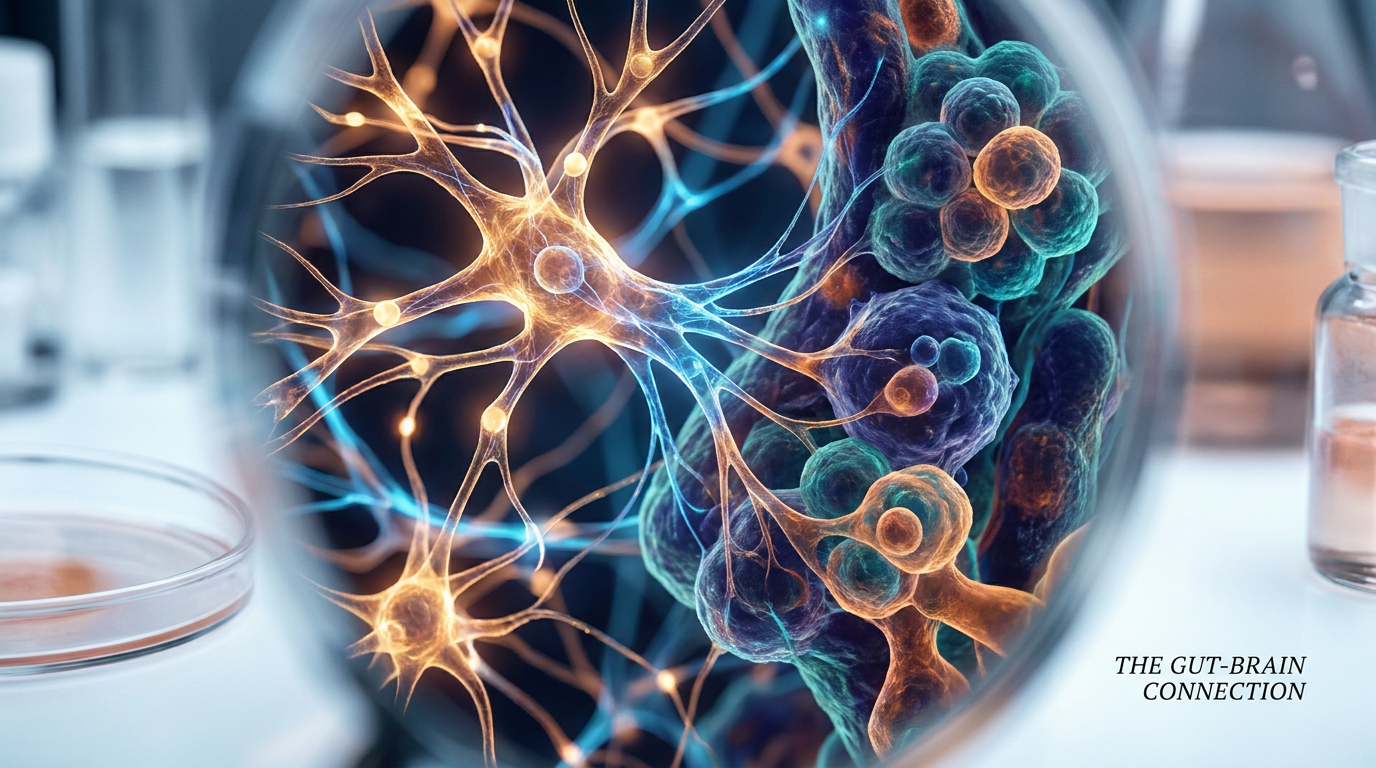
At the center of this research is the "gut-brain axis," a bidirectional communication network linking the enteric nervous system of the gastrointestinal tract with the central nervous system. This axis ensures that signals travel continuously from the brain to the gut—explaining why anxiety can cause an upset stomach—and, crucially, from the gut back to the brain.[1]
For decades, the standard psychiatric model focused heavily on neurotransmitter imbalances within the brain itself. However, recent comprehensive reviews published in leading journals have provided the strongest proof yet that the microbiome—the diverse community of bacteria, viruses, and fungi in the gut—plays a foundational role in shaping those very neurotransmitters and regulating the body's physiological response to stress.[2]

The communication between the gut and the brain relies on several distinct biological highways. The most direct route is the vagus nerve, a massive cranial nerve that extends from the brainstem down into the abdomen. This nerve acts as an information superhighway, transmitting sensory data about the state of the microbiome directly to the brain's emotional and cognitive centers.[5]
Beyond the vagus nerve, gut bacteria act as microscopic biochemical factories. Remarkably, an estimated 90 percent of the body's serotonin—a neurotransmitter critical for mood regulation, happiness, and sleep—is produced in the digestive tract, alongside other key neurochemicals like gamma-aminobutyric acid (GABA) and dopamine. When the gut is unhealthy, the production of these vital mood-stabilizing chemicals is compromised.[1]
A third crucial mechanism involves Short-Chain Fatty Acids (SCFAs), such as butyrate, acetate, and propionate. When beneficial gut bacteria ferment dietary fiber, they produce these SCFAs, which then travel through the bloodstream. SCFAs are vital for maintaining the integrity of the blood-brain barrier and regulating neuroinflammation, a condition increasingly linked to severe depression and cognitive decline.[4]
A third crucial mechanism involves Short-Chain Fatty Acids (SCFAs), such as butyrate, acetate, and propionate.
This mechanistic understanding has led to the concept of "psychobiotics"—a term coined to describe live microorganisms (probiotics) and the fibers that feed them (prebiotics) which, when ingested in adequate amounts, confer measurable mental health benefits to the host.[1]
Clinical evidence supporting psychobiotics is rapidly accumulating. Sweeping meta-analyses of randomized controlled trials conducted over the last two years found that gut-targeted interventions significantly reduced symptoms of both clinical depression and anxiety, offering a novel therapeutic approach for patients who may not fully respond to traditional medications.[3]

Specific bacterial strains have shown particular promise in these trials. For instance, interventions utilizing well-characterized strains of Lactobacillus and Bifidobacterium have demonstrated measurable improvements in affective and stress-related outcomes. These strains appear to actively lower cortisol levels and dampen the hypothalamic-pituitary-adrenal (HPA) axis, the body's central stress response system.[5]
So, how does one cultivate a psychobiotic microbiome? The answer lies in sustainable dietary patterns rather than isolated, over-the-counter supplements. Western diets, characterized by ultra-processed foods, high saturated fats, and low fiber, are consistently associated with reduced microbial diversity, increased intestinal permeability (often called "leaky gut"), and chronic low-grade inflammation.[4]
Conversely, a "psychobiotic diet" emphasizes whole, plant-based foods rich in prebiotic fibers—such as onions, garlic, asparagus, oats, and legumes. These complex carbohydrates resist human digestion, traveling intact to the lower gut where they serve as essential fuel for beneficial, SCFA-producing bacteria.[6]

Fermented foods also play a starring role in this nutritional approach. Foods containing live active cultures, including kefir, kimchi, sauerkraut, kombucha, and traditional yogurt, introduce transient beneficial microbes that help modulate the gut environment, crowd out harmful pathogens, and reduce systemic inflammation.[1]
Despite the immense promise of nutritional psychiatry, researchers caution against viewing psychobiotics as a standalone cure-all. The effects observed in clinical trials, while statistically significant, are generally small to moderate, and individual responses vary wildly based on a person's baseline microbiome, genetics, and environment.[5]

Furthermore, the field faces ongoing challenges in standardizing dosages, identifying the most effective bacterial strains for specific psychiatric conditions, and conducting the large-scale, long-term trials necessary to cement these therapies in standard clinical guidelines. Much of the current data relies on short-term interventions, leaving questions about long-term efficacy.[3]
Ultimately, the integration of microbiome science into mental health care represents a profound shift toward holistic medicine. By recognizing that mental well-being is a whole-body phenomenon, clinicians and patients are gaining a powerful, accessible new tool: the ability to support the mind by nourishing the gut.[2][6]
How we got here
2013
The International Society for Nutritional Psychiatry Research is founded to study the link between diet and mental health.
2016
The term 'psychobiotics' is expanded by researchers to include prebiotics and broad dietary interventions.
2021
Major scientific reviews establish the critical role of Short-Chain Fatty Acids in regulating neuroinflammation.
2025
Large-scale meta-analyses confirm that gut-targeted interventions significantly reduce symptoms of clinical depression and anxiety.
Viewpoints in depth
Nutritional Psychiatrists
View dietary interventions as a foundational pillar of mental health care, alongside therapy and medication.
This camp argues that the modern Western diet is a primary driver of the global mental health crisis. They point to evidence showing that ultra-processed foods degrade the gut lining and trigger systemic inflammation, which directly impairs brain function. For these practitioners, prescribing a diet rich in fiber and fermented foods is just as critical as prescribing traditional psychiatric medications, viewing food as the ultimate preventative medicine.
Microbiome Researchers
Focus on isolating specific bacterial strains and mapping the precise biochemical pathways that influence the brain.
Scientists in the lab are less focused on broad dietary advice and more interested in the exact mechanisms of action. They seek to identify which specific strains of Lactobacillus or Bifidobacterium produce the most GABA or serotonin, and how exactly Short-Chain Fatty Acids cross the blood-brain barrier. Their ultimate goal is to develop targeted, pharmaceutical-grade psychobiotics that can treat specific psychiatric conditions with the precision of traditional drugs.
Clinical Skeptics
Emphasize the need for larger, long-term human trials and caution against the commercial hype of over-the-counter probiotic supplements.
While acknowledging the reality of the gut-brain axis, this camp warns that the science is currently outpacing the clinical evidence. They highlight that many positive results come from animal models or small, short-term human trials. Skeptics argue that the commercial supplement industry has hijacked the term 'psychobiotic' to sell unproven products, and they stress that individual microbiomes are too unique for a one-size-fits-all probiotic solution to mental illness.
What we don't know
- Which specific bacterial strains are most effective for distinct psychiatric conditions.
- How individual genetic differences alter the brain's response to microbiome changes.
- The exact standardized dosages required for therapeutic clinical outcomes.
Key terms
- Gut-Brain Axis
- The bidirectional communication network that links the enteric nervous system of the digestive tract with the central nervous system of the brain.
- Psychobiotics
- Probiotics and prebiotics that specifically confer mental health benefits by interacting with the gut-brain axis.
- Short-Chain Fatty Acids (SCFAs)
- Metabolites produced when gut bacteria ferment dietary fiber, which help reduce neuroinflammation and protect the blood-brain barrier.
- Vagus Nerve
- A major cranial nerve that acts as an information superhighway, transmitting signals directly between the gut and the brain.
- Microbiome
- The diverse community of trillions of bacteria, viruses, and fungi that reside in the human digestive tract.
Frequently asked
What exactly is a psychobiotic?
A psychobiotic is a live microorganism (probiotic) or a fiber that feeds it (prebiotic) which, when consumed in adequate amounts, produces a measurable mental health benefit.
Can changing my diet replace my antidepressants?
No. Experts emphasize that dietary changes and psychobiotics should be used as an adjunctive (complementary) therapy alongside traditional treatments, not as a replacement for prescribed medication.
How long does it take for diet to change the gut microbiome?
While the microbiome can begin to shift within a few days of a major dietary change, clinical trials suggest it typically takes 4 to 12 weeks of sustained intervention to see measurable improvements in mood or anxiety.
Are probiotic supplements as effective as fermented foods?
Researchers generally prefer whole-food sources like kefir and kimchi, as they provide a wider diversity of bacterial strains along with beneficial nutrients, whereas supplements often contain isolated strains that may not survive digestion.
Sources
Source coverage
6 outlets
3 viewpoints surfaced






[1]Frontiers in NutritionMicrobiome Researchers
Psychobiotics and the Gut-Brain Axis: A Clinical Review
Read on Frontiers in Nutrition →[2]Nature Mental HealthMicrobiome Researchers
The microbiome directly affects brain chemistry and stress responses
Read on Nature Mental Health →[3]ClinicalTrials.govClinical Skeptics
Gut Microbiome-Targeted Interventions in Mental Health
Read on ClinicalTrials.gov →[4]NutrientsNutritional Psychiatrists
Nutritional Psychiatry: How Diet Affects Brain through Gut Microbiota
Read on Nutrients →[5]Experimental PhysiologyClinical Skeptics
Psychobiotics as an adjunct in integrative mental health care
Read on Experimental Physiology →[6]Factlen Editorial TeamNutritional Psychiatrists
Synthesis by Factlen editorial team
Read on Factlen Editorial Team →

More in health
See all 7 stories →Exercise Science
The Science of Zone 2: Why the Strongest Longevity Drug is Moving Slowly
7 sources

Clinical Guidelines
Exercise Matches Medication for Depression and Anxiety in Massive New Clinical Review
6 sources

Longevity Science
The Science of 'Blue Zones': What Actually Drives Human Longevity
6 sources

Zone 2 Cardio
The Science of Zone 2 Cardio: Why Slowing Down is the Key to Longevity
6 sources

Every angle. Every day.
Get health stories with full source coverage and perspective breakdowns delivered to your inbox.