
Inside F1's 2026 Revolution: Smaller Cars, Active Aero, and 100% Sustainable Fuel
Formula 1 is undergoing its most radical technical overhaul in decades, introducing lighter cars, a 50/50 hybrid power split, and fully sustainable fuels. The 2026 regulations aim to improve racing action while pushing the automotive industry toward a net-zero future.
By Factlen Editorial Team
- FIA & Regulators
- Prioritizes the long-term health of the sport through sustainable technologies, closer racing, and stricter safety standards.
- F1 Engineers & Teams
- Views the regulations as a monumental technical challenge, focusing on the complexities of energy management and aerodynamic efficiency.
- Environmental Advocates
- Celebrates the 100% sustainable fuel mandate as a crucial step toward decarbonizing the broader automotive industry.
- Motorsport Purists
- Welcomes the smaller, lighter cars and the removal of DRS, hoping for a return to organic, driver-led overtaking.
What's not represented
- · Consumer automotive manufacturers not involved in F1
- · Lower-tier motorsport categories adapting to F1's trickle-down tech
Why this matters
The 2026 regulations represent a massive leap in automotive engineering, turning Formula 1 into a high-speed laboratory for sustainable fuels and advanced hybrid systems. The innovations tested on the track this year will directly influence the efficiency and environmental impact of consumer vehicles in the coming decade.
Key points
- The 2026 F1 cars are 30kg lighter, 200mm shorter, and 100mm narrower than previous models.
- Traditional DRS has been replaced by active aerodynamics available to all drivers on every lap.
- Power units now feature a 50/50 split between combustion and electrical power, with the MGU-K output tripling.
- All cars must run on 100% sustainable 'drop-in' fuels, advancing F1's Net Zero 2030 goal.
- Overtaking is now facilitated by a manual electrical override system that deploys extra energy.
- The grid expands with Audi and Cadillac joining, alongside engine commitments from Ford and Honda.
For years, drivers and fans alike have lamented the swelling silhouette of Formula 1 cars. The machines had become heavy, wide, and cumbersome, making close-quarters racing on tight circuits increasingly difficult. But as the 2026 season kicks into gear, the sport has undergone its most radical transformation in decades. The Fédération Internationale de l'Automobile (FIA) has introduced a sweeping set of technical regulations designed to strip away the bloat and return agility to the grid.[5][7]
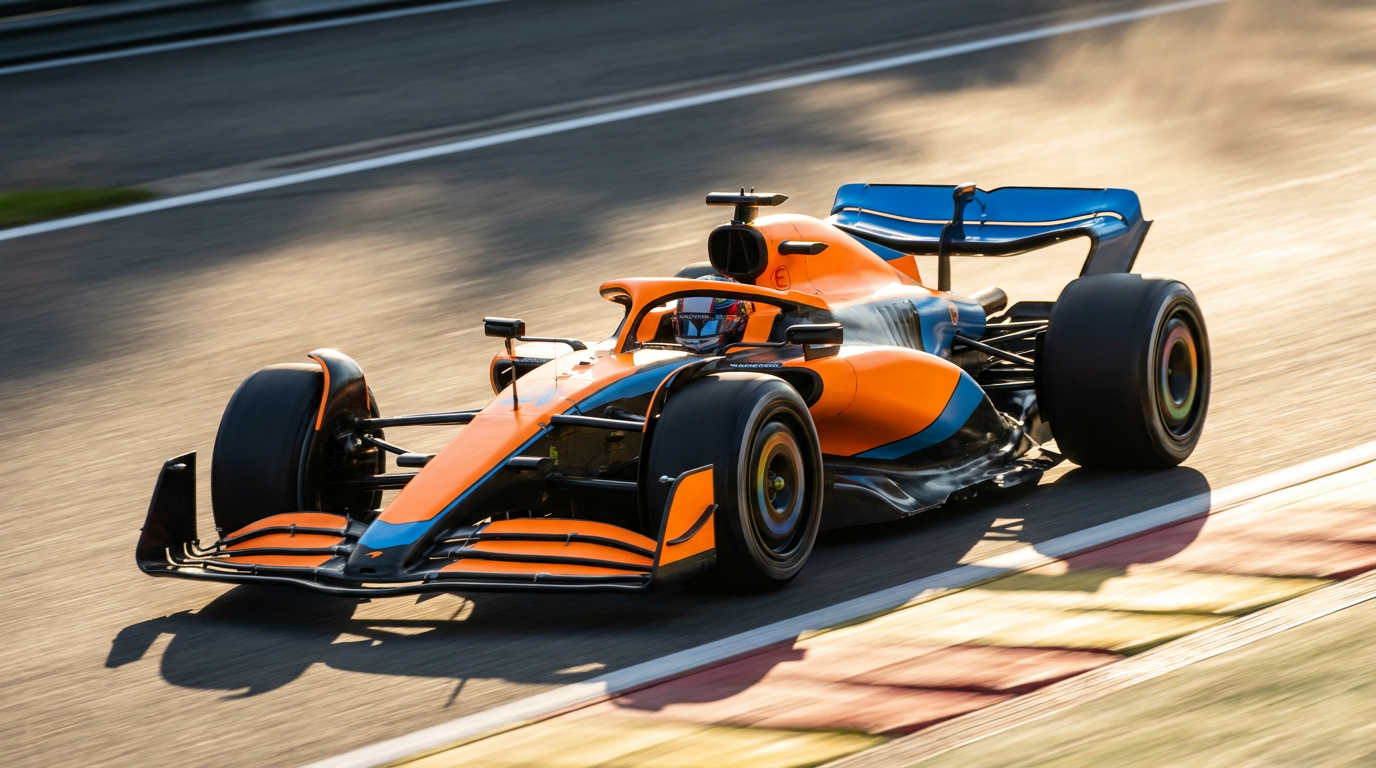
At the heart of this transformation is the 'Nimble Car' concept. The 2026 chassis is significantly smaller than its predecessor. The maximum wheelbase has been reduced from 3600mm to 3400mm, and the overall width has shrunk from 2000mm to 1900mm. Crucially, the minimum weight limit has been slashed by 30 kilograms, bringing the cars down to 768kg. While modern safety standards prevent a return to the featherweight cars of the early 2000s, this reduction marks a critical philosophical shift toward responsiveness.[2][3]
The aerodynamic philosophy has also been entirely rewritten. The ground-effect era introduced in 2022 successfully allowed cars to follow each other more closely, but it also forced teams to run ultra-stiff suspensions that battered drivers. The 2026 regulations feature a partially flat floor and a lower-powered diffuser, reducing overall downforce by roughly 15 to 30 percent. This change minimizes the reliance on extreme ground-effect suction, allowing for higher ride heights and a greater variety of suspension setups.[3][7]

Perhaps the most controversial and exciting change is the death of the Drag Reduction System (DRS) as fans know it. Introduced in 2011, DRS allowed a chasing driver to open a flap in their rear wing to gain a straight-line speed advantage. In 2026, DRS has been replaced by a sophisticated 'Active Aerodynamics' system that applies to every car on the grid, regardless of their proximity to another driver.[2][5]
The new active aero system features movable elements on both the front and rear wings. Drivers can toggle between two primary configurations. 'Z-Mode' is the default high-downforce setting used for cornering and braking, keeping the car planted to the track. Once on a straight, drivers can engage 'X-Mode', a low-drag configuration that opens the wing elements to maximize straight-line speed and efficiency. This dynamic shape-shifting ensures that the cars remain fast on the straights without sacrificing grip in the corners.[5][7]
Because active aero is available to everyone, the FIA had to invent a new mechanism to facilitate overtaking. Enter the 'Overtake Mode', a manual override system tied directly to the car's electrical energy deployment. When a driver is within one second of the car ahead, they are granted an additional 0.5 megajoules of electrical energy. This allows the trailing car to deploy a full 350 kilowatts of power up to 337 km/h, creating a speed differential that makes passing possible.[2][5]
This overtaking mechanic is heavily reliant on the second major pillar of the 2026 regulations: Power Units 2.0. The 1.6-liter turbocharged V6 internal combustion engine remains, but the hybrid architecture surrounding it has been completely overhauled. The complex and expensive Motor Generator Unit-Heat (MGU-H), which harvested energy from the exhaust, has been eliminated entirely.[1][2]
This overtaking mechanic is heavily reliant on the second major pillar of the 2026 regulations: Power Units 2.0.
To compensate for the loss of the MGU-H, the kinetic energy recovery system (MGU-K) has been massively upgraded. Electrical output has nearly tripled, jumping from 120kW to 350kW. This creates a radical 50/50 power split between the internal combustion engine and the electrical system. Energy management is now the defining factor of a Grand Prix, requiring drivers and engineers to meticulously optimize harvesting and deployment throughout a lap.[1][5]

The internal combustion engine itself is also breaking new ground. As part of Formula 1's mission to achieve Net Zero carbon emissions by 2030, the 2026 power units are mandated to run on 100% sustainable fuels. These are 'drop-in' fuels created from non-food biomass, municipal waste, or atmospheric carbon capture. This ensures that no new fossil carbon is released into the atmosphere during a race.[5][6]
The sustainable fuel mandate is a massive boon for the broader automotive industry. Formula 1 serves as a high-profile testbed for these advanced sustainable components (ASCs). By proving that synthetic fuels can deliver over 1,000 horsepower in the most demanding racing environment on Earth, the sport is accelerating the development of fuels that could eventually power millions of existing consumer vehicles without requiring engine modifications.[6][7]
These simplified, road-relevant engine regulations have successfully lured major automotive manufacturers back to the sport. The 2026 grid features an unprecedented lineup of power unit suppliers. Mercedes and Ferrari continue their long-standing operations, while Honda has returned in an exclusive factory partnership with Aston Martin. Red Bull has partnered with Ford to build its first in-house engine from scratch.[1][4]

The grid has also expanded. Audi has officially arrived, completing its takeover of the Sauber team to compete as a full works entry. Furthermore, Cadillac has joined the fray as the sport's eleventh team, utilizing Ferrari power units for their debut season. This influx of heavyweight manufacturers underscores the commercial and technological appeal of the new rulebook.[1][4]
Despite the focus on weight reduction and smaller dimensions, safety has not been compromised. The 2026 chassis introduces a rigorous new standard for driver protection. The front impact structure now features a two-stage nose design to prevent the assembly from snapping off entirely during a crash. Additionally, the roll hoop load requirements have been increased from 16G to 20G, ensuring maximum protection in the event of a rollover.[3][5]

The 2026 regulations represent a delicate balancing act. The FIA has managed to increase electrical power, mandate sustainable fuels, and introduce active aerodynamics while simultaneously shrinking the cars and cutting weight. It is a monumental engineering achievement that redefines what a Grand Prix car can be.[5][7]
As the season unfolds, the true pecking order will be determined by which teams have best mastered the complex interplay between the new aerodynamic profiles and the 50/50 hybrid power units. But regardless of who lifts the championship trophy, the 2026 regulations have already succeeded in making Formula 1 a more agile, sustainable, and fiercely competitive sport.[1][7]
How we got here
2014
Formula 1 introduces the V6 turbo-hybrid engine era, setting new standards for thermal efficiency.
2022
The sport shifts to ground-effect aerodynamics to reduce dirty air and promote closer racing.
June 2024
The FIA officially reveals the 2026 'Nimble Car' regulations, confirming smaller dimensions and active aero.
January 2026
Teams unveil their 2026 liveries and chassis concepts, marking the visual dawn of the new era.
March 2026
The 2026 regulations make their competitive debut at the season-opening Grand Prix.
Viewpoints in depth
FIA & Regulators
Focused on creating a safer, more sustainable, and highly competitive racing environment.
For the governing body, the 2026 regulations are about future-proofing Formula 1. By mandating 100% sustainable fuels and increasing electrification, the FIA ensures the sport remains relevant to global automotive trends and environmental goals. Furthermore, the deliberate reduction in car size and downforce is engineered to solve the persistent issue of 'dirty air,' theoretically allowing drivers to follow each other closely without destroying their tires, leading to more organic on-track battles.
F1 Engineers & Teams
Tasked with solving the immense technical puzzle of the 50/50 power split and active aerodynamics.
Inside the garages, the 2026 rules represent a massive reset. Engineers must completely rethink energy management, as the removal of the MGU-H means cars can no longer harvest energy from the exhaust. Instead, teams must rely heavily on kinetic recovery under braking. Software developers and strategists will play a larger role than ever, as optimizing when and where to deploy the 350kW of electrical energy—while simultaneously managing the active aero modes—will be the primary differentiator between winning and losing.
Motorsport Purists
Optimistic about the return to smaller cars and the elimination of the 'artificial' DRS overtaking aid.
Many long-time fans and traditionalists have celebrated the death of DRS, which was often criticized for making overtakes too easy and artificial on long straights. The shift to a manual 'Overtake Mode' puts the power back in the driver's hands, requiring tactical energy deployment rather than simply opening a wing flap. Additionally, the 30kg weight reduction and shorter wheelbase are seen as a vital first step in curing the sluggish, boat-like handling characteristics that have plagued modern F1 cars in tight street circuits.
What we don't know
- It remains unclear which engine manufacturer has adapted best to the removal of the MGU-H and the new 50/50 power split.
- The exact impact of active aerodynamics on the frequency and quality of overtaking won't be fully known until the first race.
- Whether the 30kg weight reduction is enough to significantly improve the cars' agility on tight street circuits is still debated among drivers.
Key terms
- Active Aerodynamics
- Moveable front and rear wings that adjust dynamically to reduce drag on straights and increase grip in corners.
- MGU-K
- Motor Generator Unit - Kinetic; a system that recovers energy generated under braking and converts it into electrical power.
- MGU-H
- Motor Generator Unit - Heat; a complex exhaust-energy recovery system used since 2014 that has been removed for the 2026 regulations.
- Drop-in Fuel
- A synthetic or biofuel that can be used in existing internal combustion engines without requiring any mechanical modifications.
- Overtake Mode
- A driver-activated system that deploys additional electrical energy to assist in passing the car ahead.
Frequently asked
Is DRS completely gone in 2026?
Yes, the traditional Drag Reduction System has been replaced. Instead, all cars use active aerodynamics to reduce drag on straights, and trailing cars use an electrical 'Overtake Mode' to gain a speed advantage.
Will the 2026 cars be slower?
Top speeds on straights will remain extremely high due to the low-drag aero modes, but cornering speeds will be slightly reduced because overall downforce has been cut by roughly 15 to 30 percent.
What makes the new fuel sustainable?
The fuel is synthesized from non-food biomass, municipal waste, or atmospheric carbon capture. This ensures that burning the fuel releases no new fossil carbon into the atmosphere.
Are there new teams joining the grid?
Yes. Audi has taken over the Sauber team to compete as a full works entry, and Cadillac has joined as an eleventh team using Ferrari engines.
Sources
Source coverage
7 outlets
4 viewpoints surfaced







[1]Formula 1FIA & Regulators
F1 in 2026: The power unit manufacturers and teams
Read on Formula 1 →[2]Red Bull RacingF1 Engineers & Teams
Bulls' Guide To: The F1 2026 Regulations
Read on Red Bull Racing →[3]Motorsport.comF1 Engineers & Teams
F1 2026 car concept revealed: Active aero, smaller dimensions
Read on Motorsport.com →[4]PlanetF1Motorsport Purists
F1 2026 grid: All the teams and engine manufacturers confirmed
Read on PlanetF1 →[5]SilverstoneFIA & Regulators
The five biggest changes coming with the F1 2026 regulations
Read on Silverstone →[6]Sustain FuelsEnvironmental Advocates
How the 2026 F1 regulations will impact sustainable fuel
Read on Sustain Fuels →[7]Factlen Editorial TeamMotorsport Purists
Synthesis by Factlen editorial team
Read on Factlen Editorial Team →
More in sports
See all 5 stories →UFC Lightweight Title
Justin Gaethje Captures Undisputed UFC Lightweight Title, Plans 2027 Return
9 sources

WNBA Milestones
Angel Reese Becomes Fastest Player in WNBA History to Reach 1,000 Career Rebounds
6 sources

Women's Soccer
NWSL Reaches Historic Milestone With Record 138 International Call-Ups Amid Domestic Expansion
6 sources

Every angle. Every day.
Get sports stories with full source coverage and perspective breakdowns delivered to your inbox.