
The Second Brain: How Gut Microbiome Science is Reshaping Mental Health
Emerging research into the gut-brain axis reveals that the trillions of microbes in our digestive system play a profound role in regulating mood, anxiety, and cognitive function.
By Factlen Editorial Team
- Nutritional Psychiatrists
- Advocate for using whole-food dietary patterns, like the Mediterranean diet, as a primary clinical intervention for mood disorders.
- Microbiome Researchers
- Focus on the specific biochemical mechanisms, such as short-chain fatty acids and targeted bacterial strains, that facilitate gut-brain communication.
- Clinical Skeptics
- Emphasize the need for rigorous, large-scale human trials and warn against the overhyped claims of the commercial supplement industry.
What's not represented
- · Commercial supplement manufacturers
- · Gastroenterologists treating IBS
Why this matters
For decades, mental health treatment has focused almost exclusively on the brain. By understanding how diet directly influences neurotransmitter production in the gut, individuals gain a powerful, accessible daily tool to support their emotional and cognitive well-being.
Key points
- The gut contains its own complex nervous system, often called the 'second brain,' which communicates constantly with the central nervous system.
- Up to 95% of the body's serotonin, a crucial neurotransmitter for mood regulation, is manufactured in the digestive tract.
- Gut bacteria ferment dietary fiber into short-chain fatty acids, which reduce neuroinflammation and protect brain health.
- Clinical trials show that dietary interventions, like the Mediterranean diet, can significantly reduce symptoms of clinical depression.
- While commercial probiotic supplements are popular, researchers emphasize that eating prebiotic fiber is a more reliable way to support gut health.
For the better part of a century, the medical consensus surrounding mental health was strictly top-down: the brain was the undisputed command center, and psychological conditions were treated almost exclusively as neurological or chemical imbalances occurring above the neck. However, a quiet revolution in microbiology and psychiatry has fundamentally inverted this model. Researchers are increasingly looking downward, discovering that the human digestive tract is not merely a passive organ for extracting nutrients, but a highly complex sensory and neurological apparatus. This paradigm shift has given rise to the concept of the "second brain," suggesting that our emotional well-being is intimately tethered to the biological ecosystem residing in our gut.[4][6]
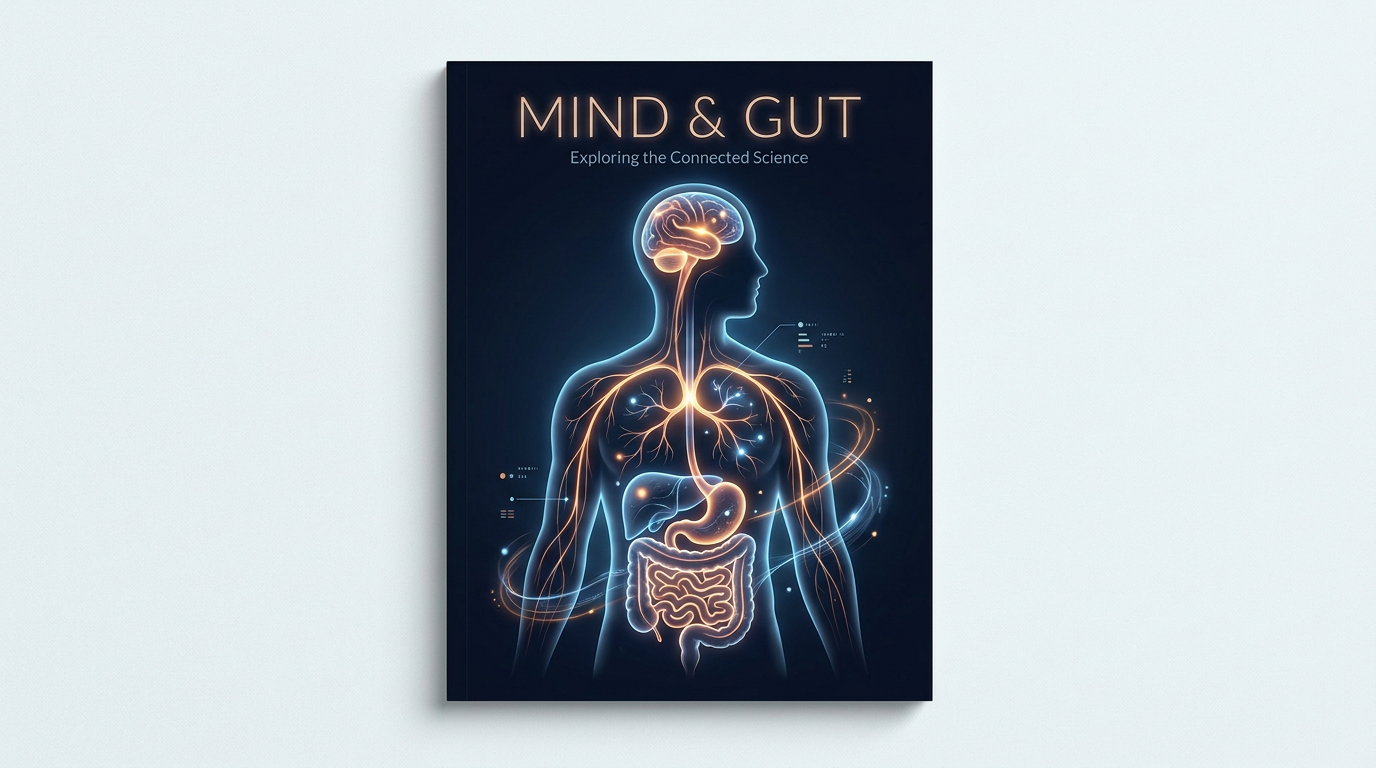
The foundation of this second brain is the enteric nervous system, a vast and intricate network of approximately 500 million neurons embedded in the lining of the gastrointestinal system. To put that number into perspective, the human gut contains more neurons than the spinal cord or the peripheral nervous system. This localized network operates with a surprising degree of independence, capable of managing the complex mechanics of digestion without direct instruction from the brain. Yet, it is far from isolated. It maintains a constant, high-speed dialogue with the central nervous system, transmitting a continuous stream of data about the body's internal environment.[2][4]
The primary conduit for this dialogue is the vagus nerve, a massive biological cable that runs from the brainstem all the way down to the abdomen. Historically, scientists believed the vagus nerve primarily carried signals from the brain downward to control the organs. Modern imaging and neurological tracking have revealed the exact opposite: roughly 80 percent of the nerve fibers in the vagus nerve are afferent, meaning they carry information from the gut upward to the brain. The digestive system is constantly reporting its status, and these signals directly influence the brain regions responsible for processing emotions, stress, and memory.[3][4]
Perhaps the most startling discovery in this field involves the origin of the body's neurotransmitters—the chemical messengers that dictate our moods. Serotonin, the famous "feel-good" molecule targeted by most modern antidepressant medications, is overwhelmingly produced outside the brain. An estimated 90 to 95 percent of the body's serotonin is manufactured in the digestive tract. Specialized cells in the gut lining synthesize this crucial chemical, which then plays a dual role: regulating intestinal movements locally while simultaneously influencing the systemic signals that govern sleep, appetite, and emotional stability.[2][3]

Dopamine, the neurotransmitter associated with reward, motivation, and pleasure, follows a similar pattern, with roughly 50 percent of the body's supply originating in the gut. The realization that the raw materials for human happiness are largely manufactured in the intestines has profound implications for how we understand mood disorders. If the factory producing these essential chemicals is compromised by poor nutrition, inflammation, or illness, the downstream effects on mental health are both logical and measurable. This biochemical reality forms the bedrock of an entirely new medical discipline.[2][6]
The enteric nervous system does not act alone; it is heavily influenced by the gut microbiome, a bustling metropolis of roughly 100 trillion bacteria, viruses, and fungi. These microorganisms outnumber human cells and possess a collective genetic catalog that dwarfs the human genome. For a long time, these microbes were viewed merely as symbiotic hitchhikers that helped break down complex carbohydrates. Today, they are recognized as active, dynamic participants in human neurobiology, capable of producing their own neuroactive compounds and directly stimulating the vagus nerve.[1][2]
When we consume dietary fiber, our human enzymes cannot break it down. Instead, it travels to the lower intestine where specific strains of bacteria ferment it. The byproduct of this fermentation process is a class of molecules known as short-chain fatty acids (SCFAs), with butyrate being the most prominent. SCFAs are metabolic superheroes. They nourish the cells lining the colon, maintain the integrity of the gut barrier, and, crucially, possess potent anti-inflammatory properties that extend far beyond the digestive tract.[1][3]
The influence of SCFAs reaches all the way to the brain. By reducing systemic inflammation, these molecules help protect the blood-brain barrier and mitigate neuroinflammation, a condition increasingly linked to severe depression, anxiety, and cognitive decline. When the microbiome is starved of fiber, the production of SCFAs plummets. The gut lining can become permeable—often referred to as "leaky gut"—allowing toxins to enter the bloodstream and trigger an immune response. This low-grade, chronic inflammation sends distress signals up the vagus nerve, which the brain often interprets as fatigue, anxiety, or low mood.[1][3]
When the microbiome is starved of fiber, the production of SCFAs plummets.
This cascading mechanism has birthed the field of "Nutritional Psychiatry," which advocates for using dietary interventions as a primary, evidence-based treatment for mental health conditions. Rather than viewing food merely as fuel or a tool for weight management, nutritional psychiatrists view dietary patterns as a way to cultivate a specific microbial ecosystem. By intentionally feeding the bacteria that produce SCFAs and neurotransmitter precursors, patients can theoretically alter their brain chemistry from the bottom up, offering a complementary approach to traditional psychotherapy and pharmacology.[5][6]
The clinical evidence supporting nutritional psychiatry has moved from observational correlations to rigorous, randomized controlled trials. The landmark SMILES trial (Supporting the Modification of lifestyle In Lowered Emotional States) was one of the first to test this hypothesis directly. Researchers took patients with moderate to severe clinical depression and assigned half to a standard social support group, while the other half received clinical dietary support to transition to a modified Mediterranean diet—rich in whole grains, legumes, fresh vegetables, and healthy fats, while strictly limiting processed foods and refined sugars.[5]
The results of the SMILES trial were a watershed moment for the field. After 12 weeks, the group adhering to the Mediterranean diet showed significantly greater improvements in their depression scores compared to the control group. Remarkably, nearly a third of the dietary intervention group achieved full remission of their depressive symptoms. These findings demonstrated that targeted nutritional changes could yield clinical outcomes comparable to, or even exceeding, some standard psychiatric interventions, fundamentally validating the gut-brain hypothesis in a real-world clinical setting.[5]

As the science matures, researchers are identifying specific strains of bacteria that seem to have outsized effects on mental health, leading to the development of "psychobiotics." These are live bacterial interventions—essentially specialized probiotics—designed specifically to yield mental health benefits. Early animal models have shown that introducing certain strains of Lactobacillus or Bifidobacterium can reduce anxiety-like behaviors and lower the production of stress hormones like cortisol. The race is now on to translate these specific microbial therapies into reliable human treatments.[1][3]
However, clinical skeptics and methodologists urge caution, noting a significant gap between the cutting-edge science and the commercial supplement market. The probiotic industry is currently a "wild west" of unregulated claims, with many off-the-shelf supplements lacking the specific strains, viable cell counts, or clinical backing required to actually influence the gut-brain axis. Furthermore, introducing a single strain of bacteria via a pill into an ecosystem of 100 trillion existing microbes is often ineffective if the underlying dietary environment cannot sustain the new arrivals.[4][6]
Because of these limitations, leading researchers emphasize that "prebiotics"—the fibrous foods that feed beneficial bacteria—are currently a more reliable intervention than probiotic pills. Prebiotics act as fertilizer for the good bacteria already present in the gut. Foods like garlic, onions, asparagus, oats, and bananas contain specific types of soluble fiber that selectively stimulate the growth of SCFA-producing microbes. By focusing on feeding the existing ecosystem rather than trying to parachute in foreign bacteria, individuals can achieve more sustainable changes to their microbiome architecture.[2][3]

Alongside prebiotics, the integration of naturally fermented foods is emerging as a powerful dietary tool. Foods like kefir, kimchi, sauerkraut, and traditional kombucha undergo lacto-fermentation, a process that not only preserves the food but creates a rich matrix of live cultures and organic acids. Recent studies indicate that a diet high in diverse fermented foods can steadily increase overall microbial diversity and decrease markers of systemic inflammation, providing a dual benefit for both digestive and cognitive health.[2][5]
One of the greatest challenges facing nutritional psychiatry is the sheer individuality of the human microbiome. Much like a fingerprint, no two gut ecosystems are exactly alike; they are shaped by genetics, geography, early childhood environment, antibiotic history, and daily habits. A dietary intervention that profoundly alleviates anxiety in one patient might have a negligible effect on another due to differing baseline microbial populations. This variability means that standardizing treatments is incredibly difficult, and the future of the field will likely rely on highly personalized, precision nutrition based on individual stool sequencing.[1][6]

Despite the remaining uncertainties, the broader implications of the gut-brain axis are undeniably empowering. For decades, individuals suffering from mood disorders often felt at the mercy of opaque chemical imbalances in their brains, reliant solely on medications that sometimes carried heavy side effects. The revelation that mental health is deeply intertwined with digestive health democratizes a portion of psychiatric care. It provides patients with an actionable, daily lever—what they choose to put on their plates—to actively participate in their own neurological well-being.[4][5][6]
The science of the second brain is still in its relative infancy, but the trajectory is clear. As researchers continue to map the complex chemical vocabulary shared between our gut bacteria and our neurons, the artificial boundary between physical and mental health is dissolving. Nutritional psychiatry is not poised to replace traditional therapies or life-saving medications, but it is rapidly becoming an essential pillar of holistic care. By learning to feed our microbes, we are ultimately learning a new, profound way to care for our minds.[5][6]
How we got here
Early 2000s
Advances in genetic sequencing allow scientists to map the human microbiome in unprecedented detail.
2013
The term 'psychobiotics' is coined to describe live organisms that produce a mental health benefit when ingested.
2017
The landmark SMILES trial publishes results showing dietary intervention can effectively treat clinical depression.
Present
Nutritional psychiatry emerges as a recognized clinical field, integrating dietary counseling into standard mental health care.
Viewpoints in depth
Nutritional Psychiatrists
Advocates for using whole-food dietary patterns as a primary clinical intervention for mood disorders.
This camp, increasingly represented in mainstream clinical practice, argues that mental health cannot be separated from metabolic health. They point to robust clinical trials demonstrating that shifting patients away from ultra-processed foods and toward fiber-rich, nutrient-dense diets yields measurable improvements in anxiety and depression. Rather than focusing on single nutrients or isolated bacterial strains, nutritional psychiatrists emphasize the synergy of whole-food patterns, arguing that the body's biochemistry is best supported by a diverse, natural diet.
Microbiome Researchers
Focuses on the specific biochemical mechanisms and targeted bacterial strains that facilitate gut-brain communication.
Scientists working in microbiology and neurogastroenterology are focused on the granular mechanics of the gut-brain axis. They are mapping exactly which strains of bacteria produce specific neurotransmitters and how short-chain fatty acids cross the blood-brain barrier. This camp is highly optimistic about the future of 'precision medicine,' believing that within a decade, doctors will be able to sequence a patient's microbiome and prescribe highly specific, lab-grown psychobiotics to treat distinct psychiatric conditions, moving beyond general dietary advice.
Clinical Skeptics
Emphasizes the need for rigorous human trials and warns against the overhyped claims of the commercial supplement industry.
While acknowledging the reality of the gut-brain axis, methodologists and clinical skeptics warn that the science is currently outpacing the clinical applications. They point out that much of the foundational research relies on animal models, and translating those results to complex human ecosystems is notoriously difficult. This camp is particularly critical of the multi-billion-dollar probiotic supplement industry, arguing that many commercial products make sweeping mental health claims without the rigorous, strain-specific human trials required to prove efficacy.
What we don't know
- Exactly which specific combinations of bacterial strains are most effective for treating distinct psychiatric conditions like bipolar disorder or schizophrenia.
- How to reliably permanently alter an adult's microbiome, given that gut ecosystems tend to revert to their baseline state after interventions end.
- The precise degree to which genetics versus early childhood diet dictates an individual's baseline microbiome diversity.
Key terms
- Enteric Nervous System
- A vast network of millions of neurons lining the gastrointestinal tract that governs digestion and communicates directly with the brain.
- Vagus Nerve
- The primary neural highway connecting the gut to the brain, transmitting sensory data and influencing mood, heart rate, and digestion.
- Short-Chain Fatty Acids (SCFAs)
- Beneficial compounds produced when gut bacteria ferment dietary fiber, known for reducing inflammation and protecting the blood-brain barrier.
- Microbiome
- The collective community of trillions of bacteria, fungi, and viruses that inhabit the human digestive tract.
Frequently asked
What is the gut-brain axis?
The gut-brain axis is the two-way biochemical communication network connecting the enteric nervous system in your gut to your central nervous system and brain, primarily via the vagus nerve.
Can changing my diet cure depression?
While diet alone is not a cure-all, clinical trials have shown that adopting a nutrient-dense, fiber-rich diet can significantly reduce depressive symptoms and act as a powerful complement to traditional psychiatric treatments.
What are psychobiotics?
Psychobiotics are specific strains of live bacteria (probiotics) that, when ingested in adequate amounts, produce a measurable mental health benefit by interacting with the gut-brain axis.
Are prebiotic foods better than probiotic pills?
Many researchers suggest that prebiotics (fiber-rich foods that feed existing gut bacteria) are more reliable than commercial probiotic pills, which often struggle to permanently colonize the gut ecosystem.
Sources
Source coverage
6 outlets
3 viewpoints surfaced






[1]Nature Reviews MicrobiologyMicrobiome Researchers
The gut microbiome and the brain
Read on Nature Reviews Microbiology →[2]Harvard T.H. Chan School of Public HealthNutritional Psychiatrists
The Microbiome
Read on Harvard T.H. Chan School of Public Health →[3]National Institutes of HealthMicrobiome Researchers
The Gut-Brain Axis: Influence of Microbiota on Mood and Mental Health
Read on National Institutes of Health →[4]American Psychological AssociationClinical Skeptics
That gut feeling
Read on American Psychological Association →[5]The Lancet PsychiatryNutritional Psychiatrists
Nutritional medicine as mainstream in psychiatry
Read on The Lancet Psychiatry →[6]Factlen Editorial TeamClinical Skeptics
Synthesis by Factlen editorial team
Read on Factlen Editorial Team →

More in health
See all 7 stories →Exercise Science
The Science of Zone 2: Why the Strongest Longevity Drug is Moving Slowly
7 sources

Clinical Guidelines
Exercise Matches Medication for Depression and Anxiety in Massive New Clinical Review
6 sources

Longevity Science
The Science of 'Blue Zones': What Actually Drives Human Longevity
6 sources

Zone 2 Cardio
The Science of Zone 2 Cardio: Why Slowing Down is the Key to Longevity
6 sources

Every angle. Every day.
Get health stories with full source coverage and perspective breakdowns delivered to your inbox.