
US and Iran Open High-Stakes Nuclear Talks in Switzerland Amid Strait of Hormuz Tensions
Delegations from Washington and Tehran are converging in Switzerland for 60 days of nuclear negotiations, even as Iran threatens to close the Strait of Hormuz and President Trump floats imposing US tolls on the waterway.
By Factlen Editorial Team
- US Administration
- Focuses on enforcing the 14-point MOU, denying the Strait is closed, and using economic leverage to secure a final nuclear deal.
- Iranian Government & Military
- Argues the US and Israel are violating the ceasefire via actions in Lebanon, using the Strait of Hormuz as leverage.
- Regional Mediators
- Emphasizes keeping diplomatic channels open in Switzerland and preventing the fragile ceasefire from collapsing.
- Israeli Security Establishment
- Maintains focus on neutralizing Hezbollah threats in Lebanon, asserting these operations are necessary despite the broader truce.
What's not represented
- · Global shipping and logistics companies
- · European energy importers
- · Lebanese civilians affected by the ongoing strikes
Why this matters
The outcome of these 60-day negotiations will determine whether the Middle East stabilizes into a historic diplomatic realignment or plunges back into a regional war that could choke off global energy supplies and spike inflation worldwide.
Key points
- US and Iranian delegations are meeting at the Bürgenstock resort in Switzerland for 60 days of negotiations aimed at securing a comprehensive nuclear and security deal.
- Iran's military claimed it was closing the Strait of Hormuz in response to Israeli strikes in Lebanon, a move the US swiftly denied, stating commercial traffic is flowing.
- President Donald Trump warned that the US might impose its own tolls on the Strait of Hormuz if a final agreement is not reached.
- The talks are designed to implement a 14-point memorandum of understanding that temporarily halted a conflict sparked by late-February strikes.
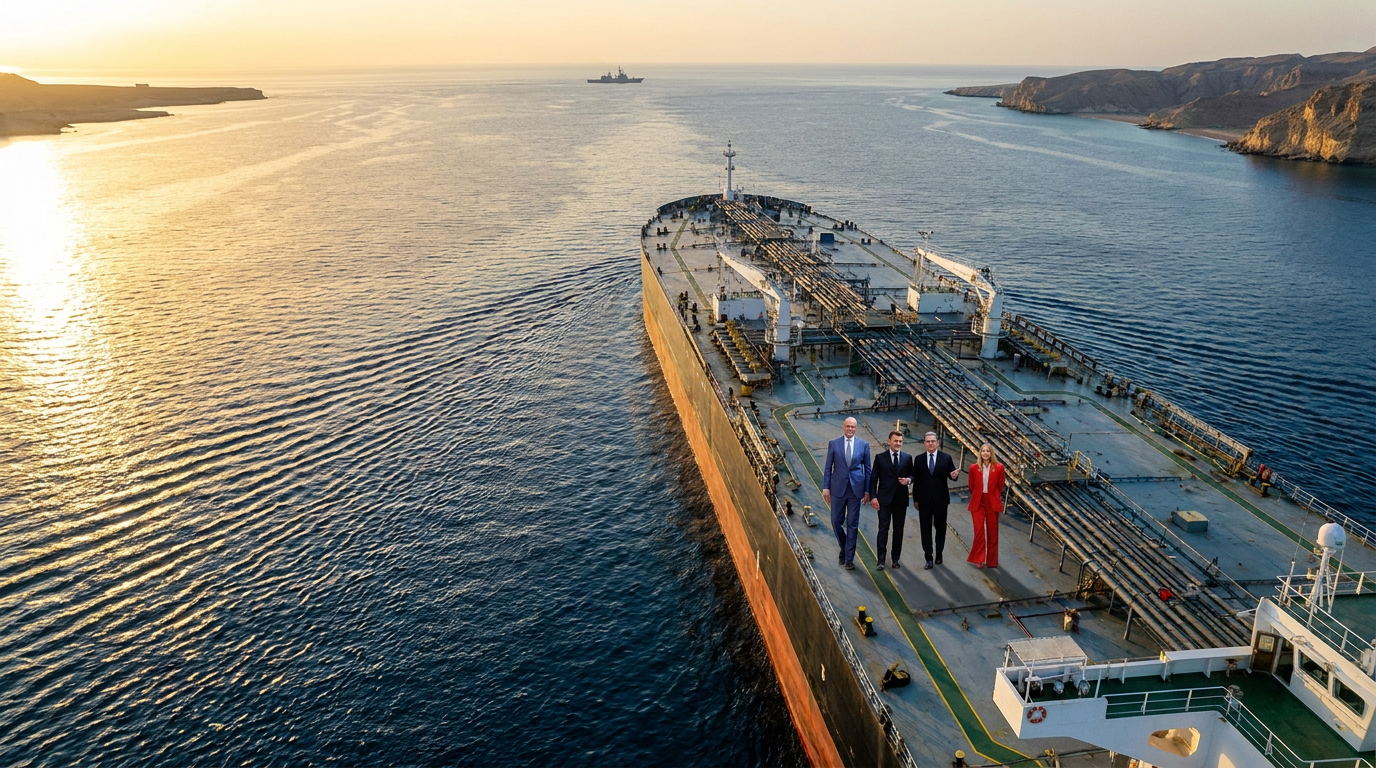
High-stakes nuclear and peace negotiations between the United States and Iran are set to begin in Switzerland, even as the fragile ceasefire underpinning the talks threatens to unravel over military clashes in Lebanon and threats to global shipping. Delegations from Washington and Tehran are converging on the Bürgenstock resort for direct talks mediated by Qatar and Pakistan. The diplomatic push represents the first major attempt to forge a comprehensive settlement since a 14-point memorandum of understanding was signed earlier this week, temporarily pausing a conflict that erupted in late February. Yet the diplomatic window opened against a backdrop of severe brinkmanship, with both sides trading threats over the control and taxation of the Strait of Hormuz, the world's most critical oil chokepoint.[1][3][7]
Vice President JD Vance departed for Switzerland on Saturday to lead the American diplomatic effort, joining US special envoy Steve Witkoff and presidential adviser Jared Kushner, who were already on the ground managing technical elements of the negotiation. They will face an Iranian delegation led by Parliament Speaker Mohammad Bagher Ghalibaf and Foreign Minister Abbas Araghchi. The presence of senior Iranian central bank and oil officials underscores Tehran's primary objective: securing immediate sanctions relief and the unfreezing of national assets. Vance projected confidence before his departure, telling reporters that the United States "has all the cards" and expressing hope that the teams could make simultaneous progress on both the nuclear portfolio and the regional security crisis.[1][3][7][8]
The negotiations nearly derailed before they began when Iran's top joint military command, the Khatam al-Anbiya Central Headquarters, abruptly announced it was closing the Strait of Hormuz to all vessel traffic. Tehran justified the dramatic escalation by accusing the United States and Israel of violating the core terms of the memorandum of understanding. Specifically, Iranian officials pointed to ongoing Israeli military operations against Hezbollah militants in southern Lebanon. Iran argues that the interim agreement requires a cessation of hostilities on all fronts by all allied parties, and warned that the strait's closure was merely a "first step" to force compliance with the ceasefire.[2][5][6]

The United States swiftly disputed Iran's claim of a waterway shutdown, framing the announcement as political posturing rather than a tactical reality. US Central Command (CENTCOM) issued a statement asserting that Iran does not control the Strait of Hormuz and confirmed that maritime traffic remained intact. According to military officials, 55 merchant ships carrying more than 17 million barrels of oil successfully transited the chokepoint on Saturday while US forces monitored the area to ensure freedom of navigation. Vice President Vance echoed this assessment, stating he had seen no evidence of a closure and suggesting that any Iranian naval maneuvers were likely related to the 30-day mine-clearing operations mandated by the recent agreement.[4][5][6]
The United States swiftly disputed Iran's claim of a waterway shutdown, framing the announcement as political posturing rather than a tactical reality.
Adding immense pressure to the Swiss negotiations, President Donald Trump issued a stark economic ultimatum regarding the future of the Persian Gulf. In a social media post on Saturday, Trump warned that if a final, comprehensive peace deal is not reached within the 60-day window established by the memorandum, the United States might begin imposing its own tolls on commercial vessels transiting the Strait of Hormuz. Trump emphasized that the current agreement guarantees toll-free travel for 60 days, but declared that any future fees would be collected exclusively by Washington as reimbursement for "services rendered as the guardian angel" to Middle Eastern nations.[2][6][8]

The primary stumbling block for the negotiators in Switzerland remains the active combat zone in southern Lebanon, which threatens to drag Washington and Tehran back into direct confrontation. Despite reports of a localized ceasefire agreement between Israel and Hezbollah, the Israel Defense Forces reported striking multiple Hezbollah terrorist targets on Saturday. The IDF stated the strikes were a necessary response to more than 50 projectiles launched by the Iran-backed militant group overnight. Because neither Israel nor Hezbollah are direct signatories to the US-Iran memorandum, their continued exchanges of fire create a dangerous loophole in the truce, prompting Iran to leverage the Strait of Hormuz to demand American intervention in Israeli military planning.[5][8]
The 14-point memorandum of understanding was designed to halt a rapidly escalating regional war that began with US and Israeli strikes on Iranian targets on February 28. Beyond the immediate ceasefire, the document establishes a strict 60-day timeline to negotiate a permanent resolution to Iran's nuclear program and regional proxy network. However, the rollout of the agreement has been fraught with internal friction. Reports indicate that US negotiators released the memorandum before securing formal approval from Iran's senior leadership on the detailed, classified proposals regarding the exact future of Tehran's nuclear facilities, opting to rely on "gentleman's agreements" to keep the diplomatic momentum alive.[3][5]
For the Iranian government, the urgency of the Swiss negotiations is driven by severe domestic economic pressures exacerbated by years of sanctions and the recent military conflict. President Masoud Pezeshkian's administration is facing mounting public frustration over inflation and currency devaluation. The inclusion of high-ranking banking and energy officials in the delegation to Bürgenstock highlights Tehran's demand that any permanent nuclear concessions must be met with the immediate unfreezing of overseas assets and the normalization of its oil exports. Iranian officials have publicly acknowledged that while the memorandum of understanding is a crucial first step, their economic crisis cannot be solved without a comprehensive, finalized agreement that permanently lifts the American financial blockade.[7][8]

As technical experts from all four nations convene at the Bürgenstock resort, the success of the talks hinges on whether the mediators can decouple the long-term nuclear negotiations from the daily volatility in the Middle East. Swiss and Qatari officials spent Saturday frantically working to keep the Iranian delegation from withdrawing over the Lebanon strikes, underscoring the fragility of the process. If the principals can stabilize the immediate security environment, the next 60 days will determine whether the temporary truce evolves into a historic geopolitical realignment, or collapses back into a broader regional war that chokes off global energy supplies and triggers unprecedented American tolls on international shipping.[1][3][7]
How we got here
Feb 28, 2026
A regional conflict begins following US and Israeli military strikes on Iranian targets.
Early June 2026
The US and Iran sign a 14-point memorandum of understanding to halt fighting and open a 60-day negotiation window.
June 19, 2026
Israel and Hezbollah continue trading fire in Lebanon despite broader truce efforts.
June 20, 2026
Iran claims a Strait of Hormuz closure; US and Iranian delegations arrive in Switzerland for talks.
Viewpoints in depth
US Administration's view
The US aims to enforce the 14-point MOU and use economic leverage to secure a final nuclear deal.
American officials, led by Vice President JD Vance, are approaching the Swiss talks with a projection of absolute leverage. The administration maintains that the 14-point memorandum of understanding strictly prohibits any disruption to the Strait of Hormuz, dismissing Iran's closure claims as posturing. By floating the unprecedented idea of US-imposed tolls on the waterway, President Trump is signaling that Washington is prepared to aggressively monetize its military dominance in the region if Tehran fails to make permanent concessions on its nuclear program.
Iranian Government's view
Tehran argues the US and Israel are violating the ceasefire, using the Strait of Hormuz to demand compliance.
For Iran's leadership, the ongoing Israeli military operations against Hezbollah in Lebanon represent a fundamental breach of the interim peace agreement. Iranian military commanders view the threat of closing the Strait of Hormuz as a necessary and proportional lever to force the United States to rein in its allies. Simultaneously, the Iranian diplomatic delegation is laser-focused on economic survival, demanding that any long-term restrictions on their nuclear capabilities must be met with the immediate unfreezing of assets and a total end to the financial blockade.
Israeli Security Establishment's view
Israel maintains that neutralizing Hezbollah threats in Lebanon is a non-negotiable security imperative.
While not a direct signatory to the US-Iran memorandum of understanding, Israel's military actions are deeply intertwined with the negotiations. The Israel Defense Forces argue that their strikes in southern Lebanon are strictly defensive responses to Hezbollah projectile launches. From the perspective of the Israeli security establishment, the broader US-Iran truce cannot serve as a shield for Iranian proxy groups to attack northern Israel with impunity, making the Lebanon front a volatile wild card in the Swiss talks.
What we don't know
- Whether the localized fighting between Israel and Hezbollah in Lebanon will escalate enough to cause the Iranian delegation to walk away from the table.
- How the United States would practically enforce or collect maritime tolls in the Strait of Hormuz if a final deal is not reached.
- The exact, classified details regarding the future of Iran's nuclear facilities that have yet to be formally approved by Tehran's senior leadership.
Key terms
- Strait of Hormuz
- A highly strategic waterway between the Persian Gulf and the Gulf of Oman, through which a significant portion of the world's oil supply passes.
- Memorandum of Understanding (MOU)
- A formal agreement outlining the terms and details of a preliminary truce and a 60-day framework for further negotiations between the US and Iran.
- Khatam al-Anbiya Central Headquarters
- The highest-level joint military command of the Iranian Armed Forces, responsible for operational coordination.
Frequently asked
Why are the US and Iran meeting in Switzerland?
Delegations are meeting at the Bürgenstock resort to negotiate a comprehensive nuclear and security agreement following a recently signed 14-point memorandum of understanding.
Is the Strait of Hormuz actually closed?
While Iran's military claimed to have closed the strait in response to strikes in Lebanon, US Central Command and Vice President Vance stated that commercial traffic continues to flow normally.
What did Donald Trump say about tolls?
President Trump warned that if a final peace deal is not reached within 60 days, the US might impose its own maritime tolls on ships passing through the Strait of Hormuz.
Sources
Source coverage
8 outlets
4 viewpoints surfaced








[1]AxiosUS Administration
Vance travels to Switzerland for nuclear talks with Iran
Read on Axios →[2]Al JazeeraIranian Government & Military
Trump vows Iran will not charge Strait of Hormuz tolls, but says US might
Read on Al Jazeera →[3]CBS NewsUS Administration
Vance heads to Switzerland Saturday to begin negotiations with Iran
Read on CBS News →[4]Fox NewsUS Administration
Iran closes Strait of Hormuz, Trump warns US may charge tolls if deal isn't reached
Read on Fox News →[5]The Times of IsraelIsraeli Security Establishment
Iran claims Hormuz closed again as IDF attacks Hezbollah; Vance says Switzerland talks may start Sunday
Read on The Times of Israel →[6]ForbesUS Administration
Trump Says U.S. May Impose Tolls In Strait Of Hormuz If Peace Deal Fails
Read on Forbes →[7]Radio Free Europe/Radio LibertyRegional Mediators
US-Iran implementation talks are back on track
Read on Radio Free Europe/Radio Liberty →[8]The HinduRegional Mediators
Trump threatens to charge U.S. tolls in Strait of Hormuz if final Iran deal not reached in 60 days
Read on The Hindu →
Every angle. Every day.
Get news politics stories with full source coverage and perspective breakdowns delivered to your inbox.