
Why the Tech Industry is Moving AI Offline to Protect Your Privacy
As privacy concerns mount over cloud-based chatbots harvesting personal data, the tech industry is rapidly shifting toward 'Local AI'—processing powerful models directly on laptops and smartphones to keep user information strictly confidential.
By Factlen Editorial Team
- Privacy Advocates
- Argue that cloud AI is a fundamental security risk and cross-app access acts as a dangerous backdoor to personal data.
- Hardware Manufacturers
- View on-device AI as the ultimate selling point for the next generation of smartphones and PCs, emphasizing speed and security.
- Enterprise IT & Compliance
- Value local AI for its ability to meet strict data regulations while boosting employee productivity.
- Cybersecurity Researchers
- Warn that while local AI solves cloud transmission risks, it creates new OS-level vulnerabilities if a device is hacked.
What's not represented
- · Cloud infrastructure providers who stand to lose revenue from local processing
- · Everyday consumers who prioritize convenience and model capability over strict data privacy
Why this matters
If you use AI for work or personal tasks, your data is likely being sent to remote servers where it can be stored, analyzed, or breached. The shift to on-device AI means you will soon be able to harness the power of generative AI without exposing your private life or confidential business files to third parties.
Key points
- Privacy advocates are warning against cloud-based AI chatbots that require deep access to personal data.
- The tech industry is shifting toward 'Local AI,' which processes data directly on your device without an internet connection.
- This shift is driving a massive hardware upgrade cycle, requiring new Neural Processing Units (NPUs).
- Local AI allows businesses to use generative tools without violating strict compliance frameworks like HIPAA.
- Because local models are smaller, Apple and Microsoft are adopting a 'hybrid' approach, routing only complex tasks to the cloud.
The honeymoon phase with artificial intelligence is colliding with a stark privacy reality. As millions of users integrate chatbots into their daily lives, Signal President Meredith Whittaker issued a blunt warning this week: "These are not your friends. These are not conscious beings." [1][1]
Whittaker's caution highlights a growing anxiety over cloud-based AI systems that demand deep access to personal lives. When industry executives envision AI agents autonomously handling tasks like holiday shopping, it requires granting remote servers access to credit cards, private messages, and calendars. [1][2] For privacy advocates, this level of cross-application access constitutes a massive security vulnerability. [2][1][2]
The fundamental vulnerability lies in the architecture of first-generation generative AI. Platforms like ChatGPT and Claude rely on cloud computing, meaning every prompt, uploaded document, and personal query must leave the user's device and travel to a remote server. [3][4] Once data reaches the cloud, it becomes susceptible to corporate policy changes, third-party access, and potential data breaches. [4][3][4]
In response to these vulnerabilities, the technology industry is executing a massive pivot toward a new paradigm: "Local AI" or "On-Device AI." [5] Rather than renting intelligence from a distant server, this approach allows users to run powerful AI models entirely on their own hardware. [3][3][5]

A local Large Language Model (LLM) operates without an internet connection once it is downloaded. [5] By processing information directly on a laptop or smartphone, the data never leaves the device. This physical isolation eliminates the risk of cloud-based interception and ensures that sensitive inputs cannot be harvested to train future commercial models. [4][5][4][5]
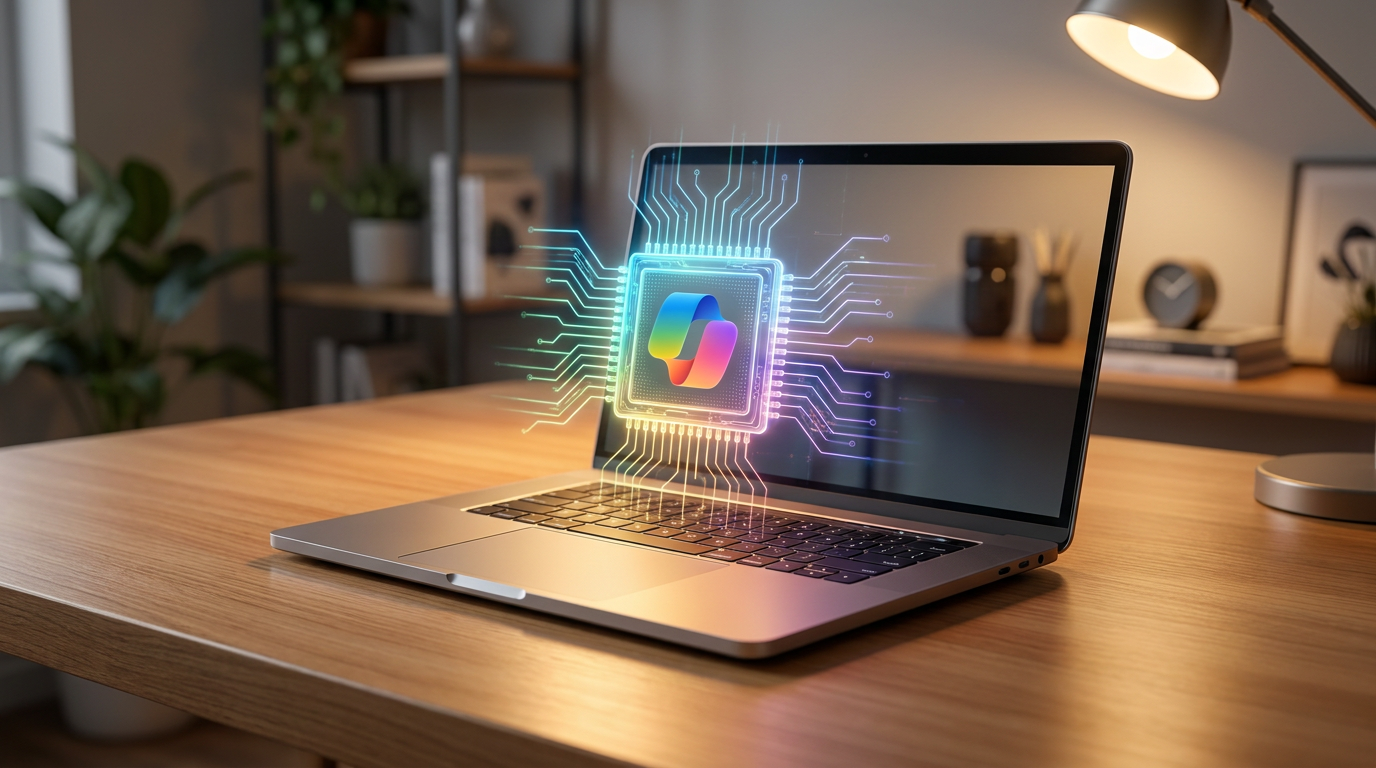
This architectural shift is driving the most significant hardware upgrade cycle in a decade. To run these complex models locally, devices require specialized silicon known as Neural Processing Units (NPUs). [6] Microsoft's new category of "Copilot+ PCs" mandates NPUs capable of at least 40 trillion operations per second (TOPS) to handle real-time AI tasks securely on the machine. [6][6]
Chipmakers are aggressively scaling these capabilities. Qualcomm's Snapdragon X Series processors are designed specifically to create isolated, protected environments for on-device AI, ensuring that facial recognition or document analysis occurs separately from the rest of the system's operations. [7] Future iterations are expected to push local processing power to 80 TOPS. [7][7]

[7] Future iterations are expected to push local processing power to 80 TOPS.
Apple is similarly anchoring its AI strategy in local processing. With the rollout of Apple Intelligence and iOS 27, the company is leaning heavily into its long-standing privacy brand. [9] By defaulting to on-device processing for tasks like text summarization and photo editing, Apple aims to satisfy both consumer privacy demands and stringent regulatory requirements. [9][9]
Beyond individual consumers, local AI is rapidly gaining traction in the enterprise sector. Law firms, healthcare providers, and financial institutions handle data that is strictly regulated by frameworks like HIPAA and GDPR. [4] For these organizations, sending client files to a public cloud AI is a compliance nightmare. [4][8][4][8]
Open-source frameworks like Ollama and LocalAI allow businesses to deploy highly capable models—such as Meta's Llama 3—directly on their own secure servers. [5] This grants employees the productivity benefits of generative AI without exposing proprietary code or confidential patient records to third-party risk. [3][5][3][5]

Privacy is not the only advantage of the local approach. Because on-device AI eliminates the need to transmit data back and forth to a server, responses are virtually instantaneous. [5] Furthermore, it removes the recurring subscription fees associated with cloud API usage, offering a predictable, one-time hardware cost. [3][5][3][5]
However, the transition to local AI involves significant trade-offs. The models that can fit on a smartphone or a standard laptop are inherently smaller and less capable than the massive, trillion-parameter models housed in corporate data centers. [3] They excel at drafting emails and summarizing documents, but struggle with complex reasoning and highly nuanced creative tasks. [3][3]
Because of this capability gap, the immediate future of AI is hybrid. Both Apple and Microsoft have designed systems that attempt to process requests locally first. [6][9] If a task is too complex for the on-device NPU, the system transparently routes the request to a secure cloud environment, balancing privacy with raw computational power. [7][6][7][9]

Furthermore, cybersecurity researchers warn that "local" does not automatically mean "secure." A recent framework published on arXiv highlights that as AI integrates deeply into operating systems, it gains unprecedented access to a user's digital life. [8] An on-device assistant that can read emails, track notifications, and view photos becomes a highly centralized target for malicious actors. [8][8]
If a device is compromised by malware, the local AI could theoretically be weaponized to summarize and exfiltrate the user's most sensitive data. [8] Therefore, meaningful privacy requires more than just local inference; it demands strict operating-system-level access controls, robust encryption, and transparent user permissions. [8][8]
As the initial novelty of conversational AI fades, the focus is shifting toward sustainable, secure deployment. The rise of on-device processing represents a critical maturation of the technology. By moving the intelligence to the data—rather than the data to the intelligence—the industry is building a foundation where users can harness the power of AI without sacrificing their digital autonomy. [4][7][4][7]
How we got here
Late 2022
ChatGPT launches, sparking a massive surge in cloud-based generative AI adoption.
March 2023
A bug in ChatGPT exposes the chat histories of some users, highlighting the privacy risks of cloud AI.
May 2024
Microsoft announces Copilot+ PCs, requiring powerful NPUs for local AI processing.
June 2026
Apple unveils iOS 27 and Apple Intelligence, cementing on-device processing as a core privacy feature.
June 2026
Signal President Meredith Whittaker publicly warns against granting AI chatbots cross-application access.
Viewpoints in depth
Privacy Advocates
Argue that cloud AI is a fundamental security risk and cross-app access acts as a dangerous backdoor to personal data.
Privacy advocates, led by figures like Signal's Meredith Whittaker, argue that the industry's push toward 'agentic' AI—systems that can autonomously act across your calendar, email, and banking apps—is fundamentally unsafe when processed in the cloud. They warn that anthropomorphizing chatbots as 'friends' lulls users into a false sense of security, encouraging them to hand over the keys to their digital lives to centralized corporate servers.
Hardware Manufacturers
View on-device AI as the ultimate selling point for the next generation of smartphones and PCs, emphasizing speed and security.
For companies like Apple, Microsoft, and Qualcomm, the pivot to local AI is both a privacy solution and a massive commercial opportunity. By framing on-device processing as the only secure way to use AI, they are incentivizing a global hardware upgrade cycle. They argue that specialized Neural Processing Units (NPUs) offer the best of both worlds: the productivity of generative AI combined with the security of physical data isolation.
Cybersecurity Researchers
Warn that while local AI solves cloud transmission risks, it creates new OS-level vulnerabilities if a device is hacked.
Security researchers emphasize that 'local' does not automatically equate to 'safe.' While on-device processing prevents data from being intercepted in transit or stored on a corporate server, it also centralizes a massive amount of context on the user's physical device. If a laptop is compromised by malware, an OS-integrated AI that has access to all files and messages becomes a highly efficient tool for hackers to summarize and extract sensitive information.
What we don't know
- It remains unclear how quickly local AI models will bridge the capability gap with massive cloud-based systems like GPT-5.
- The long-term impact of sustained NPU usage on laptop and smartphone battery life is still being evaluated in real-world conditions.
- Regulators have not yet determined if hybrid AI systems—which route some tasks to the cloud—fully comply with strict data localization laws.
Key terms
- Local AI (On-Device AI)
- Artificial intelligence models that process data directly on a user's hardware rather than relying on remote cloud servers.
- Large Language Model (LLM)
- The underlying AI technology that powers chatbots by predicting and generating human-like text based on vast amounts of training data.
- Neural Processing Unit (NPU)
- A specialized hardware chip designed specifically to accelerate artificial intelligence tasks efficiently without draining the battery.
- TOPS (Trillion Operations Per Second)
- A metric used to measure the processing speed of an NPU, indicating how many AI calculations it can perform in one second.
- Agentic AI
- Advanced AI systems designed to take autonomous actions across multiple apps, such as booking flights or making purchases on a user's behalf.
Frequently asked
What is the difference between local AI and cloud AI?
Cloud AI sends your prompts to remote servers for processing, while local AI runs the model entirely on your device's own hardware, requiring no internet connection.
Can local AI models match the performance of ChatGPT?
Not entirely. Local models are smaller and highly capable for tasks like summarizing and drafting, but they lack the deep reasoning and broad knowledge base of massive cloud models.
Do I need a new computer to run local AI?
While some smaller models can run on older hardware, the latest local AI features require devices with dedicated Neural Processing Units (NPUs), such as Copilot+ PCs or newer Apple devices.
Is local AI completely immune to hacking?
No. While it prevents data interception in the cloud, if your physical device is infected with malware, the local AI and the data it accesses could still be compromised.
Sources
Source coverage
9 outlets
4 viewpoints surfaced








[1]TechCrunchPrivacy Advocates
Signal’s Meredith Whittaker wants you to remember that AI chatbots ‘are not your friends’
Read on TechCrunch →[2]BloombergPrivacy Advocates
Meredith Whittaker on AI Privacy and Security
Read on Bloomberg →[3]MediumEnterprise IT & Compliance
The Trade-Off Worth Naming: Local AI
Read on Medium →[4]AI JournEnterprise IT & Compliance
Benefits of Using Local AI Models for Data Privacy
Read on AI Journ →[5]DataNorthEnterprise IT & Compliance
Local LLM vs. Cloud LLMs
Read on DataNorth →[6]MicrosoftHardware Manufacturers
How Copilot+ PCs make your day easier
Read on Microsoft →[7]QualcommHardware Manufacturers
Snapdragon X Series chips prioritize privacy
Read on Qualcomm →[8]arXivCybersecurity Researchers
An OS-Centered Privacy Framework for On-Device AI
Read on arXiv →Every new iOS 27 feature that’s worth knowing about
Read on TechCrunch →

Every angle. Every day.
Get technology stories with full source coverage and perspective breakdowns delivered to your inbox.