
Beyond Memorization: How Freestyle Chess is Rewiring the Elite Game
As artificial intelligence pushes standard chess openings toward exhaustive memorization, elite players are increasingly turning to randomized starting positions to force raw creativity from move one.
By Factlen Editorial Team
- Freestyle Advocates
- Believe randomized setups save the game from AI-driven draw death and reward true over-the-board intuition.
- Classical Traditionalists
- Value the historical continuity of standard chess and the deep strategic beauty of established opening theory.
- Chess Educators
- See standard chess as essential for teaching fundamentals, viewing 960 as an advanced variant rather than a replacement.
What's not represented
- · Amateur club players who do not face the engine preparation problem
- · Chess engine developers adapting AI for randomized starting positions
Why this matters
For centuries, chess has been the ultimate test of human intellect. By changing the starting position, the game strips away the advantage of rote memorization, returning the focus to pure, unscripted problem-solving and making broadcasts vastly more exciting for fans.
Key points
- Elite classical chess suffers from high draw rates due to deep AI engine preparation.
- Chess960 randomizes the back rank, making it impossible to memorize opening theory.
- The format forces players to rely on raw calculation and intuition from move one.
- Magnus Carlsen and other top players are heavily promoting the Freestyle Chess format.
- While popular among pros, educators warn it may confuse beginners learning basic principles.
For the past decade, elite classical chess has faced a quiet existential crisis. The integration of neural-network-based artificial intelligence engines, such as Leela Chess Zero and Stockfish, has transformed how top grandmasters prepare for tournaments. Instead of relying purely on over-the-board intuition, players now memorize computer-generated opening lines that stretch twenty to thirty moves deep. This phenomenon, known as engine preparation, has led to a dramatic increase in draw rates at the highest levels of the sport, as players frequently navigate complex but perfectly balanced positions straight from their home computers.[3][6]
The result is a highly technical, memory-intensive phase of the game that often leaves fans and even the players themselves feeling uninspired. When two top-ten players meet in a classical time control, the first hour of play is frequently a recitation of moves they analyzed weeks prior. If neither player forgets their preparation, the game often fizzles into a sterile endgame draw. This heavy reliance on rote memorization has prompted a search for structural solutions to preserve the game's creative essence.[3][4]
Enter Freestyle Chess, formally known as Chess960 or Fischer Random. Originally proposed by former World Champion Bobby Fischer in 1996, this variant leaves the pawns on their traditional second and seventh ranks but shuffles the pieces on the back rank. The randomization is subject to two crucial rules: the bishops must be placed on opposite colors, and the king must be placed somewhere between the two rooks to allow for castling. Both the white and black back ranks are shuffled symmetrically, ensuring a fair starting position.[1][2]

Because there are exactly 960 legal starting positions, it is mathematically impossible for players to memorize opening theory for all of them. The starting position is typically revealed to the players just ten to fifteen minutes before the clocks start. This brief window allows them to scan the board for immediate tactical blunders, but it completely eliminates the possibility of deep engine preparation. From move one, the players are entirely on their own, forced to rely on their fundamental understanding of chess principles rather than a database.[1][5]
The mechanism of castling in Chess960 often confuses newcomers, but it is elegantly designed to mirror standard chess. No matter where the king and rooks start on the back rank, castling results in the king and rook ending up in the exact same squares they would occupy after castling in a traditional game. This preserves the strategic importance of king safety and connecting the rooks, while accommodating the chaotic initial placement of the pieces.[1][2]
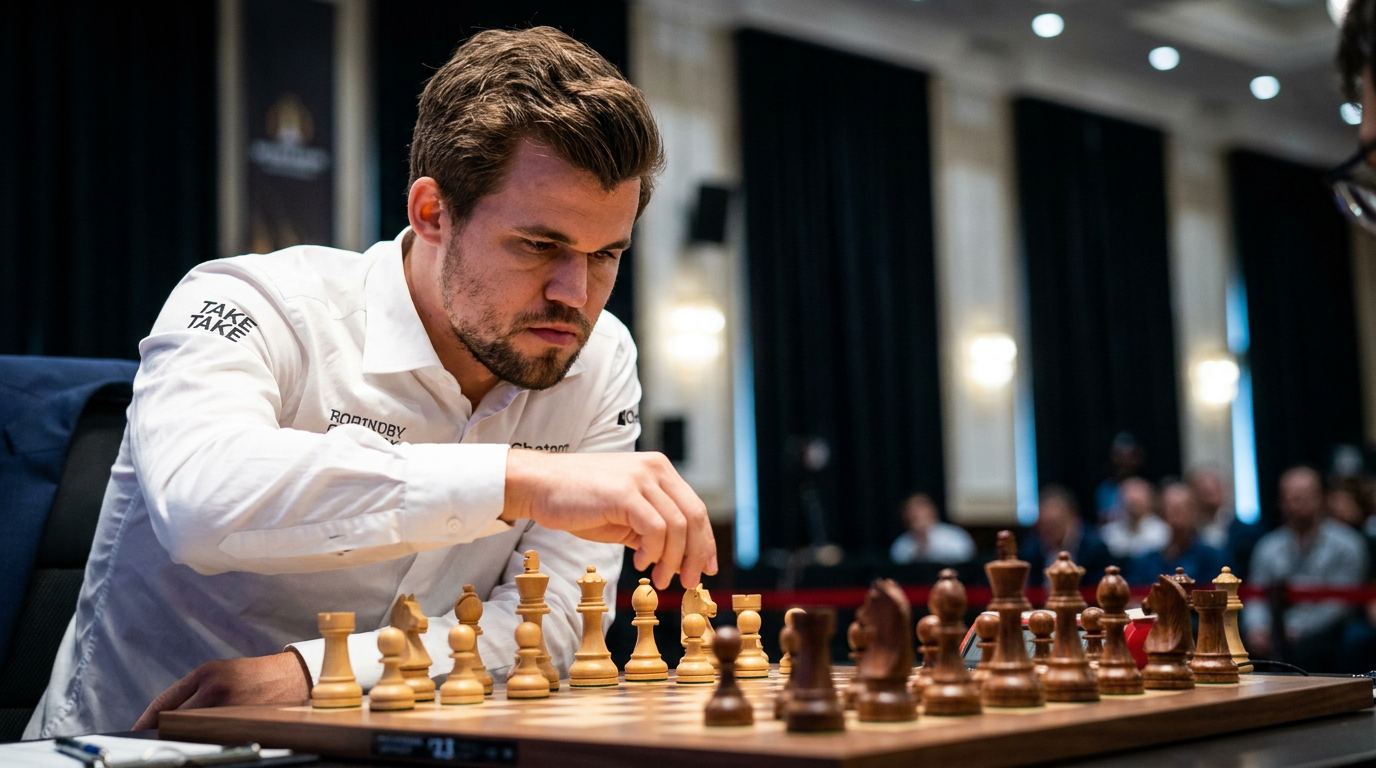
The shift toward this format has been heavily championed by Magnus Carlsen, the highest-rated player in history. After stepping away from the traditional World Chess Championship cycle, Carlsen has dedicated significant resources to promoting the Freestyle Chess Grand Slam tour. His advocacy stems from a stated desire to play chess where intuition and raw calculation are rewarded over the ability to memorize computer evaluations. The tour has attracted massive viewership, proving that audiences are hungry for decisive, unpredictable games.[4][6]
From a cognitive perspective, playing Chess960 requires a fundamentally different mental load. In standard chess, the opening phase relies heavily on declarative memory and pattern recognition of familiar pawn structures, such as the Sicilian or the Ruy Lopez. In Freestyle Chess, players must immediately engage in deep calculation and structural evaluation. They have to assess piece coordination, control of the center, and king safety without the comfort of established heuristics.[5]
From a cognitive perspective, playing Chess960 requires a fundamentally different mental load.
This immediate cognitive demand often leads to time trouble. Because players cannot blitz out their first fifteen moves from memory, they burn significant time on the clock early in the game. This time pressure compounds the complexity of the middlegame, leading to a higher frequency of human errors and, consequently, a much higher rate of decisive games. For spectators, this translates to thrilling, high-stakes broadcasts where the evaluation bar swings wildly.[4][5]

Despite its growing popularity at the elite level, the format is not without its detractors. Classical traditionalists argue that standard chess possesses a deep historical continuity that is lost in Chess960. When a player executes a brilliant novelty in the Queen's Gambit, they are participating in a conversation that spans centuries, engaging with the ideas of Capablanca, Alekhine, and Kasparov. Freestyle chess severs this historical tether, creating isolated games that lack the rich narrative context of opening theory.[4][6]
Furthermore, some of the 960 starting positions are aesthetically jarring or inherently unbalanced. While engines evaluate all 960 positions as relatively equal, human players often find certain setups incredibly awkward to navigate. A position where all the pieces are clustered in the corner can lead to closed, maneuvering games that are just as dry as a heavily memorized Berlin Defense. Tournament organizers have occasionally debated curating the list of starting positions to remove the most unplayable setups.[1][3]
Chess educators also express reservations about introducing the variant too early in a player's development. Standard chess openings teach fundamental principles: controlling the center, developing pieces harmoniously, and castling early. The chaotic starting positions of Chess960 can sometimes violate these principles, making it a confusing tool for beginners. Most coaches agree that a strong foundation in classical chess is a prerequisite for understanding the complex imbalances of Freestyle Chess.[5][6]
Nevertheless, the momentum behind the randomized format appears unstoppable in the professional sphere. FIDE, the international governing body of chess, has officially recognized the variant and hosts its own World Fischer Random Chess Championship. The integration of official rating systems for the format has legitimized it as a parallel discipline, rather than just a casual exhibition variant. Players are now actively training their pure calculation skills to adapt to the new landscape.[2][4]

The rise of Freestyle Chess also highlights a fascinating paradox regarding artificial intelligence. It was the absolute supremacy of AI that broke the classical opening phase, yet it is also AI that validates the fairness of Chess960. Before the advent of neural network engines, it was difficult to prove that all 960 positions offered a fair fight for both the white and black pieces. Modern engines have confirmed that the first-move advantage remains roughly consistent across the randomized setups.[3][6]
Looking ahead, the chess world is likely to settle into a dual-format ecosystem. Classical chess will remain the standard for amateur play, club tournaments, and historical record-keeping. However, for the top one percent of grandmasters, where engine preparation has created an unbreakable ceiling of draws, Freestyle Chess offers a vital escape hatch. It provides a arena where the title of best player in the world is decided over the board, rather than in a server farm.[4][6]

Ultimately, the embrace of randomized openings is a testament to the resilience of the game. Rather than allowing technology to render human competition obsolete, the chess community has altered the parameters of the battlefield. By shuffling the back rank, they have ensured that chess remains a vibrant, unpredictable contest of human creativity, securing its relevance for generations to come.[5][6]
How we got here
1996
Former World Champion Bobby Fischer announces the rules for Fischer Random Chess in Buenos Aires.
2019
FIDE hosts the first officially recognized World Fischer Random Chess Championship.
2024
Magnus Carlsen launches the WEISSENHAUS Freestyle Chess G.O.A.T. Challenge, rebranding the format.
2025-2026
The Freestyle Chess Grand Slam tour expands globally, attracting massive viewership and elite participation.
Viewpoints in depth
Freestyle Advocates
Proponents argue that randomized setups are the only way to save elite chess from becoming a memory contest.
Advocates, led by figures like Magnus Carlsen, believe that the beauty of chess lies in over-the-board problem solving. They argue that when players simply recite 25 moves of Stockfish analysis, the human element of the game is lost. By randomizing the starting position, Freestyle Chess strips away the safety net of home preparation, forcing players to evaluate complex imbalances immediately. This camp points to the significantly higher rate of decisive games and increased broadcast viewership as proof that the format is the future of professional chess.
Classical Traditionalists
Traditionalists maintain that standard chess offers a historical depth and strategic purity that variants cannot match.
For traditionalists, the appeal of chess is inextricably linked to its history. The standard starting position has been analyzed for centuries, creating a rich tapestry of opening theory that connects modern players to the legends of the past. They argue that the chaotic starting positions of Chess960 often lead to aesthetically unpleasing games that lack the logical flow of a well-played classical opening. Furthermore, they contend that the 'draw death' of chess is overstated, noting that brilliant players still find ways to create imbalances in standard positions.
Chess Educators
Coaches emphasize that standard chess remains the necessary foundation for learning the game's core principles.
From a pedagogical standpoint, educators view standard chess as the optimal tool for teaching strategy. The traditional starting position naturally encourages fundamental principles: fighting for the center, developing knights before bishops, and castling early for king safety. In Chess960, these principles are often violated by necessity due to the awkward placement of pieces. Therefore, most coaches argue that while Freestyle Chess is an excellent training tool for advanced calculation, it should not replace classical chess in scholastic programs or beginner curricula.
What we don't know
- Whether Freestyle Chess will eventually replace classical chess as the primary format for the World Chess Championship.
- How long it will take for AI engines to develop generalized heuristics for all 960 positions that humans can memorize.
- If tournament organizers will eventually curate the 960 positions to remove the most unbalanced or aesthetically displeasing setups.
Key terms
- Engine Preparation
- The practice of using powerful chess artificial intelligence to analyze and memorize the best moves in the opening phase before a game begins.
- Novelty
- A move in the opening phase of a chess game that has never been played before in recorded competitive history.
- Chess960
- A chess variant created by Bobby Fischer where the back rank pieces are randomized, offering 960 possible starting positions.
- Declarative Memory
- The cognitive ability to consciously recall facts and knowledge, heavily relied upon by chess players to remember opening variations.
Frequently asked
What is the difference between Chess960 and standard chess?
In Chess960, the pawns start in their normal positions, but the pieces on the back rank are shuffled randomly into one of 960 possible setups. All other rules remain the same.
How do you castle in Chess960?
Castling rules are adapted so that, regardless of where the king and rook start, they end up on the exact same squares they would occupy after castling in a standard game of chess.
Will Freestyle Chess replace standard chess?
It is unlikely to replace standard chess for amateurs and beginners, but it is rapidly becoming a parallel standard for elite professionals seeking to avoid heavy computer memorization.
Sources
Source coverage
6 outlets
3 viewpoints surfaced






[1]Chess.comChess Educators
Chess960 (Fischer Random) Rules and Strategies
Read on Chess.com →[2]FIDE
FIDE Laws of Chess: Guidelines for Chess960
Read on FIDE →[3]arXivClassical Traditionalists
Quantifying the impact of engine preparation on elite chess draw rates
Read on arXiv →[4]The GuardianFreestyle Advocates
Magnus Carlsen and the rise of Freestyle Chess
Read on The Guardian →[5]New In ChessChess Educators
The Cognitive Demands of Randomized Openings
Read on New In Chess →[6]Factlen Editorial TeamFreestyle Advocates
Synthesis by Factlen editorial team
Read on Factlen Editorial Team →
Every angle. Every day.
Get sports stories with full source coverage and perspective breakdowns delivered to your inbox.