
Iran Claims Strait of Hormuz Closure as US Denies Shutdown and Threatens Tolls Ahead of Swiss Talks
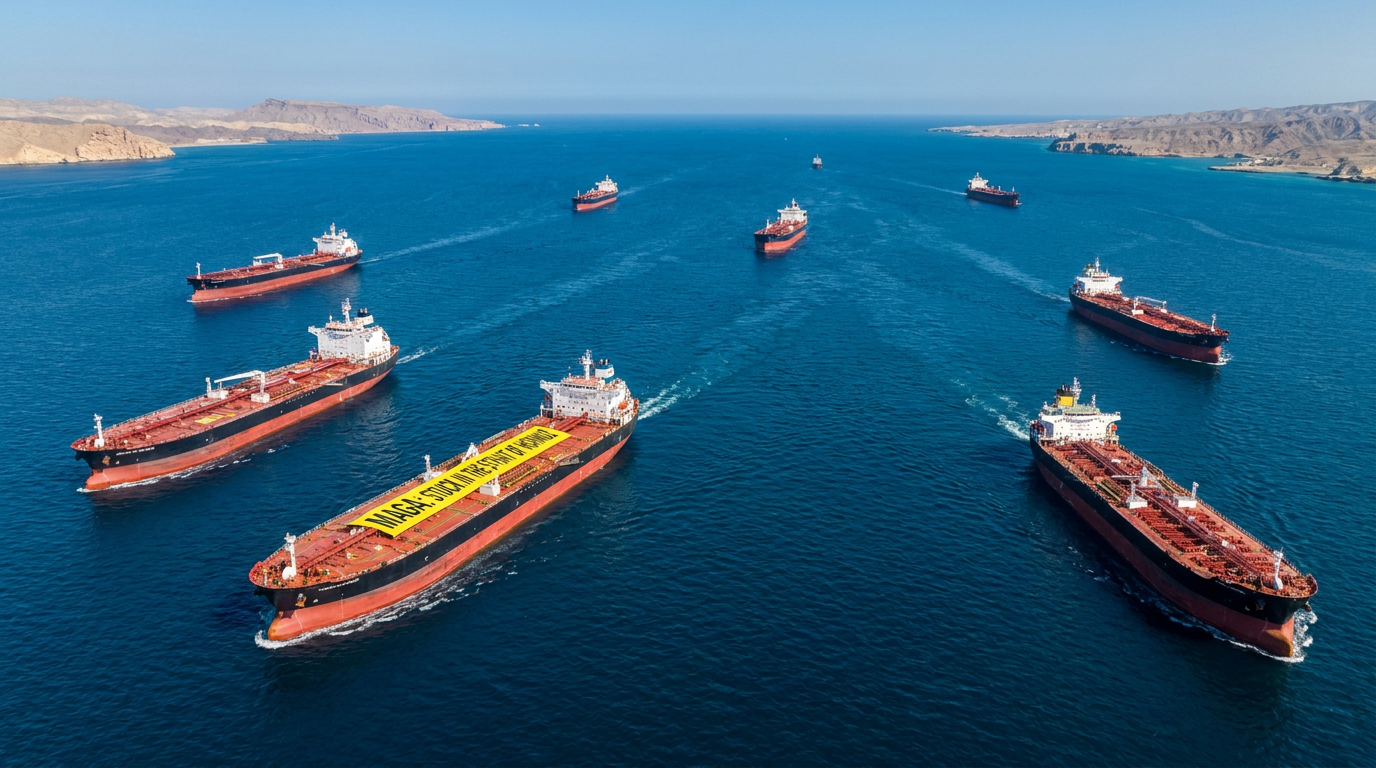
Iran's military announced the closure of the vital Strait of Hormuz in retaliation for Israeli strikes in Lebanon, a claim the US military swiftly denied. The conflicting narratives emerge as President Trump threatens to impose US tolls on the waterway and diplomats gather in Switzerland for high-stakes nuclear negotiations.
By Factlen Editorial Team
- US Administration
- Argues the strait remains open and threatens economic leverage to force a final deal.
- Iranian Military Command
- Views the closure as a justified response to ceasefire violations in Lebanon.
- Global Shipping & Energy Markets
- Focused on the physical reality of transit and the risk of catastrophic price spikes.
- Regional Security Analysts
- Views the conflicting claims as posturing ahead of the Switzerland talks to maximize leverage.
What's not represented
- · Omani Government Officials
- · European Energy Importers
- · Lebanese Civilians
Why this matters
The Strait of Hormuz is the world's most critical energy chokepoint, handling roughly a fifth of global oil consumption. A renewed blockade—or the unprecedented imposition of tolls by either Washington or Tehran—threatens to instantly spike global energy prices and reignite a devastating regional war just days after a fragile ceasefire was signed.
Key points
- Iran's military command announced it is closing the Strait of Hormuz in retaliation for Israeli strikes in Lebanon.
- US Central Command denied the closure, reporting that 55 ships and 17 million barrels of oil transited the strait on Saturday.
- President Trump threatened to impose US tolls on the waterway if a final peace agreement is not reached within 60 days.
- Delegations from the US and Iran are traveling to Switzerland for technical-level nuclear and peace negotiations.
- The talks are being mediated by Pakistan and Qatar as both sides attempt to salvage a fragile 14-point memorandum of understanding.
The fragile 14-point memorandum of understanding designed to end the 2026 US-Iran war is facing its first existential crisis. Less than a week after the agreement was signed, the strategic Strait of Hormuz has once again become the flashpoint for a rapidly escalating geopolitical standoff.[1][4]
On Saturday, Iran’s Khatam al-Anbiya Central Headquarters announced that it was closing the vital waterway to all vessel traffic. The military command framed the closure as a "first step" in retaliating against what it described as severe breaches of the recent ceasefire agreement.[6][8]
The primary trigger for Tehran's anger stems from the Levant. Iranian officials cited continued Israeli military strikes against Hezbollah targets in southern Lebanon, arguing that Israel's failure to withdraw from Lebanese territory violates the core tenets of the US-brokered truce.[4][8]
However, the reality on the water remains fiercely contested. The United States military swiftly denied that the strait had been shuttered. US Central Command (CENTCOM) issued a statement asserting that "Iran does not control the Strait of Hormuz" and that American forces are actively monitoring the corridor to ensure freedom of navigation.[6][7]

According to CENTCOM data released Saturday, commercial traffic actually rose, with 55 merchant ships transiting the strait. The military reported that these vessels safely moved more than 17 million barrels of oil to global markets, directly contradicting Tehran's closure claims.[4][7]
US Vice President JD Vance echoed these military assessments during a Saturday morning television appearance. Vance stated that the administration was "not seeing any evidence" of a shutdown, suggesting instead that Iran might simply be warning ships away from uncleared naval minefields laid during the height of the conflict.[3][6]
The dispute over the physical status of the strait is unfolding alongside an unprecedented economic threat from Washington. On Saturday, President Donald Trump took to social media to warn that the United States might begin collecting its own tolls for passage through the waterway.[2][5]
The dispute over the physical status of the strait is unfolding alongside an unprecedented economic threat from Washington.
Trump stated that travel through the strait would remain toll-free during the 60-day negotiation period established by the memorandum. However, he warned that if a final peace deal is not reached, tolls could be imposed "by and for the United States of America" as compensation for acting as the region's "Guardian Angel."[5][7]

The threat of US-imposed tolls introduces a radical new variable into international maritime law. It remains entirely unclear how the US Navy would enforce a toll collection system in a waterway bordered by Iran and Oman, or how global shipping conglomerates and insurance markets would respond to such a mandate.[5]
This escalating war of words serves as a volatile backdrop for high-stakes diplomatic negotiations set to begin in Switzerland. Despite the threats of closures and tolls, delegations from both Washington and Tehran are converging on the Bürgenstock resort to hammer out the technical details of a permanent peace and nuclear agreement.[1][6]
The US delegation features heavy hitters from the Trump administration's inner circle. Special envoy Steve Witkoff and the president's son-in-law, Jared Kushner, have already arrived in Europe. Vice President Vance confirmed he expects to join them in the coming days, navigating what he called a "delicate coordination dance."[1][3]
The Iranian delegation is equally high-level, reportedly including parliamentary Speaker Mohammad Bagher Qalibaf, Foreign Minister Abbas Araghchi, and senior officials from the country's central bank and oil ministries. Their presence underscores Tehran's desperate need to secure the unfreezing of its assets and the lifting of the US naval blockade.[7]

The negotiations are being heavily mediated by third parties, primarily Pakistan and Qatar. Pakistan's Interior Minister Mohsin Naqvi and Prime Minister Shehbaz Sharif are playing central roles in facilitating the technical-level talks, attempting to bridge the massive trust deficit between the two adversaries.[6][7]
The stakes for these talks could not be higher. Prior to the outbreak of the war in February 2026, the Strait of Hormuz facilitated the transit of roughly 25% of the world's seaborne oil trade and 20% of its liquefied natural gas. The complete closure of the strait earlier in the spring sent shockwaves through global financial markets.[4]
If the Switzerland talks collapse—or if the current dispute over Israeli actions in Lebanon spirals out of control—the world faces the immediate prospect of a renewed dual blockade. During the peak of the conflict, the US Navy blockaded Iranian ports while the Islamic Revolutionary Guard Corps mined the strait, effectively choking off the Persian Gulf.[4]

For now, the global economy is holding its breath. Commodity tracking firms like Kpler confirmed that dozens of ships were still crossing the strait on Saturday, aligning with CENTCOM's narrative that oil is still flowing. But with both sides publicly threatening to weaponize the waterway, the 60-day window for peace is already closing fast.[3][4]
How we got here
Feb 28, 2026
The US and Israel launch an air war against Iran, leading to a severe disruption of shipping in the Strait of Hormuz.
June 17, 2026
The US and Iran sign a 14-point memorandum of understanding to halt hostilities and open a 60-day negotiation window.
June 19, 2026
A renewed ceasefire between Israel and Hezbollah is announced, though military strikes quickly resume.
June 20, 2026
Iran announces the closure of the strait; the US denies the shutdown and threatens to impose tolls.
June 21, 2026
Technical-level negotiations between the US and Iran are scheduled to begin in Switzerland.
Viewpoints in depth
US Administration
Argues the strait remains open and threatens economic leverage to force a final deal.
The Trump administration and US military command maintain that Iran does not control the Strait of Hormuz and that American naval forces are successfully ensuring the free flow of global commerce. By threatening to impose US-collected tolls on the waterway if negotiations fail, Washington is attempting to maximize its economic leverage, signaling that it will not tolerate Iranian attempts to weaponize the global oil supply during the 60-day diplomatic window.
Iranian Military Command
Views the closure as a justified response to ceasefire violations in Lebanon.
Tehran's Khatam al-Anbiya Central Headquarters frames the closure of the strait not as an act of unprovoked aggression, but as a proportional, retaliatory 'first step' against the US and Israel. From the Iranian perspective, Israel's continued military operations against Hezbollah in southern Lebanon constitute a direct violation of the 14-point memorandum of understanding, compelling Iran to flex its asymmetric maritime power to force compliance.
Global Energy Markets
Focused on the physical reality of transit and the risk of catastrophic price spikes.
For shipping conglomerates and commodities traders, the political rhetoric is secondary to the physical safety of their vessels. While tracking data currently supports the US claim that oil is still flowing, the mere threat of a renewed dual-blockade or the introduction of unprecedented tolls creates massive uncertainty. Markets fear that a collapse of the Switzerland talks could instantly choke off 20% of the world's energy supply, triggering a global inflationary shock.
What we don't know
- It remains unclear how the United States would practically enforce or collect tolls in an international waterway bordered by Iran and Oman.
- We do not know if the Iranian delegation will walk away from the Switzerland talks if Israel continues its military operations in southern Lebanon.
- The exact status of the naval mines laid by Iran earlier in the conflict is unknown, complicating the safety of commercial transit.
Key terms
- Strait of Hormuz
- A narrow, strategically critical waterway between the Persian Gulf and the Gulf of Oman, through which roughly 20% of the world's oil passes.
- Memorandum of Understanding (MoU)
- The 14-point preliminary agreement signed by the US and Iran to halt hostilities and establish a 60-day window for peace talks.
- Khatam al-Anbiya Central Headquarters
- The highest-level joint command center of Iran's armed forces, responsible for coordinating major military operations.
- CENTCOM
- United States Central Command, the unified military command responsible for American security interests in the Middle East.
Frequently asked
Is the Strait of Hormuz actually closed right now?
There are conflicting reports. Iran's military command announced it is closed, but US Central Command and tracking firms state that dozens of ships and millions of barrels of oil continue to flow.
Why did Iran announce the closure?
Tehran cited continued Israeli military strikes against Hezbollah in southern Lebanon, which Iran views as a violation of the recent US-Iran ceasefire agreement.
What are the Switzerland talks?
US and Iranian delegations, mediated by Pakistan and Qatar, are meeting in Switzerland to negotiate a broader nuclear and peace agreement during a 60-day window.
Could the US charge tolls in the strait?
President Trump floated the idea on social media, threatening to impose US tolls if a final peace deal is not reached, though it remains unclear how the US would enforce such a measure.
Sources
Source coverage
8 outlets
4 viewpoints surfaced








[1]AxiosUS Administration
Vance travels to Switzerland for nuclear talks with Iran
Read on Axios →[2]Al JazeeraIranian Military Command
Trump vows Iran will not charge Strait of Hormuz tolls, but says US might
Read on Al Jazeera →[3]Fox NewsUS Administration
Vance: 'We're not seeing any evidence' that Iran is still closing Strait of Hormuz, oil is flowing
Read on Fox News →[4]The Washington PostGlobal Shipping & Energy Markets
Iran says it is closing Strait of Hormuz, testing fragile agreement with U.S.
Read on The Washington Post →[5]ForbesUS Administration
Trump Threatens U.S. Tolls In Strait Of Hormuz If Iran Peace Deal Fails
Read on Forbes →[6]The Times of IsraelRegional Security Analysts
US denies strait shuttered, says traffic flowing; US, Iran negotiators gathering in Swiss resort
Read on The Times of Israel →[7]PBSRegional Security Analysts
Trump threatens to charge U.S. tolls in Strait of Hormuz if final Iran deal not reached in 60 days
Read on PBS →[8]Iran InternationalIranian Military Command
Iran says it will close Strait of Hormuz to shipping
Read on Iran International →
Every angle. Every day.
Get news politics stories with full source coverage and perspective breakdowns delivered to your inbox.