
The Science of No-Dig Gardening: Why Leaving Soil Alone Yields Better Results
By mimicking natural forest floors, the no-dig gardening method preserves underground fungal networks and microbial life, leading to healthier plants and fewer weeds.
By Factlen Editorial Team
- Microbiologists & Soil Scientists
- Focuses on the unseen subterranean ecosystem and its role in plant health.
- Organic Horticulturists
- Prioritizes practical benefits like weed suppression, labor reduction, and mimicking natural systems.
- Institutional Horticulture
- Evaluates the method through controlled trials, environmental impact, and broad adoption feasibility.
What's not represented
- · Commercial fertilizer manufacturers
- · Heavy agricultural machinery producers
Why this matters
Tilling and digging destroy the microscopic ecosystems that naturally fertilize and hydrate plants. Adopting no-dig methods saves home gardeners hours of backbreaking labor while sequestering carbon and reducing the need for chemical fertilizers.
Key points
- No-dig gardening involves leaving soil completely undisturbed and layering organic matter on the surface.
- The method preserves delicate mycorrhizal fungal networks and earthworm channels that are destroyed by traditional tilling.
- Undisturbed soil retains significantly more moisture, sequesters carbon, and suppresses dormant weed seeds.
- Transitioning requires an initial thick layer of compost over cardboard, but drastically reduces long-term labor and fertilizer costs.
For generations, the arrival of spring meant breaking out the spade, the garden fork, or the gas-powered rototiller. Turning the earth was considered an essential, unquestioned chore to loosen compacted soil, mix in synthetic fertilizers, and prepare a pristine, weed-free bed for new seeds. The visual of dark, freshly churned earth has long been synonymous with a productive farm or backyard garden. However, a growing consensus among soil scientists, ecologists, and leading horticulturists suggests this annual backbreaking ritual might be doing substantially more harm than good to the very plants it is meant to help.[3][4]
Enter the 'no-dig' or 'no-till' gardening movement. Rather than mechanically churning the earth, this method asks gardeners to leave the soil completely undisturbed. Instead of digging organic matter into the ground, practitioners layer compost, leaf mold, and mulch directly on the surface of the soil. The core philosophy is to feed the soil life from the top down, trusting that the subterranean ecosystem is perfectly capable of distributing those nutrients without human intervention. It represents a fundamental shift from treating soil as an inert medium to treating it as a living organism.[5][6]
This surface-layering philosophy directly mimics the natural processes of a forest floor, where fallen leaves, decaying wood, and animal matter pile up and slowly break down over time. In nature, nobody is out there with a rototiller turning the forest soil, yet wild ecosystems produce massive amounts of lush, resilient vegetation. By allowing nature to handle the incorporation of nutrients, the no-dig method preserves the complex, microscopic ecosystems that thrive just beneath the surface, creating a self-sustaining loop of fertility that strengthens year after year.[6][7]
The science behind the success of no-dig gardening lies entirely in the soil microbiome. Healthy soil is not just a collection of dirt and minerals; it is a dense, bustling web of bacteria, protozoa, nematodes, and mycorrhizal fungi. These microscopic organisms form vital symbiotic relationships with plants. The fungi act as a massive secondary root system, breaking down organic matter and delivering essential nutrients and water directly to plant roots. In exchange, the plants secrete liquid sugars into the soil to feed the fungal networks.[2][4]

When a spade or a mechanical tiller slices through the earth, it acts like a bulldozer to this microscopic infrastructure. Digging physically severs the delicate, thread-like fungal networks that take months or years to establish. It also exposes subterranean microbes to fatal levels of oxygen and ultraviolet sunlight, effectively sterilizing the top layer of the soil. The plants are then forced to rely entirely on their own limited root systems and whatever synthetic fertilizers the gardener provides, rather than tapping into the vast, natural nutrient-sharing network.[3][4]
Research confirms the severe biological cost of mechanical cultivation. Studies conducted by the United States Department of Agriculture have shown that microbial biomass carbon can be up to 140 percent greater in no-till systems compared to conventionally tilled plots during certain times of the year. Furthermore, undisturbed soil retains significantly higher levels of organic carbon and total nitrogen in its surface layers. By leaving the soil alone, the microbial populations explode, creating a highly active biological engine that continuously feeds the garden.[1]
Beyond microscopic health, digging destroys the crucial physical architecture of the soil. Earthworms naturally aerate the ground by tunneling up and down, creating semi-permanent channels that allow heavy rainfall to drain quickly and plant roots to penetrate deeply into the subsoil. Tilling collapses all of these tunnels, pulverizing the soil into a fine dust that quickly settles and compacts after the first heavy rain. This compacted, structureless soil struggles to absorb water, leading to surface runoff, erosion, and shallow, easily stressed plant roots.[3][6]
Beyond microscopic health, digging destroys the crucial physical architecture of the soil.
One of the most immediate and celebrated benefits for home gardeners is a drastic reduction in weed pressure. Traditional digging constantly brings dormant weed seeds from deep underground up to the surface, exposing them to the flash of sunlight they need to germinate. It is a self-defeating cycle: the act of weeding and turning the soil actively plants the next generation of weeds. In a no-dig system, those thousands of dormant seeds remain buried in the dark, unable to sprout.[4][5]
Any weed seeds that do happen to blow onto the surface from the wind must contend with a thick, suppressive layer of mulch. To start a new no-dig bed over an existing lawn or a patch of stubborn weeds, gardeners typically lay down overlapping sheets of plain brown cardboard. This light-blocking barrier completely smothers the existing vegetation, starving it of the solar energy required to survive. The cardboard acts as a temporary, biodegradable shield that clears the slate without a single drop of chemical herbicide.[4][5]

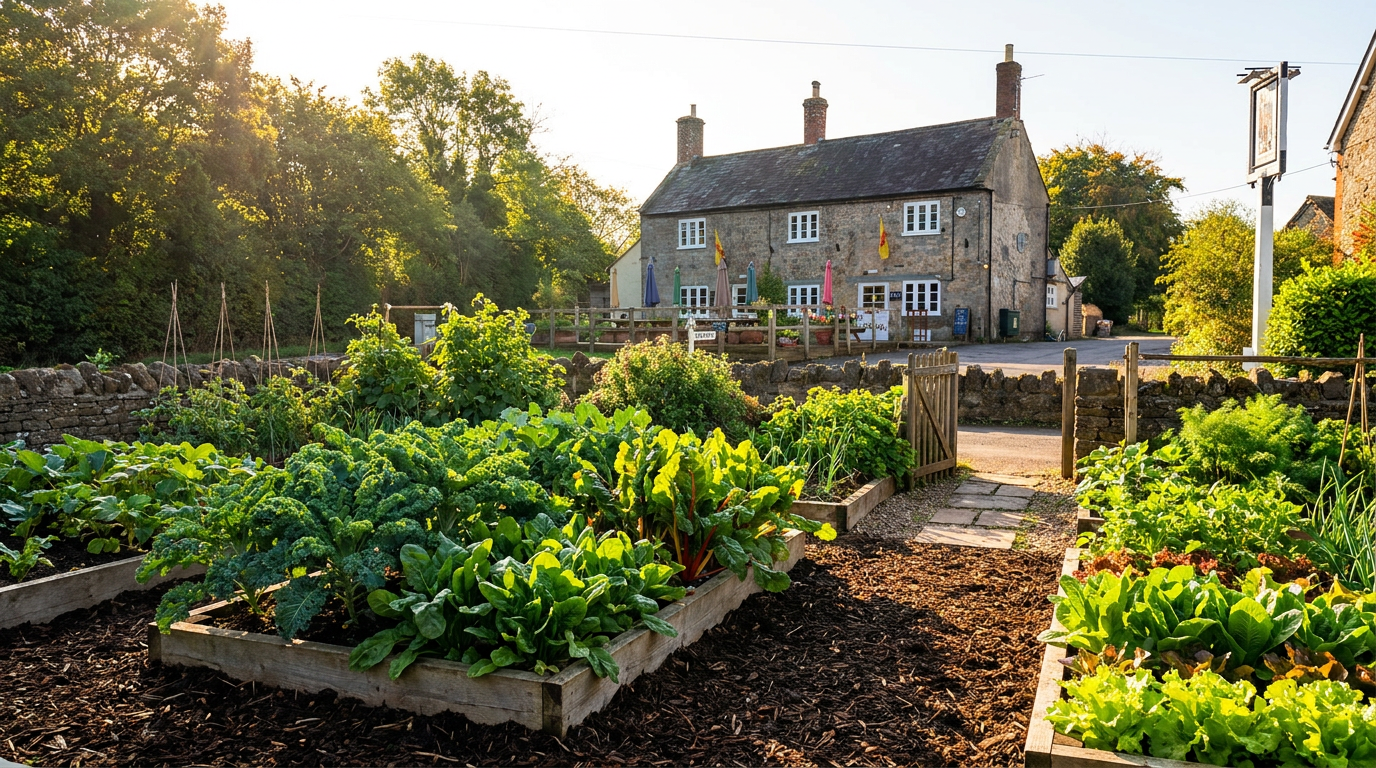
A thick layer of compost—usually four to six inches deep—is then spread directly over the cardboard barrier. Seeds and young transplants can be planted immediately into this rich top layer. Over the course of a few months, the cardboard naturally decomposes into the earth, allowing the new plant roots to reach the native soil below. By the time the roots break through, the native soil has already been softened and enriched by the activity of earthworms rising to consume the decaying cardboard.[5][6]
The practical results of this hands-off approach are often visibly superior to traditional methods. Charles Dowding, a pioneering English horticulturist who has championed the no-dig method for decades, conducted rigorous side-by-side trials of dug versus undug vegetable beds. Over an eight-year period of meticulous record-keeping, he reported that the no-dig beds yielded an additional 100 kilograms of produce compared to the tilled beds. This higher yield was achieved while requiring a fraction of the physical labor, watering, and weeding time, proving that less intervention can directly lead to greater abundance.[4][5]

The environmental implications of this shift extend far beyond the borders of the backyard vegetable patch. Tilling the earth releases massive amounts of carbon dioxide—which had been safely sequestered in the soil by decaying plant matter—back into the atmosphere. By leaving the ground intact, no-till agriculture and home gardening become powerful, decentralized tools for carbon sequestration. Scaling these practices globally is increasingly viewed by ecologists as a vital strategy to mitigate climate change while simultaneously improving food security.[3][7]
Transitioning to a no-dig system does require a significant initial investment of organic matter, which can be daunting for those managing large plots. Sourcing enough high-quality compost to establish the first deep layer is often the biggest logistical and financial hurdle for new practitioners. However, once the biological engine of the bed is established, it requires only a thin, one-inch annual top-up of compost or mulch. This drastically reduces long-term maintenance, eliminates the need for expensive synthetic fertilizers, and cuts water usage by insulating the soil.[5][6]
While the method is highly adaptable to almost any climate, it does require a shift in aesthetic expectations. A no-dig garden covered in straw, wood chips, or dark compost looks fundamentally different from the neat, pulverized earth of a freshly tilled conventional farm. Furthermore, heavily mulched soil takes slightly longer to warm up in the early spring, which can occasionally delay the planting of heat-loving crops. Yet, as the plants mature and the soil food web flourishes, the vibrant health of the garden quickly overshadows these minor adjustments.[6][7]

Ultimately, the shift toward no-dig gardening represents a broader, philosophical change in how humanity views cultivation and agriculture. Instead of treating soil as an inert, lifeless medium to be mechanically manipulated and chemically forced into production, the no-dig philosophy treats the earth as a living, breathing partner. By putting down the spade, stepping back, and trusting the microscopic ecosystems beneath our feet, gardeners and farmers alike are finding that doing less physical work actually yields a far richer, more resilient, and more sustainable harvest for generations to come.[4][7]
Viewpoints in depth
Microbiologists & Soil Scientists
Focuses on the unseen subterranean ecosystem and its role in plant health.
For soil scientists, the garden is primarily a habitat for microorganisms. They view tillage as a catastrophic event that destroys the physical architecture of the soil, severing mycorrhizal fungal networks that act as an extension of plant roots. By leaving the soil intact, this camp emphasizes that bacteria and fungi can efficiently cycle nutrients, sequester carbon, and build a resilient microbiome that naturally protects plants from disease.
Organic Horticulturists
Prioritizes practical benefits like weed suppression, labor reduction, and mimicking natural systems.
Practitioners in the field advocate for no-dig because it solves the most common frustrations of home gardening: weeds and backbreaking labor. By layering compost on top of the soil, they mimic the natural leaf-litter cycle of a forest floor. This camp highlights that undisturbed soil doesn't bring dormant weed seeds to the surface, and the thick mulch layer retains moisture so effectively that irrigation needs drop significantly.
Institutional Horticulture
Evaluates the method through controlled trials, environmental impact, and broad adoption feasibility.
Major horticultural bodies are shifting their official guidance away from traditional digging based on long-term data. Institutions note that while no-dig requires a significant upfront investment in compost, the long-term benefits—such as reduced carbon emissions, preserved soil structure, and comparable or superior crop yields—make it the most environmentally responsible choice for the future of gardening.
What we don't know
- The exact long-term impact of various cover crop species on the specific fungal composition of no-till soil remains under active study.
- How rapidly large-scale commercial agriculture can transition to true no-till systems given the heavy machinery currently in use.
Key terms
- Mycorrhizal Fungi
- Fungi that form a mutually beneficial relationship with plant roots, extending their reach to gather water and nutrients in exchange for plant sugars.
- Soil Microbiome
- The complex, microscopic community of bacteria, fungi, protozoa, and nematodes living within the soil ecosystem.
- Carbon Sequestration
- The process of capturing and storing atmospheric carbon dioxide; undisturbed soil naturally locks carbon underground.
- Tillage
- The traditional agricultural practice of preparing soil by mechanically digging, stirring, or overturning it.
- Humus
- The dark, organic material in soil formed by the complete decomposition of plant and animal matter.
Frequently asked
Can I use the no-dig method on heavy clay soil?
Yes. While it seems counterintuitive not to break up clay, layering organic matter on top encourages earthworms to tunnel up, naturally aerating and softening the clay over time without destroying its structure.
Do I ever need to use a spade in a no-dig garden?
Spades are still used for specific tasks, such as planting trees, digging out deep-rooted woody weeds like brambles, or harvesting root vegetables like potatoes.
How do I deal with aggressive perennial weeds?
For highly persistent weeds, gardeners lay down a light-blocking layer of thick cardboard or even black plastic for up to a year to starve the roots of energy before planting.
Does no-dig gardening require more compost?
It requires a large volume of compost to establish the first bed (usually 4 to 6 inches deep), but in subsequent years, it only requires a thin 1-inch top-up, making it highly efficient long-term.
Sources
Source coverage
7 outlets
3 viewpoints surfaced





[1]USDAMicrobiologists & Soil Scientists
Effects of conventional and no-tillage systems on soil microbial communities
Read on USDA →[2]MDPIMicrobiologists & Soil Scientists
Effects of No-Tillage on Soil Microbial Community Structure
Read on MDPI →[3]Royal Horticultural SocietyInstitutional Horticulture
No-dig gardening: Preserving soil structure
Read on Royal Horticultural Society →[4]BBC Science FocusInstitutional Horticulture
Why no-dig gardening is the secret to better, healthier soil
Read on BBC Science Focus →[5]Charles DowdingOrganic Horticulturists
No Dig Growing: Feed the soil to feed the plants
Read on Charles Dowding →[6]Garden DesignOrganic Horticulturists
No-Till Gardening: A Guide to the No-Dig Method
Read on Garden Design →[7]Factlen Editorial TeamInstitutional Horticulture
Synthesis by Factlen editorial team
Read on Factlen Editorial Team →
Every angle. Every day.
Get home stories with full source coverage and perspective breakdowns delivered to your inbox.