
The Evidence on Rapamycin: Can an Organ Transplant Drug Actually Slow Human Aging?
Decades of animal data show the mTOR inhibitor rapamycin reliably extends mammalian lifespan, but recent human trials reveal a complex picture of safety, modest healthspan benefits, and lingering uncertainties.
By Factlen Editorial Team
- Translational Researchers
- Focus on finding the exact dosing protocol that maximizes cellular cleanup without suppressing the immune system.
- Clinical Skeptics
- Demand large-scale, long-term human trials before endorsing off-label use for healthy aging.
- Longevity Optimists
- Point to robust animal data and early human safety signals to justify early adoption of the drug.
What's not represented
- · Regulatory Agencies
- · Health Insurance Providers
Why this matters
Rapamycin is currently the most scientifically validated compound for extending mammalian lifespan. Understanding its safety profile and true efficacy in humans is critical as thousands of healthy adults begin taking it off-label in an attempt to slow biological aging.
Key points
- Rapamycin is an FDA-approved immunosuppressant that reliably extends the lifespan of mice by 10 to 25 percent.
- The drug works by inhibiting the mTOR pathway, tricking cells into a state of 'autophagy' where they clean up damaged proteins.
- The 2025 PEARL trial confirmed that low, weekly doses of rapamycin are safe for healthy older adults over a 48-week period.
- While the trial did not show significant visceral fat loss, women taking 10 mg weekly saw improvements in lean muscle mass and pain reduction.
- Despite widespread off-label use by longevity enthusiasts, there is currently no definitive clinical proof that rapamycin extends human lifespan.
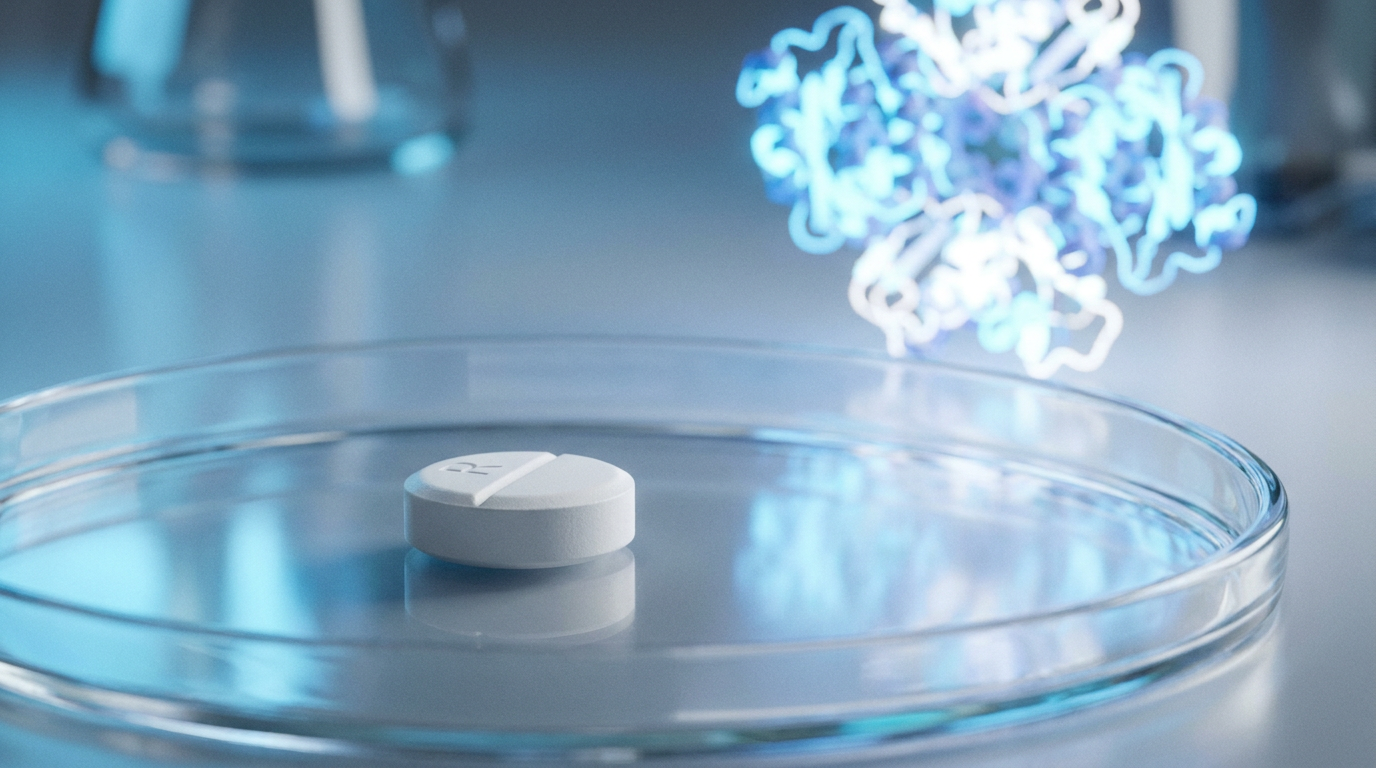
In the quest to slow human aging, the most promising candidate is not a futuristic genetic therapy, but a generic drug discovered half a century ago in the dirt of Easter Island. Isolated in 1975 from a soil bacterium on the island known locally as Rapa Nui, rapamycin was initially developed as a potent antifungal agent. By 1999, the FDA had approved it as an immunosuppressant to prevent organ rejection in kidney transplant patients. Yet over the past two decades, this unassuming white pill has become the undisputed heavyweight champion of longevity science, reliably extending the lifespan of every model organism it has been tested on.[1][6][8]
The enthusiasm surrounding rapamycin stems from its unique mechanism of action. The drug targets a highly conserved metabolic signaling cascade known as the mechanistic target of rapamycin, or mTOR. Found in nearly all eukaryotic cells, mTOR acts as a master switch for cellular growth and metabolism. When nutrients are abundant, mTOR is active, signaling the cell to build proteins, grow, and divide. But when mTOR is chronically overactive—a state often driven by modern diets of frequent snacking and high caloric intake—cells prioritize growth over maintenance, leading to the accumulation of cellular debris and low-grade inflammation that drives age-related diseases.[1][7]
Rapamycin effectively 'tricks' the body into a state of perceived nutrient scarcity by inhibiting the mTOR pathway. When mTOR is temporarily turned down, the cell shifts from a growth phase into a repair phase. This triggers a biological cleanup process called autophagy, where cells actively hunt down and recycle damaged proteins, misfolded structures, and leaky mitochondria. By clearing out this cellular debris, rapamycin mimics the well-documented longevity benefits of caloric restriction and fasting, but without requiring patients to actually starve themselves.[6][7]

In animal models, the results of this cellular cleanup have been nothing short of extraordinary. In 2009, the National Institute on Aging's Interventions Testing Program demonstrated that rapamycin extended the lifespan of mice by 10 to 25 percent. Crucially, this lifespan extension occurred even when the drug was administered to mice that were already 600 days old—the biological equivalent of a 60-year-old human. Across dozens of independent laboratories, rapamycin remains the most consistently replicated life-extending compound in mammalian history, delaying the onset of age-related cancers, cognitive decline, and cardiovascular dysfunction in rodents.[1][8]
However, translating these miraculous mouse results to humans presents a profound clinical challenge. In transplant patients, rapamycin is given daily at high doses to intentionally suppress the immune system. Chronic, high-level mTOR inhibition can lead to severe side effects, including an increased risk of infections, mouth ulcers, and metabolic disturbances like elevated lipids and insulin resistance. For a healthy adult looking to extend their healthspan, taking a daily immunosuppressant is an unacceptable risk.[1][6]
To solve this, longevity researchers hypothesized that a low, intermittent dose—typically taken just once a week—could provide the benefits of autophagy without suppressing the immune system. This 'pulsed' approach allows mTOR to be inhibited just long enough to trigger cellular cleanup, before returning to normal function for the rest of the week. Early pilot studies suggested this intermittent dosing might actually rejuvenate the immune system, rather than suppress it, by clearing out exhausted immune cells and allowing fresh ones to take their place.[4][6]
This 'pulsed' approach allows mTOR to be inhibited just long enough to trigger cellular cleanup, before returning to normal function for the rest of the week.
The most rigorous test of this intermittent protocol arrived with the PEARL trial (Participatory Evaluation of Aging with Rapamycin for Longevity), which published its highly anticipated results in 2024 and 2025. Designed as a decentralized, double-blind, placebo-controlled study, PEARL tracked healthy older adults taking either 5 mg or 10 mg of compounded rapamycin weekly for 48 weeks. The primary goal was to establish whether this off-label longevity protocol was actually safe for long-term human use outside of a transplant ward.[3][6]
The safety data from PEARL offered a massive green light for the longevity community. Over the nearly year-long study, the low-dose weekly rapamycin was exceptionally well-tolerated. Adverse events were similar across both the rapamycin and placebo groups, and researchers detected no significant negative changes in blood biomarkers for liver function, kidney function, or metabolic health. The trial confirmed that the fears of severe immunosuppression stemming from daily transplant doses do not seem to apply to the weekly longevity protocol.[3]

On the efficacy front, however, the PEARL results were more nuanced. The trial failed to hit its primary endpoint: rapamycin did not significantly reduce visceral fat compared to the placebo. Yet, secondary endpoints revealed intriguing, sex-specific benefits. Women taking the higher 10 mg weekly dose experienced statistically significant improvements in lean tissue mass and a reduction in self-reported pain. Participants in the 5 mg group also reported significant improvements in general health and emotional well-being, suggesting that the drug may offer tangible quality-of-life improvements even if it doesn't melt away belly fat.[3]
Beyond body composition, emerging evidence suggests rapamycin's most profound human benefits may occur at the microscopic level of immune resilience. A 2025 study from Oxford University examined the effects of rapamycin on human T cells—the white blood cells responsible for fighting infections and cancer. The researchers found that exposing these cells to rapamycin prevented DNA damage induced by chemical stress and increased the T cells' survival rate threefold. This provides direct mechanistic evidence that mTOR inhibition can protect the human immune system from the deterioration that normally accompanies aging.[5]
Despite these promising signals, mainstream clinical medicine remains deeply skeptical of prescribing rapamycin for healthy aging. A comprehensive 2025 review published in the journal Aging analyzed the landscape of human trials and delivered a sobering verdict: there is currently no definitive clinical evidence that rapamycin extends human lifespan or meaningfully slows the biological aging process. The reviewers cautioned that while animal data is robust, the human trials conducted so far have been too small, too short, or focused on secondary endpoints rather than validated epigenetic aging clocks.[2][6]

This lack of definitive proof has not stopped a booming off-label market. Thousands of 'biohackers' and longevity enthusiasts are currently taking weekly rapamycin, often prescribed by specialized anti-aging clinics or sourced internationally. This widespread use has created a massive, uncontrolled human experiment. While observational data from these early adopters generally supports the drug's safety profile, it provides little rigorous evidence regarding optimal dosing, long-term efficacy, or the potential for rare side effects that only emerge after years of continuous use.[4][6]
To bridge the gap between biological plausibility and clinical certainty, a new wave of massive, multi-phase trials is launching in 2026. Researchers at institutions like the University of Arizona are initiating long-term studies designed to track the biological effects of rapamycin over multiple years, using sophisticated molecular benchmarks to measure whether the drug is actually turning back the epigenetic clock. These trials aim to move rapamycin out of the realm of speculative biohacking and into the era of evidence-based gerotherapeutics.[4]
Until those long-term results are published, rapamycin remains a paradox. It is simultaneously the most proven life-extending compound in the history of biology, and an unproven experimental therapy for human aging. For now, the evidence pack confirms that intermittent, low-dose rapamycin is remarkably safe and capable of triggering the cellular cleanup mechanisms that keep mammals young. Whether that translates to an extra decade of healthy human life is the billion-dollar question that science is finally equipped to answer.[1][2][6]
How we got here
1975
Rapamycin is discovered in soil samples from Easter Island (Rapa Nui).
1999
The FDA approves rapamycin as an immunosuppressant for kidney transplant patients.
2009
The NIA Interventions Testing Program proves rapamycin extends the lifespan of mice, even when started late in life.
2025
The PEARL trial publishes results, showing low-dose weekly rapamycin is safe in healthy older adults over 48 weeks.
2026
Large-scale, multi-phase clinical trials launch to track rapamycin's long-term effects on human biological aging clocks.
Viewpoints in depth
Translational Researchers
Focus on finding the exact dosing protocol that maximizes cellular cleanup without suppressing the immune system.
This camp argues that the secret to rapamycin lies entirely in the dosing schedule. They point to the vast difference between daily transplant doses (which suppress immunity) and weekly longevity doses (which seem to rejuvenate it). Their primary goal is to establish standardized, evidence-based protocols—such as 5 mg to 10 mg taken once every seven days—that can reliably trigger autophagy while allowing mTOR to function normally for the rest of the week.
Clinical Skeptics
Demand large-scale, long-term human trials before endorsing off-label use for healthy aging.
Mainstream medical professionals and regulatory purists emphasize that mice are not humans. They argue that while the animal data is undeniably robust, the human clinical trials conducted so far have been too short and too small to prove that rapamycin extends human lifespan. This camp warns against the widespread off-label use of the drug, citing unknown long-term risks and the lack of validated biomarkers to prove the drug is actually slowing biological aging.
Longevity Optimists
Point to robust animal data and early human safety signals to justify early adoption of the drug.
Comprising biohackers, anti-aging physicians, and early adopters, this camp believes the risk-reward ratio already favors taking rapamycin. They argue that waiting 20 years for a definitive human lifespan trial is a luxury aging individuals do not have. Armed with the safety data from the PEARL trial and decades of flawless replication in mammalian models, they view low-dose rapamycin as the most rational, evidence-backed intervention currently available to extend human healthspan.
What we don't know
- Whether the 10-25% lifespan extension seen in mice will translate to a meaningful increase in maximum human lifespan.
- The optimal human dosing schedule—whether 5 mg, 10 mg, or a different intermittent protocol provides the best balance of autophagy and safety.
- The long-term effects of suppressing the mTOR pathway over decades, as current human safety data is largely limited to one-year trials.
Key terms
- mTOR
- The 'mechanistic target of rapamycin,' a protein complex that acts as a master switch for cell growth and metabolism.
- Autophagy
- A cellular cleanup process where cells break down and recycle damaged proteins and components, often triggered by fasting or rapamycin.
- Senescence
- A state where older, damaged cells stop dividing but refuse to die, secreting inflammatory chemicals that drive aging.
- Healthspan
- The period of a person's life spent in good health, free from chronic diseases and disabilities of aging.
Frequently asked
What is rapamycin currently approved for?
It is FDA-approved as an immunosuppressant for organ transplant recipients and as a treatment for certain cancers.
How does rapamycin affect aging?
It inhibits a cellular pathway called mTOR, tricking the body into a state of 'autophagy' where cells clean up damaged proteins and mitochondria.
Is it safe for healthy people to take?
Recent trials like PEARL suggest low, weekly doses are generally safe over a year, but long-term safety for longevity purposes remains unproven.
Does rapamycin extend human lifespan?
There is currently no definitive clinical proof that it extends human lifespan, though it reliably extends lifespan in mice and other mammals.
Sources
Source coverage
8 outlets
3 viewpoints surfaced







[1]National Institutes of HealthTranslational Researchers
Rapamycin and mTOR inhibition in aging and longevity
Read on National Institutes of Health →[2]AgingClinical Skeptics
What is the clinical evidence to support off-label rapamycin therapy in healthy adults?
Read on Aging →[3]medRxivTranslational Researchers
Participatory Evaluation of Aging with Rapamycin for Longevity (PEARL)
Read on medRxiv →[4]Fight Aging!Translational Researchers
Large rapamycin clinical trial launches
Read on Fight Aging! →[5]Oxford University Research (via NAD)Longevity Optimists
Human Evidence for mTOR Inhibition's Longevity Effects
Read on Oxford University Research (via NAD) →[6]Factlen Editorial TeamLongevity Optimists
Synthesis by Factlen editorial team
Read on Factlen Editorial Team →[7]EXCLI JournalClinical Skeptics
mTOR inhibitors in the context of aging
Read on EXCLI Journal →[8]NutritionFactsLongevity Optimists
Rapamycin: The Longevity Drug?
Read on NutritionFacts →
More in health
See all 8 stories →Mitochondrial Health
The Science of Zone 2 Cardio: Why Low-Intensity Exercise is the New Longevity Standard
6 sources

Longevity Science
The Science and Skepticism of 'Blue Zones': Do Longevity Hotspots Really Exist?
6 sources

Glymphatic System
The Science of 'Brain Washing': How Deep Sleep Cleanses Toxins and Protects Cognitive Health
8 sources

Exercise Therapy
The Evidence for Exercise as a Frontline Mental Health Treatment
6 sources

Every angle. Every day.
Get health stories with full source coverage and perspective breakdowns delivered to your inbox.