
How to Buy a Home with a 3% Mortgage Rate in a 6.5% World
Assumable mortgages allow buyers to take over a seller's historically low interest rate, offering a rare loophole to today's housing affordability crisis.
By Factlen Editorial Team
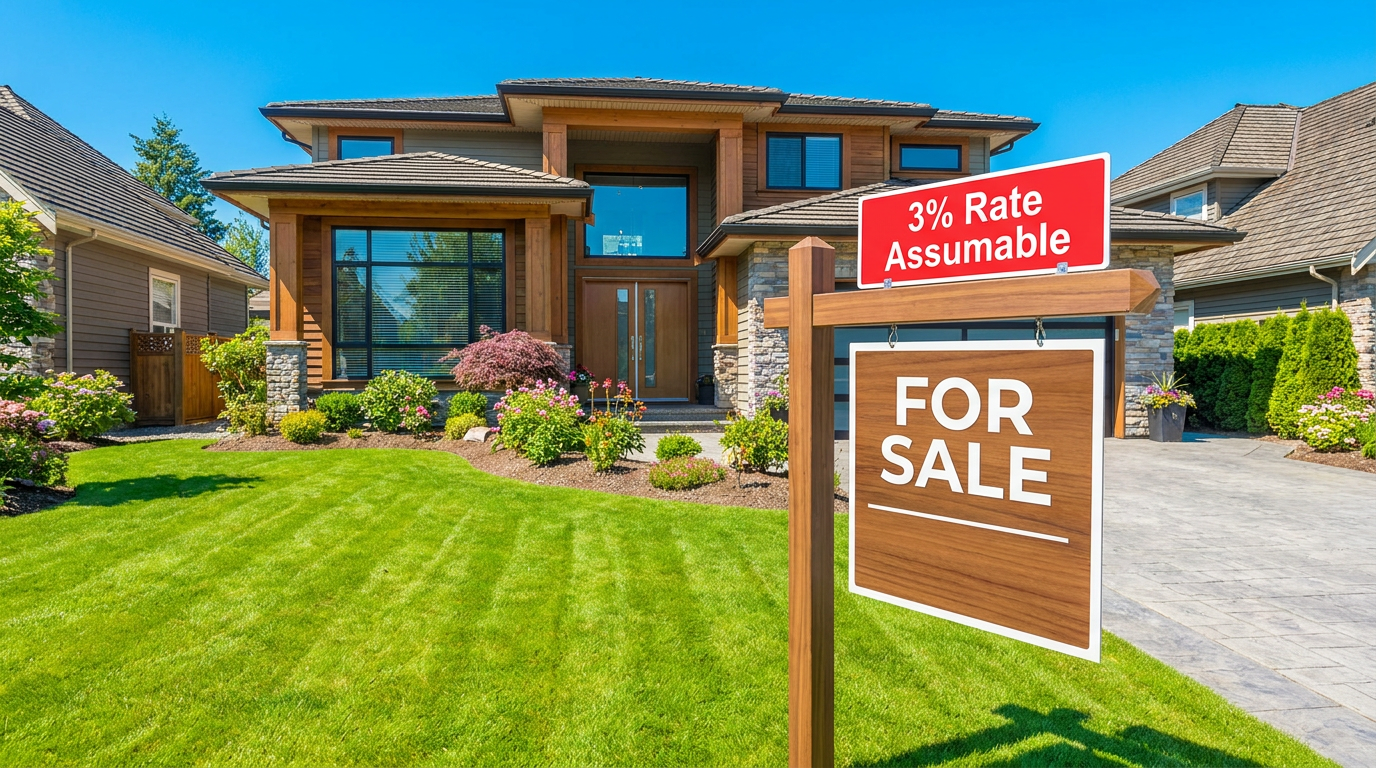
- Budget-Conscious Homebuyers
- For buyers priced out by 6.5% rates, assumptions are a vital lifeline to homeownership.
- Home Sellers
- Sellers use their low rates as a premium feature to command higher sale prices.
- Mortgage Lenders & Servicers
- Servicers view assumptions as a low-margin, high-friction administrative burden.
- Housing Policy Experts
- Economists see assumable loans as a key tool to thaw frozen housing inventory.
What's not represented
- · Real Estate Agents
- · Veterans
Why this matters
For homebuyers priced out of the current market, assuming a seller's legacy mortgage offers a rare loophole to secure a 3% interest rate, potentially saving hundreds of thousands of dollars and making homeownership affordable again.
Key points
- Assumable mortgages allow buyers to take over a seller's existing loan, including their historically low interest rate.
- Only government-backed loans, such as FHA, VA, and USDA mortgages, are typically eligible for assumption.
- Buyers must cover the 'equity gap' between the home's purchase price and the remaining loan balance with cash or a second loan.
- The assumption process is highly manual and can take 60 to 90 days to close.
- Nearly 12.5 million U.S. mortgages are assumable, with 6.8 million carrying rates of 4% or below.
The current state of the housing market in 2026 presents a brutal math problem for prospective buyers. With average 30-year fixed mortgage rates hovering around 6.5%, purchasing power has been severely diminished. Meanwhile, existing homeowners are deeply reluctant to sell, effectively "locked in" to their properties because they refuse to surrender the rock-bottom 3% interest rates they secured during the pandemic.[3][6]
But there is a financial time machine available for a specific, persistent subset of homebuyers. It is called an assumable mortgage, and it allows a buyer to step directly into the seller's shoes. Instead of taking out a new loan at today's rates, the buyer takes over the seller's exact loan balance, remaining repayment term, and—crucially—their historically low interest rate.[1][6]
While the concept of assuming a mortgage has existed for decades, it faded into obscurity during the long era of falling interest rates. Nobody wants to take on an old loan when a brand-new one is cheaper. Today, however, the macroeconomic math has violently reversed, turning these legacy loans into some of the most valuable financial assets in the real estate market.[1][6]
The potential scale of this loophole is massive. According to data from ICE Mortgage Technology, there are at least 12.5 million assumable mortgages nationwide, representing nearly a quarter of all outstanding home loans in the United States.[1][4]
Digging deeper into the numbers reveals the true prize for house hunters. Roughly 6.8 million of those assumable loans carry an interest rate of 4% or below, and nearly 5 million are locked in at 3.5% or less. For a buyer facing a 6.5% market, securing one of these loans can mean saving hundreds of dollars a month and well over $100,000 in interest over the life of the loan.[1][4]

The macroeconomic backdrop makes these loans particularly vital. The Bipartisan Policy Center notes that in early 2026, the average rate on a new 30-year fixed mortgage sat at 6.16%, while the average rate across all existing mortgages was just 4.4%. Astonishingly, roughly 20% of all outstanding loans carry an interest rate below 3%.[3]
This massive spread has created a "lock-in" effect that has frozen housing inventory across the country, as homeowners simply cannot afford to trade their 3% mortgage for a 6.5% one. Assumable mortgages offer a rare win-win solution: buyers get a below-market rate, and sellers can use their cheap loan as a marketing premium to attract more bids and command a higher sale price.[3][6]

However, there is a significant catch regarding which loans actually qualify for this maneuver. The vast majority of conventional mortgages—the standard loans backed by Fannie Mae and Freddie Mac—contain a strict "due-on-sale" clause. This legal provision requires the mortgage to be paid off in full the moment the property changes hands, legally blocking any assumption.[6]
However, there is a significant catch regarding which loans actually qualify for this maneuver.
Instead, the assumable market is restricted entirely to government-backed loans. Specifically, mortgages insured by the Federal Housing Administration (FHA), the Department of Veterans Affairs (VA), and the U.S. Department of Agriculture (USDA) are assumable by design, provided the new buyer meets the lender's credit requirements.[1][6]
Finding an eligible home is only the first hurdle; the second is navigating what the industry calls the "equity gap." When a buyer assumes a mortgage, they are only taking over the remaining balance of the loan, not the total purchase price of the home.[6]
Because home values have surged over the last five years, the gap between the seller's remaining loan balance and the home's current market value can be massive. If a home is selling for $500,000 and the assumable mortgage balance is $300,000, the buyer must bring $200,000 to the closing table to make the seller whole.[6]

Most buyers do not have that kind of cash lying around. To bridge the equity gap, buyers typically have to take out a second mortgage for the difference. While that second loan will be priced at today's higher interest rates, the blended rate of the two loans is still usually much lower than financing the entire purchase at 6.5%.[1][6]
There are also specific quirks depending on the loan type, particularly with VA loans. While a civilian buyer can legally assume a VA loan without having ever served in the military, doing so triggers a major consequence for the seller.[5][6]
The Department of Veterans Affairs guarantees a specific dollar amount, known as an entitlement, for each veteran. If a non-veteran assumes the loan, the seller's entitlement remains trapped in that property until the loan is entirely paid off. This often prevents the veteran from using their VA benefits to buy their next home, making many veterans hesitant to allow civilian assumptions.[5]
Finally, there is the friction of the process itself. Mortgage servicers are legally required to process assumptions for eligible loans, but they have little financial incentive to do so quickly. The fees they can charge are strictly capped by the government—the FHA recently raised its processing fee cap to $1,800—which barely covers the administrative cost of underwriting a new buyer.[2][6]

As a result, the assumption process is notoriously slow and manual. While a traditional mortgage might close in 30 days, an assumption can easily drag on for 60 to 90 days, requiring immense patience from both the buyer and the seller as paperwork winds its way through understaffed servicing departments.[2][6]
Despite these hurdles, the sheer financial upside is forcing the industry to adapt. Startups have emerged specifically to help buyers find homes with assumable mortgages and navigate the labyrinthine paperwork. Meanwhile, housing policy experts are increasingly viewing assumptions as a critical tool to thaw the frozen housing market and restore mobility.[2][3]
For the persistent homebuyer willing to hunt for the right property, endure a sluggish closing process, and creatively finance the equity gap, the reward is unparalleled. In a housing market defined by high costs and limited options, the assumable mortgage remains the ultimate cheat code.[6]
How we got here
Pre-1982
Most conventional mortgages were freely assumable without lender permission.
1982
Congress passes the Garn-St. Germain Act, allowing lenders to enforce 'due-on-sale' clauses, effectively ending conventional assumptions.
2020–2021
Mortgage rates plummet to historic lows, creating a massive new inventory of sub-3% government-backed loans.
2023–2026
As new rates surge past 6%, buyer demand for assumable FHA and VA loans skyrockets.
Viewpoints in depth
Budget-Conscious Homebuyers
For buyers priced out by 6.5% rates, assumptions are a vital lifeline to homeownership.
Homebuyers view the equity gap and slow processing times as frustrating but necessary hurdles. The potential to save over $100,000 in interest over 30 years makes the upfront hassle entirely worth it, especially for first-time buyers who can scrape together the cash or secure a second lien to make the math work.
Home Sellers
Sellers use their low rates as a premium feature to command higher sale prices.
Sellers recognize that their 3% mortgage is a financial asset just like a renovated kitchen or a new roof. By marketing their home as assumable, they attract a wider pool of buyers who can afford higher purchase prices because their monthly payments will be artificially low.
Mortgage Lenders & Servicers
Servicers view assumptions as a low-margin, high-friction administrative burden.
Because government regulations strictly cap the fees servicers can charge for processing an assumption, lenders lose money on the administrative overhead. They argue the manual underwriting process takes resources away from more profitable new-loan originations, leading to the notorious delays buyers experience.
Housing Policy Experts
Economists see assumable loans as a key tool to thaw frozen housing inventory.
Think tanks like the Bipartisan Policy Center argue that expanding assumability—or introducing portable mortgages—could break the 'lock-in' effect. By allowing homeowners to move without surrendering their low rates, inventory would loosen, ultimately stabilizing prices across the broader market.
What we don't know
- Whether federal regulators will force mortgage servicers to speed up the sluggish 60-to-90 day assumption approval process.
- If Congress will explore expanding 'portable' mortgages to conventional loans to further thaw the housing market.
Key terms
- Assumable Mortgage
- A home loan that allows a buyer to take over the seller's existing interest rate, remaining balance, and repayment schedule.
- Equity Gap
- The difference between the home's agreed-upon purchase price and the remaining balance of the assumed mortgage, which the buyer must cover.
- Due-on-Sale Clause
- A standard provision in conventional mortgages requiring the loan to be paid in full when the property is sold, legally preventing assumption.
- VA Entitlement
- The specific dollar amount the Department of Veterans Affairs guarantees on a veteran's mortgage, which remains tied up if a non-veteran assumes their loan.
Frequently asked
Can I assume a conventional mortgage?
Generally, no. Most conventional loans contain a due-on-sale clause that requires the loan to be paid off when the home is sold. Only government-backed loans like FHA, VA, and USDA mortgages are broadly assumable.
Do I need to be a veteran to assume a VA loan?
No, civilian buyers can assume a VA loan if they meet the lender's credit requirements. However, the seller's VA entitlement remains tied to the loan until it is paid off, which makes many veterans hesitant to allow civilian assumptions.
How do I pay for the equity gap?
Buyers must cover the difference between the home's purchase price and the assumed mortgage balance. This is typically done using cash savings or by taking out a second mortgage at current market rates.
Sources
Source coverage
6 outlets
4 viewpoints surfaced






[1]Business InsiderBudget-Conscious Homebuyers
The 3% mortgage is still alive. You just have to know where to look.
Read on Business Insider →[2]The Wall Street JournalHome Sellers
A 3% Mortgage Rate in a 7% World? This Startup Says It Can Do That
Read on The Wall Street Journal →[3]Bipartisan Policy CenterHousing Policy Experts
Assumable and Portable Mortgages: Potential Solutions to the Housing Lock-In Effect
Read on Bipartisan Policy Center →[4]ICE Mortgage TechnologyMortgage Lenders & Servicers
Mortgage Monitor: Assumable Loan Inventory and Market Impact
Read on ICE Mortgage Technology →[5]U.S. Department of Veterans Affairs
VA Home Loan Entitlement and Assumption Rules
Read on U.S. Department of Veterans Affairs →[6]Factlen Editorial TeamHousing Policy Experts
Synthesis by Factlen editorial team
Read on Factlen Editorial Team →


Every angle. Every day.
Get finance stories with full source coverage and perspective breakdowns delivered to your inbox.