
The Rise of the All-in-One Heat Pump Washer-Dryer: How It Works and Why It's Changing Laundry
Ventless, 120-volt combo machines are revolutionizing the laundry room by washing and drying clothes in a single drum while cutting energy use by up to 50%.
By Factlen Editorial Team
- Energy Efficiency Advocates
- Highlighting the massive reduction in household carbon footprint and the ease of electrification without panel upgrades.
- Appliance Manufacturers
- Focusing on the engineering triumph of fitting a heat pump into a standard footprint and the push for smart home integration.
- Large Household Consumers
- Noting the drawback of sequential laundry, preferring separate units for high-volume washing.
What's not represented
- · Plumbers and electricians who are seeing reduced labor hours per home build due to simplified appliance installations.
- · Landlords and property managers weighing the upfront cost of combo units against the long-term benefits of eliminating dryer vent fire risks.
Why this matters
These machines eliminate the need to transfer wet laundry, drastically lower electricity bills, and allow renters and homeowners to install full-size laundry setups anywhere without needing a 240-volt outlet or an exterior vent.
Key points
- Modern heat pump combos wash and dry clothes in a single drum, eliminating the need to transfer wet laundry.
- They operate on a standard 120-volt outlet, freeing up 240-volt panel space for other home electrification projects.
- The closed-loop ventless design uses 40 to 50 percent less energy than traditional electric resistance dryers.
- Because they don't require exterior venting, they can be installed in closets, kitchens, or interior bathrooms.
- While a single load takes about two hours, the single-drum design prevents users from running overlapping loads.
For decades, the all-in-one washer-dryer was a compromise appliance relegated to cramped European apartments and tiny homes. Early iterations were notorious for their microscopic capacities, agonizingly slow six-hour cycle times, and a tendency to bake clothes into wrinkled, damp submission. They were appliances of last resort rather than convenience. But over the last few years, a quiet revolution has transformed the laundry aisle.[1]
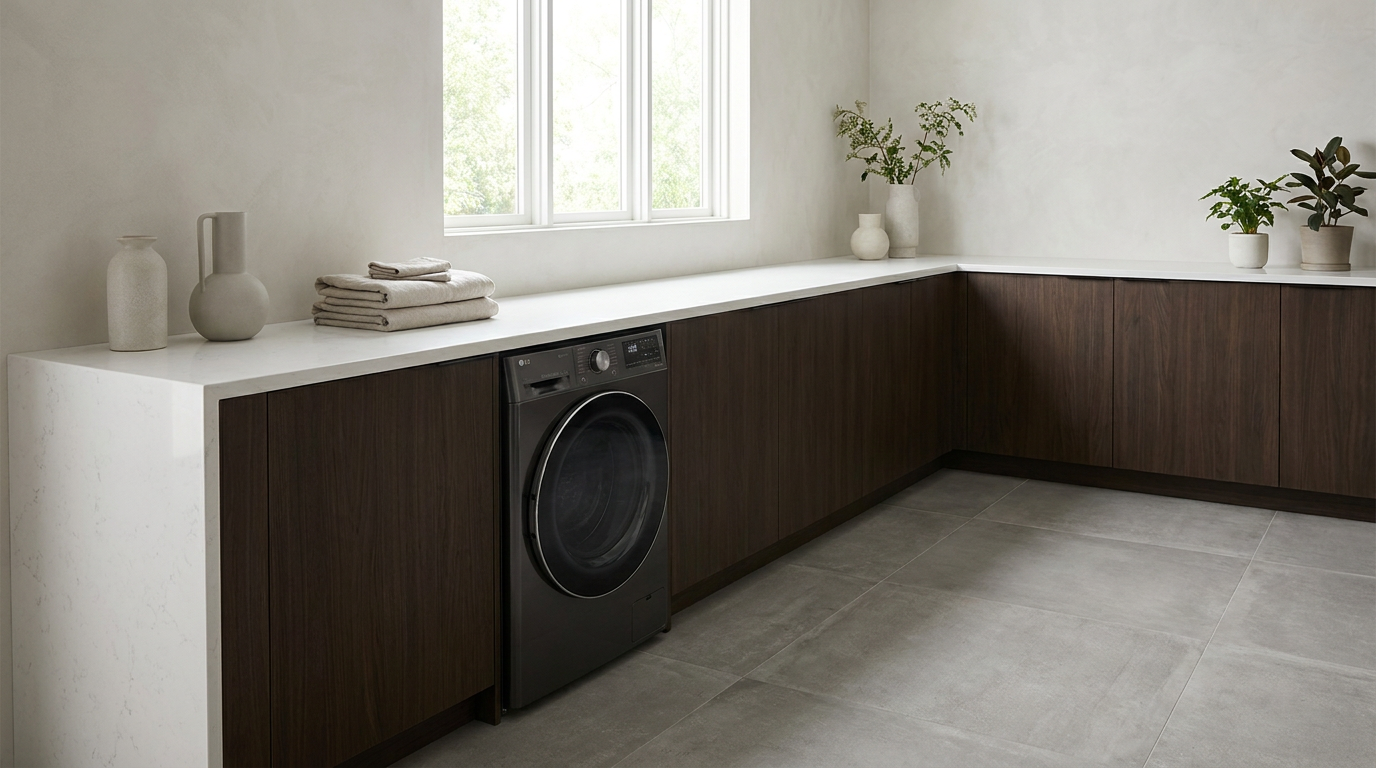
The arrival of full-size, heat pump all-in-one washer-dryers from major manufacturers like GE Profile, LG, and Samsung has fundamentally rewritten the rules of household chores. These modern titans boast massive 4.8 to 5.0 cubic-foot drums, capable of handling king-size comforters and large family loads. More importantly, they wash and dry a normal load in about two hours, completely eliminating the need to transfer wet clothes from one machine to another.[1][2]
The secret to this leap in performance is the integration of heat pump technology. Traditional electric dryers rely on energy-hungry heating elements to scorch air, which is then blown through the tumbling clothes and vented outside, taking your home's climate-controlled air with it. Heat pump combos operate on an entirely different, closed-loop principle that requires no exterior venting whatsoever.[3][5]

Instead of generating raw heat, a heat pump works essentially like an air conditioner running in reverse. It uses a compressor and a chemical refrigerant to capture and move thermal energy. Inside the machine, condenser coils heat the air, which is then blown through the wet clothes in the drum to absorb moisture.[3][5]
Once the hot air becomes saturated with water from the laundry, it doesn't get expelled outside. Instead, it passes over a set of cold evaporator coils. This sudden drop in temperature causes the moisture in the air to condense into liquid water, much like condensation forming on the outside of a cold glass of lemonade on a summer day.[3][5]
That extracted liquid water is simply pumped out through the exact same drain hose used during the wash cycle. Meanwhile, the newly dehumidified air is reheated by the condenser coils and sent right back into the drum to absorb more moisture. This continuous, closed-loop recycling of air is what makes the system so revolutionary.[4][5]
Because they recycle their own heat rather than constantly warming fresh room-temperature air, heat pump washer-dryers use roughly 40 to 50 percent less energy than conventional electric dryers. This massive reduction in electricity consumption translates to significantly lower utility bills, with some estimates suggesting a single wash-and-dry cycle uses less than one kilowatt-hour of electricity.[2][3]

The efficiency gains extend beyond the appliance itself. Because these units are ventless, they stop the invisible drain on a home's HVAC system. Traditional dryers actively pump hundreds of cubic feet of heated or air-conditioned indoor air outside every minute they run, forcing the home's furnace or AC to work harder to replace it. The closed-loop heat pump eliminates this hidden energy penalty entirely.[2]
Because these units are ventless, they stop the invisible drain on a home's HVAC system.
This dramatic drop in power consumption also solves one of the biggest hurdles to home electrification: the electrical panel. Traditional electric dryers require a dedicated 240-volt, 30-amp circuit. Modern heat pump combos, however, plug into a standard, everyday 120-volt wall outlet. This frees up valuable space in the breaker box, which homeowners can then repurpose for an electric vehicle charger, an induction stove, or a home heat pump system without needing an expensive panel upgrade.[1][2][6]
The ventless, 120-volt design also offers unprecedented flexibility for interior design and architecture. Without the need to route a four-inch exhaust duct to an exterior wall, laundry machines can now be placed virtually anywhere with a water line and a drain. Builders are increasingly installing them in walk-in closets, upstairs bathrooms, or kitchen alcoves, fundamentally changing the layout of modern homes.[2][6]

Beyond energy and space savings, the heat pump mechanism is inherently gentler on fabrics. Because the system relies on dehumidification rather than brute-force high heat to extract moisture, the internal temperatures remain significantly lower than in traditional vented dryers. This lower-temperature drying process reduces wear and tear on elastic, prevents shrinking, and extends the lifespan of clothing.[2][5]
However, the transition to an all-in-one system does require an adjustment in laundry habits. While a single load takes roughly two hours from dirty to dry—comparable to the total time of a separate wash and dry cycle—the combined nature of the machine means sequential processing is impossible. You cannot start washing a second load of laundry while the first load is still drying.[4]
For large households that generate mountains of laundry and rely on running back-to-back loads simultaneously, this bottleneck can be a dealbreaker. Appliance experts note that for families doing four or five loads on a Sunday afternoon, traditional side-by-side machines will still cut the total chore time in half.[4]
Maintenance also looks slightly different with a combo unit. Because the machine handles both wet washing and dry lint in the same environment, keeping the filters clean is paramount. Manufacturers have designed easily accessible, multi-stage lint filters at the front of the machines, and experts stress that cleaning these filters after every single cycle is critical to maintaining fast drying times and preventing internal buildup.[4]

Despite these behavioral shifts, the all-in-one heat pump washer-dryer represents one of the most significant leaps in major home appliance technology in decades. By merging two bulky machines into one, slashing energy consumption, and eliminating the need for specialized electrical and venting infrastructure, these units are rapidly becoming the new standard for modern, efficient homes.[1][7]
How we got here
Pre-2023
Combo washer-dryers were mostly small-capacity condenser units known for taking up to six hours to dry clothes.
Mid-2023
GE Appliances launched the Profile UltraFast, proving that a full-size, 120-volt heat pump combo could wash and dry a load in two hours.
Early 2024
LG introduced the WashCombo at CES, expanding the market for high-efficiency, full-size ventless laundry machines.
2025–2026
Heat pump combos become a dominant trend in home construction and renovations due to their space-saving and energy-efficient designs.
Viewpoints in depth
Appliance Manufacturers
Focusing on the engineering triumph of fitting a heat pump into a standard footprint and the push for smart home integration.
For appliance makers, the modern combo unit represents a major engineering victory. Condensing a full-size washing machine and a heat pump drying system into a standard 28-inch-wide chassis required entirely new compressor designs and airflow routing. Manufacturers view these machines as the ultimate smart-home hub, often integrating automatic detergent dispensers and AI-driven fabric sensors that adjust cycle times on the fly. They argue that eliminating the physical transfer of wet clothes removes the most universally disliked step of the laundry process.
Energy Efficiency Advocates
Highlighting the massive reduction in household carbon footprint and the ease of electrification without panel upgrades.
Environmental groups and energy policy advocates champion heat pump combos as a critical tool for home electrification. Because these units run on a standard 120-volt outlet, they allow homeowners to transition away from fossil-fuel gas dryers without paying thousands of dollars to upgrade their home's electrical panel. Furthermore, advocates point out that by sealing the home's thermal envelope—stopping the venting of climate-controlled air to the outside—these machines offer compounding energy savings that extend far beyond the appliance's own electricity use.
Large Household Consumers
Noting the drawback of sequential laundry, preferring separate units for high-volume washing.
While the technology is universally praised for its efficiency, families with heavy laundry demands often remain skeptical of the all-in-one format. Because a combo unit ties up the single drum for both washing and drying, it is impossible to run overlapping loads. Appliance service experts note that for households accustomed to washing a second load while the first is in the dryer, the linear two-hour cycle of a combo machine can actually extend total laundry day time. For these users, traditional side-by-side machines—even if they are heat-pump powered—remain the preferred setup.
What we don't know
- How the long-term reliability of these complex, dual-function machines will compare to simpler, standalone washers and dryers over a 10-to-15-year lifespan.
- Whether the higher upfront cost of heat pump combos will drop significantly as manufacturing scales and more competitors enter the market.
Key terms
- Heat Pump
- A highly efficient device that uses a compressor and refrigerant to move thermal energy from one place to another, acting like an air conditioner in reverse.
- Ventless Dryer
- A dryer that recycles its own heated air and extracts moisture through condensation, eliminating the need for an exhaust duct to the outside.
- Closed-Loop System
- A self-contained airflow cycle where air is continuously heated, passed through wet clothes, dehumidified, and reheated without taking in outside air.
- Evaporator Coil
- The cold section of a heat pump system where moisture-laden air is cooled, causing the water to condense and drain away.
- 120-Volt Outlet
- The standard electrical wall outlet found throughout North American homes, which is sufficient to power modern heat pump combo machines.
Frequently asked
Do I need a special electrical outlet for a heat pump washer-dryer?
No. Unlike traditional electric dryers that require a 240-volt circuit, modern heat pump combos plug into a standard 120-volt wall outlet.
Do these machines need to be vented to the outside?
No. They use a closed-loop system that condenses moisture into water and pumps it down the standard washer drain, requiring no exterior ductwork.
Does it take longer to do laundry with a combo unit?
A single load takes about two hours from start to finish, which is comparable to washing and drying separately. However, you cannot run two loads simultaneously.
Where does the lint go if there is no vent?
Lint is trapped in a multi-stage filter located on the machine, which must be manually cleaned by the user after every cycle to maintain efficiency.
Sources
Source coverage
7 outlets
3 viewpoints surfaced







[1]ReviewedAppliance Manufacturers
GE Profile vs. LG WashCombo: Which ventless washer-dryer is best?
Read on Reviewed →[2]ElectrekAppliance Manufacturers
LG WashCombo vs. GE Profile heat pump washer-dryers compared, 10 reasons to get either
Read on Electrek →[3]Rewiring AmericaEnergy Efficiency Advocates
Washer/heat pump dryer combo: what is it?
Read on Rewiring America →[4]Yale ApplianceLarge Household Consumers
GE Profile vs LG vs Samsung: Best Combo Washer-Dryers
Read on Yale Appliance →[5]Massachusetts Clean Energy CenterEnergy Efficiency Advocates
How Heat Pump Clothes Dryers Work
Read on Massachusetts Clean Energy Center →[6]Efficiency VermontEnergy Efficiency Advocates
Heat pump washer-dryers: A new way to do laundry
Read on Efficiency Vermont →[7]Factlen Editorial Team
Synthesis by Factlen editorial team
Read on Factlen Editorial Team →

More in shopping
See all 7 stories →Wearable Tech
Smart Rings vs. Smartwatches: The 2026 Clinical Evidence on Wearable Accuracy
9 sources

Wearable Tech
Smart Rings vs. Smartwatches: The 2026 Health Tracking Comparison
7 sources

Device Longevity
The 7-Year Smartphone: How Extended Support is Killing the Two-Year Upgrade Cycle
6 sources
E-Bike Tech
How to Choose an E-Bike in 2026: A Complete Buying Guide
7 sources
Every angle. Every day.
Get shopping stories with full source coverage and perspective breakdowns delivered to your inbox.