
The 7-Year Smartphone: How Extended Support is Killing the Two-Year Upgrade Cycle
Major manufacturers and new EU regulations are pushing smartphone lifespans to seven years, transforming how consumers buy, repair, and hold onto their devices.
By Factlen Editorial Team
- Premium Manufacturers
- Flagship makers are using longevity to justify higher prices and pivot to subscription services.
- Right to Repair Advocates
- Environmental and consumer groups celebrate the software extensions but demand cheaper hardware parts.
- Budget & Mid-Range Brands
- Lower-tier manufacturers struggle to balance long-term support with affordability.
What's not represented
- · Independent Repair Shops
- · Mobile Carriers
Why this matters
Smartphones are transitioning from disposable two-year gadgets into long-term investments. Understanding which brands offer seven years of support can save you thousands of dollars and protect your personal data over the next decade.
Key points
- Google and Samsung now guarantee seven years of operating system and security updates for their flagship smartphones.
- New EU Ecodesign regulations mandate that manufacturers provide spare parts for seven years and software updates for five years.
- The average US smartphone replacement cycle has stretched to nearly 3.8 years as consumers hold onto devices longer.
- Budget and mid-range phones still lag behind, often receiving only two to four years of software support.
The era of the automatic two-year smartphone upgrade is quietly drawing to a close. For over a decade, consumers were conditioned to replace their devices the moment their carrier contract expired, driven by degrading batteries and software that felt sluggish. But in 2026, the industry has fundamentally pivoted toward longevity as a premium feature, transforming how we view mobile hardware.[5]
The catalyst for this shift began at the top of the market. While Apple has historically supported its iPhones for five to seven years, the Android ecosystem long suffered from fragmentation, with many devices abandoned after just two years. That changed when Google announced an unprecedented seven years of operating system and security updates for its Pixel 8 series, a standard it has maintained through its latest releases.[6]
Samsung, the world's largest Android manufacturer, quickly matched the pledge. Starting with the Galaxy S24 and continuing through the 2026 Galaxy S26 lineup, the South Korean tech giant committed to seven years of Android upgrades, One UI improvements, and security patches. This means a flagship phone purchased today is guaranteed to remain secure and feature-rich into the 2030s.[2][3]

This extended software support is not merely a marketing gimmick; it is a necessity driven by changing consumer habits. The average smartphone replacement cycle in the United States has stretched from roughly two and a half years to nearly 3.8 years. As hardware innovation plateaus, consumers are holding onto their devices longer, demanding that their expensive pocket computers function like long-term investments.[1][5]
But software is only half of the longevity equation. A phone that receives updates until 2033 is useless if its battery dies in 2028 or its screen shatters and cannot be affordably fixed. This is where sweeping legislative changes have forced the hardware to catch up with the software.[1]
In June 2025, the European Union's landmark Ecodesign rules for smartphones and tablets officially took effect, fundamentally altering how devices are manufactured globally. The regulations mandate that manufacturers must provide access to spare parts and repair information to both professional repairers and end-users for at least seven years after a product is retired from the market.[4]
The EU directive also sets strict durability baselines. Smartphones must now be able to survive at least 45 accidental drops without losing functionality. More importantly, they must retain at least 80% of their original battery capacity after undergoing 800 full charging cycles, ensuring the power cell survives the first few years of heavy use.[4]
Smartphones must now be able to survive at least 45 accidental drops without losing functionality.
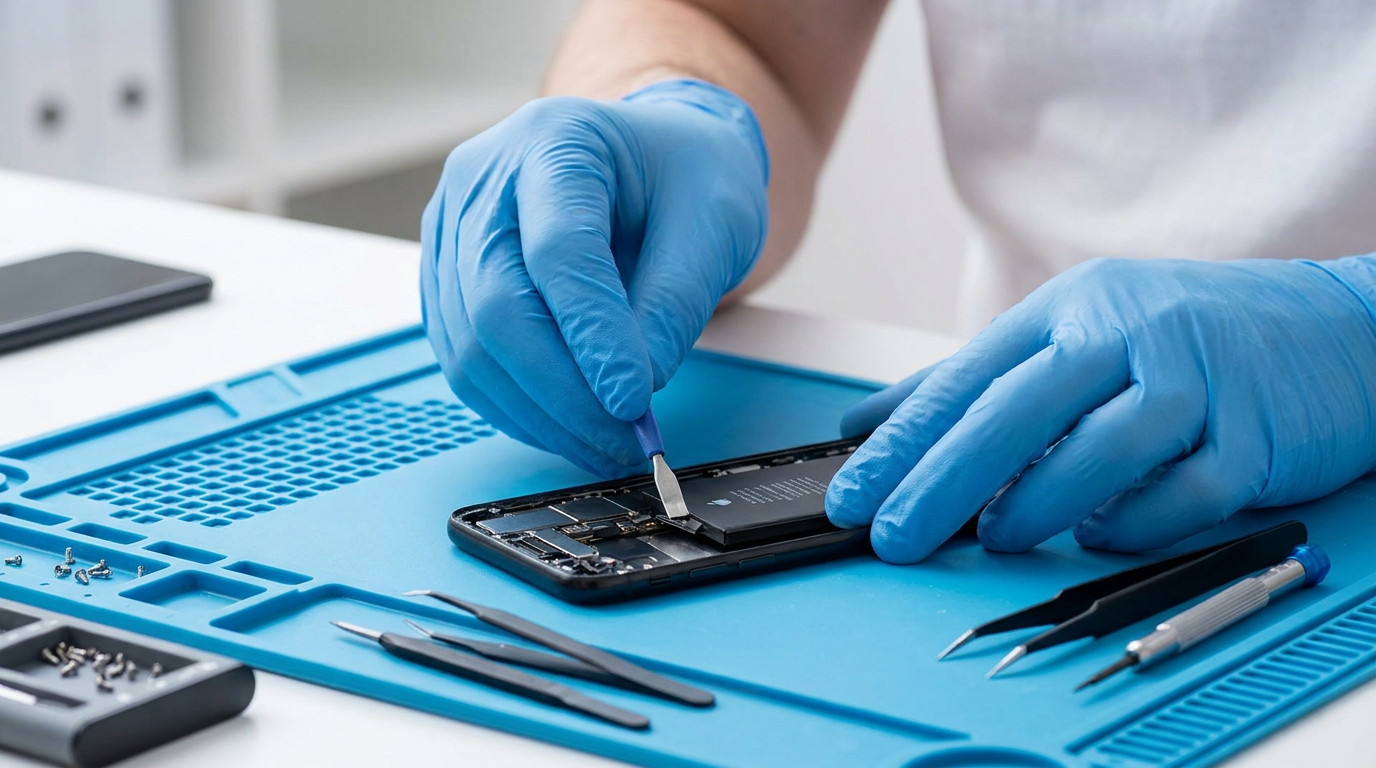
These hardware mandates are reshaping smartphone design. Manufacturers are moving away from heavily glued components toward more modular, screw-based assemblies that allow for easier battery and screen replacements. If a battery degrades after three years, consumers can now swap it out and enjoy another three to four years of peak performance, perfectly aligning with the seven-year software window.[4]

The environmental implications of this shift are massive. Extending the lifespan of smartphones significantly reduces electronic waste and the carbon emissions associated with manufacturing new devices. The Right to Repair coalition views the seven-year parts availability as a major victory, though some advocates argue that the high cost of official spare parts remains a barrier to universal repairability.[4]
For consumers, the financial benefits are clear. While flagship phones have grown more expensive, their cost-per-year plummets when amortized over a six- or seven-year lifespan. Furthermore, guaranteed long-term support has bolstered the secondary market, making refurbished phones a much safer and more valuable purchase.[5]
However, this new longevity paradigm has created a two-tier system in the smartphone market. While premium devices from Apple, Google, and Samsung enjoy seven years of support, budget and mid-range Android phones often still only receive two to four years of updates.[6]
The disparity exists because maintaining software for dozens of different budget models is incredibly expensive for manufacturers. Budget brands operate on razor-thin margins, making it difficult to justify the ongoing engineering costs required to port new Android versions to cheaper chipsets years after the device was originally sold.[6]

Security is the most critical aspect of this divide. When a phone stops receiving security patches, it becomes vulnerable to newly discovered exploits and malware. Eventually, banking and enterprise applications will refuse to run on outdated, unpatched operating systems, effectively forcing an upgrade even if the hardware is pristine.[5]
To compensate for the revenue lost by consumers upgrading less frequently, manufacturers are pivoting toward software and services. Samsung and Google are increasingly integrating advanced on-device and cloud-based artificial intelligence into their ecosystems. Industry analysts expect that while the base OS updates remain free, premium AI features may eventually require a subscription, creating a recurring revenue stream that outlasts the initial hardware purchase.[1][3]
Ultimately, the era of planned obsolescence in flagship smartphones is giving way to a model of sustained value. By aligning durable hardware, accessible repairs, and decade-spanning software support, the industry is finally treating the smartphone not as a disposable gadget, but as a lasting essential tool.[1][2]
How we got here
2021
France introduces mandatory repairability indexes for electronic devices, including smartphones.
October 2023
Google announces an unprecedented 7 years of OS and security updates for the Pixel 8 series.
January 2024
Samsung matches Google's pledge, promising 7 years of updates starting with the Galaxy S24 lineup.
June 2025
The EU's Ecodesign rules for smartphones and tablets officially take effect, mandating long-term parts and software availability.
Early 2026
The average US smartphone replacement cycle approaches 3.8 years as consumers hold onto devices longer.
Viewpoints in depth
Premium Manufacturers' View
Flagship makers are using longevity to justify higher prices and pivot to subscription services.
Companies like Samsung and Google have realized that as hardware innovation slows, software longevity is a powerful differentiator. By guaranteeing seven years of support, they can justify premium price tags exceeding $1,000. Furthermore, keeping users within their ecosystem for nearly a decade provides a captive audience for recurring revenue streams, such as cloud storage subscriptions and premium AI features, offsetting the loss of frequent hardware sales.
Right to Repair Advocates' View
Environmental and consumer groups celebrate the software extensions but demand cheaper hardware parts.
Organizations like the Right to Repair Europe coalition view the seven-year software and parts mandates as a historic victory against planned obsolescence. However, they argue that the battle is only half won. Advocates point out that if manufacturers price official spare parts—like screens and motherboards—too high, consumers will still be economically forced to buy new devices. They continue to push for universal compatibility and the right to use third-party components without software locks.
Budget Market Reality
Lower-tier manufacturers struggle to balance long-term support with affordability.
For manufacturers producing sub-$300 smartphones, a seven-year update promise is economically unviable. These devices run on a fragmented array of cheaper chipsets, each requiring bespoke engineering to support new Android versions. Budget brands argue that forcing them to provide flagship-level software support would necessitate raising prices, thereby pricing lower-income consumers out of the smartphone market entirely.
What we don't know
- Whether manufacturers will eventually charge subscription fees for premium AI features to offset the loss of frequent hardware sales.
- How well the internal components of 2024 and 2025 smartphones will actually handle the processing demands of operating systems released in 2031.
- If the high cost of official spare parts will deter consumers from utilizing the mandated seven-year repair windows.
Key terms
- OS Upgrade
- A major annual change to the phone's operating system (like moving from Android 15 to Android 16) that introduces new features and interface changes.
- Security Patch
- A smaller, regular update designed specifically to fix vulnerabilities and protect the device from hackers and malware.
- Ecodesign Directive
- European Union regulations that mandate products be designed for durability, repairability, and reduced environmental impact.
- Charge Cycle
- One full discharge and recharge of a battery; using 50% of the battery one day and 50% the next counts as one complete cycle.
Frequently asked
Will my older phone get 7 years of updates?
Generally no. The 7-year policies from Google and Samsung apply only to newer devices, starting with the Pixel 8 and Galaxy S24 series released in 2023 and 2024.
Does repairing a phone slow it down?
No. In fact, replacing a degraded battery restores the phone's ability to draw peak power, often significantly improving performance and preventing unexpected shutdowns.
Why don't cheap phones get 7 years of updates?
Budget phones operate on very thin profit margins. Manufacturers struggle to absorb the long-term engineering costs required to update and test software for cheaper, less powerful chipsets over many years.
What happens when a phone stops getting security updates?
The device becomes vulnerable to new malware and exploits. Over time, critical apps like banking or mobile payment services may block access to protect your data.
Sources
Source coverage
6 outlets
3 viewpoints surfaced






[1]ForbesPremium Manufacturers
Samsung’s Galaxy S26 Ultra Can Challenge And Change The World
Read on Forbes →[2]TechweezPremium Manufacturers
Samsung Confirms 7 Years of Software Updates for Select Devices
Read on Techweez →[3]HardwareZonePremium Manufacturers
Galaxy S24 to get 7 years of software update, Galaxy AI to be free till 2025?
Read on HardwareZone →[4]Right to Repair EuropeRight to Repair Advocates
First EU Ecodesign rules on mobile phones and tablets published
Read on Right to Repair Europe →[5]Refurb.meRight to Repair Advocates
How long does a cell phone last? (2026 Guide)
Read on Refurb.me →[6]GadgetSpecsBudget & Mid-Range Brands
Best Smartphone Operating System for Updates (2026)
Read on GadgetSpecs →
More in shopping
See all 6 stories →Pet Tech
The Trade-Offs Between Bluetooth Trackers and Cellular GPS for Pet Safety
7 sources

Display Tech
OLED vs. Mini-LED in 2026: Which TV Technology Actually Wins?
7 sources
Smart Home Protocols
Matter over Thread vs. Wi-Fi: Which Smart Home Protocol Should You Choose?
6 sources

Wearable Tech
Smart Rings vs. Smartwatches: The 2026 Clinical Evidence on Wearable Accuracy
9 sources

Every angle. Every day.
Get shopping stories with full source coverage and perspective breakdowns delivered to your inbox.