
Iran Declares Strait of Hormuz Closed Over Lebanon Strikes; U.S. Military Denies Blockade
Iran's military announced the closure of the vital Strait of Hormuz, citing Israeli strikes in Lebanon as a violation of a recent ceasefire. The U.S. military swiftly denied the claim, reporting that commercial traffic and millions of barrels of oil continue to flow through the waterway.
By Adel Khoury

Share this story
Iran's military command declared the closure of the Strait of Hormuz on Saturday, throwing a fragile new peace agreement into immediate jeopardy. The Khatam-al Anbiya Central Headquarters announced that the vital maritime choke point would be shut to all vessel traffic, framing the move as a direct response to ongoing Israeli military strikes against Hezbollah targets in southern Lebanon.
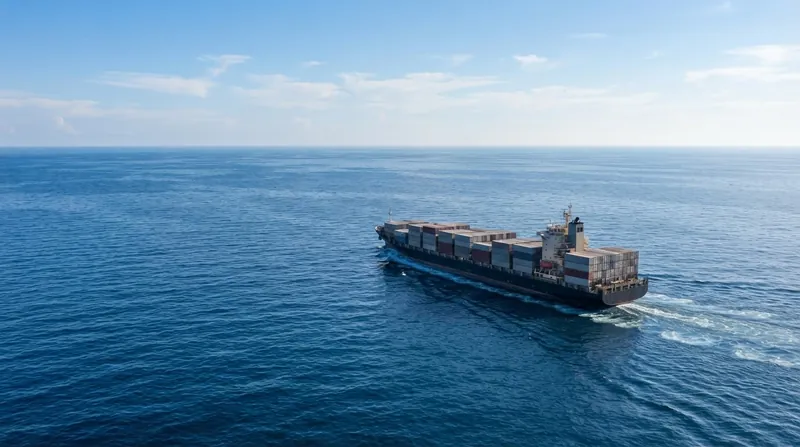
The United States military swiftly rebuffed Tehran's declaration, insisting that the waterway remains open and active. U.S. Central Command spokesperson Navy Captain Tim Hawkins stated unequivocally that "Iran does not control the Strait of Hormuz," reporting that 55 merchant ships carrying 17 million barrels of oil had successfully transited the corridor on Saturday alone. Vice President JD Vance echoed this assessment, assuring the public that the straits were flowing freely.[1]
The renewed tensions arrive just days after U.S. President Donald Trump and Iranian President Masoud Pezeshkian signed a landmark memorandum of understanding on June 17. The agreement aimed to end a severe regional conflict that began earlier in the year, stipulating a cessation of hostilities across multiple fronts, including Lebanon, and the lifting of a U.S. blockade on Iranian ports in exchange for unimpeded commercial shipping through the strait.[4]
The core friction point threatening the broader U.S.-Iran detente is the ongoing military activity in southern Lebanon. Iranian state media cited Israel's continued operations against Hezbollah as a direct breach of the ceasefire's terms. Israeli Prime Minister Benjamin Netanyahu has maintained that Israel will secure its northern border and maintain a security zone in Lebanon as long as necessary, complicating the Trump administration's efforts to enforce a comprehensive regional truce.[1][3]
For the global maritime and energy sectors, the conflicting claims create a perilous environment. The Strait of Hormuz is one of the world's most critical energy arteries, historically handling roughly 25 percent of all seaborne oil trade and a fifth of global liquefied natural gas shipments. While U.S. forces are actively monitoring the area to support freedom of navigation, the Iranian Revolutionary Guard Corps' previous use of sea mines and vessel boardings earlier in 2026 has left shipping companies deeply cautious.[4]
The sudden escalation threatens to derail scheduled technical-level talks in Switzerland, where U.S. and Iranian negotiators were expected to discuss the implementation of the 14-clause memorandum. Pakistan, acting as a primary mediator, indicated that talks were still planned for Sunday, but the rapid deterioration of trust on the water casts a long shadow over the diplomatic table.[1][3]
Prior to the recent ceasefire, a months-long de facto closure of the strait had severely disrupted global energy markets and forced vessels to anchor outside the Gulf. If Iran successfully reimposes a blockade—or if the perceived risk simply drives insurance premiums to prohibitive levels—the economic fallout could rapidly reverse the stabilization seen in recent days.[4]
The international community is now watching to see if Iran will take physical action to enforce its declared closure, such as deploying naval assets or harassing transiting ships, or if the announcement serves primarily as diplomatic leverage. Meanwhile, the Trump administration faces mounting pressure to navigate the competing demands of securing the global energy supply, maintaining the nascent agreement with Tehran, and managing its alliance with Israel.[1]
The geography of the Strait of Hormuz inherently complicates the dispute. At its narrowest point, the strait is only 21 miles wide, and the shipping lanes in both directions are just two miles wide. Crucially, vessels transiting the internationally recognized Traffic Separation Scheme must pass through the territorial waters of Iran and Oman. This geographical reality gives Tehran significant asymmetric leverage, allowing it to threaten global commerce without necessarily deploying a massive conventional naval force.[4]
Regional allies are also reacting to the sudden shift. Saudi Arabia and the United Arab Emirates, both heavily reliant on the strait for their own energy exports, had only recently begun repairing diplomatic relations with Tehran following the June 17 agreement. The prospect of renewed hostilities in their immediate waters threatens ambitious regional economic plans, including a proposed $350 billion reconstruction fund intended to stabilize the area.[3]
Ultimately, the standoff tests the limits of the newly signed memorandum of understanding. With Washington insisting the waterway is open and Tehran declaring it closed, the reality will likely be determined on the water in the coming days. If commercial vessels continue to transit under the protective umbrella of the U.S. Navy without Iranian interference, Tehran's declaration may be viewed as political posturing. However, any physical confrontation could instantly reignite the broader conflict that diplomats have spent weeks trying to extinguish.[1][2]
Perspectives explored
Iranian Military Command
Argues that the closure is a justified response to Israeli military actions that violate the recent ceasefire.
Tehran's military leadership views the June 17 memorandum of understanding as a holistic agreement that requires a cessation of hostilities across all regional fronts. By their interpretation, Israel's continued operations against Hezbollah in southern Lebanon constitute a direct breach of the U.S.-brokered truce. Consequently, the Khatam-al Anbiya Central Headquarters framed the closure of the Strait of Hormuz not as an act of unprovoked aggression, but as a necessary 'first step of response' to force compliance with the ceasefire's terms. Iranian officials have also previously asserted that the strait requires management and have floated the idea of imposing maritime transit fees.
U.S. Administration
Maintains that the strait remains open to international shipping and that Iran lacks the authority to close it.
The U.S. perspective, articulated by Central Command and Vice President JD Vance, is rooted in the principle of freedom of navigation in international waters. Washington fundamentally rejects Iran's claim of control over the Strait of Hormuz, pointing to the uninterrupted flow of 55 merchant ships and 17 million barrels of oil as empirical proof that the waterway remains open. The administration views the June 17 agreement as a pathway to de-escalation and considers Iran's declarations as counterproductive posturing that threatens global economic stability, while simultaneously trying to manage its complex alliance with Israel.
Israeli Government
Prioritizes national security and border defense over the broader U.S.-Iran maritime and diplomatic agreements.
For Israel, the primary strategic imperative is neutralizing the threat posed by Hezbollah on its northern border. Prime Minister Benjamin Netanyahu has made it clear that Israel will maintain a security zone in southern Lebanon for as long as its defense needs dictate. From this viewpoint, Israeli military operations are a non-negotiable matter of national survival, distinct from the maritime security of the Persian Gulf or the diplomatic negotiations between Washington and Tehran. Israeli leadership remains deeply skeptical of any agreement that relies on Iranian goodwill or that constrains Israel's ability to defend itself against proxy forces.
Key points
- Iran's military declared the Strait of Hormuz closed to vessel traffic on Saturday.
- Tehran cited ongoing Israeli strikes in Lebanon as a violation of a recent U.S.-Iran ceasefire.
- The U.S. military denied the closure, stating that 55 ships and 17 million barrels of oil passed through on Saturday.
- The dispute threatens a fragile June 17 memorandum of understanding aimed at ending a severe regional conflict.
Open questions
- Whether Iran will deploy naval forces or sea mines to physically enforce its declared closure of the strait.
- How global shipping companies and maritime insurers will adjust their risk assessments and transit schedules in the coming days.
- Whether the scheduled diplomatic talks in Switzerland will proceed or collapse under the renewed tension.
Timeline
Feb 2026
A major regional conflict erupts, leading to a de facto closure of the Strait of Hormuz and a U.S. blockade of Iranian ports.
June 17, 2026
The U.S. and Iran sign a memorandum of understanding to end the conflict and restore freedom of navigation.
June 18, 2026
Commercial shipping traffic in the strait hits a two-month high as the U.S. lifts its blockade.
June 19, 2026
Israel continues military operations against Hezbollah in southern Lebanon, despite the broader ceasefire.
June 20, 2026
- U.S. Administration & Military
- Maintains that the strait remains open and under international navigation, emphasizing that Iran does not control the waterway.
- Iranian Military Command
- Argues that Israeli military operations in Lebanon violate the recent ceasefire, justifying the closure of the strait as a retaliatory measure.
- Israeli Government
- Asserts the right to continue military operations in southern Lebanon to secure its borders, regardless of the broader U.S.-Iran agreements.
- International Observers & Industry
- Focuses on the severe economic and geopolitical consequences of the standoff, warning of the risks to global energy markets.
Perspectives this story doesn't cover
- Lebanese Civilians
- European Energy Importers
Sources
Source coverage
4 outlets
4 viewpoints surfaced




- [1]The Washington PostU.S. Administration & Military
Iran says it is closing Strait of Hormuz, testing fragile agreement with U.S.
Read on The Washington Post → - [2]Al JazeeraInternational Observers & Industry
Overplaying Strait of Hormuz card will turn Iran into a pariah state
Read on Al Jazeera → - [3]The GuardianIranian Military Command
Iran announces plans to bring in maritime fees for strait of Hormuz
Read on The Guardian → - [4]WikipediaInternational Observers & Industry
2026 Strait of Hormuz crisis
Read on Wikipedia →
More in News & Politics
See all →US-Israel Relations
US Defense Secretary Hegseth Makes Unannounced Visit to Israel Ahead of Election
6 sources

Humanitarian Aid
WFP Halts Gaza Food Aid for 500,000 People Citing Severe Funding Shortage
4 sources
Presidential Runoff
Lula and Flávio Bolsonaro Clash in First Presidential Runoff Debate
5 sources

Political Unrest
Fire Engulfs Albanian Supreme Court as Anti-Government Protests Enter Fifth Day
6 sources

Comments
Every angle. Every day.
Get News & Politics stories with full source coverage and perspective breakdowns, free every day.