
How the Human Brain Builds Sentences, Neuron by Neuron
By tracking the electrical activity of individual cells in real time, researchers have discovered that the brain uses highly specialized neurons to assemble language. The breakthrough paves the way for advanced speech prosthetics.
By Factlen Editorial Team
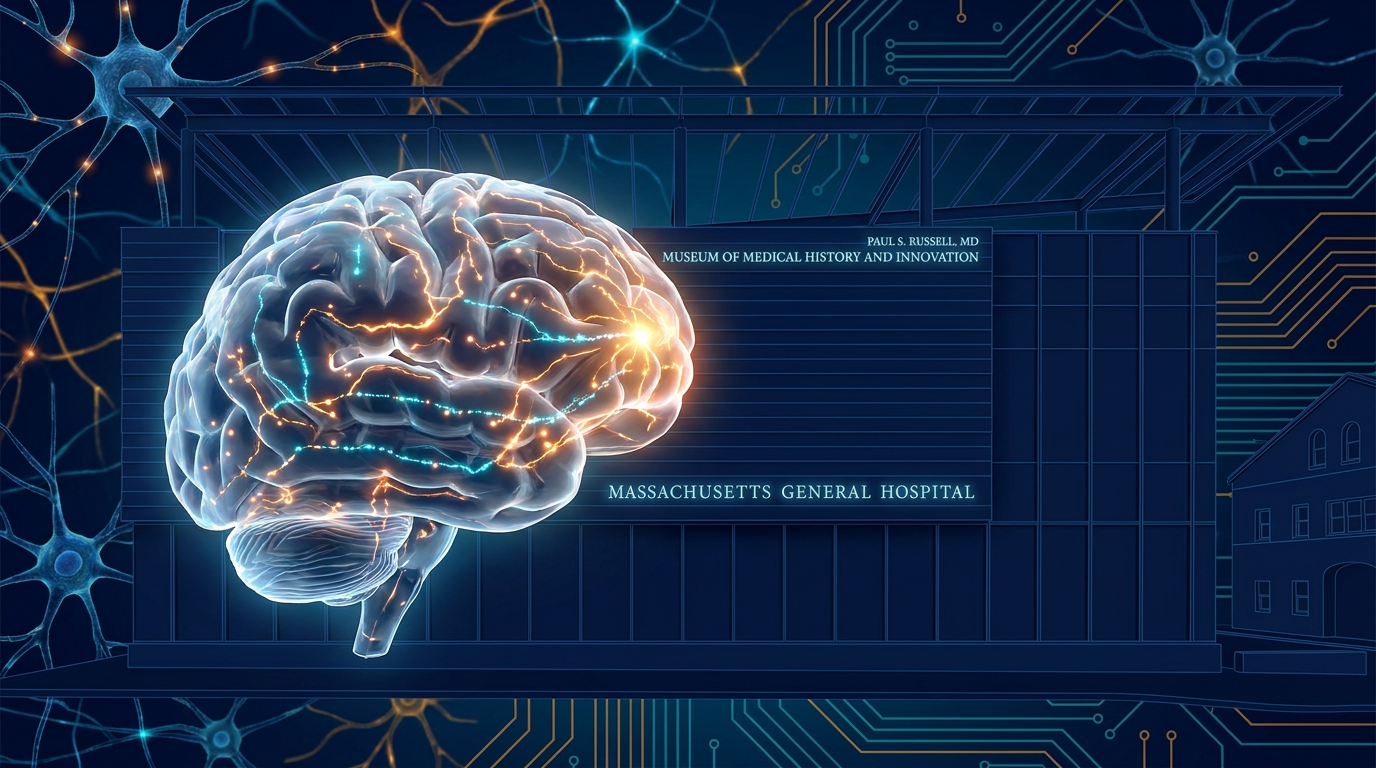
- Neuroscientists
- Focusing on the fundamental paradigm shift in understanding brain architecture.
- Clinical Neurologists
- Prioritizing the diagnostic and therapeutic potential for speech disorders.
- Neuroprosthetics Engineers
- Looking toward the future of brain-computer interfaces and synthetic speech.
- Cognitive Linguists
- Fascinated by the brain's real-time contextual processing and semantic mapping.
What's not represented
- · Patients currently living with severe aphasia or locked-in syndrome.
- · Bilingual individuals whose brains navigate multiple phonetic and semantic systems.
Why this matters
Understanding exactly how the brain encodes language at the cellular level is the critical first step toward curing severe speech disorders. This high-resolution map brings us closer to brain-computer interfaces that could restore a voice to patients paralyzed by stroke, ALS, or traumatic brain injury.
Key points
- Researchers have tracked the electrical activity of individual brain cells during unscripted conversations.
- The brain builds sentences neuron by neuron, utilizing highly specialized cells rather than a diffuse network.
- Specific neurons are dedicated to individual phonemes, syllables, and distinct semantic categories like 'animals' or 'actions'.
- The brain actively uses sentence context to decipher meaning in real time, distinguishing between words like 'son' and 'sun'.
- This high-resolution neural map paves the way for advanced speech prosthetics for patients with severe communication disorders.
In the fraction of a second before a person speaks, the human brain executes a biological miracle. It weaves together complex grammar, precise vocabulary, and underlying semantic meaning, orchestrating the physical movements of the mouth and vocal cords to produce sound. For decades, neuroscientists believed this process was a diffuse, whole-network phenomenon—a generalized hum of activity spread across the brain's language centers.[1]
That paradigm is now undergoing a radical shift. By tracking the electrical crackle of individual brain cells in real time during unscripted conversations, researchers have discovered that the brain builds sentences neuron by neuron. Rather than a generalized cloud of activity, the frontotemporal cortex operates more like a highly specialized assembly line, where individual cells act as distinct linguistic building blocks.[1][6]
The breakthrough was made possible by Neuropixels probes, a cutting-edge recording technology. These probes are smaller than the width of a human hair, yet they contain hundreds of channels capable of simultaneously recording the activity of dozens or even hundreds of individual neurons.[2]
A team led by researchers at Massachusetts General Hospital (MGH) and Harvard Medical School implanted these high-density arrays in patients who were already undergoing brain surgery for conditions like epilepsy or Parkinson's disease. This provided a rare, unprecedented window into the awake, talking human brain.[2][4]

As the patients engaged in natural, unscripted conversations, the researchers watched the linguistic assembly line in action. They found that almost half of the recorded neurons were dedicated to specific phonemes—the distinct sounds that make up words.[3]
For example, some neurons became highly active only when the patient was about to produce a "p" or "b" sound, which requires stopping airflow at the lips. A completely different set of neurons fired in anticipation of "k" or "g" sounds, which are formed by pressing the tongue against the soft palate.[3]
These phoneme-specific neurons fire well before the mouth even moves. By monitoring this activity, the researchers found they could accurately predict the exact consonants and vowels a person was about to speak before a single sound was uttered.[2][5]
Moving up the hierarchy of language, about a quarter of the tracked neurons were responsible for assembling those phonemes into syllables. These "syllable neurons" activated precisely 70 milliseconds before the patient uttered the sound, acting as the final rhythmic conductors before speech became physical.[3]

Moving up the hierarchy of language, about a quarter of the tracked neurons were responsible for assembling those phonemes into syllables.
But the brain's specialization doesn't stop at mere sound production; it extends deep into semantic meaning. In a parallel phase of the research, scientists mapped how individual neurons respond to the definitions of words.[4]
They discovered that semantic neurons cluster into roughly nine distinct categories. Specific cells fire uniquely in response to words associated with actions, emotional states, objects, foods, animals, nature, people, names, or spatiotemporal relationships. A neuron that lights up for "bunny" might also fire for "horse," acting as a dedicated node for the concept of animals.[4]

Crucially, these neurons are not just passive dictionary entries; they are dynamic interpreters of context. Researchers observed how the brain handles homophones—words that sound identical but have entirely different meanings.[4]
When a patient heard the sentence, "My son jumped into the canal," neurons in the "family and people" category lit up. But when they heard, "The sun set into the ocean," those family neurons remained quiet, and "nature" neurons fired instead. The brain actively uses the surrounding sentence to decipher meaning in real time, proving that language comprehension is a dynamic, predictive process.[4][6]

"We used to think language was this diffuse, whole-network phenomenon," notes Dr. Ziv Williams, a neurosurgeon at MGH and co-author of the studies. "But it turns out you have specific neurons that only care if a word is a noun, or only care if a phrase is ending."[1][2]
The sheer speed of this cellular choreography is staggering. In natural conversation, humans produce about three words per second, with remarkably few errors. The brain seamlessly integrates context, selects the correct semantic nodes, assembles the syllables, and fires the motor commands in milliseconds.[5]
Beyond unraveling a fundamental mystery of human cognition, this high-resolution map of the language cortex carries profound clinical implications. Disruptions in these neural networks are the root cause of speech impairments in a wide variety of neurological conditions, including stroke, traumatic brain injury, and neurodegenerative disorders.[3][5]
By understanding exactly how individual neurons encode speech, engineers are now better equipped to design advanced brain-computer interfaces (BCIs). Because the researchers proved it is possible to predict what a person intends to say before they say it, this technology lays the groundwork for highly accurate speech prosthetics.[3][5]

For patients suffering from locked-in syndrome, ALS, or severe aphasia, these future prosthetics could bypass damaged vocal cords or motor pathways entirely, translating the electrical crackle of their linguistic neurons directly into synthetic speech.[5][6]
As researchers continue to explore how these neurons handle multiple languages and complex grammar, the mapping of the brain's sentence-building cells stands as a monumental leap forward. It transforms our understanding of communication from a mysterious cognitive cloud into a precise, beautifully orchestrated biological symphony.[4][6]
How we got here
Pre-2020s
Neuroscientists widely believe that language processing is a diffuse, whole-network phenomenon spread across broad brain regions.
Early 2020s
The development of high-density Neuropixels probes allows researchers to record hundreds of individual neurons simultaneously in human patients.
Jan 2024
Initial findings are published showing that single neurons encode specific speech sounds and syllables before they are spoken.
Jun 2026
Further research published in Nature solidifies the map of the brain's linguistic assembly line, detailing how neurons dynamically process semantic context.
Viewpoints in depth
Neuroscientists' view
Focusing on the fundamental paradigm shift in understanding brain architecture.
For decades, the prevailing model of language processing assumed a distributed, whole-network mechanism where meaning and sound emerged from broad regional activations. The discovery of highly specialized, single-neuron linguistic building blocks forces a rewrite of foundational neuroscience textbooks. Researchers emphasize that the brain's language centers operate with a level of microscopic precision previously thought impossible to map, functioning more like a highly organized digital assembly line than a diffuse analog cloud.
Clinical Neurologists' view
Prioritizing the diagnostic and therapeutic potential for speech disorders.
Clinicians view this cellular-level map as a crucial stepping stone for treating devastating conditions like aphasia, stroke-induced speech loss, and traumatic brain injuries. By understanding exactly which neurons handle phonemes versus semantic meaning, neurologists hope to develop targeted therapies—such as highly specific deep brain stimulation—that can help rewire or bypass damaged neural circuits, restoring communication abilities that were previously considered permanently lost.
Neuroprosthetics Engineers' view
Looking toward the future of brain-computer interfaces and synthetic speech.
For engineers building the next generation of medical devices, the ability to predict intended speech before a patient opens their mouth is the holy grail. If Neuropixels or similar arrays can reliably read the 'p' and 'b' phoneme neurons in real time, engineers can route those signals to a voice synthesizer. This perspective is heavily focused on translating these biological discoveries into functional, life-changing hardware for patients with locked-in syndrome or ALS.
Cognitive Linguists' view
Fascinated by the brain's real-time contextual processing and semantic mapping.
Linguists are particularly drawn to the discovery that neurons dynamically shift their firing based on sentence context—distinguishing between 'son' and 'sun' instantly. This provides biological proof that language comprehension is an active, predictive process rather than a passive retrieval of dictionary definitions. It bridges the gap between abstract linguistic theory and hard cellular biology, showing exactly how the brain navigates the ambiguities of human grammar.
What we don't know
- How these specialized language neurons adapt or differ in individuals who are bilingual or multilingual.
- Whether the exact physical layout of these semantic neuron clusters is identical across all human brains.
- How long it will take to translate these fundamental biological discoveries into widely available, FDA-approved speech prosthetics.
Key terms
- Neuropixels
- Advanced, ultra-thin microelectrode probes capable of recording the electrical activity of hundreds of individual neurons simultaneously.
- Phoneme
- The smallest unit of sound in speech, such as the 'p' sound in 'pan' or the 'b' sound in 'ban'.
- Frontotemporal Cortex
- A region of the brain located near the front and sides of the head, heavily involved in language production, comprehension, and memory.
- Aphasia
- A language disorder, often caused by brain damage from a stroke, that affects a person's ability to communicate.
- Brain-Computer Interface (BCI)
- A system that connects the brain to external technology, allowing neural signals to control devices like computers or speech synthesizers.
Frequently asked
How did researchers track individual brain cells?
They used Neuropixels probes—tiny electrode arrays smaller than a human hair—implanted in patients who were already undergoing brain surgery for conditions like epilepsy.
Can the brain really predict what we are going to say?
Yes. Researchers found that specific neurons responsible for assembling syllables and sounds activate up to 70 milliseconds before a person actually speaks the word.
What does this mean for people who can't speak?
By mapping exactly how neurons encode intended speech, scientists can develop advanced brain-computer interfaces (BCIs) that translate these neural signals directly into synthetic speech for paralyzed patients.
Does the brain have specific neurons for different topics?
Yes. The study identified neurons that cluster into nine distinct semantic categories, meaning certain cells fire uniquely for words related to food, animals, or emotional states.
Sources
Source coverage
6 outlets
4 viewpoints surfaced






[1]NatureNeuroscientists
How the brain builds sentences, neuron by neuron
Read on Nature →[2]Massachusetts General HospitalNeuroscientists
Study discovers neurons in the human brain that can predict what we are going to say
Read on Massachusetts General Hospital →[3]National Institutes of HealthClinical Neurologists
How the brain produces speech
Read on National Institutes of Health →[4]Harvard MagazineCognitive Linguists
How Does the Brain Interpret Language in Real-Time?
Read on Harvard Magazine →[5]ScienceDailyNeuroprosthetics Engineers
Study discovers neurons in the human brain that can predict what we are going to say before we say it
Read on ScienceDaily →[6]Factlen Editorial TeamCognitive Linguists
Synthesis by Factlen editorial team
Read on Factlen Editorial Team →

Every angle. Every day.
Get science stories with full source coverage and perspective breakdowns delivered to your inbox.