
Is Climate Change Supercharging El Niño? Inside the Scientific Debate
As a potentially record-breaking El Niño forms in the Pacific, scientists are debating whether global warming is fundamentally altering the mechanics of the climate cycle or simply amplifying its destructive impacts.
By Factlen Editorial Team
- Climate Dynamicists
- Argue that greenhouse gas warming is fundamentally altering the physical mechanics of the ocean, making ENSO swings more violent.
- Impact Forecasters
- Focus on the thermodynamic reality that a warmer baseline guarantees more destructive weather impacts, regardless of changes to the underlying ocean physics.
- Observational Skeptics
- Emphasize the chaotic natural variability of the Pacific and caution that the historical data record is too short to definitively prove the cycle itself has changed.
What's not represented
- · Agricultural Economists
- · Coastal Communities
Why this matters
The return of El Niño on top of a record-warm baseline threatens to trigger severe agricultural shocks, extreme flooding, and devastating heatwaves worldwide. Understanding whether climate change is permanently rewiring this cycle is critical for governments and industries trying to forecast and survive the next decade of extreme weather.
Key points
- The WMO and NOAA have officially declared the onset of El Niño conditions for 2026, with a high probability of a strong event.
- Scientists universally agree that baseline global warming will amplify the floods, droughts, and heatwaves caused by this El Niño.
- A vigorous debate is underway regarding whether greenhouse gases are also altering the physical mechanics of the ocean to make the ENSO cycle itself more violent.
- Recent studies suggest ocean stratification has increased ENSO amplitude by 10%, though skeptics argue the observational record is too short to prove a permanent shift.
The tropical Pacific Ocean is heating up, signaling the return of a climate phenomenon that routinely reshapes global weather. In June 2026, the World Meteorological Organization (WMO) and the U.S. National Oceanic and Atmospheric Administration (NOAA) officially declared the onset of El Niño conditions. The transition ends a prolonged period of neutral and cooling La Niña patterns, setting the stage for a dramatic shift in atmospheric circulation.[2][3]
Forecast models indicate an 80 to 90 percent probability that this El Niño will persist through the end of the year, with a significant chance of developing into a "strong" or even "very strong" event. If sea-surface temperature anomalies in the central-eastern Pacific exceed 2.0 degrees Celsius above average, the resulting atmospheric disruptions will ripple across continents, altering jet streams and storm tracks.[2][3]
But the 2026 event arrives against an unprecedented backdrop: a planet already running a fever. The collision of this natural, cyclical warming pattern with human-induced climate change has ignited a vigorous debate among scientists. The central question is no longer just how hot it will get, but whether global warming is fundamentally rewiring the El Niño machine itself.[1][6]

To understand the debate, it is necessary to separate the impacts of El Niño from its mechanics. On the impacts side, the scientific consensus is absolute: climate change is supercharging the consequences of El Niño. Because a warmer atmosphere holds exponentially more moisture, the torrential rains El Niño typically brings to the southern United States and parts of South America will fall harder, increasing flood risks.[3][5]
Conversely, the droughts El Niño induces in Australia, Indonesia, and southern Africa will strike landscapes already parched by baseline global warming. This compounding effect—where natural variability rides on top of a rising temperature trend—guarantees that the extremes will be more severe than in past decades. As the WMO noted, the combination threatens to "pour fuel on the fire of a warming world."[4][6]
The deeper, more contested scientific frontier is whether greenhouse gas emissions are altering the physical mechanics of the El Niño-Southern Oscillation (ENSO) cycle. ENSO is driven by a delicate feedback loop between ocean temperatures and the trade winds that blow across the equator.[1][4]
A growing body of evidence suggests that global warming is intensifying this feedback loop. Research published in Nature Reviews Earth and Environment indicates that the upper layers of the tropical Pacific are warming faster than the deeper ocean. This creates a steeper temperature gradient, known as ocean stratification.[4]

A growing body of evidence suggests that global warming is intensifying this feedback loop.
Because the ocean is more stratified, the surface layer is less anchored to the cold, dense water below. It becomes highly sensitive to changes in wind forcing. When the trade winds weaken—the catalyst for an El Niño—the surface water sloshes eastward more violently, leading to more extreme temperature swings. Some climate dynamicists estimate that ENSO variations have already increased in amplitude by up to 10 percent since 1960 due to this effect.[4][7]
Furthermore, high-resolution climate models project that this intensification could cross a tipping point. A recent study in Nature Communications warned that within the next few decades, the historically irregular ENSO cycle could shift into a highly regular, amplified oscillation. This would result in a relentless "whiplash" between severe El Niño and La Niña events, giving ecosystems and agricultural economies little time to recover in between.[7]
However, this narrative of a mechanically supercharged El Niño is not universally accepted. Observational skeptics within the climate science community urge caution, pointing to the inherent chaos and statistical noise of the ENSO system.[1][6]
The instrumental record of high-fidelity sea-surface temperatures in the Pacific only goes back a few decades—a blink of an eye in climatological terms. Because El Niño events naturally vary wildly in strength and duration, some researchers argue that the recent string of intense events could simply be a cluster of natural variability rather than a permanent, human-induced shift in the cycle's physics.[1][4]

"Every El Niño is not the same; each one is unique with its own imprint," NOAA forecasters emphasize, highlighting the difficulty of untangling anthropogenic signals from natural ocean dynamics. Until the observational record lengthens, definitively proving that the ENSO pendulum itself has been permanently altered remains a statistical challenge.[1][3]
Despite the academic debate over the mechanics, the immediate stakes for 2026 and 2027 are universally recognized. The previous major El Niño, combined with baseline warming, helped push global temperatures to record highs.[2][5]
With the current event developing rapidly, climate scientists warn that the globe is highly likely to experience a temporary spike that could breach the 1.5-degree Celsius warming threshold set by the Paris Agreement. While a temporary breach does not mean the long-term climate goal is lost, it offers a preview of the sustained conditions the world will face if emissions are not curtailed.[5][6]

For policymakers and emergency managers, the academic distinction between a mechanically altered El Niño and a baseline-enhanced El Niño is largely academic. The WMO is urgently calling for the deployment of early warning systems to protect vulnerable populations from the impending cascade of heatwaves, disrupted monsoons, and agricultural shocks. Whether the engine is running faster or simply driving over hotter terrain, the resulting collision with human infrastructure will be unprecedented.[2][6]
How we got here
1960s–1990s
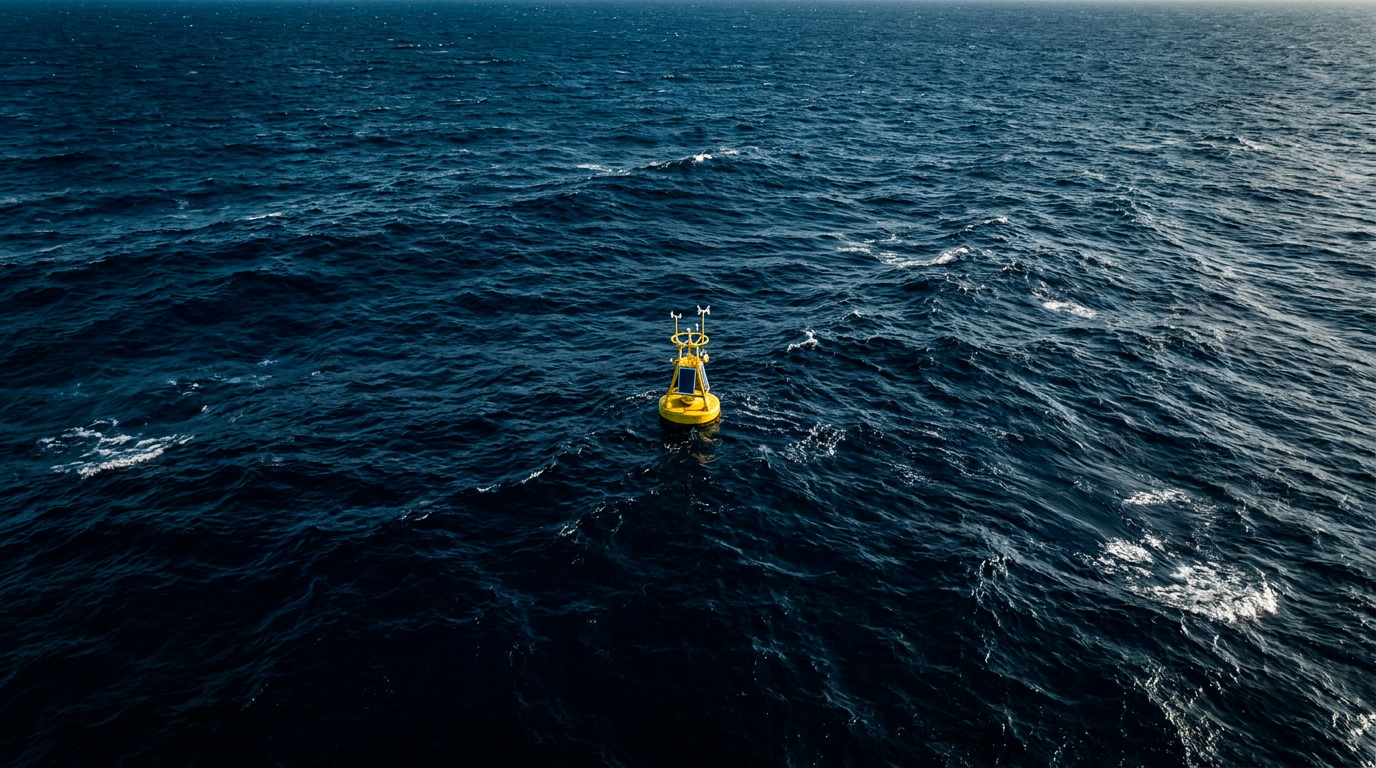
Scientists establish the baseline observational record of the El Niño-Southern Oscillation using buoy arrays.
2014–2016
A 'super' El Niño event, combined with baseline warming, shatters global temperature records.
2023–2024
Another strong El Niño contributes to 2024 becoming the hottest year in recorded history.
June 2026
The WMO and NOAA officially declare the formation of a new El Niño event in the Pacific.
Viewpoints in depth
Climate Dynamicists
Argue that greenhouse gases are fundamentally altering the ocean's mechanics.
This camp focuses on the physical oceanography of the Pacific. They point to data showing that the upper layers of the ocean are warming faster than the depths, creating a highly stratified environment. Because this warm surface layer is disconnected from the stabilizing cold water below, it reacts more violently to shifts in wind patterns. Researchers in this camp argue that this mechanical change has already increased the amplitude of ENSO swings by up to 10 percent, warning that the cycle could soon cross a tipping point into relentless, hyper-amplified oscillations.
Observational Skeptics
Caution that the historical data record is too short to prove a permanent shift in the cycle.
While not disputing that the planet is warming, this group emphasizes the inherent chaos of the ENSO system. They note that humanity only has a few decades of high-fidelity satellite and buoy data for the Pacific Ocean. Because El Niño events have always varied wildly in strength over centuries, these scientists argue that the recent string of intense events could simply be a cluster of natural statistical noise. They warn against prematurely declaring that the fundamental physics of the cycle have changed without a longer observational baseline.
Impact Forecasters
Focus on the thermodynamic reality that a warmer baseline guarantees worse outcomes.
For meteorologists and emergency planners, the debate over ocean mechanics is secondary to the laws of thermodynamics. This camp emphasizes that because a warmer atmosphere holds exponentially more water vapor, any El Niño-driven storm will inevitably drop more rain, causing worse flooding. Similarly, El Niño-driven dry spells will strike regions already suffering from baseline heat, exacerbating droughts and wildfires. They argue that this 'double whammy' effect requires immediate global adaptation, regardless of whether the ocean's internal engine has been permanently altered.
What we don't know
- Whether the recent string of intense El Niño events represents a permanent mechanical shift in the climate system or a temporary cluster of natural variability.
- Exactly how high global average temperatures will spike in 2026 and 2027 as the ocean releases stored heat into the atmosphere.
- Whether the ENSO cycle will eventually cross a tipping point into a state of relentless, highly regular oscillations, as some models predict.
Key terms
- El Niño-Southern Oscillation (ENSO)
- The overarching climate pattern in the tropical Pacific, consisting of a warm phase (El Niño), a cool phase (La Niña), and a neutral phase.
- Sea-Surface Temperature (SST) Anomaly
- The difference between the current temperature of the ocean's top layer and its long-term historical average.
- Ocean Stratification
- The separation of ocean water into distinct layers based on temperature and density, which prevents deep, cold water from mixing with the warm surface.
- Trade Winds
- Persistent east-to-west winds that blow across the equatorial Pacific, which normally push warm surface water toward Asia.
Frequently asked
What exactly is El Niño?
It is the warm phase of a natural climate cycle in the Pacific Ocean, characterized by weakened trade winds and unusually warm surface waters that alter global weather patterns.
How does climate change make El Niño worse?
A warmer atmosphere holds more moisture, meaning El Niño-driven storms produce heavier rainfall, while baseline warming makes El Niño-driven droughts hotter and more severe.
Will 2026 or 2027 be the hottest year on record?
Because El Niño releases massive amounts of oceanic heat into the atmosphere, climate scientists warn there is a high probability that global temperature records will be broken in the coming year.
Does El Niño affect hurricane season?
Yes. It typically increases wind shear in the Atlantic, which suppresses hurricane formation there, but fuels stronger storms in the central and eastern Pacific.
Sources
Source coverage
7 outlets
3 viewpoints surfaced






[1]The New York TimesObservational Skeptics
Is Climate Change Supercharging El Niño?
Read on The New York Times →[2]World Meteorological OrganizationImpact Forecasters
WMO Update: Prepare for El Niño
Read on World Meteorological Organization →[3]National Oceanic and Atmospheric AdministrationImpact Forecasters
El Niño Advisory Issued for 2026
Read on National Oceanic and Atmospheric Administration →[4]Nature Reviews Earth and EnvironmentClimate Dynamicists
Changing El Niño–Southern Oscillation in a warming climate
Read on Nature Reviews Earth and Environment →[5]The GuardianImpact Forecasters
UN agency predicts phenomenon that supercharges weather extremes
Read on The Guardian →[6]Factlen Editorial TeamImpact Forecasters
Synthesis by Factlen editorial team
Read on Factlen Editorial Team →Greenhouse warming intensifies El Niño-Southern Oscillation
Read on Nature Communications →

Every angle. Every day.
Get science stories with full source coverage and perspective breakdowns delivered to your inbox.