
Global Markets Rally as U.S.-Iran Peace Framework Promises Energy Relief
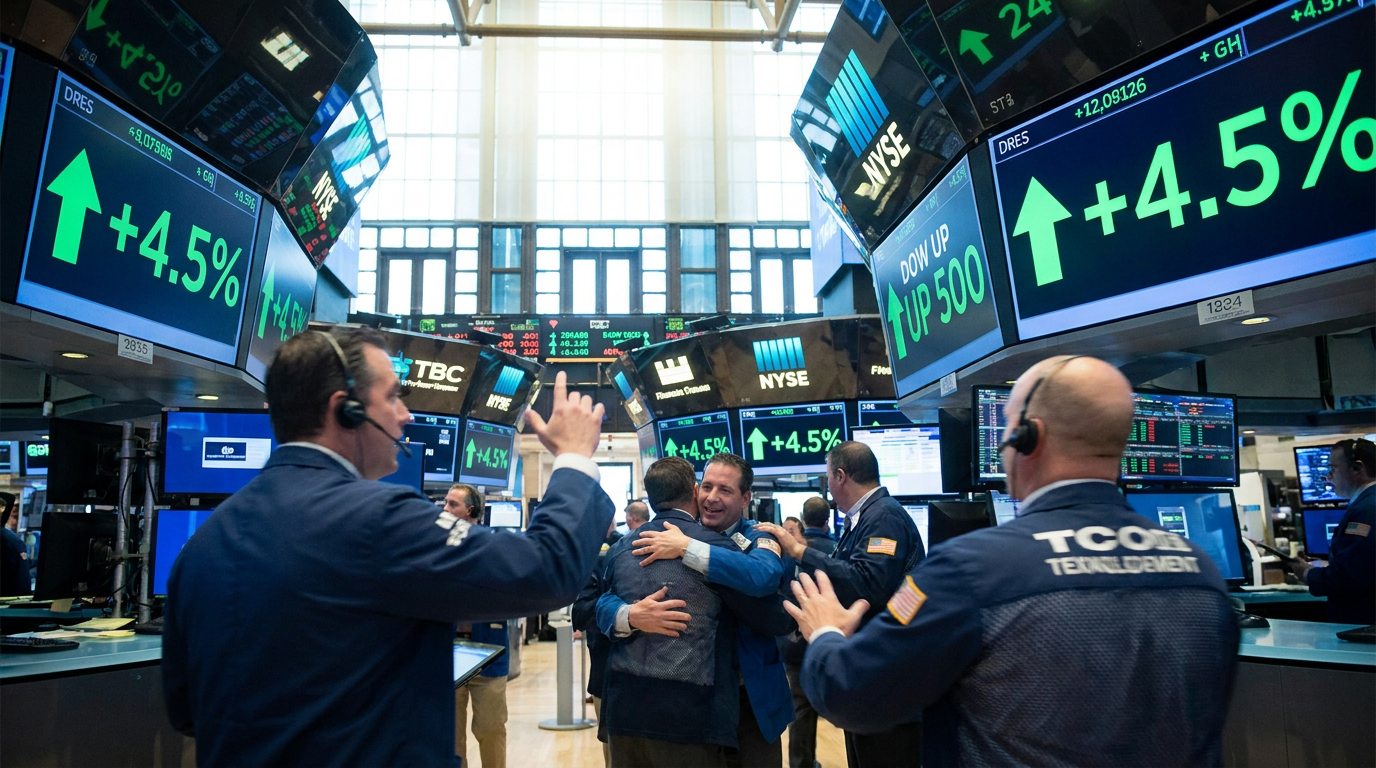
Equities surged and oil prices tumbled following a tentative 60-day ceasefire between the U.S. and Iran, signaling a potential reopening of the Strait of Hormuz. The diplomatic breakthrough has sparked a broad market rally, with technology and consumer stocks leading the charge as investors anticipate lower inflation and reduced energy costs.
By Factlen Editorial Team
- Tech & Equity Investors
- View the de-escalation as a green light for risk-on assets, betting that lower inflation will boost consumer spending and tech margins.
- Energy Analysts
- Focus on supply chain mechanics and caution that returning to baseline crude prices will take time despite the ceasefire.
- Macroeconomists
- Analyze the secondary effects on inflation and how the Federal Reserve will adjust monetary policy in response to cheaper oil.
What's not represented
- · Shipping Industry Executives
- · Middle Eastern Regional Allies
Why this matters
The tentative peace framework not only de-escalates a major global conflict but directly impacts consumer wallets by driving down oil prices. Lower energy costs could ease inflationary pressures, potentially influencing the Federal Reserve's upcoming interest rate decisions and lowering everyday costs at the gas pump.
Key points
- A tentative 60-day ceasefire between the U.S. and Iran has sparked a global market rally.
- Brent crude oil prices tumbled below $80 a barrel as the geopolitical risk premium unwound.
- Tech and consumer stocks surged on expectations of lower inflation and reduced energy costs.
- Retail gas prices are expected to face downward pressure in the coming weeks.
- Analysts caution that a full return to pre-conflict oil prices will take time as supply chains normalize.
The announcement of a tentative 60-day ceasefire between the United States and Iran has sent a wave of relief across global financial markets, signaling a potential end to months of geopolitical anxiety.[4][8]
Equities surged in early trading on Monday, driven by optimism that the diplomatic breakthrough will lead to the reopening of the Strait of Hormuz, a critical artery for global energy supplies.[4][5]
The immediate market reaction was most visible in the energy sector, where Brent crude prices tumbled sharply, breaking below the $80 per barrel mark as traders digested the news.[6]
For months, the conflict had baked a significant geopolitical risk premium into oil prices, keeping them elevated despite broader economic cooling and steady production elsewhere in the world.[2][6]

Now, with the prospect of unhindered shipping through the Persian Gulf returning to the table, commodity traders are rapidly unwinding those premium positions, leading to a swift recalibration of energy costs.[2][7]
The ripple effects of cheaper energy are already being priced into consumer-facing sectors, lifting retail and transportation stocks that have struggled under the weight of high fuel expenses.[5]
Retail gas prices, which had stubbornly hovered just above the psychologically significant $4-per-gallon mark in the United States, are expected to see downward pressure in the coming weeks.[3]
Analysts note that while it typically takes time for crude price drops to fully translate to the pump, the futures market is already signaling substantial relief for consumers heading into the summer driving season.[3][7]
Beyond energy, the technology sector experienced a robust rally, with semiconductor stocks leading the charge and pushing major indices higher.[1][5]
Beyond energy, the technology sector experienced a robust rally, with semiconductor stocks leading the charge and pushing major indices higher.
The "chip-stock rally" returned in full force, fueled not only by the geopolitical de-escalation but also by ongoing domestic developments in artificial intelligence infrastructure and memory technology.[1]

Investors are betting that lower energy costs will reduce overhead for energy-intensive tech operations, particularly the massive data centers required for AI training, thereby boosting profit margins.[1][5]
The bond market is also actively digesting the news, with the $30 trillion Treasury market taking a wait-and-see approach as yields adjust to the shifting macroeconomic landscape.[4]
Falling oil prices generally alleviate broad inflationary pressures, which could give the Federal Reserve significantly more breathing room in its ongoing battle to stabilize the economy.[4][7]
All eyes are now on incoming Fed Chair Kevin Warsh's first policy meeting, as traders debate whether the central bank will hold rates steady or consider cuts in light of the improved inflation outlook.[7]
Despite the market euphoria, energy analysts caution that a complete return to pre-conflict oil prices—such as the $67 a barrel seen in previous years—could take significantly longer than equities suggest.[2]

The global crude supply chain requires time to normalize, and an excess of global supplies combined with lower shipping costs must fully materialize before physical markets see complete normality.[2][6]
Furthermore, the ceasefire is currently a 60-day framework, meaning long-term market stability still hinges on the success of upcoming diplomatic negotiations between Washington and Tehran.[8]
How we got here
Early 2026
Tensions escalate, restricting commercial shipping in the Strait of Hormuz.
Spring 2026
Oil prices bake in a heavy geopolitical risk premium, pushing U.S. gas prices over $4 per gallon.
June 14, 2026
The U.S. and Iran announce a tentative 60-day ceasefire framework.
June 15, 2026
Global markets rally and oil prices tumble in response to the diplomatic breakthrough.
Viewpoints in depth
Tech & Equity Investors
Investors see the de-escalation as a major catalyst for growth stocks.
For equity markets, the ceasefire removes a massive overhang of uncertainty. Investors are betting that the sudden drop in energy costs will act as a de facto tax cut for consumers, boosting discretionary spending. Furthermore, the technology sector—particularly companies building out energy-hungry AI infrastructure—stands to benefit from lower utility costs, which has driven a resurgence in the chip-stock rally.
Energy Analysts
Commodity experts warn that physical markets take time to heal.
While traders are quick to sell off futures contracts, physical energy analysts emphasize that the logistics of moving oil take time to normalize. Shipping companies must renegotiate insurance rates for vessels passing through the Strait of Hormuz, and global supply gluts must be managed. They caution that while the risk premium is gone, returning to baseline prices like $67 a barrel will require sustained peace and lower shipping costs.
Macroeconomists
Economists are focused on how the Federal Reserve will respond to the inflation relief.
The broader economic implication of the ceasefire is its deflationary effect. Macroeconomists are closely watching how this sudden drop in energy prices will alter the Federal Reserve's calculus. With incoming Fed Chair Kevin Warsh preparing for his first policy meeting, the reduction in headline inflation could provide the central bank with the justification needed to pause rate hikes or even consider cuts, fundamentally shifting the macroeconomic landscape for the second half of the year.
What we don't know
- Whether the 60-day ceasefire will translate into a permanent diplomatic resolution.
- Exactly how quickly the drop in crude oil prices will reach retail gas stations.
- How the Federal Reserve will officially interpret the energy price drop in its upcoming policy meeting.
Key terms
- Strait of Hormuz
- A crucial shipping chokepoint between the Persian Gulf and the Gulf of Oman, through which a significant portion of the world's oil passes.
- Risk Premium
- The extra return investors demand to compensate for the uncertainty and potential losses associated with geopolitical instability.
- Brent Crude
- A major trading classification of sweet light crude oil that serves as a major benchmark price for purchases of oil worldwide.
Frequently asked
Will gas prices drop immediately?
Not immediately. It typically takes a few weeks for crude oil price drops to reach retail gas stations, but futures markets indicate relief is coming soon.
How long is the ceasefire?
The current framework is a tentative 60-day agreement designed to halt hostilities and allow for further diplomatic negotiations.
Why did tech stocks rally on this news?
Lower energy costs reduce inflation fears and lower the operational overhead for energy-intensive sectors, such as the massive data centers used for AI.
Sources
Source coverage
8 outlets
3 viewpoints surfaced






[1]MarketWatchEnergy Analysts
The chip-stock rally is back in full force — thanks to two big geopolitical developments
Read on MarketWatch →It could take years for oil prices to return to $67 a barrel. Here’s why.
Read on MarketWatch →Here’s when gas prices will go down now that there’s a deal to end the Iran war
Read on MarketWatch →[4]ReutersMacroeconomists
Global equities surge as U.S.-Iran ceasefire framework promises energy market relief
Read on Reuters →[5]BloombergTech & Equity Investors
Tech and consumer stocks lead S&P 500 higher on Hormuz reopening timeline
Read on Bloomberg →[6]Financial TimesEnergy Analysts
Brent crude tumbles below $80 on tentative Tehran-Washington accord
Read on Financial Times →[7]CNBCTech & Equity Investors
What the 60-day Iran ceasefire means for your portfolio and at the pump
Read on CNBC →[8]Al JazeeraMacroeconomists
Markets react to U.S.-Iran 60-day ceasefire and Strait of Hormuz reopening
Read on Al Jazeera →

Every angle. Every day.
Get finance stories with full source coverage and perspective breakdowns delivered to your inbox.