
EPA Moves to Revoke California's Emissions Waivers, Targeting State-Level EV Mandates
The Environmental Protection Agency has formally transmitted four California emissions waivers to Congress for review, a procedural maneuver designed to strip the state of its authority to set stricter-than-federal vehicle pollution standards.

The U.S. Environmental Protection Agency has formally initiated a process to strip California of its unique authority to set its own vehicle emissions standards, a move that could effectively end state-level electric vehicle mandates across the country. On Friday, EPA Administrator Lee Zeldin transmitted four previously granted Clean Air Act waivers to Congress, invoking the Congressional Review Act (CRA) to open the rules to legislative veto.[1][2]
The targeted waivers allow California to enforce stricter greenhouse gas limits than the federal government for passenger cars, heavy-duty trucks, and small off-road engines like lawnmowers. Because the Clean Air Act permits other states to adopt California's standards—a provision utilized by 17 other states—these waivers effectively force automakers to comply with a de facto national standard driven by Sacramento rather than Washington.[3]
The EPA's legal justification relies on a novel interpretation of the CRA. The agency argues that previous administrations failed to properly submit the California waivers to Congress for review, meaning lawmakers were denied their statutorily required opportunity to evaluate the rules. By transmitting them now, the EPA has started a ticking clock for Congress to pass resolutions of disapproval with a simple majority vote.[5]
Administrator Zeldin framed the action as a defense of the free market, stating that the EPA is "committed to promoting consumer choice and ensuring affordable vehicles for all Americans." The administration contends that California's aggressive push toward electrification imposes massive compliance costs on manufacturers, which are ultimately passed down to consumers nationwide who may not want or be able to afford electric vehicles.[1][2]
Environmental groups and Democratic lawmakers immediately condemned the maneuver as an unprecedented attack on states' rights and public health. Organizations argue the administration is systematically dismantling the government's ability to regulate climate pollution, noting that this action follows the EPA's February rescission of the foundational Greenhouse Gas Endangerment Finding.[6]
For the global auto industry, the EPA's move introduces a volatile new layer of regulatory uncertainty. While some manufacturers have privately lobbied against the strict timelines of California's EV mandates, automakers generally despise a fractured market. The prospect of a protracted legal battle between the federal government and the nation's largest auto market threatens to disrupt long-term supply chains, battery investments, and production schedules.[3][5]
If Congress successfully passes the CRA resolutions and the President signs them, the impact goes beyond merely revoking the current waivers. The Congressional Review Act explicitly forbids an agency from issuing a "substantially similar" rule in the future without new congressional authorization, potentially locking California out of regulating vehicle emissions permanently unless the underlying Clean Air Act is amended.[5]
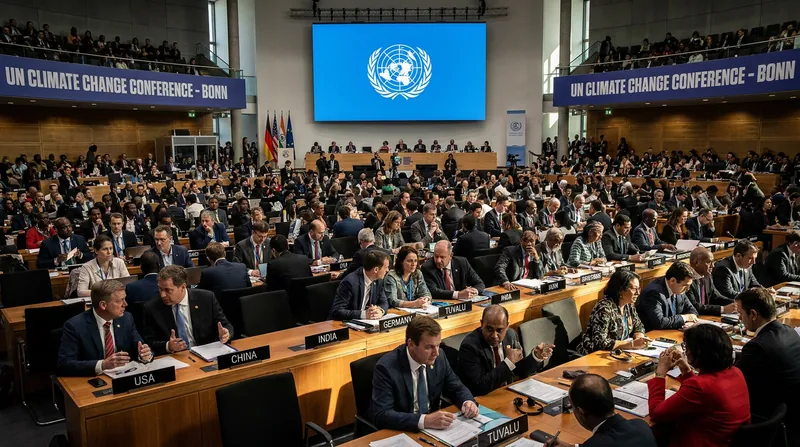
The domestic rollback arrives at a highly sensitive moment for global climate diplomacy. As the EPA announced its transmission of the waivers, international negotiators were gathered in Bonn, Germany, for the UN's SB64 climate meetings. Diplomats from nearly 200 countries are currently working to flesh out the "Belém-Antalya Mechanism," a framework designed to accelerate the global transition away from fossil fuels ahead of the COP31 summit.[4]
The stark divergence between the U.S. federal government's deregulatory push and the UN's decarbonization agenda cast a long shadow over the Bonn proceedings. UN Climate Change Executive Secretary Simon Stiell emphasized to delegates that the world has entered an "era of implementation" requiring up to $1.3 trillion annually in climate finance, a goal that relies heavily on the participation of the world's largest economy.[4]
International delegates have expressed private frustration that the U.S. is retreating from its domestic climate commitments just as global temperatures hover near record levels. Recent environmental reports highlight that clean technologies like electric mobility are reaching "positive tipping points," making the U.S. policy reversal appear increasingly out of step with global market trends.[6]
The battle over the waivers now shifts simultaneously to Capitol Hill and the federal courts. Congress has a limited legislative window to vote on the CRA resolutions, while the California Attorney General's office is widely expected to file suit challenging the EPA's retroactive application of the CRA to waivers granted years ago.[3]
Until the courts or Congress issue a final verdict, the U.S. auto market remains in a state of suspended animation. Automakers must decide whether to continue investing billions in EV transitions to satisfy California and international markets, or pivot back to internal combustion engines to capitalize on the federal government's deregulatory environment.[3]
Viewpoints in depth
Federal Deregulators
The EPA and conservative lawmakers argue the waivers create an unconstitutional national standard.
The current EPA administration, led by Lee Zeldin, contends that California's unique waiver authority has been weaponized to force a radical transformation of the national auto industry. By setting aggressive EV mandates, California effectively dictates what cars can be sold in the 17 states that follow its rules, which represent over a third of the U.S. market. Deregulators argue this imposes massive compliance costs on automakers, driving up vehicle prices for consumers nationwide who may prefer traditional gas-powered cars. They view the CRA maneuver as a necessary restoration of federal supremacy and free-market consumer choice.
State Environmental Defenders
California and environmental groups view the move as an illegal attack on states' rights and public health.
Defenders of the waivers argue that the Clean Air Act explicitly intended for California to act as a laboratory for environmental innovation due to its severe historical smog problems. They view the EPA's retroactive use of the Congressional Review Act as a legally dubious loophole designed to bypass standard administrative rulemaking procedures. Environmental advocates warn that stripping these waivers will lead to thousands of premature deaths from increased air pollution and severely cripple the United States' ability to meet its Paris Agreement climate targets, punishing states that want to take proactive measures.
International Climate Negotiators
Global diplomats see the U.S. rollbacks as a threat to international decarbonization efforts.
For delegates gathered at the UN climate meetings in Bonn, the U.S. domestic policy reversals are a source of deep frustration. Negotiators are currently trying to build consensus around the 'Belém-Antalya Mechanism' to transition away from fossil fuels and secure $1.3 trillion in annual climate finance. The U.S. retreat from its own EV targets undermines the credibility of these international agreements. Diplomats fear that if the world's largest economy and historical emitter abandons its clean energy transition, it will provide political cover for other nations to scale back their own climate ambitions.
Key points
- The EPA has transmitted four California vehicle emissions waivers to Congress for review under the Congressional Review Act.
- The move aims to strip California of its authority to set stricter-than-federal EV mandates and emissions standards.
- Because 17 other states follow California's rules, the revocation would fundamentally alter the U.S. auto market.
- Environmental groups and state officials are preparing for a massive legal battle over the EPA's novel use of the CRA.
What we don’t know
- Whether Congress will successfully pass the resolutions of disapproval within the required legislative window.
- How federal courts will rule on the legality of applying the Congressional Review Act retroactively to previously granted waivers.
- Whether major automakers will adjust their long-term EV production schedules in response to the regulatory uncertainty.
How we got here
1970
The Clean Air Act is passed, granting California the unique ability to request waivers for stricter emissions standards.
Feb 2026
The EPA rescinds the 2009 Greenhouse Gas Endangerment Finding, removing the foundational justification for federal tailpipe emissions rules.
May 2026
The SEC proposes rescinding its Climate-Related Disclosure Rules for public companies.
June 8, 2026
The UN SB64 climate meetings begin in Bonn, Germany, to negotiate global fossil fuel transition frameworks.
June 12, 2026
EPA Administrator Lee Zeldin transmits four California emissions waivers to Congress, triggering the CRA review process.
- Federal Deregulators
- Argue that California's waivers create an unconstitutional de facto national standard that drives up vehicle costs and limits consumer choice.
- State Environmental Defenders
- View the move as an illegal overreach that attacks states' rights to protect their citizens from air pollution and climate change.
- International Climate Negotiators
- See the U.S. domestic rollbacks as a severe threat to global decarbonization efforts and the credibility of international climate agreements.
- Auto Manufacturers
- Caught in the middle, seeking regulatory certainty and a unified national standard rather than a fractured market or whiplash between administrations.
Perspectives this story doesn't cover
- Auto Dealership Owners
- Fossil Fuel Industry Executives
- Low-Income Car Buyers
Sources
Source coverage
6 outlets
4 viewpoints surfaced






- [1]EPA Press OfficeFederal Deregulators
EPA Fulfills Statutory Obligation by Transmitting Four California Waiver Rules to Congress
Read on EPA Press Office → - [2]Fox NewsFederal Deregulators
California sues Trump EPA over move to subject state vehicle emissions waivers to congressional review
Read on Fox News → - [3]ReutersAuto Manufacturers
U.S. EPA targets California vehicle emissions authority in new congressional review
Read on Reuters → - [4]UNFCCCInternational Climate Negotiators
June Climate Meetings – Picking up the pieces at SB64
Read on UNFCCC → - [5]PoliticoAuto Manufacturers
Zeldin's EPA uses obscure CRA maneuver to challenge California's climate power
Read on Politico → - [6]Earth.orgState Environmental Defenders
US Climate Rollbacks Cast Shadow Over UN Bonn Climate Talks
Read on Earth.org →
More in News & Politics
See all →EPA Rollback
Pioneering Climate Scientists Rebut Administration's Justification for Revoking EPA Greenhouse Gas Authority
5 sources

UN Climate Talks
Fossil Fuel Nations Accused of 'Coordinated Attacks' to Undermine Climate Science at UN Bonn Talks
4 sources
PFAS Regulation
Chemours to Pay $450 Million in First Federal Settlement Over PFAS 'Forever Chemicals'
6 sources

Critical Minerals
U.S. Secures Major Congolese Cobalt Mine in Escalating Minerals Race with China
3 sources

Comments
Every angle. Every day.
Get News & Politics stories with full source coverage and perspective breakdowns, free every day.