
Crypto Enters Its 'Boring' Era as Volatility Drops and Stablecoins Power Global Payments
Bitcoin's price swings have fallen to multi-year lows, while major financial networks like Mastercard are adopting stablecoins for 24/7 global settlement.
By Factlen Editorial Team
- Utility Advocates
- Focus on the practical benefits of stablecoins and dropping volatility for global payments.
- Institutional Finance
- Emphasize integrating blockchain tech into regulated, traditional banking structures.
- Fundamental Skeptics
- Doubt the long-term survival of unbacked cryptocurrencies despite recent market calm.
What's not represented
- · Retail merchants adopting stablecoin payments
- · Consumers in emerging markets using stablecoins to hedge against local inflation
Why this matters
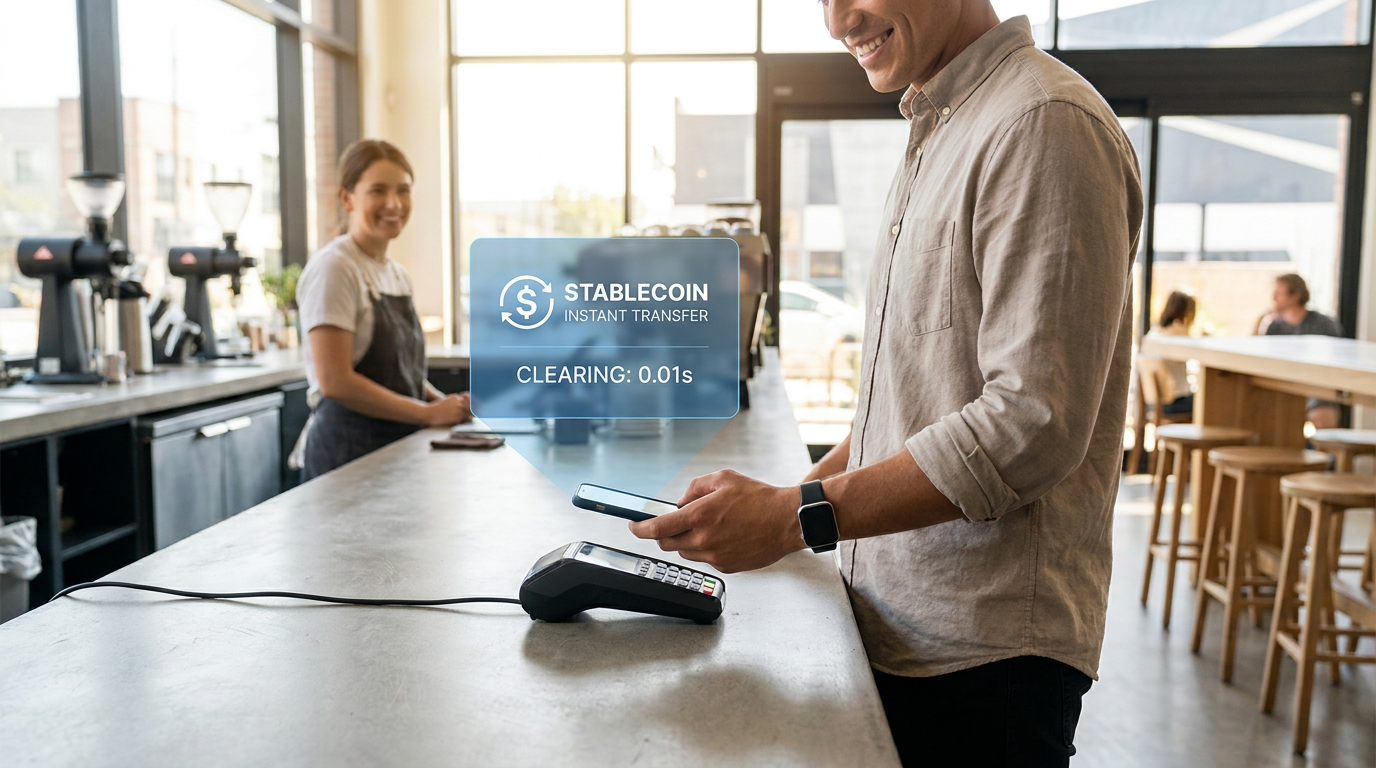
For years, cryptocurrency was treated as a speculative casino, keeping everyday users and businesses away. The shift toward low-volatility digital assets and stablecoins means cross-border payments, remittances, and weekend business settlements are finally becoming faster and cheaper than traditional banking rails.
Key points
- Bitcoin's price volatility has dropped to a nine-month low, falling below the volatility of major tech stocks like Tesla.
- Stablecoins have officially overtaken unbacked crypto assets as the primary vehicle for cross-border digital transactions.
- Mastercard has expanded its network to settle transactions using stablecoins, enabling 24/7 weekend and holiday clearing.
- Traditional U.S. banks are developing 'tokenized deposits' to compete with stablecoins while keeping funds within the regulated banking system.
The cryptocurrency industry is finally losing its rollercoaster reputation, and market observers couldn't be happier. In June 2026, digital assets are undergoing a profound maturation, transitioning away from the speculative frenzy of the early 2020s and toward functional, everyday financial plumbing. As the market consolidates, the wild price swings that once defined the sector are giving way to a period of unprecedented calm, signaling that the technology is ready for real-world utility.[1][6]
The data paints a picture of a rapidly stabilizing asset class. Bitcoin's implied volatility—a key metric of expected price fluctuations—has plunged to a nine-month low, while its daily price swings are now roughly half of what they were in 2021. Financial analysts note that the world's largest cryptocurrency is currently exhibiting less historical volatility than major technology stocks like Tesla or Nvidia, a remarkable shift for an asset once synonymous with financial chaos.[2][6]

While thrill-seeking day traders might mourn the end of massive overnight rallies, market strategists suggest this stabilization is exactly what the ecosystem needs. A predictable, near-zero long-term return profile is increasingly viewed as a prerequisite for Bitcoin to function as a viable currency rather than a speculative lottery ticket. By shedding its extreme volatility, the asset is slowly building the trust required for everyday commercial use.[1]
But the most consequential revolution in digital finance is happening quietly in the background through stablecoins—digital tokens permanently pegged to fiat currencies like the U.S. dollar. The International Monetary Fund recently reported that stablecoins have officially overtaken unbacked crypto assets as the dominant vehicle for cross-border digital transactions, moving billions of dollars globally without the friction of traditional banking rails.[4]
Unlike legacy payment systems that rely on a patchwork of correspondent banks and batch processing, stablecoins offer always-on, programmable settlement. Value moves peer-to-peer on a shared ledger, settling atomically and remaining available 24/7, completely independent of banking cut-off times or geographic boundaries. This architecture allows complex payment logic, such as conditional escrow releases or automated revenue splits, to be embedded directly into the transfer of funds.[4][8]
Unlike legacy payment systems that rely on a patchwork of correspondent banks and batch processing, stablecoins offer always-on, programmable settlement.
Traditional financial giants are now aggressively leaning into this stability. In early June, Mastercard announced a major expansion of its global network, allowing partners to settle transactions using regulated stablecoins like USDC and PYUSD. By integrating these digital assets into its existing infrastructure, the payment processor is bridging the gap between decentralized technology and established financial safeguards.[3]

For global commerce, the implications of this integration are massive. Merchants and financial partners can now clear payments on weekends and holidays, bypassing the traditional banking sector's limited operating hours. This intraday and weekend settlement optionality provides businesses with immediate liquidity, ensuring that capital isn't trapped in transit during critical operational windows.[3]
The traditional banking sector is not sitting idle while stablecoin issuers capture the lucrative settlement market. U.S. banks are rapidly developing "tokenized deposits"—blockchain-based representations of traditional commercial bank money. These instruments aim to offer the same real-time, programmable settlement as stablecoins while keeping corporate funds securely within the regulated banking perimeter, allowing institutions to continue paying interest on large balances.[5]
From a macroeconomic perspective, the rise of stablecoins presents both opportunities and challenges. The IMF notes that the frictionless flow of digital dollars is functionally equivalent to global dollarization, offering users in emerging markets a vital lifeline against local currency inflation. However, this rapid adoption also forces central banks to adapt quickly to prevent the fragmentation of national payment systems.[4]
Despite the undeniable technological strides, fundamental skeptics remain vocal. Nobel laureate Eugene Fama recently reiterated his stance that unbacked cryptocurrencies like Bitcoin violate the basic rules of a medium of exchange. He argues that because their supply is artificially capped and their value is driven entirely by fluctuating demand, they lack the intrinsic utility required to survive long-term, predicting an eventual collapse.[7]
However, the broader trajectory of the industry in 2026 suggests a clear divergence between purely speculative tokens and utility-driven networks. As regulatory frameworks solidify and institutional adoption deepens, the focus has shifted entirely to real-world applications. By trading dramatic volatility for boring reliability, the cryptocurrency market is finally delivering on its original promise: making the global movement of money faster, cheaper, and universally accessible.[8]
How we got here
2009
The Bitcoin network launches as an experimental decentralized currency.
2021
Crypto markets experience massive volatility and mainstream speculative fervor, cementing a rollercoaster reputation.
2024
The European Union implements MiCA, providing a comprehensive regulatory framework for digital assets and stablecoins.
2025
Spot Bitcoin ETFs launch in the U.S., bringing massive institutional capital and helping stabilize the market.
June 2026
Mastercard expands its global network to settle transactions using stablecoins, enabling 24/7 clearing.
Viewpoints in depth
Payment Innovators
Financial networks and crypto advocates who see stablecoins as the future of global settlement.
This camp, which includes major payment processors and blockchain developers, argues that traditional banking rails are archaic and slow. By integrating stablecoins, they believe the global economy can achieve 24/7, instant settlement that dramatically lowers the cost of remittances and business-to-business transfers. They view the drop in crypto volatility as proof that the technology is finally maturing into a reliable utility rather than a speculative gamble.
Traditional Banks
Established financial institutions seeking to modernize their own infrastructure.
While banks acknowledge the efficiency of blockchain technology, they are wary of decentralized stablecoins operating outside the traditional regulatory perimeter. This group advocates for 'tokenized deposits'—putting commercial bank money on blockchains. They argue this provides the speed and programmability of crypto while maintaining the consumer protections, interest yields, and systemic safety of the established banking system.
Fundamental Skeptics
Economists and traditional investors who doubt the long-term viability of unbacked digital assets.
Despite the recent market calm, traditional economists argue that assets like Bitcoin lack intrinsic value and are driven entirely by speculative demand. They maintain that without the backing of a sovereign government or a physical use case, unpegged cryptocurrencies cannot serve as a reliable medium of exchange and remain vulnerable to eventual collapse, regardless of short-term price stability.
What we don't know
- Whether central banks will eventually issue their own digital currencies that outcompete private stablecoins.
- How traditional banks' 'tokenized deposits' will fare in the open market against established stablecoins like USDC.
Key terms
- Stablecoin
- A cryptocurrency designed to maintain a stable value by being backed 1:1 by a traditional currency like the U.S. dollar.
- Volatility
- A statistical measure of how much an asset's price fluctuates over time; high volatility means large, rapid price swings.
- Tokenized deposits
- Digital representations of traditional bank deposits that live on a blockchain, allowing for instant, programmable transfers within the regulated banking system.
- Settlement
- The final step in a financial transaction where the actual funds are permanently transferred from the buyer to the seller.
Frequently asked
What exactly is a stablecoin?
A stablecoin is a type of cryptocurrency whose value is permanently pegged to another asset, usually a fiat currency like the U.S. dollar, to eliminate the wild price swings associated with traditional crypto.
Why is Bitcoin's volatility dropping?
As Bitcoin matures and sees wider adoption by institutional investors and exchange-traded funds (ETFs), its market has deepened, making it less susceptible to massive, sudden price swings.
Can I pay for everyday items with crypto?
Increasingly, yes. Major payment networks like Mastercard are integrating stablecoin settlements, allowing merchants to accept digital dollars seamlessly alongside traditional credit cards.
Sources
Source coverage
8 outlets
3 viewpoints surfaced








[1]MarketWatchUtility Advocates
Bitcoin’s long-term return may actually be close to zero — and that could be just what it needs
Read on MarketWatch →[2]Charles SchwabInstitutional Finance
Bitcoin Volatility Shrinks to Magnificent 7 Levels
Read on Charles Schwab →[3]MastercardUtility Advocates
Mastercard expands settlement capabilities to include stablecoin, intraday, holiday and weekend options
Read on Mastercard →[4]International Monetary FundUtility Advocates
Tokenized Finance and Money
Read on International Monetary Fund →[5]Markets MediaInstitutional Finance
U.S. Banks Fight Stablecoin Growth with Tokenized Deposits
Read on Markets Media →[6]BloombergInstitutional Finance
Bitcoin Volatility Drops to Nine-Month Low as Crypto Market Consolidates
Read on Bloomberg →[7]ProMarketFundamental Skeptics
Nobel Laureate Eugene Fama Predicts Bitcoin Will Become Worthless
Read on ProMarket →[8]KrakenUtility Advocates
The road ahead for crypto markets in 2026
Read on Kraken →

More in finance
See all 55 stories →Mega-IPOs
The Mechanics of Mega-IPOs: What the Historic SpaceX Debut Means for Everyday Investors
5 sources

Mega-Cap IPOs
SpaceX Prices Historic $75 Billion IPO, Shattering Records and Rewriting Market Rules
8 sources
Bitcoin Maturation
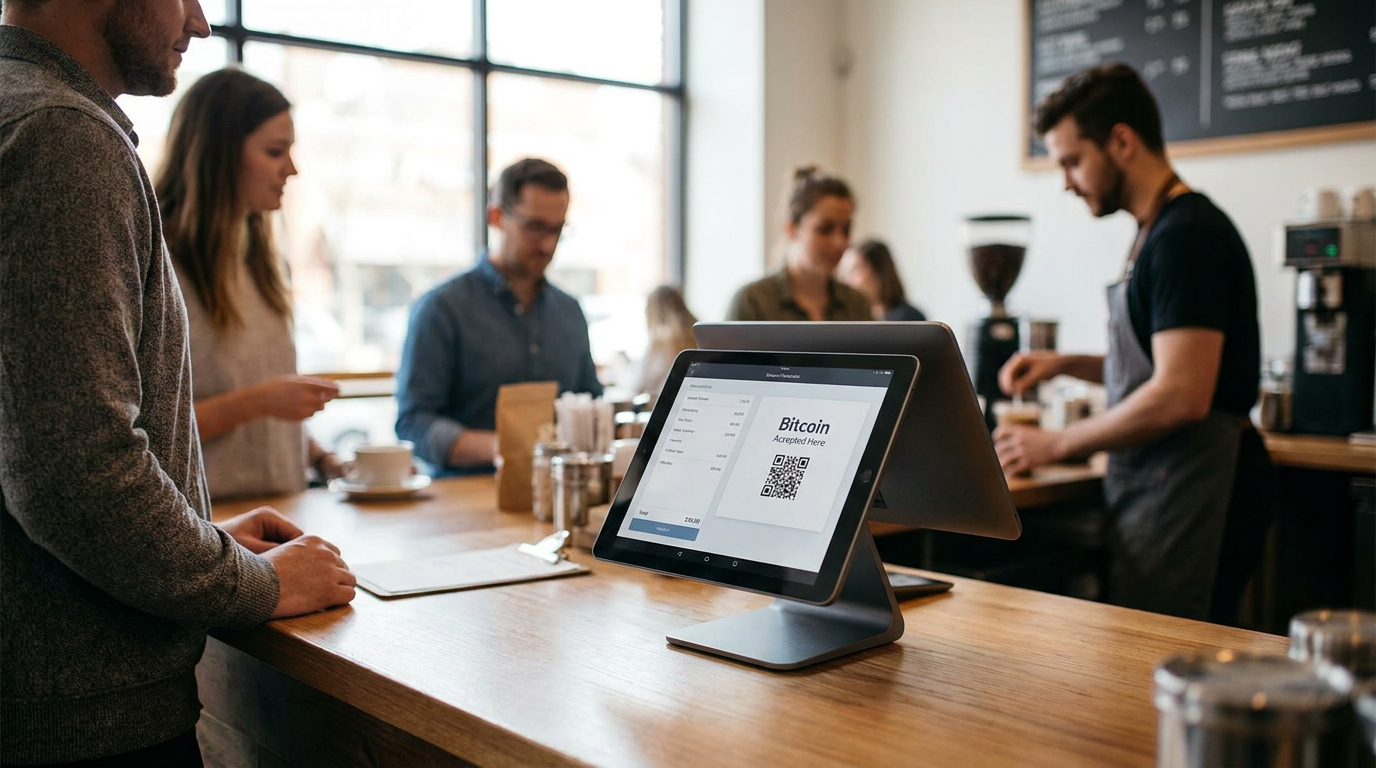
Bitcoin's price is stabilizing—and economists say that's exactly what it needs to become a true currency
7 sources
Space Economy
SpaceX Goes Public: Inside the $1.75 Trillion IPO Reshaping the Stock Market
6 sources

Every angle. Every day.
Get finance stories with full source coverage and perspective breakdowns delivered to your inbox.