
Buying an Electric Car in 2026: BEV vs. PHEV Trade-Offs Explained
As charging networks expand and battery ranges increase, the choice between a fully electric vehicle and a plug-in hybrid comes down to daily driving habits and access to home charging. We break down the costs, emissions, and real-world trade-offs of both options.
By Factlen Editorial Team
- Pure Electric Advocates
- Argue that BEVs are the only true path to decarbonization and that PHEVs are a compromise that prolongs fossil fuel reliance.
- Pragmatic Transitioners
- View PHEVs as a necessary bridge technology that reduces emissions immediately without inducing range anxiety.
- Infrastructure Realists
- Focus on the practical limitations of the current charging grid, emphasizing that vehicle choice must match local realities.
What's not represented
- · Apartment dwellers without reliable charging access
- · Rural drivers in extreme cold climates
Why this matters
Choosing the right electrified vehicle dictates your daily routine, your long-term maintenance costs, and your personal carbon footprint. A mismatched purchase can lead to frustrating road trips or thousands of dollars in wasted fuel and maintenance.
Key points
- BEVs offer zero tailpipe emissions and the lowest running costs but require reliable charging access.
- PHEVs provide 20 to 50 miles of electric range for daily commutes, with a gas engine for long road trips.
- Lifecycle analyses show BEVs produce 31% to 36% fewer lifetime emissions than comparable PHEVs.
- A PHEV's environmental and financial benefits vanish if the owner does not plug it in regularly.
- The choice ultimately hinges on daily driving habits, home charging availability, and road trip frequency.
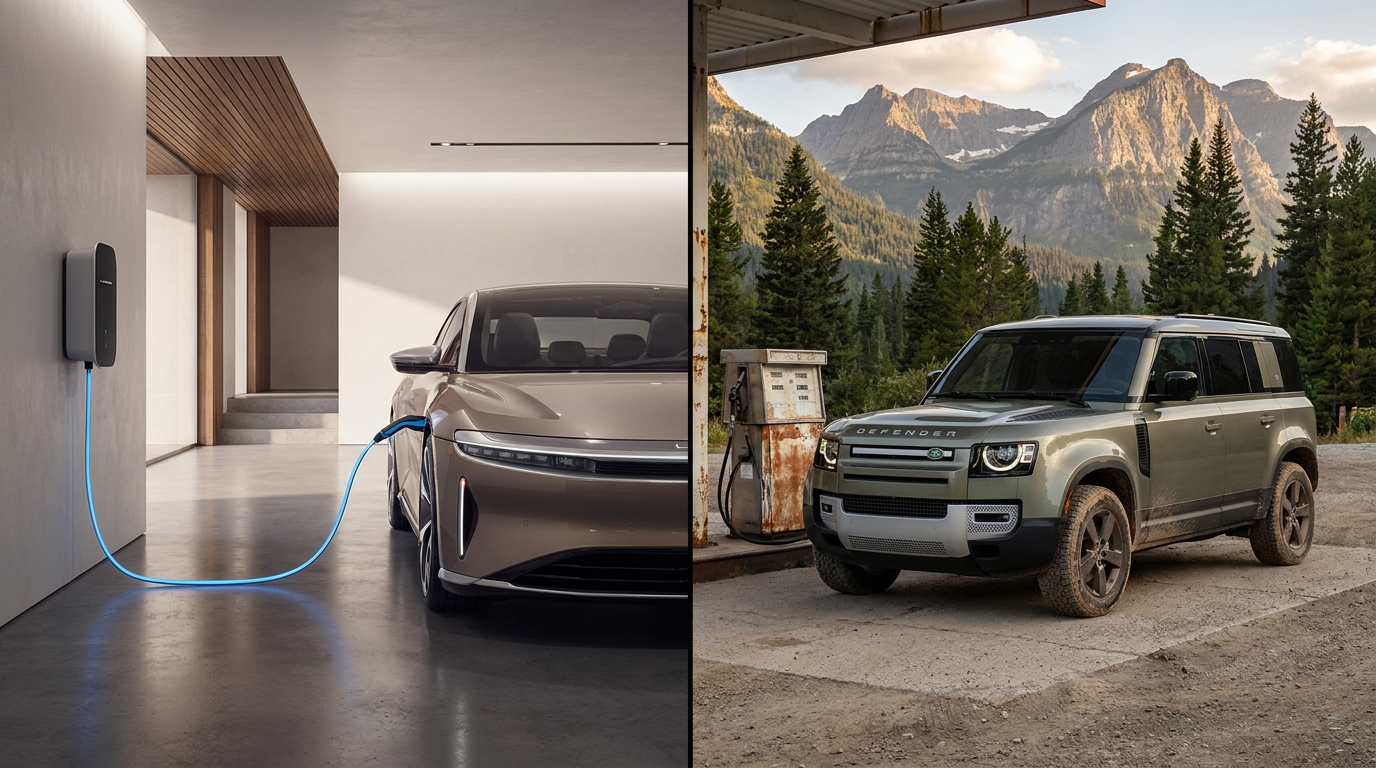
The automotive landscape in 2026 offers more electrified options than ever before, leaving buyers with a pivotal and sometimes confusing choice: commit fully to a battery electric vehicle (BEV) or bridge the gap with a plug-in hybrid electric vehicle (PHEV). Both drivetrains drastically reduce tailpipe emissions and lower daily running costs compared to traditional gas-powered cars, but they serve fundamentally different lifestyles and driving habits. Understanding the nuances of each technology is essential for buyers looking to maximize their financial investment and minimize their environmental impact. As charging infrastructure expands and battery technology matures, the decision is no longer just about early adoption; it is about finding the exact mechanical fit for your daily commute, your weekend road trips, and your home parking situation.
A Battery Electric Vehicle relies entirely on a large lithium-ion battery pack and one or more electric motors to propel the car. It has no internal combustion engine, no gas tank, and zero tailpipe emissions. Modern BEVs routinely offer ranges exceeding 300 miles on a single charge, making them highly capable for the vast majority of driving needs. They are also highly efficient machines, converting 87 to 91 percent of the electrical energy from the grid directly into forward movement. This stands in stark contrast to the mere 16 to 25 percent efficiency of a standard gasoline engine, which loses most of its energy to heat and friction. Because they have so few moving parts, BEVs deliver instant torque, a whisper-quiet cabin, and a remarkably smooth driving experience.[1]
A Plug-in Hybrid Electric Vehicle, by contrast, carries both a moderately sized rechargeable battery and a traditional gasoline engine. It operates as a pure electric vehicle for short distances—typically 20 to 50 miles depending on the make and model—before seamlessly transitioning to gasoline power for extended trips. This dual-powertrain approach aims to eliminate the range anxiety associated with pure electric driving while still offering the benefits of electric propulsion for daily errands. When the battery is depleted, the gasoline engine kicks in, operating much like a standard hybrid vehicle to maximize fuel economy until the car can be plugged in again. This makes the PHEV a versatile chameleon, capable of zero-emission school runs on Tuesday and a cross-country road trip on Saturday.[2]

For BEVs, the primary argument centers on mechanical simplicity and total decarbonization. Drivers who can install a Level 2 charger at home wake up every morning with a 'full tank,' bypassing gas stations entirely and integrating their vehicle's energy needs into their household electricity bill. The evidence shows that for daily commutes under 50 miles and predictable urban driving, a BEV operates flawlessly and highly cost-effectively. Against BEVs, critics point to the reliance on public charging infrastructure for long road trips. While networks have expanded massively by 2026, relying on public fast chargers can still require careful route planning, app management, and longer stops compared to a quick five-minute gas fill-up.[2][8]
For PHEVs, the core advantage is absolute flexibility. A PHEV can handle a 15-mile daily commute entirely on cheap electricity, then drive cross-country on gasoline without a single charging stop or moment of range anxiety. However, the evidence against PHEVs highlights their mechanical complexity. Owners are essentially maintaining two separate powertrains in one vehicle. This means carrying the dead weight of a gasoline engine during electric driving, and lugging a heavy, depleted battery when running on gas, which slightly reduces overall fuel efficiency compared to a standard hybrid. Furthermore, PHEVs still require traditional maintenance like oil changes, spark plug replacements, and transmission servicing.[2]
When evaluating environmental impact, the evidence strongly favors fully electric vehicles. While manufacturing a BEV's massive battery generates higher initial carbon emissions due to mining and production processes, the vehicle offsets this deficit within a few years of driving. A 2026 lifecycle analysis from the University of Michigan found that a BEV with a 480-mile range produces 31 to 36 percent fewer lifecycle emissions than a comparable PHEV, and over 70 percent fewer than a standard gas car. The larger the vehicle, the more pronounced the savings become, with electric pickups showing massive emissions reductions over their gasoline counterparts.[1][4]

The Department of Energy and the Environmental Protection Agency confirm that even when accounting for the electricity grid's current mix of fossil fuels and renewables, BEVs maintain a significant cradle-to-grave emissions advantage. PHEVs also offer substantial environmental benefits, but their actual emissions savings depend entirely on driver behavior. If a PHEV owner rarely plugs in and relies primarily on the gas engine, the vehicle operates as a heavy, inefficient gas car, completely negating its environmental purpose. Studies show that corporate fleet PHEVs, in particular, are often driven without ever being charged, highlighting the gap between theoretical efficiency and real-world application.[1][6][7]
PHEVs also offer substantial environmental benefits, but their actual emissions savings depend entirely on driver behavior.
The financial case for a BEV relies heavily on long-term savings. While the upfront purchase price often remains higher than that of a comparable gas car, electricity is generally much cheaper than gasoline on a per-mile basis. Furthermore, the absence of oil changes, spark plugs, and transmission fluid drastically slashes maintenance costs over the vehicle's lifespan. For high-mileage drivers, the total cost of ownership for a BEV quickly becomes highly competitive, often undercutting traditional vehicles within the first three to five years of ownership.[8]
PHEVs often present a lower barrier to entry than long-range BEVs, as their smaller battery packs cost significantly less to manufacture. However, they still carry a premium over standard, non-plug-in hybrids. To make the math work and recoup that initial premium, a PHEV owner must diligently charge the vehicle every single night to maximize electric miles and minimize trips to the gas station. If the vehicle is driven primarily on gasoline, the owner pays the higher upfront cost of the PHEV without reaping the financial rewards of cheap residential electricity.[2]
Real-world testing reinforces these economic realities. When Consumer NZ tested identical vehicle platforms with different drivetrains, the fully electric variant proved to be the cheapest to run by a wide margin, costing a fraction of the PHEV's weekly fuel bill. Yet, the PHEV offered undeniable peace of mind for drivers venturing into rural areas with sparse charging networks, highlighting the fundamental trade-off between absolute daily efficiency and geographical freedom. For many buyers, the extra running cost of a PHEV is viewed as an acceptable insurance premium against range anxiety.[3]
Market trends indicate a growing preference for pure electric power as infrastructure improves. In markets like Germany, plug-in vehicles now account for over 20 percent of new registrations, with BEVs outselling PHEVs nearly two-to-one. This shift reflects growing consumer confidence in battery technology and the rapid deployment of fast-charging stations, which gradually erodes the PHEV's primary selling point of unlimited range. Automakers are also shifting their research and development budgets heavily toward pure electric platforms, signaling that BEVs represent the long-term future of the industry.[5]

Ultimately, a Battery Electric Vehicle fits well when a driver has reliable access to dedicated home or workplace charging, primarily commutes within the vehicle's established range, and wants to minimize both daily running costs and their personal environmental impact. It is the optimal choice for multi-car households where one vehicle can be dedicated to local driving and predictable regional trips. For these drivers, the BEV offers an unparalleled combination of smooth performance, low maintenance, and true zero-tailpipe emissions.[8]
Conversely, a BEV does not fit well when a driver relies exclusively on street parking without any reliable charging access, frequently tows heavy loads over long distances, or regularly travels through remote corridors lacking modern fast-charger infrastructure. In these specific scenarios, the logistical hurdles of relying entirely on public charging networks can quickly outweigh the benefits of pure electric driving. For drivers who cannot charge while they sleep, the time spent waiting at public stations can turn a simple weekly routine into a stressful exercise in battery management and constant route planning.[8]
A Plug-in Hybrid Electric Vehicle fits well when a driver has a short daily commute that can be covered entirely on electric power, but frequently takes spontaneous road trips or visits rural areas where chargers are scarce. It serves as an excellent transitional vehicle for those who want to dip their toes into electric driving, enjoy the quiet torque of an EV around town, but are not quite ready to fully sever ties to the ubiquitous gasoline network. It offers the ultimate compromise for one-car households that demand maximum versatility.[2][8]
However, a PHEV does not fit well when the owner lacks a dedicated place to plug it in nightly. Without regular charging, a PHEV is simply a heavier, more expensive gasoline car that offers worse fuel economy than a standard hybrid. It also falls short for drivers seeking the absolute lowest maintenance costs or a maximum reduction in their personal carbon footprint, as the internal combustion engine remains a central, unavoidable component of the vehicle's long-term operation. If you aren't plugging it in, you are paying for technology you aren't using.[2][7]
How we got here
2010
The first mass-market PHEVs and BEVs launch, introducing consumers to plug-in technology.
2020
BEV ranges begin to consistently cross the 300-mile threshold, reducing early range anxiety.
2024
Plug-in vehicles surpass 20 percent market share in key European markets like Germany.
2026
Standardized charging ports simplify the BEV public charging experience across North America.
Viewpoints in depth
Pure Electric Advocates
Argue that BEVs are the only true path to decarbonization and that PHEVs are a compromise that prolongs fossil fuel reliance.
This camp, heavily supported by environmental agencies and pure-play EV manufacturers, argues that the climate crisis requires an immediate and total shift away from internal combustion engines. They point to lifecycle emission studies showing that BEVs are vastly superior to PHEVs over a decade of ownership. Furthermore, they argue that PHEVs carry unnecessary mechanical complexity and that many PHEV owners fail to plug their vehicles in regularly, turning them into inefficient gas cars that merely greenwash the owner's carbon footprint.
Pragmatic Transitioners
View PHEVs as a necessary bridge technology that reduces emissions immediately without inducing range anxiety.
Automotive analysts and consumer advocates in this camp argue that forcing buyers into pure BEVs before public infrastructure is fully mature will stall the green transition. They highlight that a PHEV's 40-mile electric range covers the vast majority of daily commutes, meaning the car operates as an EV 90 percent of the time. By offering the safety net of a gas tank for the remaining 10 percent, PHEVs convince hesitant buyers to abandon pure gasoline vehicles much faster than a BEV-only mandate would.
Infrastructure Realists
Focus on the practical limitations of the current charging grid, emphasizing that vehicle choice must match local realities.
This perspective emphasizes that the BEV vs. PHEV debate is inherently geographical. In dense urban centers with robust public charging or affluent suburbs with private garages, BEVs are the obvious choice. However, in rural areas, developing nations, or dense apartment blocks where street parking is the only option, relying on a BEV is currently impractical. For these demographics, realists argue that PHEVs or even standard hybrids remain the most responsible and functional choice until grid parity is achieved.
What we don't know
- How quickly solid-state batteries will arrive to further increase BEV ranges and reduce charging times.
- Whether future government regulations will eventually phase out PHEVs alongside traditional gas cars.
Key terms
- BEV
- Battery Electric Vehicle; a car powered entirely by electricity stored in a large battery pack, with no gas engine.
- PHEV
- Plug-in Hybrid Electric Vehicle; a car featuring both a rechargeable battery for short electric trips and a gasoline engine for longer journeys.
- Level 1 Charging
- Charging via a standard 120-volt household outlet, adding about 3 to 5 miles of range per hour.
- Level 2 Charging
- Charging via a 240-volt outlet or dedicated home station, adding 15 to 30 miles of range per hour.
- Lifecycle Emissions
- The total greenhouse gases emitted from manufacturing, operating, and eventually disposing of a vehicle.
Frequently asked
Can I charge a PHEV at a Tesla Supercharger?
Generally, no. Most PHEVs do not support DC fast charging and are designed to be charged slowly at home or at Level 2 public stations.
Do I need a special charger at home for a PHEV?
No. Because PHEV batteries are relatively small, a standard 120-volt household outlet is often sufficient to fully recharge the vehicle overnight.
Are electric cars worse for the environment because of the battery?
No. Lifecycle analyses consistently show that while battery manufacturing creates initial emissions, BEVs produce significantly fewer total emissions over their lifespan compared to gas cars.
What happens if a PHEV runs out of battery?
The gasoline engine seamlessly takes over, and the vehicle operates exactly like a standard hybrid car until you can plug it in again.
Sources
Source coverage
8 outlets
3 viewpoints surfaced








[1]US Environmental Protection AgencyPure Electric Advocates
Electric Vehicle Myths
Read on US Environmental Protection Agency →[2]EdmundsPragmatic Transitioners
Hybrid vs. Plug-in Hybrid Cars: What's Right for You?
Read on Edmunds →[3]Consumer NZPragmatic Transitioners
Hybrid, PHEV and Electric compared
Read on Consumer NZ →[4]RinnovabiliPure Electric Advocates
Electric vehicle pollution, lifecycle emissions gap
Read on Rinnovabili →[5]ElliPragmatic Transitioners
BEV or PHEV? Discover the differences, benefits, and which electric vehicle fits your driving style
Read on Elli →[6]Department of EnergyPure Electric Advocates
Emissions from Electric Vehicles
Read on Department of Energy →[7]Government of CanadaInfrastructure Realists
Cradle to grave: Lifecycle emissions of electric versus gasoline vehicles in Canada
Read on Government of Canada →[8]EV24Infrastructure Realists
REEV vs BEV vs PHEV: Understanding the Differences in 2025
Read on EV24 →



Every angle. Every day.
Get guides stories with full source coverage and perspective breakdowns delivered to your inbox.