
How Solid-State Batteries Are Finally Reaching the EV Market in 2026
After decades of research, solid-state batteries are moving from the lab to production lines, promising to double electric vehicle range and eliminate fire risks.
By Factlen Editorial Team
- Automakers & Battery Developers
- Viewing solid-state tech as the ultimate competitive moat to secure market dominance.
- Materials Scientists
- Focused on the immense physical and chemical challenges of scaling the technology.
- Market Analysts
- Predicting a slow, expensive trickle-down effect for everyday consumers.
What's not represented
- · Oil & Gas Industry
- · Lithium-Ion Supply Chain Workers
Why this matters
Solid-state batteries are poised to eliminate the final hurdles to electric vehicle adoption by doubling driving range, slashing charge times to 15 minutes, and removing the risk of battery fires. This breakthrough will fundamentally change how cars are designed, making them lighter, safer, and ultimately more affordable.
Key points
- Solid-state batteries replace flammable liquid electrolytes with stable solid materials like ceramics or sulfides.
- The technology allows for pure lithium metal anodes, nearly doubling energy density to 400–600 Wh/kg.
- Vehicles equipped with solid-state cells could see ranges exceeding 800 miles and charge times under 15 minutes.
- Major players like Toyota, QuantumScape, and Greater Bay Technology are launching pilot production lines in 2026.
- Manufacturing challenges remain, particularly the need for expensive, moisture-free dry rooms to handle sensitive materials.
The electric vehicle industry is hitting a massive, long-awaited inflection point in 2026. After decades of laboratory promises, false starts, and billions of dollars poured into research and development, solid-state batteries are finally rolling off pilot production lines and preparing to enter consumer vehicles. For years, this technology was viewed as the elusive "Holy Grail" of energy storage—a theoretical marvel that worked perfectly on a lab bench but fell apart when subjected to the rigors of mass manufacturing. Now, a convergence of breakthroughs in materials science and manufacturing techniques has allowed major automakers and specialized startups to cross the chasm from prototype to production, signaling a fundamental shift in how the world will power transportation for the next century.[1][2]
The stakes for this transition could not be higher. For years, range anxiety, sluggish charging times, and severe cold-weather degradation have served as the primary hurdles preventing mass electric vehicle adoption among skeptical consumers. Solid-state technology promises to fundamentally rewrite this entire equation in one sweeping motion. By replacing the volatile components of traditional batteries, these new cells are projected to double the driving range of an average EV, cut fast-charging times down to under fifteen minutes, and virtually eliminate the catastrophic risk of battery fires. It is a generational leap in capability that threatens to render the internal combustion engine entirely obsolete.[3]
To truly understand the magnitude of this breakthrough, it is essential to look inside the architecture of a conventional lithium-ion battery. Today's standard EV batteries rely heavily on a liquid electrolyte—a complex chemical solvent that acts as a highway, shuttling lithium ions back and forth between the cathode and the anode during the charging and discharging cycles. While this liquid medium is highly effective at conducting ions, it comes with a host of severe physical and chemical limitations that engineers have spent the last decade trying to mitigate through complex software and heavy hardware.[5][6]
That liquid electrolyte is undeniably the Achilles' heel of modern electric vehicles. It is highly flammable and sensitive to temperature fluctuations, meaning that modern battery packs require heavy, complex liquid-cooling systems and thick protective armor to prevent thermal runaway in the event of a high-speed crash or severe overheating. If a traditional lithium-ion cell is punctured, the liquid electrolyte can easily ignite, triggering a chain reaction that is notoriously difficult for first responders to extinguish. This inherent volatility forces automakers to compromise on weight, space, and overall vehicle efficiency just to keep the battery safe.[2][5]

As the name implies, solid-state batteries completely eliminate this vulnerability by replacing the volatile liquid solvent with a rigid, solid material—typically a specialized ceramic, sulfide-based compound, or advanced polymer. This solid layer is engineered to act as both the conductive electrolyte that allows ions to flow and the physical separator that keeps the positive and negative electrodes from touching. By engineering a material that is solid but still highly conductive to lithium ions, scientists have managed to remove the most dangerous component of the battery without sacrificing its ability to store and release electrical energy.[5][6][7]
The immediate and most critical benefit of this architectural shift is absolute safety. Without a flammable liquid solvent sloshing around inside the cell, solid-state batteries are virtually immune to combustion. In rigorous testing, these advanced cells have been intentionally punctured with metal needles, crushed by hydraulic presses, and subjected to extreme external heat without catching fire or exploding. This unprecedented stability fundamentally changes how vehicles can be engineered; without the need for heavy protective armor and sprawling cooling systems, automakers can reclaim interior space and drastically reduce the overall weight of the vehicle.[2][3]
But the most lucrative advantage for the automotive industry is the massive leap in energy density—a metric typically measured in watt-hours per kilogram (Wh/kg). Because the solid electrolyte is chemically stable and physically rigid, manufacturers can safely utilize a pure lithium metal anode instead of the heavier, bulkier graphite anodes required in liquid-based cells. Lithium metal is the ultimate anode material because it is incredibly light and holds a massive amount of energy, but it was far too dangerous to use with liquid electrolytes due to its tendency to cause short circuits.[6][7]
But the most lucrative advantage for the automotive industry is the massive leap in energy density—a metric typically measured in watt-hours per kilogram (Wh/kg).
This critical material swap dramatically increases the total amount of energy the battery can hold within the exact same physical footprint. While today's absolute best lithium-ion cells max out somewhere around 250 to 300 Wh/kg, the new wave of solid-state cells currently entering production is targeting an astonishing 400 to 600 Wh/kg. This represents a near-doubling of energy capacity, unlocking a new realm of possibilities for vehicle design, aerodynamics, and long-haul transportation that was previously thought impossible with battery-electric technology.[3][4][7]

In real-world, practical terms, this leap in energy density presents automakers with a highly lucrative choice. On one hand, they can keep the battery pack the exact same physical size and weight as today's models, effectively doubling the vehicle's driving range to well over 800 miles on a single charge. Alternatively, they can choose to halve the battery's weight and size while maintaining a standard 300-mile range, making the car significantly lighter, vastly more energy-efficient, and ultimately much cheaper to manufacture. This flexibility is why the industry views solid-state as the ultimate endgame.[3]
Charging speeds also see a massive, paradigm-shifting leap forward. In traditional liquid batteries, charging too quickly causes the formation of "dendrites"—microscopic, needle-like metallic spikes that grow from the anode and can pierce the separator, causing a catastrophic short circuit. Because solid electrolytes are physically dense and rigid, they naturally resist and suppress the growth of these dendrites. As a result, solid-state batteries can safely absorb massive amounts of electrical power at staggering rates without degrading the internal chemistry or risking a fire.[2][6]
Several leading battery developers and automotive joint ventures are now targeting a 10% to 80% charge time in under fifteen minutes. This effectively mirrors the time it takes for a driver to pull into a traditional gas station, stretch their legs, and grab a cup of coffee. By erasing the long, tedious charging stops that currently plague cross-country EV road trips, solid-state technology removes one of the last major conveniences and selling points of the legacy internal combustion engine.[1][3]
The global race to commercialize and scale this technology has reached a fever pitch in 2026. In China, automakers like Chery are aggressively preparing to launch their first solid-state-equipped passenger vehicles this year. These early models are boasting unprecedented capabilities, including reliable, full-capacity operation even in freezing sub-zero temperatures—a notorious weak point for traditional EVs that lose significant range in the winter. Chinese battery manufacturers are heavily subsidized and moving at breakneck speed to secure dominance in this next-generation supply chain.[4]

Meanwhile, Western players and legacy automakers are making aggressive, highly capitalized moves of their own. Volkswagen-backed QuantumScape has officially inaugurated its "Eagle Line" in California, preparing to put its proprietary ceramic-separator batteries into real-world test vehicles. Simultaneously, American startups like Factorial Energy are actively partnering with domestic automakers to integrate their solid-state cells into upcoming passenger vehicle programs, ensuring that the United States remains highly competitive in the global battery arms race.[1]
Toyota, which currently holds the largest patent portfolio in the solid-state space, is targeting 2027 for its own massive commercial rollout. The Japanese automotive giant has been developing this technology for over a decade and is promising an 800-mile range alongside a battery lifespan that could easily exceed the mechanical life of the car itself. By focusing heavily on sulfide-based solid electrolytes, Toyota hopes to leapfrog its competitors and reclaim its status as the undisputed leader in green automotive technology.[1][2]
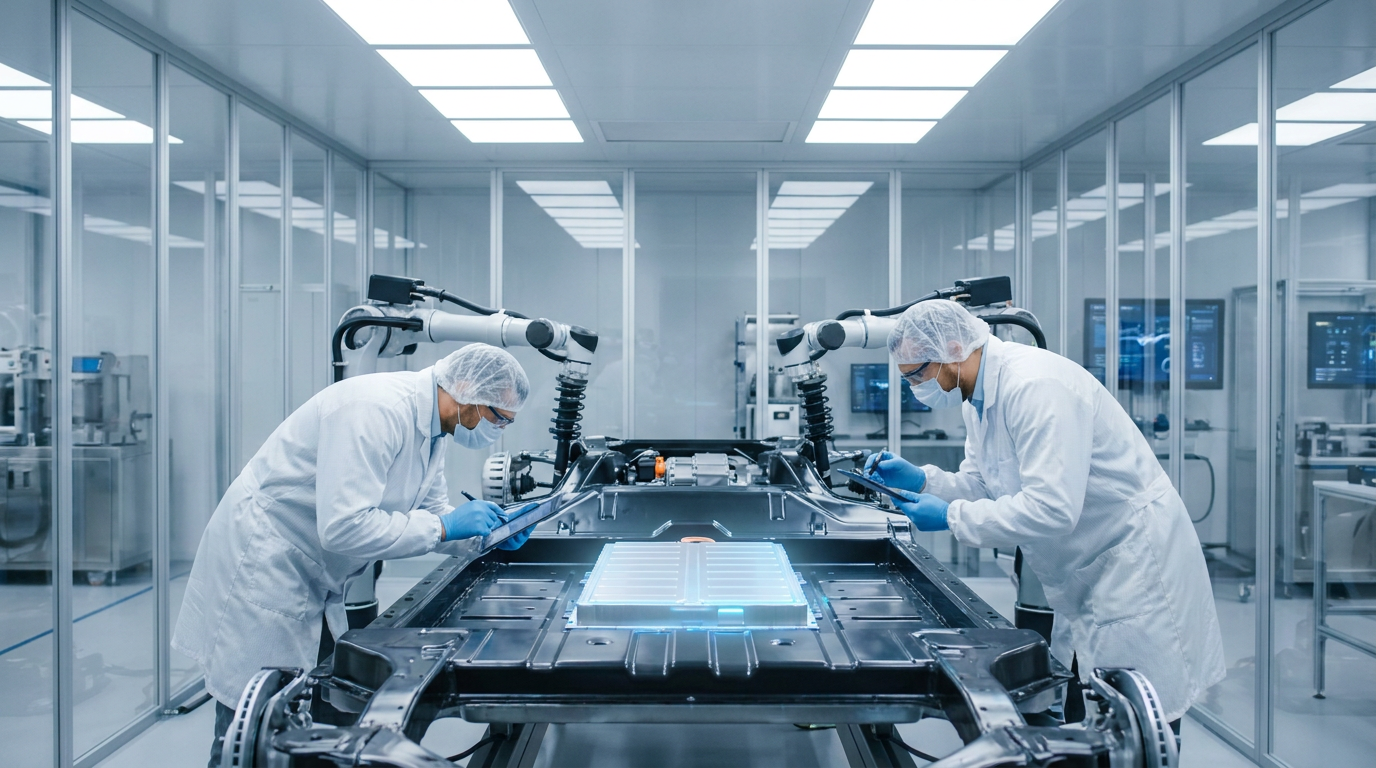
Despite the immense momentum and billions in funding, scaling up from pilot lines to global mass production remains a brutal, unforgiving engineering challenge. Manufacturing solid electrolytes requires extreme precision and entirely new factory architectures. Sulfide-based materials, for instance, are highly sensitive to moisture and require massive, expensive "dry rooms" to prevent degradation during assembly. Ensuring perfect, continuous physical contact between the solid electrolyte and the electrodes as the battery naturally expands and contracts during use remains a significant hurdle that engineers are still working to perfect at scale.[2][5][7]
While the very first solid-state batteries will almost certainly debut exclusively in premium, high-end luxury vehicles and hypercars due to their initial cost, the technology's arrival marks the definitive beginning of the end for liquid-based lithium-ion cells. As manufacturing processes are refined, supply chains mature, and economies of scale inevitably drive down costs, the 1,000-mile, fireproof, fast-charging EV is no longer a distant lab experiment. It is rapidly becoming the new industry standard, promising a cleaner, more efficient future for global transportation.[1][3]
How we got here
2012
Early investments in solid-state startups like QuantumScape begin as the industry seeks alternatives to liquid lithium-ion.
2020
QuantumScape goes public, raising significant capital to fund mass-market research and scale up manufacturing.
2024
Early A-sample cells successfully pass rigorous needle penetration and thermal shock tests without catching fire.
2026
First pilot production lines open globally, and early test vehicles equipped with solid-state batteries hit the road.
2028
Projected timeline for broader commercial availability of solid-state technology in premium electric vehicles.
Viewpoints in depth
Battery Manufacturers & Automakers
Viewing solid-state tech as the ultimate competitive moat.
For legacy automakers like Toyota and ambitious startups like QuantumScape, solid-state batteries represent a chance to reset the EV hierarchy. By doubling range and slashing charge times, they hope to eliminate the final consumer objections to electric vehicles. The race is heavily capitalized, with companies viewing the first successful mass-market solid-state cell as the 'Holy Grail' that will secure market dominance for the next decade.
Materials Scientists
Focused on the immense physical and chemical challenges of scaling the technology.
While the theoretical benefits are proven, chemists and engineers caution that moving from a pristine lab environment to a chaotic factory floor is notoriously difficult. Solid electrolytes, particularly sulfide-based ones, are highly sensitive to moisture and require expensive 'dry rooms' for manufacturing. Furthermore, ensuring perfect physical contact between the solid electrolyte and the electrodes as the battery expands and contracts during use remains a significant engineering hurdle.
Market Analysts
Predicting a slow, expensive trickle-down effect for consumers.
Financial analysts warn that the 'solid-state revolution' will not happen overnight. Because the manufacturing processes are entirely new and highly complex, the first generation of these batteries will carry a massive premium. Analysts expect them to debut exclusively in high-end luxury vehicles and hypercars. It may take well into the 2030s for economies of scale to bring solid-state technology down to the price point of an affordable, mass-market commuter car.
What we don't know
- Exactly how quickly manufacturing costs will fall to make solid-state batteries affordable for entry-level commuter cars.
- Which specific solid electrolyte material—sulfides, oxides, or polymers—will ultimately dominate the mass market.
- How the long-term mechanical stress of expanding and contracting electrodes will affect the battery's lifespan over decades of real-world use.
Key terms
- Electrolyte
- The medium inside a battery that allows ions to flow between the cathode and anode during charging and discharging.
- Energy Density
- The amount of energy a battery can store relative to its weight or size, typically measured in watt-hours per kilogram (Wh/kg).
- Dendrites
- Microscopic, needle-like metallic structures that can grow inside a battery during charging, potentially causing short circuits.
- Thermal Runaway
- A dangerous chain reaction where a battery cell overheats and catches fire, often spreading rapidly to adjacent cells.
Frequently asked
What is a solid-state battery?
A battery that replaces the flammable liquid electrolyte found in traditional lithium-ion cells with a solid material, like ceramic or sulfide.
Why are they safer than current EV batteries?
Because they lack a liquid electrolyte, they are highly resistant to catching fire or exploding, even if punctured or overheated in a crash.
When will I be able to buy a car with one?
Early models and test vehicles are hitting the road in 2026, with broader commercial availability in premium vehicles expected between 2027 and 2028.
Will this make electric vehicles cheaper?
Eventually. While initial solid-state batteries will be expensive, their higher energy density means future cars could use smaller, lighter battery packs, reducing overall vehicle costs.
Sources
Source coverage
7 outlets
3 viewpoints surfaced







[1]CleanTechnicaAutomakers & Battery Developers
Solid-State Battery Milestones Appear Encouraging For Near Future
Read on CleanTechnica →[2]AutoblogAutomakers & Battery Developers
This Startup Could Beat Toyota to the EV Holy Grail
Read on Autoblog →[3]AutoNocionMarket Analysts
Two Breakthroughs Could Give EVs 1,000 Miles of Range
Read on AutoNocion →[4]CarNewsChinaAutomakers & Battery Developers
Chery to launch first electric vehicle with solid-state battery
Read on CarNewsChina →[5]Murata ManufacturingMaterials Scientists
What are solid-state batteries? An expert explains the basics
Read on Murata Manufacturing →[6]American Chemical SocietyMaterials Scientists
Solid-State Batteries: An Introduction
Read on American Chemical Society →[7]QuratorMaterials Scientists
What exactly are solid-state batteries, and how do they work?
Read on Qurator →
Every angle. Every day.
Get guides stories with full source coverage and perspective breakdowns delivered to your inbox.