
A Cancer Therapy is 'Resetting' the Immune System to Send Severe Lupus into Remission
CAR-T cell therapy, originally developed for blood cancers, is showing unprecedented success in treating severe autoimmune diseases by completely rebooting patients' immune systems.
By Factlen Editorial Team
- Clinical Researchers
- View CAR-T as a paradigm-shifting breakthrough that moves autoimmune treatment from symptom management to potential cures.
- Patient Advocates
- Celebrate the life-changing restoration of health and drug-free remission, while pushing for broader trial access.
- Biotech Innovators
- Focus on scaling the technology through 'off-the-shelf' donor cells and expanding the platform to diseases like multiple sclerosis.
- Safety & Access Monitors
- Caution that long-term durability is unproven, and warn that the intense chemotherapy prep and high costs could limit accessibility.
What's not represented
- · Health Insurance Providers
- · Oncologists adapting to rheumatology demand
Why this matters
For decades, autoimmune diseases like lupus have been managed with lifelong, side-effect-heavy immunosuppressants that only slow the damage. This breakthrough suggests a single treatment could offer a permanent, drug-free cure, fundamentally changing the future of rheumatology.
Key points
- Five patients in a UK clinical trial achieved deep remission from severe lupus after receiving CAR-T cell therapy.
- The treatment involves genetically engineering a patient's own T-cells to hunt down and destroy the rogue B-cells causing the disease.
- Months after the treatment, patients' bodies generate new, healthy B-cells, effectively 'resetting' the immune system.
- A pooled review of 145 patients showed 84 percent were able to discontinue all immunosuppressive medications after the therapy.
- Clinical trials are now expanding to test 'off-the-shelf' donor cells and applying the therapy to other autoimmune diseases like multiple sclerosis.
For three decades, 64-year-old Katie Tinkler lived with a severe, aggressive form of lupus that ravaged her body. The chronic autoimmune disease forced her to give up her career as a fitness instructor, left her unable to walk properly, and pushed her to the brink of requiring dialysis for kidney failure. Today, she is skiing, dancing at her daughter's wedding, and living completely free of the disease's symptoms.[2][7]
Tinkler is one of five patients in England who have achieved deep, drug-free remission following a pioneering clinical trial at University College London Hospitals (UCLH). The trial utilized chimeric antigen receptor (CAR) T-cell therapy—a revolutionary genetic treatment originally developed to hunt down and destroy blood cancers.[2][3]
By repurposing this oncology breakthrough for rheumatology, scientists are achieving what was once thought impossible: a complete "reset" of a malfunctioning immune system. "These findings are truly groundbreaking and offer fresh hope to people living with lupus," said Professor Karl Peggs, director of the UCLH biomedical research centre. "The prospect of a cure for lupus may no longer be out of reach."[2][3]
Systemic lupus erythematosus (SLE) affects an estimated 5 million people worldwide, predominantly young women. In a healthy body, white blood cells known as B-cells produce antibodies to neutralize viruses and bacteria. In lupus patients, this system misfires. The B-cells become autoreactive, producing autoantibodies that attack the body's own healthy tissues, leading to severe inflammation, joint pain, and progressive damage to the kidneys, heart, and lungs.[2][7]

Historically, rheumatologists have had to rely on blunt instruments to manage the disease. Patients are typically prescribed a lifelong regimen of heavy immunosuppressants and steroids. These drugs dampen the immune system enough to slow the organ damage, but they leave patients highly vulnerable to infections and carry a host of debilitating side effects. Reaching true remission is exceptionally rare.[4][7]
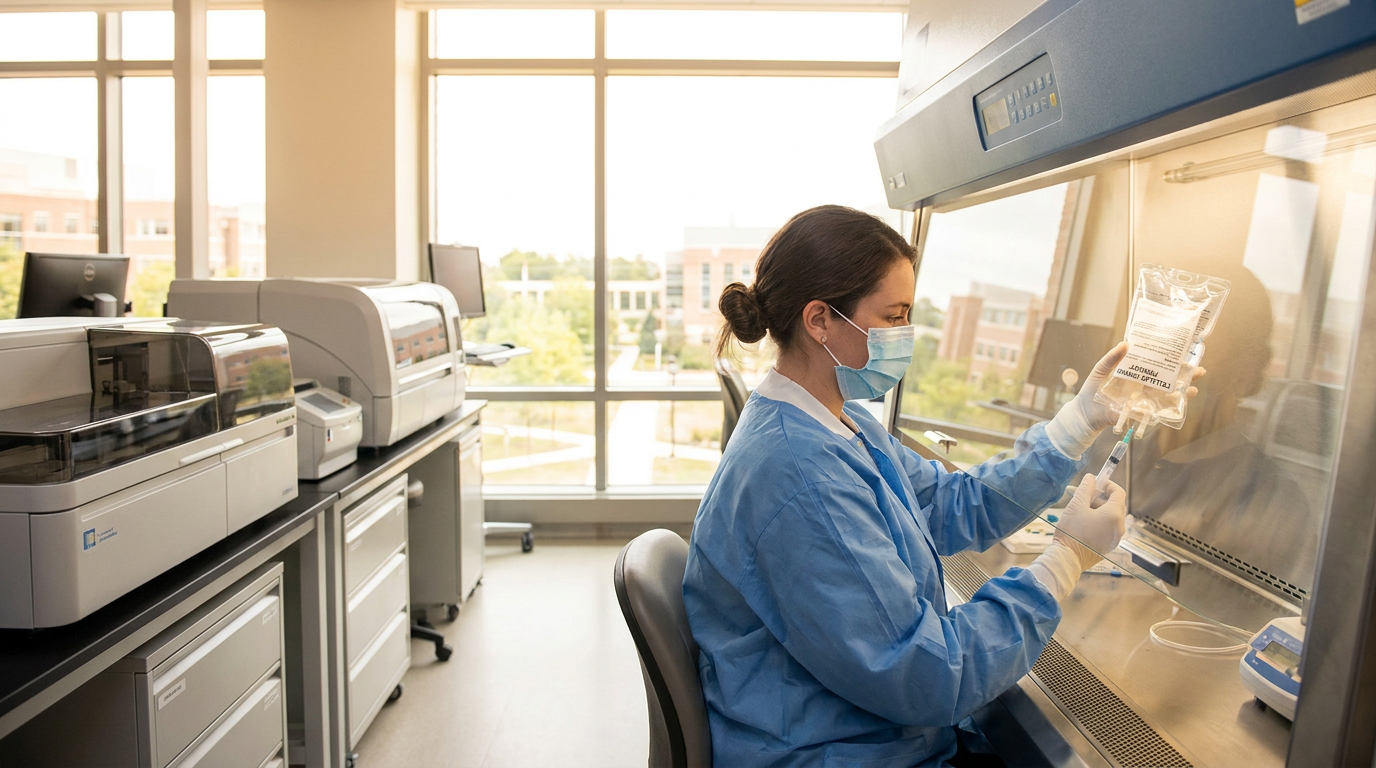
CAR-T therapy takes a radically different, highly targeted approach. The process begins by extracting a patient's T-cells—another type of white blood cell that acts as the immune system's enforcers. In a specialized laboratory, scientists genetically modify these T-cells, equipping them with a synthetic receptor designed to recognize a specific protein called CD19, which is found on the surface of B-cells.[2][3][7]
The patient then undergoes a brief course of chemotherapy, known as lymphodepletion, to clear out existing immune cells and make room for the new ones. Finally, the engineered CAR-T cells are infused back into the bloodstream. Like guided missiles, they hunt down and eradicate the rogue, autoantibody-producing B-cells, effectively wiping the slate clean.[5][7]
The patient then undergoes a brief course of chemotherapy, known as lymphodepletion, to clear out existing immune cells and make room for the new ones.
The true magic of the therapy, however, happens months later. As the CAR-T cells naturally die off, the patient's bone marrow begins to generate new B-cells. Crucially, these new cells are "naive"—they do not carry the autoreactive programming that caused the lupus. The immune system is entirely repopulated with healthy cells, effectively forgetting that it ever had the disease.[7][8]
The clinical results have been staggering. The concept was first proven in 2020 by a German medical team who treated a young woman with refractory lupus; she remains healthy and disease-free over five years later. Since then, the data has only grown stronger. A pooled review of 145 patients presented at the American College of Rheumatology's 2025 Convergence found that six months after treatment, 84 percent of patients were able to discontinue all other immunosuppressive therapies.[4][9]
"Given the central role B cells play in lupus pathogenesis, this approach offers a compelling therapeutic avenue," noted Alberto Nordmann-Gomes, a researcher who led the 2025 review. The analysis showed that average disease activity scores plummeted from a severe 13.1 down to just 2.3, indicating profound clinical improvement.[9]

The success is triggering a global race to expand the therapy. Sheba Medical Center in Israel has established an independent cellular manufacturing program, becoming the first center in the country to apply CAR-T for autoimmune conditions and reporting "outstanding responses" in early patients.[4]
Meanwhile, the biotech industry is working to solve CAR-T's biggest limitation: the bespoke, time-consuming manufacturing process. Because traditional CAR-T requires engineering each individual patient's cells, it is notoriously expensive—often costing hundreds of thousands of dollars per treatment—and difficult to scale to the millions of people living with autoimmune diseases.[4][9]
To bridge this gap, researchers are developing "off-the-shelf," or allogeneic, CAR-T therapies. The RESOLUTION trial, currently underway at the Norton Cancer Institute in the United States, is testing an investigational product called ALLO-329. This therapy uses T-cells from healthy donors that are genetically modified in advance and stored, eliminating the wait time and potentially lowering costs.[5]

The implications extend far beyond lupus. Because many severe autoimmune diseases are driven by rogue B-cells, the immune-reset mechanism could be universally applicable. In June 2026, the U.S. Food and Drug Administration cleared Imviva Biotech to launch a trial testing its off-the-shelf CAR-T therapy, CTA313, in patients with progressive multiple sclerosis (MS) and autoimmune encephalitis.[8]
Despite the immense promise, clinicians urge caution. The treatment is intense, and the required chemotherapy pre-conditioning carries its own risks of infection and toxicity. Patients can also experience Cytokine Release Syndrome (CRS)—a systemic inflammatory response triggered by the rapid destruction of B-cells. While data shows CRS is generally much milder in lupus patients than in cancer patients, it still requires careful hospital monitoring.[5][7][9]

There are also unanswered questions about long-term durability. The Lupus Research Alliance recently awarded substantial grants to researchers investigating why a small subset of patients might relapse, and whether certain antibody-producing plasma cells manage to evade the CD19-targeted CAR-T cells.[6]
For now, the focus remains on larger Phase 2 and Phase 3 trials to confirm safety and efficacy across diverse populations. But for the patients who have already received the infusion, the results are nothing short of miraculous. After decades of managing a slow, painful decline, rheumatology is finally daring to use the word "cure."[2][3][7]
How we got here
2020
A German medical team successfully treats the first severe lupus patient with CAR-T therapy, achieving rapid remission.
Oct 2025
A pooled review of 145 patients shows 84% were able to discontinue all immunosuppressive therapies after CAR-T.
Jan 2026
The RESOLUTION trial launches in the US to test 'off-the-shelf' donor CAR-T cells for lupus and scleroderma.
June 2026
UCLH announces five patients in a UK trial have achieved deep remission, with some completely symptom-free after decades of illness.
Viewpoints in depth
Clinical Researchers' View
Medical professionals view CAR-T as a paradigm-shifting breakthrough that moves autoimmune treatment from symptom management to potential cures.
For decades, rheumatologists have relied on blunt immunosuppressants that dampen the entire immune system, leaving patients vulnerable to infections while only slowing the progression of organ damage. Clinical researchers see CAR-T therapy as a fundamental paradigm shift. By selectively targeting and destroying the rogue B-cells, the therapy allows the body to regenerate a healthy, naive immune system. Researchers emphasize that while long-term data is still being collected, the ability to achieve drug-free remission in patients who had exhausted all other options suggests that a true cure for autoimmune diseases is finally within reach.
Biotech Innovators' View
Industry developers are focused on scaling the technology through 'off-the-shelf' donor cells and expanding the platform to other diseases.
While the clinical results are staggering, biotech companies recognize that the current autologous CAR-T process—which requires extracting and engineering each individual patient's cells—is too slow and expensive to scale to the millions of people with autoimmune diseases. Innovators are heavily investing in allogeneic, or 'off-the-shelf,' therapies that use healthy donor cells modified to evade immune rejection. By solving the manufacturing bottleneck, these companies aim to make CAR-T a frontline treatment not just for lupus, but for multiple sclerosis, scleroderma, and rheumatoid arthritis.
Safety & Access Monitors' View
Healthcare economists and safety monitors caution that the intense chemotherapy prep and high costs could limit accessibility.
Despite the optimism, cautious voices in the medical community point out that CAR-T therapy is an intense, high-risk procedure. Patients must undergo lymphodepletion—a form of chemotherapy—which carries significant risks of infection and toxicity. Furthermore, the astronomical cost of cellular therapies, which often exceed $400,000 per treatment in oncology, raises serious questions about equitable access. Monitors warn that unless manufacturing costs plummet, this miraculous cure could remain out of reach for the vast majority of the 5 million people worldwide living with lupus.
What we don't know
- Whether the immune reset is permanent, or if the autoreactive B-cells will eventually return years down the line.
- How effectively the pharmaceutical industry can scale 'off-the-shelf' allogeneic CAR-T to lower costs and increase access.
- Which specific autoimmune diseases beyond lupus and multiple sclerosis will respond best to the therapy.
Key terms
- CAR-T Cell Therapy
- A treatment where a patient's T-cells are extracted, genetically engineered to hunt specific targets, and infused back into the body.
- B-cells
- White blood cells that normally produce antibodies to fight infections, but in autoimmune diseases, mistakenly attack healthy tissue.
- Systemic Lupus Erythematosus (SLE)
- The most common and severe form of lupus, where the immune system causes widespread inflammation and organ damage.
- Lymphodepletion
- A preparatory chemotherapy phase used to clear out existing immune cells before infusing the engineered CAR-T cells.
- Allogeneic Therapy
- An 'off-the-shelf' treatment using cells from healthy donors rather than the patient's own cells, making it faster and cheaper to produce.
Frequently asked
Is CAR-T therapy a permanent cure for lupus?
It is too early to declare it a permanent cure, but early patients have remained in drug-free remission for years, suggesting the immune system has been successfully 'reset'.
Does this treatment require chemotherapy?
Yes, currently patients must undergo a brief course of chemotherapy to clear out their existing immune cells before the engineered T-cells are infused.
Will this work for other autoimmune diseases?
Researchers are highly optimistic. Clinical trials are already underway testing CAR-T therapy for multiple sclerosis, scleroderma, and rheumatoid arthritis.
When will this be widely available?
The therapy is still in clinical trials for autoimmune diseases. Widespread availability will depend on larger Phase 2 and 3 trials and solving the high manufacturing costs.
Sources
Source coverage
9 outlets
4 viewpoints surfaced









[1]BBCPatient Advocates
'I've never been this good' – revolutionary immune reset puts lupus in remission
Read on BBC →[2]The GuardianPatient Advocates
Lupus patients in England in remission after pioneering NHS trial of GM therapy
Read on The Guardian →[3]University College London HospitalsClinical Researchers
CAR T-cell therapy transforms life of patient with severe lupus
Read on University College London Hospitals →[4]Sheba Medical CenterClinical Researchers
Breakthrough in Lupus: Sheba Advances CAR-T Therapy for Lupus Patients
Read on Sheba Medical Center →[5]Norton Cancer InstituteClinical Researchers
CAR T-cell therapy for lupus, myositis and scleroderma: New clinical trial offers hope
Read on Norton Cancer Institute →[6]Lupus Research AlliancePatient Advocates
Lupus Research Alliance and Genentech Fund Researchers Translating CAR T Success into Durable Lupus Treatments
Read on Lupus Research Alliance →[7]MedScriptumSafety & Access Monitors
Resetting the immune system: CAR-T therapy achieves long-term remission in patients with lupus
Read on MedScriptum →[8]Multiple Sclerosis News TodayBiotech Innovators
FDA clears CTA313 trial for progressive MS, autoimmune diseases
Read on Multiple Sclerosis News Today →[9]Rheumatology UpdateSafety & Access Monitors
New Evidence Supports CAR-T Cells as a Potential Breakthrough in SLE Care
Read on Rheumatology Update →

Every angle. Every day.
Get health stories with full source coverage and perspective breakdowns delivered to your inbox.