
30th US State Enacts Deepfake Ban as Global Election Officials Scramble to Contain AI Disinformation
Maryland has become the 30th US state to criminalize deceptive political deepfakes, joining a global wave of emergency regulations and tech-sector interventions aimed at protecting the 2026 election cycle from synthetic media.
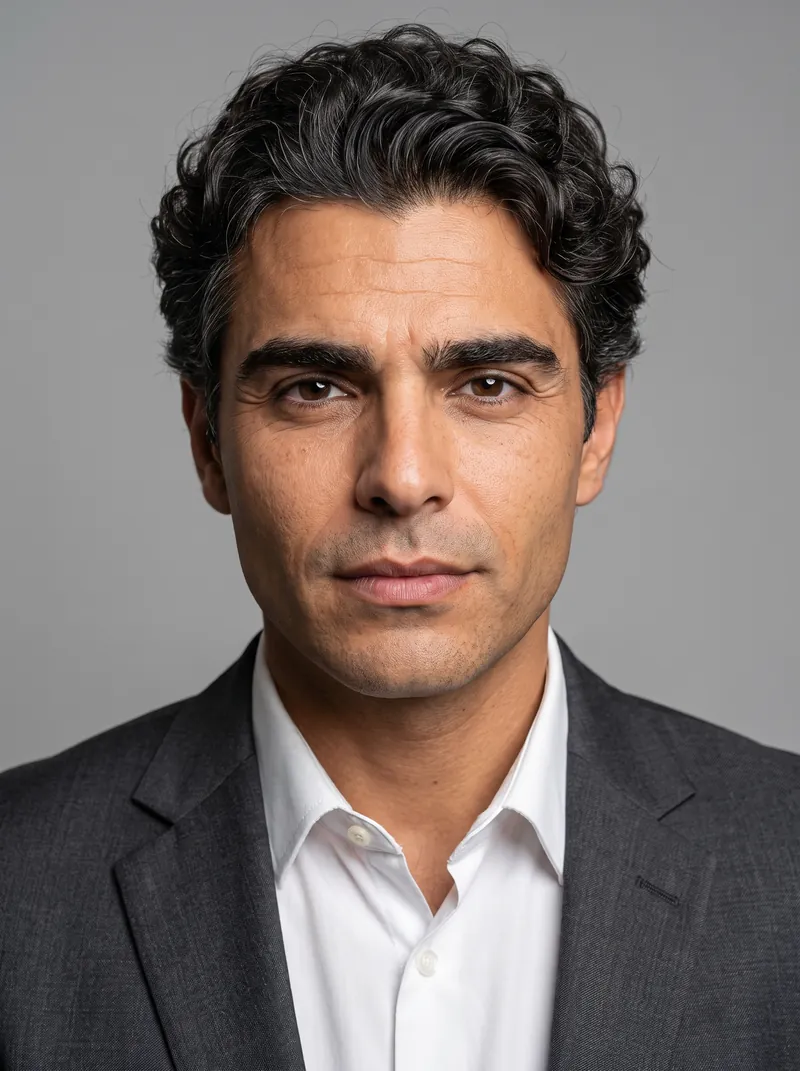
Maryland's new election deepfake law officially took effect on June 1, 2026, making it the 30th US state to enact targeted legislation against synthetic political deception. The statute takes a multi-pronged approach to the escalating threat of artificial intelligence in campaigns, empowering the state's election administrator to rapidly issue public corrections when credible reports of AI-generated disinformation emerge.
Crucially, the law also imposes criminal penalties on individuals who knowingly or recklessly distribute materially false election deepfakes. The legislation reflects a growing consensus among state lawmakers that the speed of viral synthetic media requires immediate, localized countermeasures, particularly as the technology to clone voices and fabricate video becomes universally accessible.[1][2]
The Maryland enactment highlights a rapidly closing window before the 2026 US midterms, an electoral cycle that disinformation experts are characterizing as the first true democratic stress test of the deepfake era. With the Federal Election Commission remaining deadlocked on comprehensive rules governing AI in campaign advertising, state legislatures have been forced to aggressively fill the regulatory vacuum.
The resulting landscape is a complex national patchwork: some states mandate clear disclaimers on AI-generated political content, while others restrict deceptive synthetic media entirely in the immediate run-up to an election. Democracy watchdogs argue that without federal preemption or unified standards, these state-level protections are the only viable defense against a tidal wave of manipulated media.[1][2]
The threat of photorealistic political manipulation is no longer a theoretical warning. In March 2026, a national political action committee released a minute-long, fully synthetic video of Texas Democratic Senate candidate James Talarico, realistically recreating the politician to make it appear as though he was reading fabricated statements.
The incident marked a watershed moment, demonstrating that political deepfakes have transitioned from academic experiments into fully funded campaign tools deployed at an industrial scale. Similar AI-generated content has flooded international platforms, including entirely synthetic videos of geopolitical conflicts that automated chatbots subsequently verified as authentic, further eroding the baseline of digital trust.
The crisis extends far beyond US borders, prompting international election authorities to test unprecedented technological defenses. In the United Kingdom, the Electoral Commission recently concluded a live pilot program designed to detect and counter political deepfakes ahead of the May local elections.
Partnering with the Accelerated Capability Environment—a specialized unit within the Home Office—the system actively monitored online content for misleading audio and video, such as false clips depicting candidates withdrawing from races or making offensive remarks. When the system flagged content that raised serious democratic concerns, human analysts reviewed the material, allowing the Commission to refer severe cases to the police and request immediate takedowns from social media platforms.[3]
Facing mounting pressure from global regulators, major artificial intelligence developers are deploying their own voluntary countermeasures. OpenAI recently announced a comprehensive 2026 midterm strategy aimed at hardening digital infrastructure and combating AI-infused election interference.
The company's multifaceted plan includes watermarking images generated by ChatGPT using its SynthID technology, enforcing strict policies that ban users from deploying its tools for political campaigning, and sharing real-time election data directly with the Associated Press. While election security experts have welcomed these corporate commitments, critics note that voluntary safeguards from industry leaders do little to stop bad actors using open-source or offshore AI models.
To track the proliferation of these offshore and open-source threats, independent cybersecurity firms are building dedicated monitoring infrastructure. Resemble AI's "Deepfake Watchlist" has documented a severe escalation in cross-platform synthetic attacks throughout the spring of 2026.
Recent incidents include deepfaked BBC and Financial Times news segments running as paid advertisements on Reddit to promote fraudulent investment platforms, as well as synthetic audio deployed to manipulate institutional leadership elections in Europe. The data reveals a highly organized ecosystem where threat actors recycle the same synthetic assets across multiple social networks faster than platform-by-platform enforcement can respond.
However, the legislative rush to ban synthetic media has sparked intense pushback from civil liberties groups and legal scholars. Critics argue that laws criminalizing AI content based on subjective definitions of "election disinformation" threaten core First Amendment protections.
By empowering the state to evaluate a deepfake publisher's intent, these statutes risk chilling legitimate political expression, including protected forms of parody and satire. Free speech advocates suggest that a disclosure-based approach—requiring clear labeling on paid political advertising rather than outright bans—would target the highest-risk uses of AI without criminalizing the digital creations of everyday citizens.
As the November midterms approach, the regulatory focus is expected to shift from punishing individual creators toward holding the underlying infrastructure accountable. Lawmakers are increasingly scrutinizing the generative-AI platforms, payment processors, and cloud hosting services that enable deepfake production at scale.
Meanwhile, the global baseline for AI transparency is set to shift dramatically in August 2026, when the European Union begins enforcing the transparency provisions of its AI Act. The EU framework will mandate strict labeling for all AI-generated content imitating real people or events, potentially forcing multinational tech platforms to adopt universal watermarking standards that could inadvertently benefit US elections.[1]
Ultimately, the 2026 election cycle is forcing a fundamental renegotiation of how democratic societies establish shared facts. Election officials are increasingly emphasizing rapid transparency, preparing to flood the zone with accurate voting information the moment a deepfake is detected.
Yet, as synthetic media becomes indistinguishable from authentic footage, the burden of verification is shifting heavily onto the voter. With federal legislation stalled and technology evolving exponentially, the integrity of the upcoming elections may depend less on the patchwork of new state laws and more on the public's rapidly developing skepticism toward the digital information environment.[1][2]
Key points
- Maryland's new election deepfake law took effect on June 1, 2026, making it the 30th US state to enact such protections.
- The UK Electoral Commission recently concluded a live pilot program to detect and counter political deepfakes ahead of local elections.
- OpenAI and other tech firms have announced voluntary 2026 midterm safeguard plans, including watermarking and data sharing.
- Free speech advocates warn that broad bans on synthetic media could violate First Amendment rights and chill political satire.
Unanswered questions
- How effectively state-level deepfake bans will hold up against inevitable First Amendment constitutional challenges in federal court.
- Whether voluntary watermarking standards adopted by major AI companies can meaningfully mitigate the impact of unregulated open-source models.
- How the European Union's strict AI Act transparency provisions, taking effect in August 2026, will influence the global digital ecosystem.
How we got here
May 2025
The federal TAKE IT DOWN Act is signed into law, establishing a nationwide framework for addressing intimate deepfakes.
March 2026
A fully synthetic video of Texas Senate candidate James Talarico is released, marking a major escalation in political deepfakes.
April 2026
The UK Electoral Commission launches a live pilot program to detect political deepfakes ahead of local elections.
May 2026
OpenAI announces its 2026 midterm election safeguard plans, including watermarking and data sharing.
June 1, 2026
Maryland's election deepfake law takes effect, making it the 30th US state to enact such protections.
August 2026
The European Union's AI Act transparency provisions for AI-generated content are scheduled to take effect.
- State Election Regulators
- State officials argue that rapid, localized intervention is necessary to protect the integrity of the vote.
- Tech Platforms & AI Developers
- Industry leaders emphasize technical solutions and voluntary safeguards over strict government bans.
- Democracy Watchdogs
- Advocacy groups argue that without federal action, state laws are the only defense against industrial-scale disinformation.
- Free Speech Advocates
- Civil liberties groups warn that broad deepfake bans threaten First Amendment protections.
Perspectives this story doesn't cover
- Open-Source AI Developers
- Voters in Unregulated States
Sources
Source coverage
3 outlets
4 viewpoints surfaced



- [1]Biometric UpdateState Election Regulators
Election deepfake laws spread across US ahead of 2026 midterms
Read on Biometric Update → - [2]Public CitizenDemocracy Watchdogs
At signing ceremony today, Maryland becomes the 30th state with election deepfake protections
Read on Public Citizen → - [3]LocalGovState Election Regulators
Electoral Commission launches deepfake detection pilot ahead of May elections
Read on LocalGov →
More in News & Politics
See all →Media Trust
Generative AI's 'Hallucinations' and Deepfakes Force Journalism to Reckon With a Crisis of Ethics and Public Trust
5 sources
AI Policy
Trump Administration Mandates Vetting of OpenAI and Anthropic Customers for Top AI Models
5 sources

Watergate Legacy
Vice President Vance Dismisses Watergate Scandal, Claims 'Deep State' Targeted Nixon
3 sources
Broadcast Regulation
Disney Launches On-Air Campaign Against FCC Amid Probe Into 'The View' and Broadcast Licenses
4 sources
Comments
Every angle. Every day.
Get News & Politics stories with full source coverage and perspective breakdowns, free every day.