
The Science of Metabolic Flexibility: How Continuous Glucose Monitors Went Mainstream
Once reserved strictly for managing diabetes, continuous glucose monitors are now available over-the-counter, offering anyone real-time insights into how food, sleep, and stress affect their metabolic health.
By Factlen Editorial Team
- Metabolic Optimization Advocates
- Believe that real-time biometric feedback empowers individuals to make personalized lifestyle choices and prevent chronic disease.
- Traditional Endocrinologists
- Support data-driven health but caution that non-diabetics may misinterpret normal physiological glucose rises as pathological.
- Public Health Strategists
- Focus on the macro potential of lifestyle interventions and wearable tech to reverse population-level prediabetes trends.
What's not represented
- · Health Insurance Providers
- · Eating Disorder Recovery Specialists
Why this matters
Understanding your personal metabolic response to food and exercise can help prevent chronic diseases before they start, shifting healthcare from treating illness to optimizing daily energy and long-term healthspan.
Key points
- The FDA has cleared the first continuous glucose monitors (CGMs) for over-the-counter use by adults without diabetes.
- CGMs measure glucose in the interstitial fluid, providing a real-time dashboard of metabolic health.
- Data reveals high biochemical individuality: the same food can cause vastly different glucose responses in different people.
- Sleep deprivation and high stress can trigger glucose spikes even in the absence of food.
- Experts caution against orthorexia, noting that moderate glucose rises after meals are a normal, healthy function.
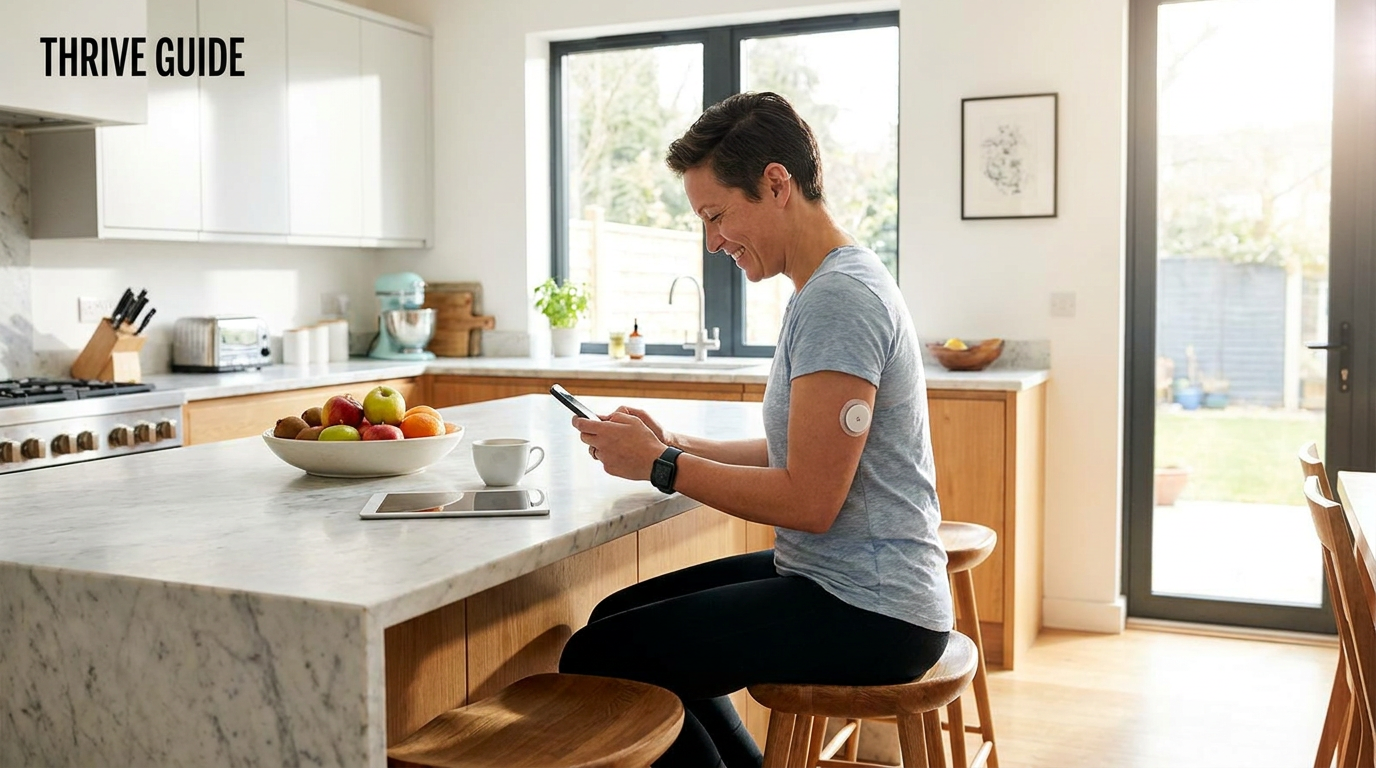
For decades, the standard approach to metabolic health was entirely reactive: wait for an annual blood test, check a fasting glucose number, and hope it hasn't crossed the threshold into prediabetes. But a quiet revolution in wearable technology is flipping that paradigm. Continuous glucose monitors (CGMs)—small, coin-sized sensors worn on the back of the arm—have broken out of the clinical diabetes sphere and entered the mainstream wellness market, giving everyday users a real-time dashboard for their metabolism.[1][5]
The shift accelerated rapidly following the U.S. Food and Drug Administration's landmark decisions to clear the first over-the-counter CGMs for adults without diabetes. By removing the prescription barrier, regulators acknowledged a growing scientific consensus: metabolic dysfunction exists on a spectrum, and empowering individuals with their own data can be a powerful tool for preventative health.[2]
At the heart of this trend is the pursuit of "metabolic flexibility." This is the body's ability to efficiently switch between burning carbohydrates and burning fat for fuel. In a metabolically flexible person, blood sugar rises moderately after a meal and returns to baseline quickly. In someone with poor metabolic flexibility, the same meal might trigger a massive glucose spike followed by a steep crash—a rollercoaster that drives fatigue, brain fog, and intense cravings.[1][4]
To understand how these devices work, it is helpful to look under the hood. A CGM does not actually measure blood. Instead, a tiny, flexible filament sits just beneath the skin, measuring glucose levels in the interstitial fluid—the fluid that surrounds the body's cells. The sensor takes a reading every few minutes and beams the data via Bluetooth to a smartphone app, creating a continuous curve of the user's metabolic state throughout the day and night.[4][5]

This real-time feedback loop is fundamentally changing how people approach nutrition. Traditional dietary advice relies on broad, population-level averages, such as the glycemic index. But CGM data has revealed a startling degree of "biochemical individuality." A bowl of oatmeal might cause a perfectly healthy, flat glucose response in one person, while sending another person's blood sugar soaring into prediabetic ranges. Conversely, that second person might process a slice of pizza with minimal disruption.[4]
The stakes for understanding these individual responses are remarkably high. Recent long-term data highlights that over 115 million adults in the U.S. alone have prediabetes, a condition strongly tied to cardiovascular disease, cognitive decline, and systemic inflammation. However, landmark 20-year follow-up studies have proven that targeted lifestyle interventions can drastically cut the risk of these chronic diseases from developing.[3][7]
The stakes for understanding these individual responses are remarkably high.
For the growing community of biohackers and wellness enthusiasts, the goal isn't just disease prevention; it's daily optimization. Users quickly learn that food is only one variable in the metabolic equation. A poor night of sleep can make the body highly insulin resistant the next day, causing exaggerated glucose spikes from meals that would normally be well-tolerated. Similarly, high-stress events trigger the release of cortisol, which prompts the liver to dump glucose into the bloodstream, causing a spike even if the person hasn't eaten anything.[1][5]

Exercise also plays a fascinating, visible role on a CGM. A brisk 15-minute walk after a carbohydrate-heavy meal can visibly blunt a glucose spike, as contracting muscles pull glucose out of the bloodstream to use for immediate energy without requiring insulin. For many users, seeing this real-time cause-and-effect is the behavioral nudge they need to build sustainable, healthy habits that decades of generic public health messaging failed to inspire.[3][4]
However, the mainstreaming of CGMs is not without its critics in the medical community. Some endocrinologists caution against the pursuit of a perfectly "flat" glucose line. It is entirely normal and healthy for blood sugar to rise after eating; that is how the body distributes energy. The concern is that healthy individuals might misinterpret normal physiological responses as pathological, leading to unnecessary anxiety or overly restrictive diets.[5]
This phenomenon, sometimes referred to as orthorexia—an unhealthy obsession with healthy eating—is a genuine risk when highly detailed biometric data meets the general public. If a user cuts out all fruit and complex carbohydrates simply to keep their glucose line flat, they may inadvertently harm their gut microbiome and miss out on vital micronutrients and fiber.[1][6]

To mitigate these risks, the latest generation of over-the-counter CGM apps are evolving from simple data displays into intelligent, context-aware coaches. Rather than just flashing a red warning for a high number, these platforms use AI to contextualize the data. They might point out that a spike during a high-intensity workout is a healthy, expected release of energy, or suggest pairing a carbohydrate with a protein or fat to soften the metabolic impact next time.[1][4]
This evolution mirrors a broader shift in consumer health, where individuals are taking unprecedented ownership of their biological data. Just as the public learned to track daily steps, resting heart rate, and sleep cycles over the last decade, metabolic tracking is poised to become a standard pillar of personal health management.[6]

Ultimately, the true promise of the over-the-counter CGM movement is not about achieving a perfect score on an app. It is about building a deeper, more intuitive relationship with one's own body. By illuminating the hidden connections between what we eat, how we move, and how we feel, this technology offers a powerful, uplifting roadmap to a longer, more energetic life.[1][3]
How we got here
Early 2000s
Continuous glucose monitors are first introduced as prescription-only medical devices strictly for managing Type 1 diabetes.
2010s
Biohackers and endurance athletes begin using off-label prescription CGMs to optimize performance and nutrition.
2024
The FDA clears the first over-the-counter CGMs (such as Dexcom Stelo) for adults who do not use insulin.
2025-2026
Major health tech companies integrate OTC CGM data into mainstream fitness and wellness applications.
Viewpoints in depth
Metabolic Optimization Advocates
Believe that real-time biometric feedback empowers individuals to make personalized lifestyle choices and prevent chronic disease.
This camp, largely composed of longevity researchers, biohackers, and preventative medicine physicians, argues that the traditional healthcare model is too reactive. By the time a patient is diagnosed with prediabetes via an annual fasting blood test, years of metabolic damage have already occurred. They view CGMs as a revolutionary educational tool that provides immediate, undeniable feedback. When a user sees a visual spike and crash after eating a highly processed snack, followed by a steady curve after a balanced meal, the behavioral change is often rapid and permanent. For this group, democratizing access to biometric data is the key to reversing global trends in metabolic syndrome.
Traditional Endocrinologists
Support data-driven health but caution that non-diabetics may misinterpret normal physiological glucose rises as pathological.
Many practicing endocrinologists and dietitians welcome the focus on metabolic health but worry about the psychological side effects of hyper-tracking. They emphasize that the human body is designed to experience fluctuations in blood sugar; a rise in glucose after eating an apple is a sign of a functioning metabolism, not a medical emergency. This camp frequently warns about the rise of "orthorexia"—an unhealthy fixation on eating perfectly. They argue that if users begin eliminating healthy, nutrient-dense foods like fruits and complex carbohydrates simply to keep their CGM line flat, they risk damaging their gut microbiome and overall nutritional balance.
Public Health Strategists
Focus on the macro potential of lifestyle interventions and wearable tech to reverse population-level prediabetes trends.
Public health officials view the OTC CGM trend through the lens of population health economics. With over 115 million Americans living with prediabetes, the impending cost of chronic disease management is staggering. This group is highly interested in long-term studies showing that lifestyle interventions can drastically reduce the progression to Type 2 diabetes. While they acknowledge the risks of over-tracking, they generally support the integration of wearable technology if it successfully drives population-level increases in daily movement, better sleep hygiene, and reductions in ultra-processed food consumption.
What we don't know
- Whether the short-term behavioral changes inspired by wearing a CGM translate into permanent, decades-long lifestyle improvements.
- The exact optimal range for glycemic variability in completely healthy individuals, as most historical data is based on diabetic populations.
- How the widespread use of OTC CGMs will impact the rates of eating disorders and health anxiety in the general population.
Key terms
- Metabolic Flexibility
- The body's ability to efficiently adapt and switch between burning carbohydrates and burning fat for fuel based on availability and demand.
- Interstitial Fluid
- The fluid found in the spaces around cells. CGMs measure glucose in this fluid rather than directly in the bloodstream.
- Glycemic Variability
- The degree to which a person's blood sugar levels fluctuate between high peaks and low valleys throughout the day.
- Insulin Resistance
- A condition where cells stop responding effectively to insulin, requiring the body to produce more of it to keep blood sugar levels in a normal range.
- Biochemical Individuality
- The concept that each person's body processes foods differently due to genetics, microbiome composition, and lifestyle factors.
Frequently asked
Do I need a prescription to get a CGM?
No. The FDA recently cleared several continuous glucose monitors for over-the-counter sale to adults without diabetes.
Does applying the sensor hurt?
For most people, application is painless. The device uses a tiny, flexible filament—not a rigid needle—that sits just beneath the skin.
Should my glucose line be completely flat?
No. It is a normal, healthy physiological response for blood glucose to rise moderately after eating a meal. The goal is to avoid extreme spikes and crashes.
How long does one sensor last?
Depending on the brand, a single over-the-counter CGM sensor typically lasts between 10 and 15 days before it needs to be replaced.
Sources
Source coverage
7 outlets
3 viewpoints surfaced







[1]Factlen Editorial TeamMetabolic Optimization Advocates
Synthesis by Factlen editorial team
Read on Factlen Editorial Team →[2]U.S. Food and Drug AdministrationPublic Health Strategists
FDA Clears First Over-the-Counter Continuous Glucose Monitor
Read on U.S. Food and Drug Administration →[3]NPRPublic Health Strategists
Winning strategy to prevent diabetes and related chronic diseases
Read on NPR →[4]Nature MetabolismMetabolic Optimization Advocates
Continuous glucose monitoring in healthy individuals: a new frontier in personalized nutrition
Read on Nature Metabolism →[5]The New York TimesTraditional Endocrinologists
Should You Wear a Continuous Glucose Monitor if You Don’t Have Diabetes?
Read on The New York Times →[6]STAT NewsPublic Health Strategists
How supplement use changed over decades
Read on STAT News →[7]American Diabetes AssociationTraditional Endocrinologists
Statistics About Diabetes and Prediabetes
Read on American Diabetes Association →

More in health
See all 5 stories →Metabolic Health
How Small Lifestyle Changes in Midlife Prevent Chronic Disease Decades Later
7 sources

Metabolic Health
A 20-Year Study Proves Small Lifestyle Changes Outperform Medication in Preventing Chronic Disease
6 sources

Healthy Aging
A 21-Year Study Proves Modest Lifestyle Changes Prevent the Pileup of Chronic Diseases
6 sources

Every angle. Every day.
Get health stories with full source coverage and perspective breakdowns delivered to your inbox.