
The Science of Hydration Testing and the Push to End Extreme Weight Cutting in Combat Sports
As combat sports grapple with the severe health risks of rapid weight loss, organizations are increasingly turning to hydration testing and new weight classes. However, recent sports science reveals that enforcing safe weight management is biologically more complex than previously thought.
By Factlen Editorial Team
- Sports Scientists & Medical Professionals
- Focuses on the biological toll of rapid fluid loss and the empirical reliability of testing methods.
- Athletic Commissions & Regulators
- Prioritizes enforceable rules and structural changes to protect athletes without canceling events.
- Industry Analysts & Commentators
- Examines the cultural shift within the sport and the practical realities fighters face during fight week.
What's not represented
- · Promoters balancing event economics with safety
- · Nutritionists specializing in combat sports
Why this matters
Extreme weight cutting has long been the most dangerous aspect of combat sports, causing more long-term health damage than the fights themselves. Understanding the science of hydration and weight management reveals how the sport is evolving to protect athletes and ensure fairer competition.
Key points
- Combat sports athletes routinely shed 10 to 15 percent of their body mass through severe dehydration to gain a size advantage.
- Severe dehydration depletes the brain's protective fluid, significantly increasing the risk of concussions and acute kidney injury.
- Promotions like ONE Championship have introduced hydration testing to force athletes to compete closer to their natural weight.
- Recent sports science reveals that common urine tests are easily manipulated and unreliable for tracking rapid fluid loss.
- Experts advocate for structural changes, such as introducing 165-pound and 175-pound weight classes, to reduce the need for extreme cuts.
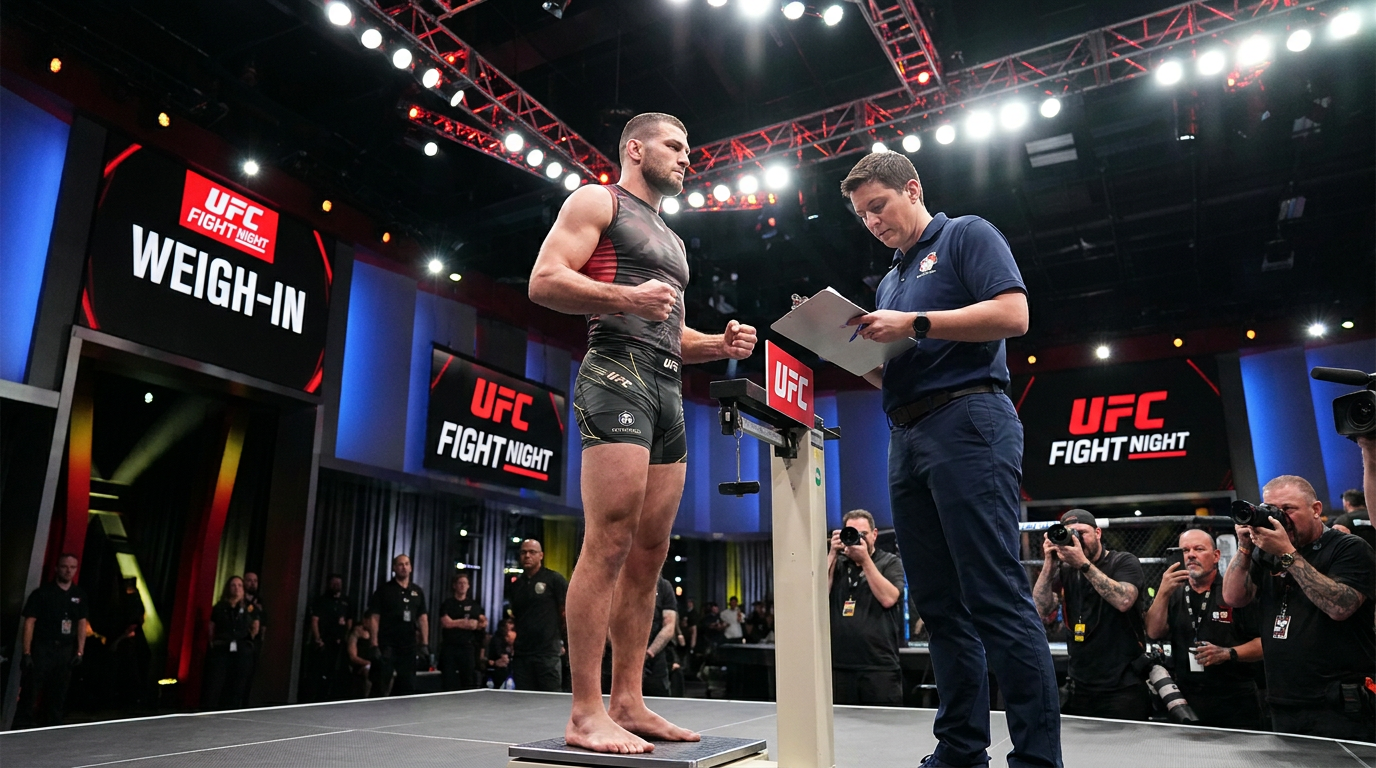
The visual of a gaunt, hollow-eyed fighter stepping onto a weigh-in scale, barely able to stand without assistance, is one of the most normalized yet inherently dangerous traditions in mixed martial arts and boxing. For decades, combat sports athletes have routinely shed anywhere from 10 to 15 percent of their total body mass in the final week before a bout. This grueling process is not about burning fat or improving conditioning; it is about draining the body of its water reserves to artificially lower their weight for a few crucial minutes on the scale. By doing so, fighters aim to gain a significant size, strength, and leverage advantage when they rehydrate and step into the cage or ring 24 hours later. However, this extreme manipulation of human physiology has led to catastrophic health outcomes, prompting a quiet but profound revolution across the industry. Driven by high-profile tragedies and a rapidly growing understanding of sports science, athletic commissions and major promotions are fundamentally rethinking how weight classes operate and how athlete safety is enforced.[1][7]
To truly understand the shift in regulatory thinking, one must first understand the underlying biology of the "cut." In the final five to seven days leading up to a fight, athletes engage in acute weight loss strategies that manipulate body water, glycogen stores, and gut content. They utilize boiling hot baths, sauna suits, and severe fluid restriction to sweat out pounds of essential hydration. Once they step off the scale, the goal is to immediately reverse this process, rapidly expanding their mass by consuming gallons of electrolyte-rich fluids before the fight begins. The physiological toll of this practice is immense and multifaceted. The human brain sits encased in a protective layer of cerebrospinal fluid, which acts as a vital shock absorber against blunt force trauma. Severe dehydration diminishes this fluid cushion, significantly increasing the risk of traumatic brain injury and concussions from strikes. Furthermore, the cardiovascular strain of operating with a drastically reduced blood plasma volume forces the heart to work exponentially harder, which can lead to acute kidney injury and, in extreme cases, fatal cardiac arrest.[6][7]

The most radical departure from traditional weigh-in protocols occurred in Asia's ONE Championship following the tragic death of 21-year-old Chinese fighter Yang Jian Bing in 2015, who suffered fatal complications during a weight cut. In response, the promotion abolished weight-cutting by dehydration entirely. They implemented a pioneering system that requires fighters to pass a urine specific gravity (USG) test to prove they are properly hydrated before they are even allowed to step on the scale. If a fighter's urine is too concentrated, indicating dehydration, they fail the test and cannot compete at that weight. This system effectively forces athletes to move up a weight class and compete much closer to their natural, everyday walking weight. While the ONE Championship model has been praised for shifting the culture of Asian MMA, implementing similar rules in North America has proven to be a complex logistical challenge for legacy promotions that rely on traditional weight classes.[1][7]
In North America, regulators like the California State Athletic Commission (CSAC) have taken a different approach, aggressively targeting the "rebound" effect rather than the cut itself. CSAC regulations now stipulate that if a fighter gains more than 15 percent of their body weight back between the official weigh-in and the moment they step into the cage, they face severe consequences. Doctors monitor the athletes on fight day, and those who exceed the 15 percent threshold can be pulled from the bout entirely or forced by the commission to move up a weight class in all future competitions. This rule is designed to eliminate the massive size disparities that incentivize extreme cutting in the first place, ensuring that a 155-pound lightweight bout doesn't secretly feature two 180-pound athletes. By focusing on the recovery phase, CSAC aims to gradually change the culture of the sport without forcing promotions to completely overhaul their existing divisional structures overnight.[4][5]
For athletes who still compete under traditional rulesets without mandatory hydration testing, the International Society of Sports Nutrition (ISSN) recently published a comprehensive position stand to provide evidence-based guidance. The ISSN researchers established strict scientific ceilings for what the human body can tolerate before performance and long-term health plummet. They recommend that fighters lose no more than 6.7 percent of their body weight in the 72 hours prior to a weigh-in, 5.7 percent within 48 hours, and an absolute maximum of 4.4 percent in the final 24 hours. The guidelines also emphasize that athletes should consume 1 to 1.5 liters of fluid per hour during the rehydration phase, combined with specific sodium concentrations, to safely restore blood plasma levels. While these guidelines offer a safer roadmap for acute weight loss, sports scientists warn that even "optimized" dehydration carries inherent risks when athletes are subsequently subjected to physical combat.[3]

The ISSN researchers established strict scientific ceilings for what the human body can tolerate before performance and long-term health plummet.
However, enforcing these new safety standards is proving to be biologically complex, and recent scientific literature has cast doubt on the efficacy of current testing methods. A pivotal 2024 study published in the Scandinavian Journal of Medicine & Science in Sports revealed a critical flaw in the way promotions monitor athlete health. The researchers found that common biomarkers, including the urine specific gravity tests heavily relied upon by organizations like ONE Championship, are often inaccurate and unreliable for monitoring rapid weight loss. Because the human body adapts to extreme stress in unpredictable ways, urine concentration does not always accurately reflect the true state of an athlete's internal blood volume or cellular hydration. This revelation complicates the push for universal regulation, as it suggests that the tests designed to protect fighters might be providing a false sense of security to both promoters and medical staff.[2][7]
The unreliability of urine testing is further exacerbated by the fact that fighters and their nutritionists have learned how to game the system. Athletes engage in a practice known as "water-loading," where they strategically consume small, calculated amounts of fluid just before their scheduled hydration test. This temporarily dilutes their urine just enough to pass the specific gravity threshold, even while their internal organs and brain remain dangerously dehydrated. The 2024 Scandinavian Journal study concluded that fingerprick blood testing is actually the most accurate biomarker for rapid fluid loss, though even that invasive method only explained about 22 percent of the total weight lost. This has led sports scientists to caution that while hydration testing is a well-intentioned step forward, it cannot be the sole mechanism for regulating fighter safety, as the biological markers are simply too easy to manipulate.[1][2][7]
Because athletes will always seek a competitive edge within the confines of the rules, prominent voices in the sport have argued that the structural gaps between weight classes are the true root of the problem. UFC commentator Joe Rogan has been a vocal advocate for overhauling the divisional landscape, comparing extreme weight cutting to sanctioned cheating. In modern MMA, the jump from the lightweight division (155 pounds) to the welterweight division (170 pounds) represents a massive 15-pound chasm. This structural gap forces a natural 165-pound athlete into a dangerous dilemma: they must either fight significantly larger men at 170 pounds or endure a grueling, health-compromising cut down to 155 pounds. Introducing intermediate divisions, such as 165 and 175 pounds, would drastically reduce the distance between weight classes, allowing fighters to compete much closer to their natural walk-around weight and eliminating the incentive for extreme dehydration.[4][7]

The era of extreme, unregulated weight cutting in combat sports is slowly but inevitably drawing to a close. As diagnostic tools improve and athletic commissions begin to share data across jurisdictions, the sport is moving toward a more holistic model of athlete health. Future regulations will likely require fighters to be monitored year-round, tracking their natural walking weight during training camps rather than just policing their bodies in the frantic 24 hours before a bout. Ultimately, the goal of these reforms is to ensure that mixed martial arts and boxing matches are decided by skill, technique, and preparation, rather than who can survive the most agonizing dehydration process. For the next generation of martial artists, the most important victory may not just be having their hand raised in the center of the cage, but arriving at fight night fully healthy and neurologically protected.[1][5]
How we got here
December 2015
ONE Championship bans extreme weight cutting following the tragic death of a 21-year-old fighter, introducing mandatory hydration testing.
June 2016
The UFC introduces early morning weigh-ins to give fighters more time to rehydrate and bans the use of intravenous (IV) fluids.
October 2019
The California State Athletic Commission (CSAC) implements a rule canceling bouts or forcing weight-class changes if a fighter regains more than 15 percent of their weight by fight night.
March 2024
Sports science studies reveal that common hydration biomarkers, such as urine specific gravity, are unreliable for monitoring rapid weight loss.
Viewpoints in depth
Sports Scientists & Medical Professionals
Medical experts emphasize that traditional hydration biomarkers are easily manipulated.
Researchers point out that while hydration testing is a noble concept, the human body's fluid dynamics make it difficult to measure accurately on short notice. Studies show that fighters can 'water-load'—drinking specific amounts of fluid to dilute their urine and pass a specific gravity test—while their blood volume and internal organs remain dangerously dehydrated. Consequently, scientists advocate for more advanced metrics, such as fingerprick blood testing, to gauge true physiological readiness.
Athletic Commissions & Regulators
Regulators seek pragmatic rules that protect fighters without destroying the sport's economics.
State commissions like California's CSAC recognize that they cannot monitor fighters year-round, so they focus on the 'rebound.' By ruling that a fighter cannot gain more than 15 percent of their body weight back by fight night, regulators aim to eliminate the massive size disparities that incentivize extreme cutting in the first place. Their goal is to change the culture gradually, ensuring that bouts remain fair and promoters aren't forced to cancel main events at the last minute.
Fighters & Coaches
Athletes are caught in a prisoner's dilemma where cutting weight feels mandatory for survival.
From the perspective of the athletes, weight cutting is a necessary evil. If a natural 170-pound fighter chooses not to cut weight and fights at welterweight, they may face an opponent who walks around at 190 pounds and cut down to 170. This size and strength disadvantage can be physically dangerous in a combat scenario. Coaches argue that until intermediate weight classes (like 165 pounds) are universally adopted, fighters will continue to dehydrate themselves simply to level the playing field.
What we don't know
- Whether major North American promotions will fully adopt hydration testing despite the logistical challenges and risk of canceled main events.
- If fingerprick blood testing will become the new standard for hydration monitoring, given its higher accuracy but increased invasiveness.
- How the long-term neurological health of fighters who cut weight under modern protocols will compare to previous generations.
Key terms
- Weight Cutting
- The practice of rapidly losing body mass, primarily through severe dehydration, in the days immediately preceding a weigh-in.
- Urine Specific Gravity (USG)
- A laboratory test that measures the concentration of particles in urine, commonly used by sports promotions to estimate an athlete's hydration level.
- Cerebrospinal Fluid
- The clear fluid surrounding the brain and spinal cord, which depletes during severe dehydration, significantly increasing the risk of concussions.
- Catchweight
- A negotiated, non-standard weight limit for a bout, often utilized when one fighter fails to make the official weight class limit.
- Water-Loading
- A technique where an athlete consumes excessive amounts of water early in the week to trigger a hormonal response that increases urine production, speeding up dehydration later.
Frequently asked
Why do fighters cut weight instead of fighting at their natural size?
Fighters cut weight to gain a size and strength advantage over their opponents. If they fight at their natural weight, they risk facing an opponent who has cut down from a much larger size.
How do combat sports athletes lose so much weight so quickly?
In the final days before a bout, fighters manipulate their water intake, use saunas, take hot baths, and restrict carbohydrates to flush fluid and glycogen from their bodies.
Why is urine testing considered unreliable for fighters?
Fighters can 'water-load' by drinking small amounts of fluid right before a test. This dilutes their urine enough to pass the test, even though their internal organs and blood volume remain dehydrated.
What happens if a fighter misses weight?
Typically, the fighter is fined a percentage of their purse (often 20 to 30 percent), which goes to their opponent, and they may be ineligible to win a championship title.
Sources
Source coverage
7 outlets
3 viewpoints surfaced







[1]Factlen Editorial TeamIndustry Analysts & Commentators
Synthesis by Factlen editorial team
Read on Factlen Editorial Team →[2]Scandinavian Journal of Medicine & Science in SportsSports Scientists & Medical Professionals
Blood, Sweat, and Tears: Implications for Hydration Testing in Combat Sports
Read on Scandinavian Journal of Medicine & Science in Sports →[3]International Society of Sports NutritionSports Scientists & Medical Professionals
ISSN Position Stand: Nutritional considerations for single-day weigh-in combat sports
Read on International Society of Sports Nutrition →[4]EssentiallySportsIndustry Analysts & Commentators
Joe Rogan Criticizes Current Weight-Cutting Practices
Read on EssentiallySports →[5]California State Athletic CommissionAthletic Commissions & Regulators
CSAC Weight Cutting and Hydration Regulations
Read on California State Athletic Commission →[6]Sports (MDPI)Sports Scientists & Medical Professionals
The Current State of Weight-Cutting in Combat Sports
Read on Sports (MDPI) →[7]The Wrestling FallacyIndustry Analysts & Commentators
Weight Cutting in Combat Sports: The Science, Dangers, and Process Explained
Read on The Wrestling Fallacy →




Every angle. Every day.
Get sports stories with full source coverage and perspective breakdowns delivered to your inbox.