
The Science of Emulsification: Mastering the Impossible Mix of Oil and Water
Understanding the molecular chemistry behind emulsification empowers home cooks to create perfectly stable vinaigrettes and hollandaise sauces—and rescue them when they break.

In short
- Emulsification is the chemical and physical process of forcing two immiscible liquids, like oil and water, to form a stable mixture.
- Emulsifiers are amphipathic molecules that feature both water-loving and oil-loving ends, allowing them to bridge the gap between opposing liquids.
- Mechanical force, such as vigorous whisking, is required to break the dispersed liquid into microscopic droplets so the emulsifier can coat them.
The glossy pool beneath a piece of fish, the velvety hollandaise draped over poached eggs, or the perfectly clinging vinaigrette on a summer salad—these culinary triumphs all rely on a single, seemingly impossible feat. They force oil and water to coexist peacefully. In the culinary world, this process is known as emulsification, and it is the invisible architecture holding together the most celebrated sauces in gastronomy.
Without it, these luxurious liquids would simply separate into unappetizing, greasy puddles. For many home cooks, attempting an emulsion feels like a high-wire act, fraught with the risk of a "broken" or split sauce. However, peeling back the curtain reveals that emulsification is not magic, but rather a predictable set of chemical and physical rules.[5][6]
The core conflict in any sauce is that oil and water are chemically opposed. Water molecules are polar, meaning they have a slight electrical charge that makes them highly attracted to one another. Oil molecules, conversely, are nonpolar and hydrophobic (water-fearing). When combined in a bowl, the water molecules cling tightly to each other, effectively squeezing the oil out and forcing it to float to the surface.
This phenomenon is driven by interfacial tension—the natural physical resistance at the boundary where the two distinct liquids meet. You can shake a jar of oil and vinegar as vigorously as you like, temporarily breaking the oil into smaller droplets, but the moment you stop, the laws of physics take over, and the liquids will inevitably separate again.[1][2][3]
To broker a lasting peace between these warring factions, a chemical mediator is required: the emulsifier. Emulsifiers are amphipathic molecules, which means they possess a dual nature. One end of the molecule is hydrophilic (water-loving), while the other end is lipophilic or hydrophobic (oil-loving). When introduced into a mixture of oil and water, these molecules immediately seek out the boundary between the two liquids.
They embed their oil-loving tails into the microscopic droplets of fat, while their water-loving heads remain firmly anchored in the surrounding watery liquid. By coating the oil droplets in this manner, emulsifiers lower the interfacial tension and create a physical barrier that prevents the oil droplets from merging back together.[1][3]
While the chemical emulsifier is the bridge, it cannot do its job without physical intervention. Creating an emulsion requires mechanical force—typically whisking, blending, or vigorous shaking. This physical action shears the bulk oil into millions of microscopic droplets, dispersing them throughout the watery base. The smaller the droplets, the thicker and more stable the resulting sauce will be.
As the whisk breaks the oil apart, the emulsifier molecules rush in to coat the newly formed droplets before they have a chance to coalesce. This is why almost every classic sauce recipe insists that the oil or melted butter be added in a slow, steady stream while whisking constantly; adding the fat too quickly overwhelms the emulsifier, leaving uncoated oil droplets that immediately clump together and break the sauce.[2][4]
In the kitchen, these mixtures generally fall into two distinct categories, depending on which liquid forms the continuous base and which is dispersed. The most common type is an oil-in-water emulsion, where tiny droplets of oil are suspended throughout a larger volume of water. Mayonnaise, vinaigrettes, and milk are classic examples of this structure.
Conversely, a water-in-oil emulsion features microscopic droplets of water trapped within a continuous matrix of fat. Butter and margarine are the most prominent culinary examples of this reverse structure. Understanding which type of emulsion you are trying to build dictates the order of operations and the ratio of ingredients required for success.[1][2][3]
When making a simple vinaigrette, many home cooks treat mustard merely as a flavor enhancer, akin to salt or pepper. However, food scientists point out that mustard is actually a potent, cold-process emulsifier. The outer coating of the mustard seed contains mucilage, a complex carbohydrate that excels at stabilizing oil-in-water mixtures.
When culinary researchers tested various mustards, they found that Dijon and coarse-ground varieties—which contain the highest levels of this mucilage—stabilized dressings far longer than standard yellow mustard. By whisking a spoonful of Dijon into the vinegar before slowly streaming in the olive oil, cooks are deploying a highly effective chemical stabilizer that prevents the dressing from separating on the salad.
For richer, permanent emulsions like mayonnaise and hollandaise, the culinary world relies on the egg yolk. Egg yolks are a powerhouse of emulsification because they contain an abundance of lecithin, a fat-like phospholipid that is exceptionally efficient at binding oil and water. A single egg yolk contains enough lecithin to emulsify several cups of oil, provided the mechanical whisking is vigorous enough and the oil is added slowly.
In mayonnaise, the lecithin coats droplets of neutral oil, suspending them in a base of lemon juice or vinegar and the water naturally present in the yolk itself. The result is a thick, creamy condiment that can remain stable in the refrigerator for weeks without separating.[3][5]
Hollandaise sauce represents the pinnacle of emulsion difficulty because it introduces a volatile third variable: heat. To make a classic hollandaise, egg yolks and an acidic liquid (like lemon juice or a wine reduction) are gently heated over a water bath while melted butter is slowly whisked in.
The heat serves a dual purpose: it melts the butterfat so it can be dispersed, and it partially coagulates the egg yolk proteins, which helps to thicken the sauce and stabilize the trapped air bubbles, creating a luxurious foam. However, this thermal balancing act is notoriously precarious, making hollandaise one of the most frequently ruined sauces in both home and professional kitchens.[4]
Emulsions are inherently fragile systems, and they can break for a variety of reasons. The most common culprit is temperature abuse. In a warm emulsion like hollandaise or beurre blanc, allowing the sauce to get too hot will cause the egg proteins to fully cook and scramble, permanently destroying the smooth texture.
Conversely, if the sauce cools down too much, the butterfat will begin to crystallize and solidify, squeezing out the water and causing the sauce to separate into a greasy, curdled mess. Culinary experts recommend holding these delicate warm sauces in an insulated thermos at a precise temperature between 120°F and 130°F (50–55°C) to maintain their stability until service.[5]
When a sauce breaks—transforming instantly from a silky cream into a separated pool of oil and liquid—the instinct is often to throw it away in frustration. However, culinary educators stress that a broken emulsion is rarely a lost cause. Because the ingredients are still perfectly good, the sauce simply needs to be re-emulsified.
The most reliable rescue technique involves starting fresh in a clean bowl with a small amount of the continuous phase—such as a splash of warm water, a fresh egg yolk, or a spoonful of mustard. By vigorously whisking the broken, oily sauce into this new base, drop by drop, the cook can re-establish the chemical bridge and restore the sauce to its former glory.[5]
Today, the science of emulsification extends far beyond traditional French technique. Modernist chefs and food manufacturers utilize a wide array of extracted hydrocolloids and stabilizers to create textures that were previously impossible. Ingredients like soy lecithin powder allow chefs to turn thin, watery juices into stable, airy foams that hold their shape on a plate.
Xanthan gum, a bacterial byproduct, is frequently used in commercial salad dressings to dramatically increase the viscosity of the water phase, preventing the oil droplets from moving and colliding, thereby keeping the dressing perfectly mixed on the supermarket shelf for months.[3]
Ultimately, mastering emulsification is about shifting one's perspective from blindly following a recipe to understanding the underlying mechanics of the ingredients. When a cook understands that mustard provides mucilage, that egg yolks deploy lecithin, and that a slow pour is required to allow these molecules to coat the fat, the kitchen becomes a laboratory of predictable outcomes.
Ultimately, mastering emulsification is about shifting one's perspective from blindly following a recipe to understanding the underlying mechanics of the ingredients.
Armed with this scientific framework, the fear of a broken sauce dissipates, replaced by the empowering knowledge that with the right emulsifier, the right temperature, and a sturdy whisk, even the most stubborn ingredients can be brought together in perfect harmony.[5]
Key terms
- Emulsion
- A stable mixture of two normally unmixable liquids, such as oil and water, achieved by dispersing one liquid into the other.
- Amphipathic
- A molecule that possesses both a hydrophilic (water-loving) and a lipophilic (oil-loving) part, allowing it to interact with both substances.
- Lecithin
- A fat-like phospholipid found abundantly in egg yolks and soybeans that acts as a highly effective natural emulsifier.
- Interfacial Tension
- The natural physical resistance and repulsive force at the boundary where two distinct, immiscible liquids meet.
- Mucilage
- A thick, glutinous carbohydrate found in the outer coating of mustard seeds that helps stabilize oil-in-water mixtures.
Frequently asked
Why do oil and water naturally separate?
Water molecules are polar and highly attracted to each other, while oil molecules are nonpolar. This difference causes the water to clump together, effectively squeezing the oil out and forcing it to separate.
What exactly does an emulsifier do?
An emulsifier is a molecule with a water-loving head and an oil-loving tail. It acts as a chemical bridge, coating microscopic oil droplets and preventing them from merging back together.
Why did my hollandaise sauce curdle?
Hollandaise usually curdles because the heat was too high, causing the egg yolk proteins to scramble, or because the melted butter was added too quickly for the emulsifier to coat the fat droplets.
Can a broken sauce be fixed?
Yes. You can rescue a broken emulsion by starting with a clean bowl and a small amount of warm water or a fresh egg yolk, then slowly whisking the broken sauce into the new base drop by drop.
Why do recipes call for mustard in vinaigrettes?
Beyond adding flavor, mustard seeds contain a complex carbohydrate called mucilage that acts as a powerful natural emulsifier, keeping the oil and vinegar mixed together for much longer.
Viewpoints in depth
Food Scientists' View
Emulsification is a measurable manipulation of surface tension and molecular polarity.
For food scientists, a sauce is a complex colloidal suspension governed by the laws of physics and chemistry. They view emulsification as the strategic deployment of amphipathic molecules—like lecithin or mucilage—to lower the interfacial tension between hydrophobic oil and hydrophilic water. From this perspective, a broken sauce is not a culinary failure, but a predictable outcome of exceeding a thermal threshold or failing to provide sufficient mechanical shear to break the dispersed phase into small enough droplets.
Culinary Educators' View
Technique and temperature control are the keys to mastering classic emulsions.
Chefs and culinary instructors approach emulsification as a foundational skill that separates amateurs from professionals. While they acknowledge the underlying chemistry, their focus is on sensory cues: the speed of the whisk, the thickness of the ribbon of butter, and the precise heat of the water bath. To an educator, teaching a student how to rescue a split hollandaise by slowly whisking it into a fresh egg yolk is just as important as teaching them how to build it correctly in the first place.
- Food Scientists & Chemists
- Focus on interfacial tension, amphipathic molecules, and the precise thermal conditions required to stabilize immiscible liquids.
- Culinary Educators
- Focus on the practical application of technique, temperature control, and the critical skills needed to rescue broken sauces.
- Practical Home Cooks
- Focus on accessible, foolproof methods and utilizing everyday pantry staples like mustard to achieve stable results.
Perspectives this story doesn't cover
- Commercial Food Manufacturers
- Vegan Recipe Developers
Sources
Source coverage
6 outlets
3 viewpoints surfaced






- [1]Oklahoma State University ExtensionFood Scientists & Chemists
Food Emulsifiers
Read on Oklahoma State University Extension → - [2]Institute of Food Science and TechnologyFood Scientists & Chemists
Fats and oils: emulsification
Read on Institute of Food Science and Technology → - [3]WebMDPractical Home Cooks
What Are Emulsifiers?
Read on WebMD → - [4]Physics WorldFood Scientists & Chemists
How to make the perfect hollandaise sauce
Read on Physics World → - [5]The Culinary ProCulinary Educators
Emulsion Sauces
Read on The Culinary Pro → - [6]Factlen Editorial TeamCulinary Educators
Synthesis by Factlen editorial team
Read on Factlen Editorial Team →
More in Lifestyle
See all →Culinary Science
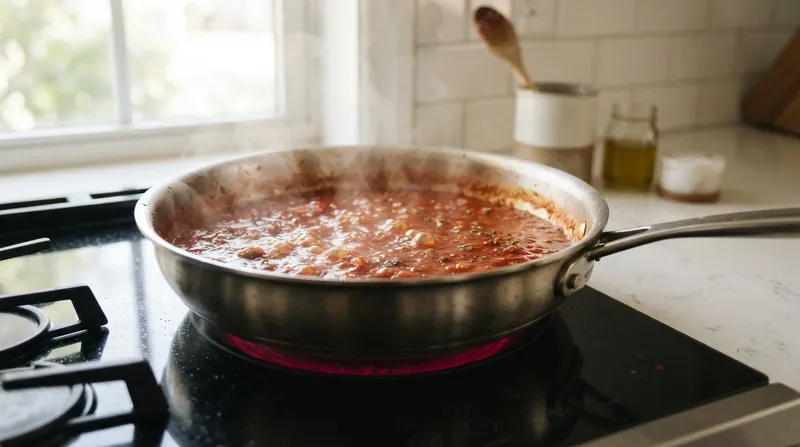
The Science of Emulsions: How to Stabilize Vinaigrettes, Mayonnaise, and Pan Sauces
6 sources
Food Safety
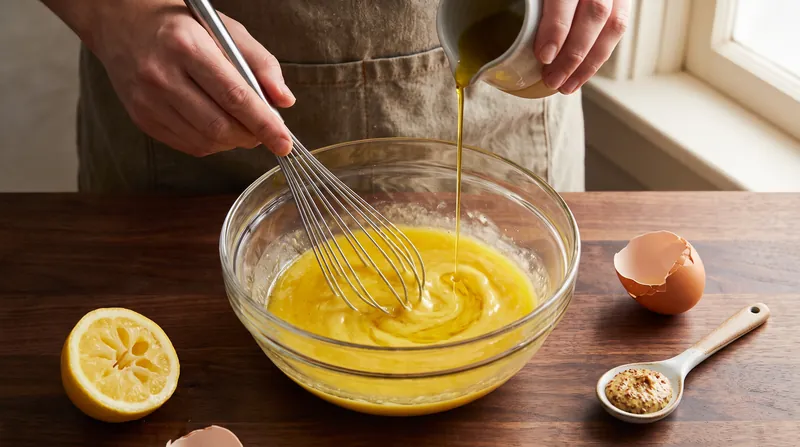
FDA Mandates National Phase-Out of 'The Big Six' Artificial Food Dyes by End of 2026
6 sources
Menu Innovation
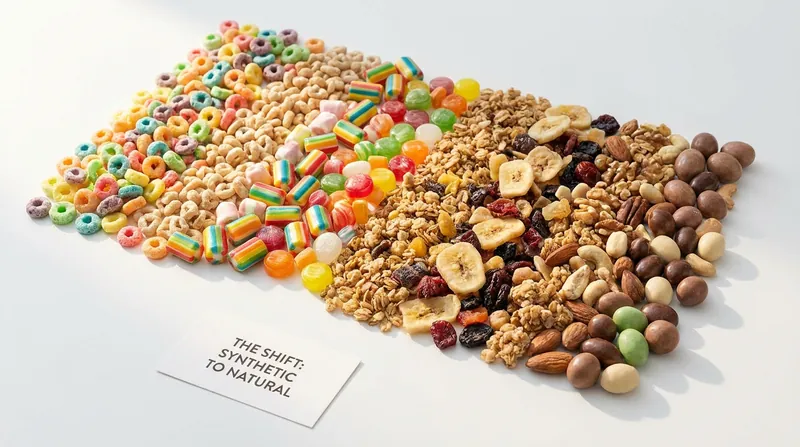
The GLP-1 Effect: How Weight-Loss Drugs Are Forcing Restaurants to Redesign Menus for 'Fewer Bites, Higher Expectations'
2 sources
Food Safety
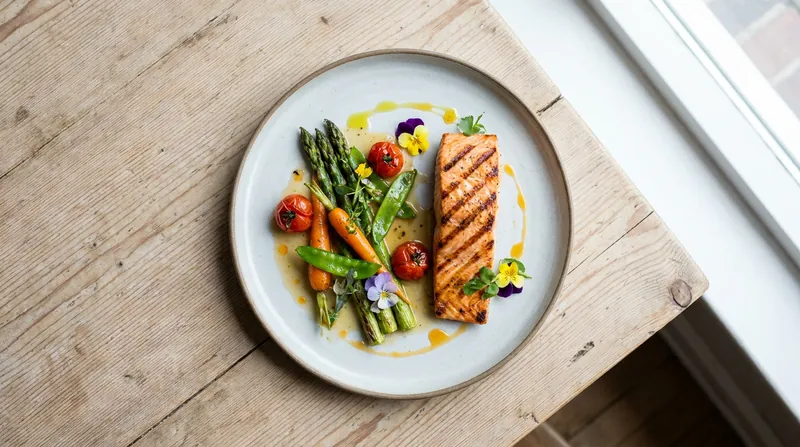
The Contaminant Crisis: How the FDA's 'Closer to Zero' Initiative is Engineering a Safer Food Supply
3 sources
Comments
Every angle. Every day.
Get Lifestyle stories with full source coverage and perspective breakdowns, free every day.