
The Science of Cold Plunges and Saunas: Which Accelerates Muscle Recovery?
As thermal recovery tools dominate the fitness industry, sports scientists are uncovering exactly when to use ice for pain relief and heat for muscle growth.
By Factlen Editorial Team
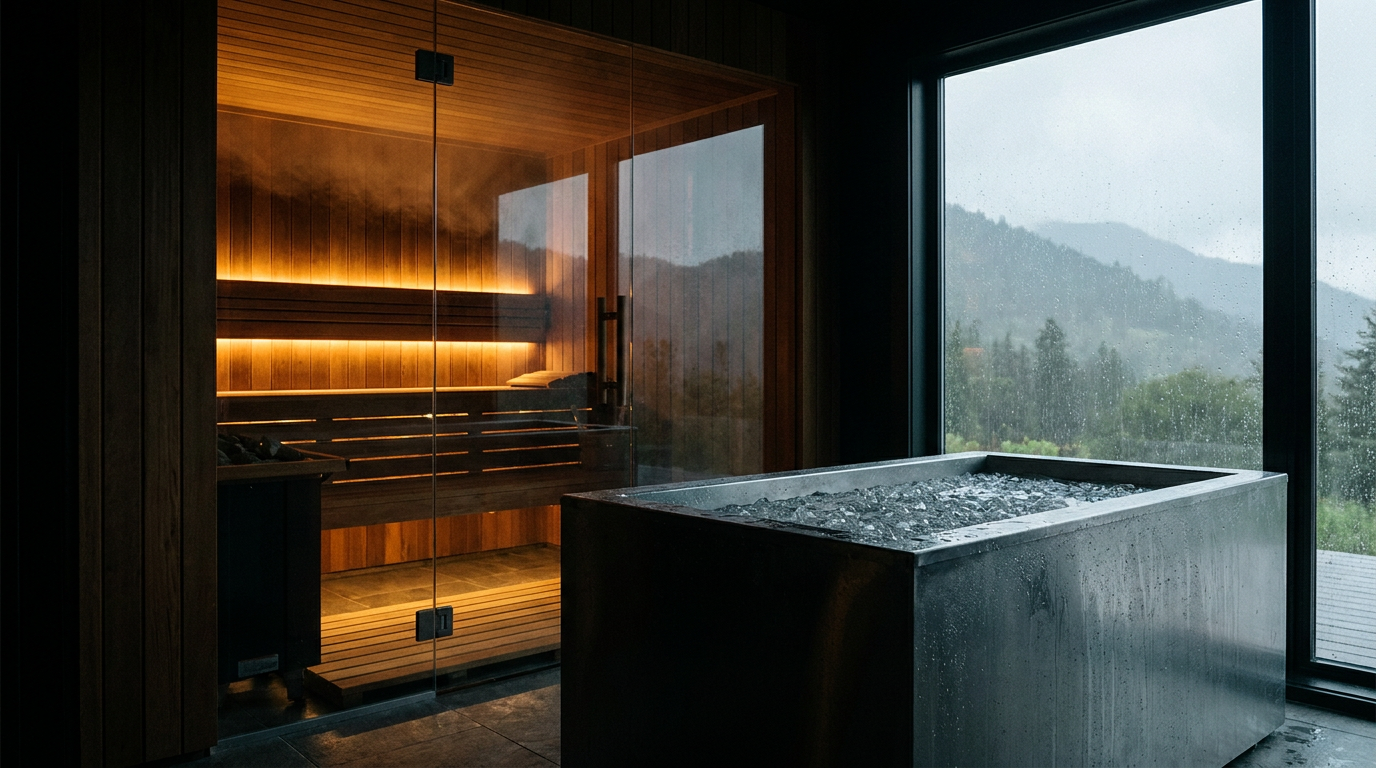
- Heat Therapy Proponents
- Focus on maximizing blood flow, triggering cellular repair via heat shock proteins, and protecting the inflammatory signals needed for muscle growth.
- Sports Science Consensus
- Argue for periodized recovery, matching the thermal stress to the specific training phase rather than relying on a single modality.
- Cryotherapy Advocates
- Prioritize immediate inflammation reduction, nervous system reset, and rapid turnaround times for endurance and in-season athletes.
What's not represented
- · Recreational athletes with limited access to commercial recovery tools
- · Cardiologists monitoring the risks of extreme thermal shock on compromised hearts
Why this matters
Understanding the physiological effects of temperature stress prevents you from accidentally sabotaging your workouts. Using the wrong modality at the wrong time can blunt muscle growth, while the right protocol can significantly accelerate your return to peak performance.
Key points
- Cold water immersion effectively reduces delayed onset muscle soreness by constricting blood vessels and numbing nerve endings.
- Routine cold exposure immediately after resistance training can blunt the inflammatory signals required for muscle hypertrophy.
- Heat therapy increases peripheral blood flow by up to 400 percent, accelerating the delivery of nutrients and the removal of metabolic waste.
- Contrast water therapy alternates hot and cold to create a 'vascular pump,' efficiently flushing biochemical debris from fatigued muscles.
- Experts recommend periodizing recovery: cold for immediate performance turnaround, and heat for long-term tissue adaptation.
Walk into any high-performance training facility today, and you are just as likely to hear the hum of a commercial chiller as the clanking of iron. The recovery room has become a non-negotiable wing of the modern gym, dominated by two opposing elements: the icy depths of the cold plunge and the sweltering heat of the sauna. Athletes and weekend warriors alike are dedicating hours to thermal stress, chasing the promise of accelerated healing and reduced soreness. But as the popularity of these modalities explodes, a fundamental debate has emerged in sports science. Does freezing your tissues shut down inflammation, or does baking them flush out toxins? The answer, according to a growing body of clinical evidence, depends entirely on what your body is trying to adapt to.[1]
To understand how temperature manipulates recovery, we first have to look at the vascular system's response to extreme cold. When you submerge yourself in water chilling at 10 to 15 degrees Celsius, your body initiates an immediate survival mechanism known as vasoconstriction. The blood vessels near the surface of your skin and within your muscle tissue rapidly clamp down, redirecting warm blood to your core organs. This aggressive narrowing of the vascular pathways acts like a physiological tourniquet, significantly reducing acute swelling and blunting the inflammatory response in micro-torn muscle fibers. Simultaneously, the cold activates TRPM8 receptors in the skin, which slow the firing frequency of nociceptive nerve endings, effectively numbing the sensation of pain.[2][4]
The clinical data strongly supports cold water immersion as a potent analgesic. A comprehensive meta-analysis evaluating dozens of randomized controlled trials found that athletes who utilized cold plunges experienced a significant reduction in delayed onset muscle soreness (DOMS) at the 24- and 48-hour marks compared to those who simply rested. Furthermore, biochemical markers of muscle damage, specifically circulating creatine kinase levels, were notably lower in the cold-exposed groups. For an athlete in the middle of a multi-day tournament or a runner trying to survive a grueling stage race, this rapid reduction in perceived fatigue and tissue swelling can be the difference between competing and withdrawing.[4][5]

However, the very mechanism that makes cold therapy so effective for immediate pain relief is exactly what makes it detrimental for long-term muscle growth. Inflammation is not inherently bad; it is the primary biological signal that tells the body to repair and reinforce damaged tissue. When a weightlifter jumps into an ice bath immediately after a heavy hypertrophy session, the severe vasoconstriction blunts the inflammatory cascade required for muscle protein synthesis. Studies have shown that routine cold exposure immediately following resistance training can actually inhibit muscle hypertrophy and reduce immediate explosive power, such as vertical jump height. The ice bath, it turns out, is a tool for preserving current performance, not for building future capacity.[1][4]
On the opposite end of the thermal spectrum lies heat therapy, which operates on the principle of vasodilation. Stepping into a sauna heated to 80 degrees Celsius triggers the blood vessels to expand massively. Research indicates that passive heat exposure can increase peripheral blood flow by up to 400 percent. Instead of trapping inflammation, heat therapy opens the floodgates, delivering a massive rush of oxygen-rich blood and essential nutrients directly to fatigued muscles. This enhanced circulation acts as a biological transit system, accelerating the removal of metabolic byproducts like lactic acid that accumulate during intense anaerobic exercise.[1][7]
On the opposite end of the thermal spectrum lies heat therapy, which operates on the principle of vasodilation.
Beyond simple blood flow, heat therapy exerts profound effects at the cellular level through the activation of heat shock proteins (HSPs). When the body's core temperature rises, cells release these specialized molecular chaperones to protect themselves from thermal stress. HSPs play a critical role in cellular repair, seeking out proteins that have been damaged or misfolded during strenuous exercise and helping them return to their proper structural state. This cellular housekeeping not only accelerates the repair of muscle tissue but also fortifies the cells against future stressors, contributing to long-term muscular resilience and adaptation.[7]

The cardiovascular benefits of routine sauna use also mimic the effects of moderate aerobic exercise. As the heart works harder to pump blood to the skin to cool the body, heart rates can elevate to between 100 and 150 beats per minute. Over time, this repeated cardiovascular demand lowers resting blood pressure, improves endothelial function, and enhances overall vascular elasticity. For athletes looking to maintain cardiovascular adaptations on rest days without subjecting their joints to the mechanical pounding of running, passive heat therapy offers a highly effective, low-impact alternative.[1]
Recognizing the distinct benefits of both extremes, sports scientists have increasingly turned to a hybrid approach: Contrast Water Therapy (CWT). By rapidly alternating between hot and cold environments, athletes attempt to harness the best of both modalities. A standard protocol might involve three minutes in a hot tub at 40 degrees Celsius, immediately followed by one minute in a 10-degree cold plunge, repeated for four to six cycles. This rapid shift in temperature creates a powerful physiological phenomenon known as the vascular pump.[1][3]
The mechanics of the vascular pump are elegantly simple but highly effective. The heat phase causes profound vasodilation, drawing blood into the extremities and expanding the vascular network. The sudden shock of the cold phase triggers immediate vasoconstriction, forcefully squeezing that blood back toward the core. By repeating this cycle, contrast therapy acts as a manual pump for the circulatory and lymphatic systems. Studies utilizing near-infrared spectroscopy have demonstrated that CWT significantly increases intramuscular oxygenated blood volume, flushing out metabolic waste products far more efficiently than passive rest or continuous cold immersion alone.[3][6]

The empirical evidence for contrast therapy is particularly strong in team sports and high-intensity interval training. Meta-analyses comparing recovery modalities have found that CWT is superior to passive recovery for reducing post-exercise blood lactate levels and alleviating subjective fatigue. While it may not completely eliminate the mechanical damage of a heavy workout, the vascular pumping effect excels at clearing the biochemical debris left behind by exhaustive efforts. Furthermore, athletes consistently report a profound sense of psychological rejuvenation following contrast sessions, driven by the massive release of endorphins triggered by the alternating thermal shock.[3][6]
Ultimately, the choice between cold, heat, or contrast therapy should not be viewed as a search for a single magic bullet, but rather as an exercise in periodization. Sports science consensus now advocates for matching the recovery modality to the specific training phase. During the competitive season, when immediate turnaround and pain management are paramount, cold water immersion is the optimal choice. It suppresses inflammation and allows the athlete to perform again within 24 hours.[1][5]

Conversely, during the off-season or dedicated hypertrophy blocks, when the goal is to build new muscle and adapt to stress, heat therapy is the superior tool. Saunas protect the inflammatory signaling required for growth while promoting deep tissue relaxation and cellular repair. For the everyday fitness enthusiast looking to balance recovery with general wellness, contrast therapy offers a practical middle ground—flushing the system, engaging the vascular pump, and leaving the nervous system in a state of balanced, parasympathetic calm.[1][7]
How we got here
Ancient Era
Roman bathhouses and Nordic saunas establish the foundational human practice of using extreme heat and cold for wellness.
1970s-1980s
Ice baths become a staple in professional sports locker rooms for acute injury management and post-game pain relief.
2010s
The popularization of contrast water therapy and accessible cryotherapy chambers brings elite recovery tools to the mainstream fitness market.
2020s
Sports science shifts toward periodized recovery, warning against the overuse of cold therapy during muscle-building phases.
Viewpoints in depth
Cryotherapy Advocates
Focus on the immediate analgesic effects of cold exposure for rapid athletic turnaround.
Proponents of cold water immersion emphasize its unmatched ability to act as a physiological reset button. By forcing aggressive vasoconstriction, cold plunges effectively trap inflammation and numb nociceptive nerve endings, providing immediate relief from the acute pain of a grueling workout. For endurance athletes, CrossFit competitors, or team sports players in the middle of a dense competitive season, this rapid reduction in perceived fatigue is invaluable. The argument here is pragmatic: if an athlete cannot walk without pain today, their theoretical muscle growth tomorrow is irrelevant. The cold plunge ensures they can get back on the field.
Heat Therapy Proponents
Emphasize the cellular repair and cardiovascular longevity benefits of passive heat stress.
Those who advocate for heat therapy point to the profound cellular and vascular adaptations that occur in the sauna. Rather than shutting down the body's natural inflammatory response, heat therapy supports it by massively increasing blood flow and delivering the oxygen and nutrients required for tissue repair. Furthermore, the activation of heat shock proteins provides a level of cellular housekeeping that cold therapy cannot match. Heat proponents argue that saunas not only protect the hypertrophic signals needed for muscle growth but also offer significant cardiovascular longevity benefits, making it the superior choice for long-term health and athletic development.
Sports Science Consensus
Advocate for a periodized approach that matches the thermal stress to the specific training goal.
The prevailing consensus among modern sports scientists is that neither heat nor cold is universally superior; rather, they are distinct tools that must be periodized. The scientific community warns against the chronic use of ice baths during off-season hypertrophy blocks, as the blunting of inflammation directly sabotages muscle protein synthesis. Conversely, relying solely on heat during a grueling multi-day tournament may not clear acute swelling fast enough. The consensus approach heavily favors contrast water therapy as a daily middle ground to flush metabolic waste, while reserving pure cold for in-season survival and pure heat for off-season growth.
What we don't know
- The exact cellular threshold at which cold water immersion begins to inhibit muscle protein synthesis.
- Whether the cardiovascular benefits of passive heat therapy translate to long-term mortality reduction in diverse, non-Nordic populations.
- The optimal personalized ratio of hot-to-cold exposure in contrast therapy based on individual body composition and gender.
Key terms
- Vasodilation
- The widening of blood vessels, which increases blood flow and nutrient delivery to tissues.
- Vasoconstriction
- The narrowing of blood vessels, which reduces blood flow and helps control acute swelling and inflammation.
- Delayed Onset Muscle Soreness (DOMS)
- The muscle pain and stiffness that typically peaks 24 to 72 hours after intense or unfamiliar exercise.
- Heat Shock Proteins (HSPs)
- Protective proteins produced by cells in response to heat stress that help repair damaged or misfolded proteins.
- Creatine Kinase (CK)
- An enzyme found in muscle tissue that, when elevated in the blood, serves as a biomarker for exercise-induced muscle damage.
Frequently asked
Does taking an ice bath kill my muscle gains?
Yes, if done immediately after hypertrophy training. Cold water immersion blunts the acute inflammatory signaling required for muscle protein synthesis.
How long should I stay in a cold plunge?
Clinical research suggests 10 to 15 minutes at 10 to 15 degrees Celsius is optimal for reducing muscle soreness without excessive risk.
What is the ideal ratio for contrast therapy?
A common evidence-based protocol involves alternating 1 minute of cold immersion with 3 to 4 minutes of heat, repeated for 4 to 6 cycles.
Can a sauna replace cardiovascular exercise?
While saunas elevate heart rate and improve vascular health similarly to moderate cardio, they do not provide the mechanical loading or muscular endurance benefits of actual exercise.
Sources
Source coverage
7 outlets
3 viewpoints surfaced





[1]Factlen Editorial TeamSports Science Consensus
Synthesis by Factlen editorial team
Read on Factlen Editorial Team →[2]Frontiers in PhysiologySports Science Consensus
Network meta-analysis on cold water immersion protocols for acute exercise-induced muscle damage
Read on Frontiers in Physiology →[3]MDPI SportsSports Science Consensus
Effects of contrast water therapy on physiological and perceptual recovery
Read on MDPI Sports →[4]National Institutes of HealthCryotherapy Advocates
Efficacy of Cold-Water Immersion for post-exercise muscle damage: A systematic review
Read on National Institutes of Health →[5]British Journal of Sports MedicineCryotherapy Advocates
Cold water immersion and recovery from strenuous exercise: a meta-analysis
Read on British Journal of Sports Medicine →[6]Physical Therapy in SportSports Science Consensus
Contrast therapy and exercise induced muscle damage: A systematic review and meta-analysis
Read on Physical Therapy in Sport →[7]Journal of Applied PhysiologyHeat Therapy Proponents
Heat stress, heat shock proteins, and muscle recovery
Read on Journal of Applied Physiology →

More in fitness
See all 36 stories →Fitness Science
The Science of Rucking: Why Weighted Walking is 2026's Defining Fitness Trend
8 sources

Diet Science
Intermittent Fasting vs. Daily Calorie Restriction: Which Actually Works Better?
6 sources
Fitness Science
The Science of Pilates: How Low-Impact Resistance Reshapes the Body and Brain
8 sources
Strength Tech
The Science of Digital Resistance: How Smart Home Gyms Compare to Free Weights
6 sources
Every angle. Every day.
Get fitness stories with full source coverage and perspective breakdowns delivered to your inbox.