
The Retail Takeover of Venture Capital: How Everyday Investors Are Finally Accessing Mega-Unicorns
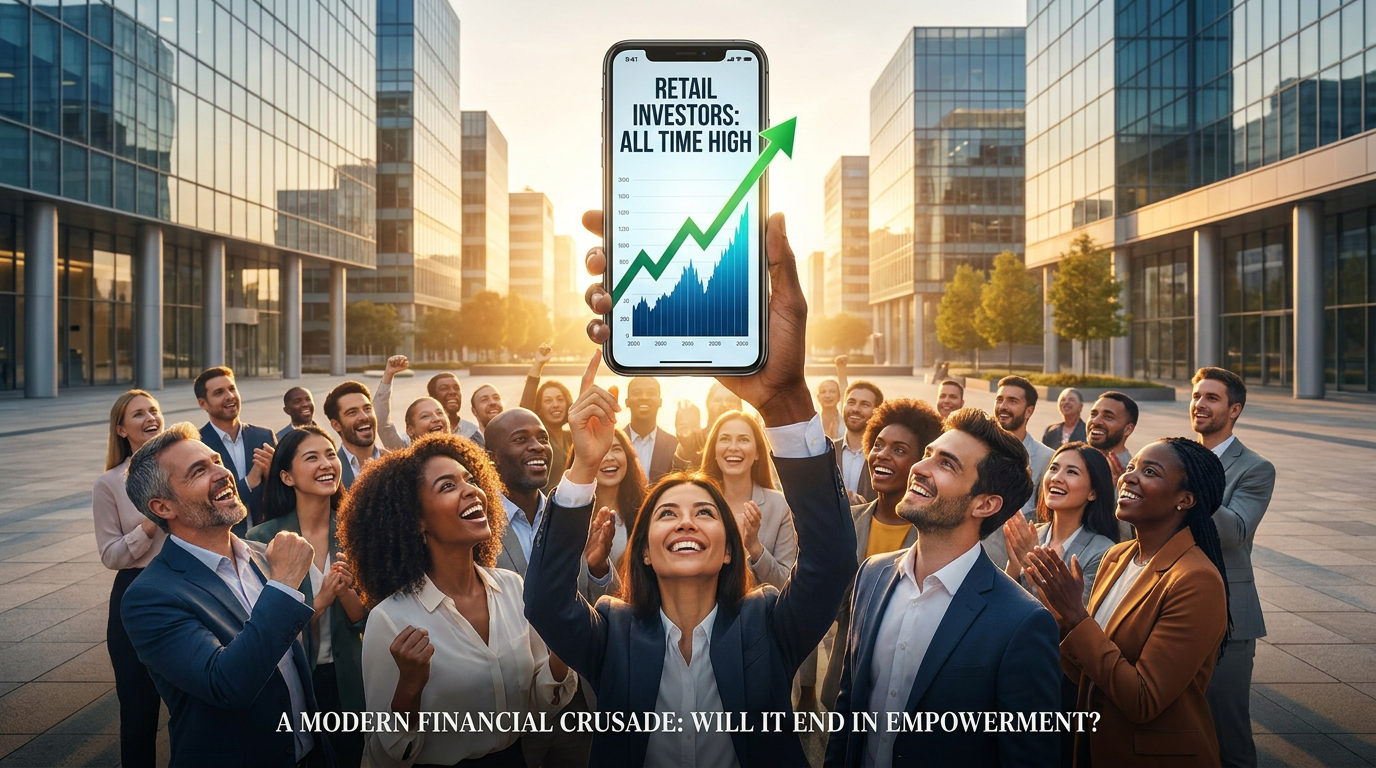
The historic $75 billion SpaceX IPO reserved an unprecedented 30% of its shares for retail investors, signaling a massive shift in how everyday people access venture-backed giants. As regulatory changes and new fund structures open the doors, the once-exclusive world of private markets is rapidly democratizing.
By Factlen Editorial Team
- Retail Access Advocates
- Argues that everyday investors deserve equal access to the high-growth phase of technology companies.
- Venture Capital Funds
- Views retail capital as a vital new liquidity pool to fund massive infrastructure and manage exit backlogs.
- Regulatory Watchdogs
- Emphasizes that private markets lack transparency, exposing retail investors to severe illiquidity and leverage risks.
What's not represented
- · Institutional Limited Partners
- · Early-stage Startup Founders
Why this matters
For decades, the explosive growth of early-stage tech companies was locked behind 'accredited investor' rules, leaving everyday people to buy in only after the biggest gains were realized. The sudden opening of venture capital to retail investors means your standard retirement portfolio can now capture the ground-floor growth of the world's most valuable private companies—if you understand the risks.
Key points
- SpaceX's record-breaking $75 billion IPO reserved 30% of shares for retail investors.
- Brokerages lowered minimum account requirements to $2,000, allowing unprecedented Main Street access.
- The SEC has reversed rules to allow closed-end funds to hold more private assets.
- Evergreen and interval funds are letting retail investors buy into venture capital with minimums as low as $10,000.
- Venture capital firms are embracing retail money to generate liquidity amid delayed institutional exits.
- Regulators warn of severe illiquidity risks and are pushing for strict portfolio allocation limits.
For decades, the most explosive wealth creation in the technology sector was hidden behind a velvet rope. By the time a high-growth startup went public, the lion's share of its appreciation had already been captured by venture capitalists, institutional funds, and high-net-worth individuals classified as "accredited investors." Everyday retail investors were left to buy the mature, slower-growing public stock. But a structural shift in the financial markets is rapidly dismantling that barrier, opening the lucrative—and risky—world of private markets to the general public. Driven by regulatory reforms, innovative fund structures, and the sheer capital requirements of frontier technology, the democratization of venture capital has arrived.[6]
The catalyst for this new era arrived on June 12, 2026, when SpaceX shattered records with the largest initial public offering in stock market history. While the sheer scale of the offering captured global headlines, the underlying mechanics of the IPO signaled a profound departure from Wall Street tradition. Rather than allocating the vast majority of shares to institutional giants, the aerospace and artificial intelligence behemoth deliberately engineered its public debut to prioritize everyday investors, effectively bridging the gap between a closely guarded mega-unicorn and the retail market.[3]
SpaceX's public debut was staggering in its proportions. The company offered shares at $135, raising an unprecedented $75 billion and achieving a valuation of $1.77 trillion before trading even began. When the opening bell rang, the stock surged, pushing the company's market capitalization past the $2 trillion mark and briefly making founder Elon Musk the world's first trillionaire. But beneath the eye-watering valuation was a structural decision that sent shockwaves through the venture capital ecosystem: SpaceX reserved up to 30% of its IPO allocation specifically for retail investors.[2][3][4]
In a typical IPO, retail investors are lucky to see 5% to 10% of the total offering, forcing them to buy shares on the open market after institutional investors have already driven up the price. To facilitate its massive retail allocation, SpaceX partnered with brokerages like Fidelity, which lowered the barrier to entry dramatically. Any customer with a retail brokerage account balance of just $2,000 was eligible to participate in the offering. This unprecedented access allowed everyday people to buy into the company at the ground floor of its public life.[5]

The retail response was overwhelming. In the first three days of trading, retail investors net bought nearly $370 million worth of SpaceX stock, outpacing their combined purchases of the legacy "Magnificent Seven" tech giants. This aggressive accumulation demonstrated a massive, pent-up demand among everyday investors for frontier technology companies that had previously been locked inside private venture capital portfolios. The success of the retail tranche proved that Main Street is more than willing to absorb the massive capital supply generated by modern mega-unicorns.[1]
To manage this transition from a private venture-backed startup to a publicly traded behemoth with a massive retail base, SpaceX bolstered its corporate governance. On June 16, the company appointed Roelof Botha to its board of directors. Botha, a prominent venture capitalist, former leader at Sequoia Capital, and a core member of the "PayPal Mafia," brings decades of experience navigating the intersection of private tech funding and public market scrutiny. His appointment serves as a crucial bridge, bringing traditional venture capital oversight to a company now accountable to millions of everyday shareholders.[1][4]
To manage this transition from a private venture-backed startup to a publicly traded behemoth with a massive retail base, SpaceX bolstered its corporate governance.
But the SpaceX IPO is merely the most visible symptom of a much broader systemic change. Beyond the public markets, the U.S. Securities and Exchange Commission (SEC) and Congress have been quietly laying the groundwork to allow retail investors direct access to private venture capital and private equity funds. Recent legislative efforts, such as the INVEST Act, aim to expand capital formation by broadening the pathways for retail investors to access private funds through registered vehicles, preserving essential protections while unlocking private market returns.[6]
One of the most significant regulatory shifts was the SEC's reversal of prior guidance that limited closed-end funds from holding more than 15% of their assets in private funds. This regulatory easing has triggered a surge in applications for "interval funds" and "tender offer funds." These specialized mutual funds are designed to hold illiquid private assets while offering periodic redemption windows—usually quarterly—allowing retail investors to buy into venture capital strategies without needing to meet the strict wealth requirements of an accredited investor.[6]
Asset managers are aggressively capitalizing on these new rules by launching "evergreen" or semi-liquid funds. Firms are rolling out private market solutions specifically tailored for individual investors, delivered through financial advisors and private banks. These open-ended investment vehicles allow individuals to regularly subscribe to or redeem their investments, providing access to typically illiquid private markets with minimum investments dropping as low as $10,000. For the first time, a standard retirement portfolio can include a slice of early-stage venture growth.[7]

The push to democratize private markets is not purely altruistic; venture capital firms desperately need the liquidity that retail investors provide. The private market is currently grappling with a severe backlog of aging investments. According to recent industry research, 62% of senior venture capital and mid-market private equity professionals are experiencing delays to their fund exit timelines, with many stretching deep into 2026 and beyond. By opening their funds to retail money, private asset managers can offload existing holdings and generate the liquidity needed to return capital to their institutional limited partners.[7]
This convergence of retail enthusiasm and venture capital's need for liquidity carries substantial risks. Private market investments are inherently opaque, difficult to value, and highly illiquid. Financial watchdogs warn that the semi-liquid nature of evergreen funds could be severely tested during a market downturn. If a wave of retail investors simultaneously attempts to redeem their shares, these funds could be forced to halt withdrawals, trapping everyday investors in highly leveraged, illiquid assets just when they need their capital the most.[7]
To mitigate these dangers, the SEC is emphasizing that broader access must be paired with robust investor protections. Regulators are pushing for registered funds pursuing private market strategies to face heightened expectations around disclosures, including detailed information on fee structures, valuation methodologies, and conflict-of-interest policies. Furthermore, consumer advocates are lobbying for strict portfolio allocation limits, ensuring that retail investors—especially those using 401(k)s and IRAs—cannot over-concentrate their retirement savings in highly speculative venture assets.[6][8]

Despite the risks, the momentum toward retail integration is accelerating, driven by the next wave of artificial intelligence giants. Wall Street is already preparing for the "MANGOS" era—a newly coined acronym replacing the Magnificent Seven, standing for Meta, Anthropic, Nvidia, Google, OpenAI, and SpaceX. With OpenAI and Anthropic having filed confidentially to go public later this year at valuations potentially north of $1 trillion, retail investors are gearing up for unprecedented access to the foundational companies of the AI revolution.[2]
The financial landscape of 2026 marks a permanent departure from the exclusionary practices of the past. Whether through historic, retail-friendly IPOs like SpaceX or the proliferation of semi-liquid evergreen funds, everyday investors finally have a seat at the venture capital table. While the risks of illiquidity and complex fee structures remain, the democratization of private markets ensures that the next generation of technological wealth creation will be shared far more broadly than ever before.[6][8]
How we got here
April 1, 2026
SpaceX confidentially submits its draft registration statement to the SEC.
May 20, 2026
SpaceX publicly files its S-1 prospectus, revealing its internal finances to the public.
June 12, 2026
SpaceX begins trading on the Nasdaq, raising a record $75 billion with a massive retail allocation.
June 16, 2026
Former Sequoia Capital leader Roelof Botha is appointed to the SpaceX board of directors.
Viewpoints in depth
Retail Access Advocates
Argues that everyday investors deserve equal access to the high-growth phase of technology companies.
This camp, which includes retail brokerages and democratization platforms, argues that the traditional "accredited investor" rules are inherently classist, locking the middle class out of the most lucrative wealth-creation engines of the modern economy. By the time companies like Uber or Airbnb went public in the past, the massive 100x returns had already been captured by private funds. They view structures like interval funds and massive retail IPO allocations as a necessary leveling of the playing field, allowing Main Street to participate in frontier tech growth.
Venture Capital Funds
Views retail capital as a vital new liquidity pool to fund massive infrastructure and manage exit backlogs.
For private asset managers, the influx of retail capital is a strategic necessity. With the IPO window historically tight and mergers facing intense antitrust scrutiny, VC funds are sitting on billions of dollars in aging, illiquid assets. Opening evergreen funds to retail investors provides a fresh stream of capital that can be used to cash out early institutional backers. Furthermore, the sheer scale of capital required to build frontier AI and space technology means that private markets can no longer rely solely on institutional limited partners; they need the collective buying power of the retail public.
Regulatory Watchdogs
Emphasizes that private markets lack transparency, exposing retail investors to severe illiquidity and leverage risks.
Financial regulators and consumer protection advocates warn that the democratization of venture capital is fraught with hidden dangers. Unlike public stocks, private companies are not required to publish audited quarterly financials, creating a massive information asymmetry. Watchdogs are particularly concerned about the "semi-liquid" nature of evergreen funds, warning that during a market panic, these funds could freeze redemptions, trapping retail investors in highly leveraged assets. They are actively lobbying for strict portfolio allocation limits to prevent everyday people from gambling their retirement savings on speculative startups.
What we don't know
- How semi-liquid evergreen funds will perform if a sudden market downturn triggers a mass wave of retail redemption requests.
- Whether the SEC will formally cap the percentage of a retail investor's retirement portfolio that can be allocated to private markets.
- If upcoming AI mega-unicorns like OpenAI and Anthropic will match SpaceX's 30% retail allocation when they go public.
Key terms
- Accredited Investor
- A regulatory classification for high-net-worth individuals who are legally permitted to invest in unregistered securities like private venture capital.
- Interval Fund
- A type of mutual fund that periodically offers to buy back a stated portion of its shares from investors, providing limited liquidity for private market assets.
- Evergreen Fund
- An open-ended investment vehicle that continuously accepts new capital and invests in private markets, offering periodic redemption windows.
- Mega-Unicorn
- A privately held startup company valued at tens or hundreds of billions of dollars, such as SpaceX or OpenAI.
- MANGOS
- A newly coined 2026 stock acronym (Meta, Anthropic, Nvidia, Google, OpenAI, SpaceX) representing the frontier AI and space technology leaders.
Frequently asked
What is an accredited investor?
An individual with a net worth over $1 million or an annual income over $200,000. Historically, they were the only people legally permitted to invest in unregistered securities like private venture capital.
How did retail investors access the SpaceX IPO?
SpaceX reserved an unprecedented 30% of its shares for retail buyers, and brokerages like Fidelity lowered their minimum account requirement to just $2,000 to allow everyday participation.
What is an evergreen fund?
A semi-liquid investment vehicle that allows retail investors to buy into private markets with lower minimums and periodic redemption windows, unlike traditional VC funds that lock up capital for a decade.
What are the risks of retail venture capital?
Private companies are highly illiquid, difficult to value, and often use leverage. During a market downturn, funds may freeze redemptions, trapping investors who need access to their cash.
Sources
Source coverage
8 outlets
3 viewpoints surfaced






[1]MarketWatchRetail Access Advocates
Retail investors have been buying more SpaceX shares than all of the ‘Magnificent Seven’ combined
Read on MarketWatch →[2]ForbesVenture Capital Funds
SpaceX Vaults Past Mag 7 Members As Wall Street Scrambles For New 'MANGOS' Acronym
Read on Forbes →[3]The GuardianRegulatory Watchdogs
SpaceX makes history with $2tn valuation in largest IPO ever
Read on The Guardian →[4]Zacks Investment ResearchVenture Capital Funds
SpaceX IPO broke records, raising $75 billion and creating one of the world's most valuable companies
Read on Zacks Investment Research →[5]FidelityRetail Access Advocates
SpaceX IPO participation guide
Read on Fidelity →[6]CartaVenture Capital Funds
Capital formation: The INVEST Act and SEC agenda
Read on Carta →[7]OcorianRegulatory Watchdogs
Access to private markets for retail investors comes with liquidity and leverage risks
Read on Ocorian →[8]SEC.govRegulatory Watchdogs
Retail SPV-LP Integration into VC and PE Funds
Read on SEC.gov →

Every angle. Every day.
Get finance stories with full source coverage and perspective breakdowns delivered to your inbox.