
Global Remittance Fees Plummet as Stablecoins Reach 1.4 Billion Accounts
Blockchain-based stablecoins are rapidly replacing traditional wire transfers for cross-border payments, cutting average remittance fees from over 6% to under 1% and saving families billions globally.
By Factlen Editorial Team
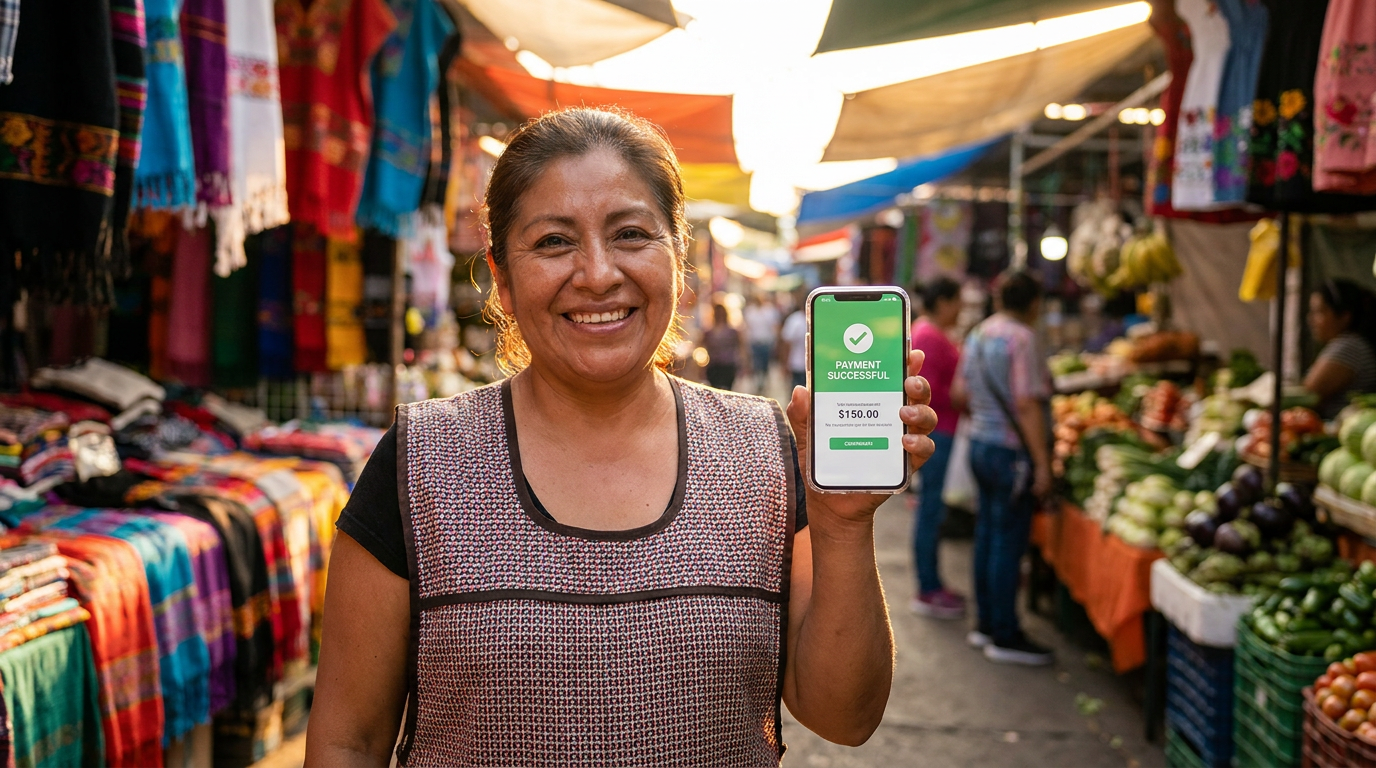
- Retail Consumers & SMEs
- Focuses on financial inclusion, drastic fee reductions, and instant settlement for cross-border payments.
- Traditional Financial Institutions
- Focuses on absorbing blockchain technology to improve backend efficiency, maintain trust, and offer 24/7 liquidity.
- Global Regulators & Central Banks
- Focuses on enforcing 1:1 reserve requirements, implementing AML controls, and mitigating risks of capital flight in emerging markets.
What's not represented
- · Traditional money transfer operators facing revenue collapse
- · Local banks in emerging markets experiencing deposit flight
Why this matters
For decades, migrant workers and small businesses have lost billions of dollars annually to middlemen and wire fees when sending money internationally. The mainstream adoption of stablecoins is finally democratizing global finance, allowing anyone with a smartphone to move dollars across borders instantly and for pennies.
Key points
- Stablecoin adoption has surged in 2026, with over 1.4 billion accounts globally ready to transact in digital dollars.
- Average cross-border remittance fees have dropped from roughly 6.5% on traditional networks to under 1% using blockchain rails.
- Latin America is leading the retail transition, with stablecoins projected to capture up to 22% of the region's remittance market this year.
- Major financial incumbents, including Visa and Stripe, are actively integrating stablecoin settlement to enable 24/7 global liquidity.
For decades, sending money across international borders has been a notoriously slow, expensive, and opaque process. Migrant workers sending funds home to their families and small businesses paying overseas suppliers have routinely surrendered significant percentages of their capital to intermediary banks and wire services. But in 2026, a quiet revolution in digital finance has reached critical mass, fundamentally altering the economics of global money movement. The era of the expensive, multi-day international wire transfer is rapidly drawing to a close, replaced by a system that moves value as easily as sending an email.
The catalyst for this transformation is the widespread adoption of stablecoins—cryptocurrencies pegged directly to fiat currencies, overwhelmingly the U.S. dollar. Unlike the volatile price swings associated with assets like Bitcoin, stablecoins are designed to hold a steady value, making them highly practical for everyday commerce. According to a comprehensive 2026 market report by financial infrastructure firm ZeroHash, these digital dollars have officially crossed a critical threshold, moving from experimental crypto-native trading tools into the core infrastructure of global finance.[1]
The sheer scale of this shift is staggering, reflecting a massive consumer appetite for better financial tools. Industry data now estimates there are more than 1.4 billion "stablecoin-ready accounts" globally. This figure represents consumers on mainstream fintech and brokerage platforms where stablecoin functionality is either currently live or actively being enabled in the background. This underlying infrastructure is allowing active users across 106 countries to bypass the traditional correspondent banking system entirely. Instead of waiting for multiple banks in different time zones to process a single payment, these users are settling high-value transactions on public blockchains in a matter of seconds, fundamentally changing expectations for how money should move.[1]
The primary driver of this mass migration is undeniable cost efficiency. A recent World Bank survey highlighted that traditional international remittances cost an average of 6.49% of the principal amount sent, a toll that disproportionately impacts lower-income families. In stark contrast, stablecoin transfers executed on efficient blockchain networks typically incur flat network fees that amount to less than 1%. For a standard $500 remittance, users are saving up to 76% in fees, keeping billions of dollars in the pockets of the families and communities who need it most.[3][4]

Latin America has emerged as a primary proving ground for this technology. Driven by a necessity to circumvent high intermediary fees and protect wealth against local currency volatility, consumers in the region are rapidly abandoning traditional money transfer operators. Financial analytics firm PayRetailers projects that by the end of 2026, stablecoins will account for up to 22% of the entire Latin American remittance market. This shift represents roughly $31 billion in transfer volume moving away from legacy rails and onto blockchain networks, signaling a permanent change in consumer behavior.[3]
Latin America has emerged as a primary proving ground for this technology.
The benefits of this technological leap extend far beyond retail remittances. Small and medium-sized enterprises, which have historically been excluded from the favorable institutional foreign exchange rates enjoyed by massive corporations, are leveraging stablecoins to pay international suppliers instantly. Major payment processors are witnessing this shift firsthand; Stripe recently reported that artificial intelligence businesses and other digital-first companies utilizing stablecoin settlements are cutting their transaction costs in half compared to legacy payment methods, prompting a 20% shift in payment volume toward digital dollars for some merchants.[2]
Even the titans of traditional finance are capitulating to the efficiency of blockchain rails. Rather than fighting the trend, incumbent networks are actively absorbing it to maintain their market dominance. Visa, which has been piloting stablecoin settlements since 2023, reported an annualized stablecoin settlement run rate of $7 billion earlier this year. By integrating on-chain settlement, these legacy networks can operate 24/7, freeing up massive amounts of liquidity that would otherwise be trapped in pre-funded accounts over weekends and bank holidays. The disruption narrative has effectively given way to a hybrid model, where traditional institutions use crypto infrastructure to upgrade their own backend operations.[4][5][7]

This institutional embrace has been unlocked by a wave of regulatory clarity that swept across major jurisdictions over the past two years. In Europe, the Markets in Crypto-Assets (MiCA) framework established stringent, region-wide standards for stablecoin operations, granting licenses to compliant issuers. Meanwhile, in the United States, legislative efforts like the Clarity Act and the GENIUS Act have pushed to mandate that stablecoin issuers hold 1:1 liquid reserves—such as cash and short-term Treasury bills—and submit to rigorous anti-money-laundering controls.[1][6]
By moving the ecosystem into familiar regulatory territory, these frameworks have given banks and payment service providers the green light to integrate digital dollars without running afoul of compliance officers. The focus of the industry has decisively shifted from generating demand to executing securely and reliably at a global scale. With the rules of the road finally established, financial institutions no longer view stablecoins as a regulatory hazard, but rather as a necessary technological upgrade to remain competitive in a digitized global economy.[7]
However, the transition is not without its friction points. While moving digital dollars across a blockchain is nearly instantaneous and virtually free, the "on-ramps" and "off-ramps"—the processes of converting local paper currency into stablecoins and vice versa—remain a persistent bottleneck. In many emerging markets, users still face notable fees when cashing out their digital tokens into physical fiat at local exchanges or agents, which can slightly erode the overall cost savings achieved during the cross-border transfer itself.[5]

Furthermore, global financial watchdogs remain cautious about the macroeconomic implications of borderless digital dollars. Organizations like the Financial Stability Board have warned that large-scale adoption of USD-backed stablecoins could exacerbate capital flight in developing nations. If citizens overwhelmingly substitute their local currency for digital dollars to protect their purchasing power, central banks risk losing control over their domestic monetary policy and money supply. Additionally, the concentration of billions of dollars in reserve assets among a few major stablecoin issuers creates new systemic dependencies that regulators are only just beginning to monitor, ensuring that the financial stability of the traditional banking sector isn't inadvertently compromised.[2][5]
Despite these macroeconomic hurdles, the trajectory of global payments has been permanently altered for the better. The original promise of cryptocurrency—a decentralized, borderless, and frictionless medium of exchange—is finally being realized, albeit through regulated, dollar-pegged assets rather than speculative tokens. As this invisible infrastructure becomes further embedded into the apps and services people use every day, the financial world is becoming demonstrably flatter. By stripping away the rent-seeking intermediaries that have long dominated international finance, stablecoins are delivering a rare, clear-cut victory for global financial inclusion, leaving consumers and small businesses with more of their hard-earned money.[7]
How we got here
2022
The collapse of algorithmic stablecoins like TerraUSD forces the market to consolidate around fully fiat-backed digital dollars.
2023–2024
Payment giants like Visa and Stripe begin piloting stablecoin settlement on public blockchains like Solana and Ethereum.
2025
The European Union implements the MiCA framework, providing the first major region-wide regulatory clarity for stablecoin issuers.
Mid-2026
Stablecoin-ready accounts surpass 1.4 billion globally as digital dollars capture a double-digit share of the Latin American remittance market.
Viewpoints in depth
Retail Consumers & SMEs
For everyday users and small businesses, stablecoins represent a long-overdue escape from the extractive fees of legacy banking.
Advocates for financial inclusion point out that the traditional banking system has long penalized those who can least afford it. By utilizing stablecoins, migrant workers are saving up to 76% on remittance fees, keeping billions of dollars within their communities rather than surrendering it to middlemen. For small and medium-sized enterprises in emerging markets, stablecoins offer a way to bypass local currency volatility and pay international suppliers instantly, leveling the playing field against massive corporations that have historically enjoyed preferential foreign exchange rates.
Traditional Financial Institutions
Incumbent banks and payment networks view stablecoins not as a threat to be fought, but as a technological upgrade to be absorbed.
Rather than viewing blockchain technology as an existential threat, legacy financial institutions are increasingly treating it as a superior backend infrastructure. Payment giants like Visa and Stripe are integrating stablecoin settlement to offer their clients 24/7 liquidity, bypassing the limitations of traditional banking hours and weekend closures. By adopting digital dollars, these incumbents aim to maintain their regulatory moats and consumer trust while drastically reducing their own operational costs and settlement times.
Global Regulators
Financial watchdogs are balancing the clear consumer benefits of cheap remittances with the macroeconomic risks of borderless digital dollars.
Regulators have largely accepted that stablecoins are here to stay, shifting their focus from prohibition to risk mitigation. Frameworks like Europe's MiCA and the U.S. GENIUS Act are designed to ensure that stablecoin issuers hold 1:1 liquid reserves, preventing the kind of algorithmic collapses seen in previous crypto cycles. However, central banks in developing nations remain deeply concerned that the frictionless nature of digital dollars could accelerate capital flight, undermining their sovereign currencies and complicating domestic monetary policy.
What we don't know
- How traditional money transfer operators will adjust their business models as blockchain alternatives erode their primary revenue streams.
- Whether emerging market central banks will attempt to restrict stablecoin usage to protect their sovereign currencies from capital flight.
- How quickly the friction and fees associated with local fiat 'off-ramps' can be eliminated in developing nations.
Key terms
- Stablecoin
- A type of cryptocurrency whose value is pegged to another asset, most commonly the U.S. dollar, to maintain a stable price.
- Remittance
- Money sent by a person working in a foreign country back to their home country, often to support family members.
- On-ramp / Off-ramp
- The services or exchanges that allow users to convert traditional fiat currency (like paper money) into cryptocurrency, and vice versa.
- SWIFT
- The traditional global messaging network used by banks to securely transmit instructions for international money transfers, often taking several days to settle.
- MiCA
- The Markets in Crypto-Assets regulation, a comprehensive legal framework in the European Union designed to govern digital assets and stablecoin issuers.
Frequently asked
Are stablecoins the same as Bitcoin?
No. While both use blockchain technology, stablecoins are pegged to stable assets like the U.S. dollar to prevent the wild price swings associated with Bitcoin.
How do stablecoins make sending money cheaper?
They bypass the traditional network of intermediary banks. Transactions settle directly between digital wallets on a public blockchain, reducing overhead and middleman fees.
Is it safe to hold money in stablecoins?
New regulations in the U.S. and Europe require major stablecoin issuers to hold 1:1 liquid reserves (like cash and short-term Treasury bills) to back every digital token, significantly reducing the risk of a collapse.
Do I need to know how to use crypto to send a stablecoin?
Increasingly, no. Many traditional fintech apps and payment providers are integrating stablecoins on their backend, allowing users to send money normally while the app handles the blockchain technology invisibly.
Sources
Source coverage
7 outlets
3 viewpoints surfaced







[1]ZeroHashTraditional Financial Institutions
2026 Stablecoin Momentum Report
Read on ZeroHash →[2]StripeTraditional Financial Institutions
Stablecoin trends businesses need to understand in 2026
Read on Stripe →[3]PayRetailersRetail Consumers & SMEs
How 2026 payment trends are reshaping LatAm commerce
Read on PayRetailers →[4]CircleRetail Consumers & SMEs
Stablecoin Payments: The Next Phase of Digital Commerce
Read on Circle →[5]OpenfxTraditional Financial Institutions
Stablecoins & Cross-Border Payments Report 2026
Read on Openfx →[6]Schwab NetworkGlobal Regulators & Central Banks
Bitcoin Maintains $60,000 Support & Path Ahead for Clarity Act
Read on Schwab Network →[7]Factlen Editorial TeamGlobal Regulators & Central Banks
Synthesis by Factlen editorial team
Read on Factlen Editorial Team →

Every angle. Every day.
Get finance stories with full source coverage and perspective breakdowns delivered to your inbox.