
The Gut-Brain Axis: How Trillions of Microbes Are Shaping Your Mood
Emerging research in "nutritional psychiatry" reveals that the gut microbiome produces key neurotransmitters like serotonin and dopamine, offering new dietary pathways to treat anxiety and depression.
By Factlen Editorial Team
- Nutritional Psychiatrists
- Advocate for dietary interventions and psychobiotics as foundational, empowering treatments for mental health.
- Microbiome Researchers
- Focus on the biological mechanisms of the gut-brain axis and the need for precision, strain-specific medicine.
- Clinical Skeptics
- Emphasize the modest effect sizes of probiotics and caution against replacing standard psychiatric medications.
What's not represented
- · Patients with severe treatment-resistant depression
- · Commercial probiotic manufacturers
Why this matters
Understanding that mental health is deeply connected to digestive health gives you actionable, everyday tools—like eating more fiber and fermented foods—to actively improve your mood and stress resilience without relying solely on medication.
Key points
- The gut microbiome acts as a secondary nervous system, producing key neurotransmitters like serotonin, dopamine, and GABA.
- The vagus nerve serves as a bidirectional superhighway, transmitting chemical signals from the digestive tract directly to the brain.
- Psychobiotics—targeted probiotics and prebiotics—have been shown in clinical trials to yield modest reductions in anxiety and depression.
- Ultra-processed foods degrade the gut lining and increase inflammation, which can trigger psychological stress responses.
- Traditional high-fiber diets and fermented foods naturally support the bacteria responsible for regulating mood and emotional resilience.
For decades, the conversation around mental health has been firmly rooted in the brain. If you felt anxious, depressed, or chronically stressed, the solution was presumed to lie entirely between your ears. But a paradigm shift is sweeping through neuroscience and psychiatry, relocating the center of emotional well-being to an unexpected place: the digestive tract.[7]
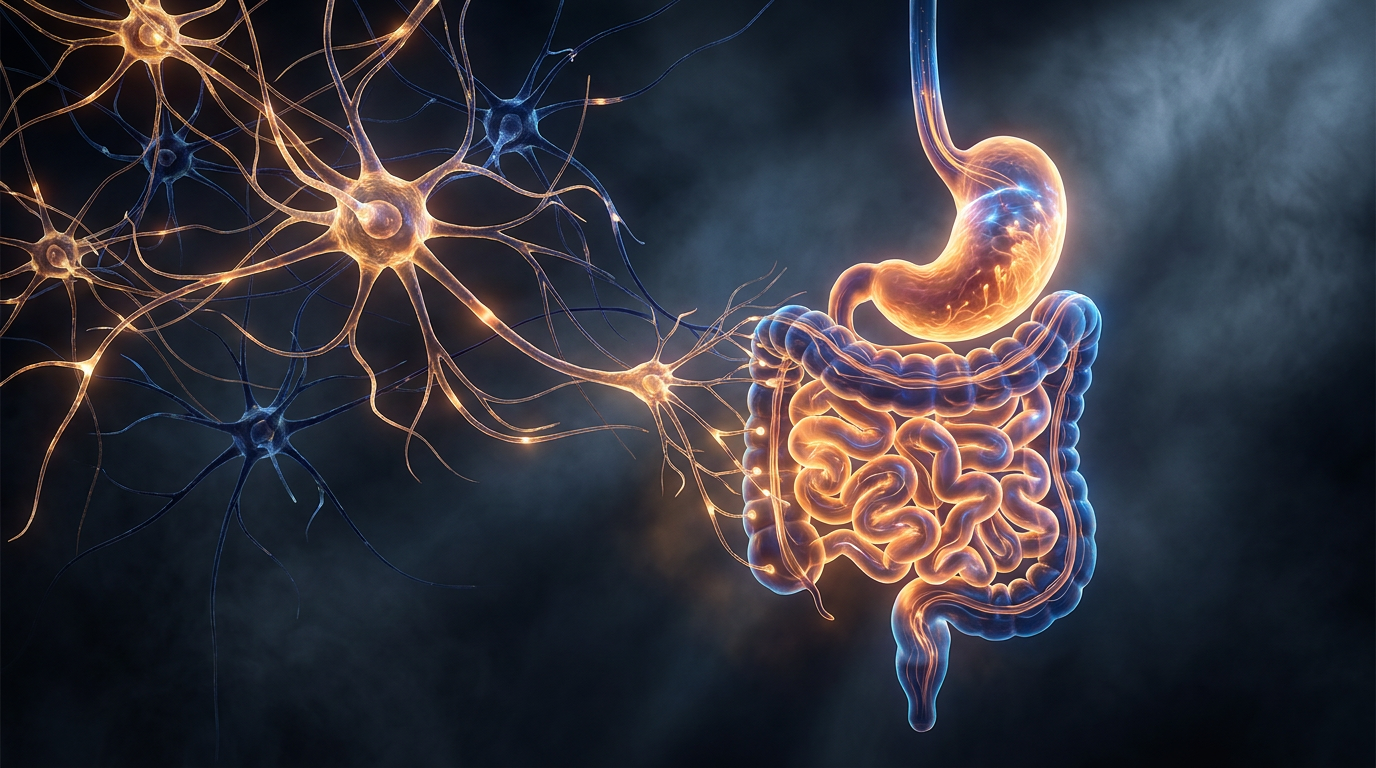
Welcome to the era of "nutritional psychiatry" and the gut-brain axis. Researchers have discovered that the human gut is not merely a digestion engine; it is a complex, secondary nervous system that constantly communicates with the brain. This bidirectional superhighway dictates much of how we feel, think, and react to stress.[4][5]
At the heart of this system are the roughly 100 trillion microorganisms living in the human gastrointestinal tract. This microbiome, weighing about as much as the human brain, functions as an invisible organ. It breaks down food, trains the immune system, and, crucially, manufactures the very chemicals that regulate our emotions.[2]
Consider serotonin, the famous "feel-good" neurotransmitter targeted by blockbuster antidepressant medications. While it is vital for brain function, approximately 90% of the body's serotonin is actually produced in the gut. Specialized cells in the intestinal lining, known as enterochromaffin cells, manufacture this chemical.[1][2]

These gut cells do not work in isolation. They are heavily influenced by the microbiome. Specific bacteria, such as Akkermansia muciniphila, produce short-chain fatty acids (SCFAs) like butyrate when they ferment dietary fiber. These SCFAs act as chemical messengers, signaling the gut lining to ramp up serotonin production.[2][6]
The gut's chemical factory does not stop at serotonin. Specific strains of Lactobacillus and Bifidobacterium—common residents of a healthy digestive system—are proficient at producing gamma-aminobutyric acid (GABA). GABA is the body's primary inhibitory neurotransmitter; its job is to turn down the volume on the nervous system, inducing calmness and reducing feelings of anxiety and fear.[3][6]
Even dopamine, the neurotransmitter associated with motivation and reward, has deep roots in the digestive system. Several bacterial genera, including Bacteroides and Enterococcus, possess the enzymatic machinery to synthesize dopamine. While peripherally produced dopamine cannot cross the blood-brain barrier, it heavily influences the enteric nervous system and sends signals up to the brain via the vagus nerve.[2][6]
Even dopamine, the neurotransmitter associated with motivation and reward, has deep roots in the digestive system.
The vagus nerve is the physical cable connecting the gut to the brain. It acts as a massive sensory antenna, detecting the neurotransmitters and inflammatory markers produced by gut bacteria and transmitting that data directly to the brain's emotional centers, including the amygdala. If the gut is inflamed, the brain registers stress; if the gut is balanced, the brain registers safety.[1][3]

This profound connection has given rise to a new class of therapeutic interventions known as "psychobiotics." Coined by researchers over the last decade, the term refers to live microorganisms (probiotics) or the fibers that feed them (prebiotics) which confer mental health benefits when ingested in adequate amounts.[1][3]
Recent umbrella reviews of clinical trials from 2025 and 2026 have solidified the evidence base for psychobiotics. Studies show that targeted probiotic interventions can yield small-to-moderate, yet clinically significant, reductions in depressive and anxiety symptoms. These interventions typically take four to twelve weeks to alter the microbiome enough to shift mood baselines.[1][3]
Psychobiotics do not work exactly like traditional psychiatric drugs. Instead of directly altering receptor uptake in the brain, they modulate the hypothalamic-pituitary-adrenal (HPA) axis—the body's central stress response system. By lowering systemic inflammation and repairing the intestinal barrier, psychobiotics reduce the physiological alarm signals that trigger psychological anxiety.[1][6]
The composition of this microbial ecosystem is highly malleable, shifting in response to what we eat. Western dietary patterns, characterized by high intakes of ultra-processed foods, saturated fats, and artificial additives, are consistently linked to gut dysbiosis. This imbalance degrades the intestinal lining, causing "leaky gut" and chronic low-grade inflammation that travels straight to the brain.[2][4]
Conversely, traditional diets rich in plant diversity—most notably the Mediterranean diet—are associated with a significantly lower risk of depression. The magic lies in the fiber. Complex carbohydrates found in vegetables, legumes, and whole grains pass undigested into the colon, where they serve as the primary food source for beneficial, neurotransmitter-producing bacteria.[4][5]

Fermented foods are also stepping into the spotlight as natural psychobiotics. Foods like kefir, kimchi, sauerkraut, and traditional yogurt are teeming with live cultures, including the very Lactobacillus strains known to produce GABA. Regular consumption of these foods introduces transient beneficial bacteria that help crowd out inflammatory microbes.[2][5]
Despite the excitement, experts caution against viewing kombucha or probiotic capsules as a replacement for standard psychiatric care. The effect sizes of psychobiotics are modest compared to acute pharmacological interventions. They are best viewed as a powerful adjunct therapy—a foundational layer of mental health care that makes the brain more resilient.[1][6]

The future of nutritional psychiatry lies in precision medicine. Because every individual's microbiome is as unique as a fingerprint, a probiotic strain that alleviates anxiety in one person might do nothing for another. Researchers are currently developing microbiome-sequencing tools to tailor specific dietary and psychobiotic prescriptions to a patient's unique microbial deficit.[2][6]
Ultimately, the science of the gut-brain axis offers a deeply empowering message. While we cannot always control the external stressors in our lives, we have immense agency over our internal ecosystem. By feeding our microbes well, we are quite literally feeding our minds.[7]
How we got here
2013
The term 'psychobiotics' is first coined by researchers to describe microbes that confer mental health benefits.
2017
The landmark SMILES trial becomes the first randomized controlled trial to demonstrate that dietary improvement can treat clinical depression.
2020
Major scientific reviews confirm the critical role of the vagus nerve in transmitting microbial signals to the brain's emotional centers.
2025–2026
Large-scale umbrella reviews solidify the clinical evidence for psychobiotics as an effective adjunct therapy for anxiety and depression.
Viewpoints in depth
Nutritional Psychiatrists
Advocates for using diet as a primary tool for mental health intervention.
This camp views the gut-brain connection as a massive, untapped opportunity for patient empowerment. Rather than relying solely on pharmaceuticals, nutritional psychiatrists emphasize that patients can actively improve their mental health three times a day through their food choices. They point to the success of the Mediterranean diet in clinical trials, arguing that prescribing fiber and fermented foods should become a standard part of psychiatric care alongside traditional therapy.
Microbiome Researchers
Scientists focused on the precise biological mechanisms of gut-brain communication.
Researchers in this field are less concerned with broad dietary advice and more focused on the molecular mechanics—specifically how short-chain fatty acids (SCFAs) and the vagus nerve operate. They argue that the future of psychobiotics is not in generic over-the-counter probiotic pills, but in precision medicine. By sequencing an individual's unique microbiome, they believe doctors will soon be able to prescribe specific, engineered bacterial strains to correct precise neurotransmitter deficits.
Clinical Skeptics
Medical professionals urging caution regarding the hype surrounding probiotics.
While acknowledging the reality of the gut-brain axis, clinical skeptics warn that the wellness industry has vastly outpaced the science. They highlight that the effect sizes of psychobiotics in randomized controlled trials remain modest and highly variable. Their primary concern is that vulnerable patients might abandon proven, life-saving treatments like SSRIs or cognitive behavioral therapy in favor of unproven commercial probiotic supplements.
What we don't know
- Exactly which specific strains of bacteria are most effective for different types of anxiety or depression.
- How individual genetic differences affect the way a person's brain responds to gut-derived neurotransmitters.
- The long-term psychological effects of taking highly concentrated, engineered psychobiotic supplements over decades.
Key terms
- Gut-Brain Axis
- The two-way communication network linking the central nervous system in the brain to the enteric nervous system in the digestive tract.
- Psychobiotics
- Probiotics and prebiotics that specifically yield mental health benefits by interacting with the gut-brain axis.
- Vagus Nerve
- A major cranial nerve that acts as a physical superhighway, transmitting sensory data from the gut directly to the brain.
- Enterochromaffin Cells
- Specialized cells lining the gastrointestinal tract that manufacture the vast majority of the body's serotonin.
- Short-Chain Fatty Acids (SCFAs)
- Beneficial compounds produced when gut bacteria ferment dietary fiber, which help reduce inflammation and stimulate neurotransmitter production.
- Dysbiosis
- An imbalance in the gut microbial community, often caused by poor diet or stress, which is linked to inflammation and various diseases.
Frequently asked
What exactly are psychobiotics?
Psychobiotics are live bacteria (probiotics) or the fibers that feed them (prebiotics) that provide mental health benefits, such as reduced anxiety or depression, when consumed in adequate amounts.
Can probiotics replace my antidepressant medication?
No. Experts emphasize that psychobiotics have modest effect sizes and should be used as an adjunct therapy to support mental health, not as a replacement for prescribed psychiatric medications.
How long does it take for diet to change the microbiome?
While the composition of the microbiome can begin to shift within days of a dietary change, clinical trials show it typically takes 4 to 12 weeks of consistent psychobiotic use to see noticeable improvements in mood.
What foods naturally contain psychobiotics?
Fermented foods like kefir, kimchi, sauerkraut, and traditional yogurt contain live beneficial bacteria. High-fiber foods like legumes, whole grains, and vegetables provide the prebiotics these bacteria need to thrive.
Sources
Source coverage
7 outlets
3 viewpoints surfaced







[1]National Institutes of HealthClinical Skeptics
Attacking the Gut–Brain Axis with Psychobiotics: An Umbrella Review
Read on National Institutes of Health →[2]MDPIMicrobiome Researchers
Diet–Microbiome–Brain Interactions in Mental Health
Read on MDPI →[3]FrontiersMicrobiome Researchers
Psychobiotics and Anxiety: Clinical Trial Evidence
Read on Frontiers →[4]Psychiatric TimesNutritional Psychiatrists
The Growing Evidence Base for Nutritional Psychiatry
Read on Psychiatric Times →[5]Deakin UniversityNutritional Psychiatrists
How Food Impacts Mood
Read on Deakin University →[6]Experimental PhysiologyClinical Skeptics
Microbiota-gut-brain axis and neuroactive effects
Read on Experimental Physiology →[7]Factlen Editorial TeamMicrobiome Researchers
Synthesis by Factlen editorial team
Read on Factlen Editorial Team →


Every angle. Every day.
Get health stories with full source coverage and perspective breakdowns delivered to your inbox.