
How Parametric Insurance is Rewriting the Rules of Disaster Recovery
As traditional property coverage becomes cost-prohibitive in climate-vulnerable regions, a data-driven alternative is paying out claims in days rather than months.
By Factlen Editorial Team
- Climate Resilience Advocates
- Focus on the humanitarian and macroeconomic benefits of rapid liquidity.
- Insurtech & Reinsurers
- View the model as a necessary evolution to keep uninsurable risks on the books.
- Policyholder Advocates
- Value the speed but warn consumers about the dangers of basis risk.
What's not represented
- · Traditional claims adjusters facing industry shifts
- · Regulators managing the legal definitions of insurance
Why this matters
Traditional insurance is buckling under the weight of climate change, leaving homeowners and businesses waiting months for payouts or facing uninsurable risks. Parametric policies offer a lifeline by injecting immediate cash into disaster zones, allowing communities to rebuild before the damage compounds.
Key points
- Parametric insurance pays out automatically based on weather data triggers, bypassing the need for claims adjusters.
- The model provides rapid liquidity, often disbursing funds within 14 to 30 days of a disaster.
- It is increasingly used by farmers, coastal homeowners, and governments to fill gaps left by retreating traditional insurers.
- The primary drawback is 'basis risk,' where the data trigger might not perfectly align with the actual damage experienced.
The traditional property insurance model is buckling under the weight of a changing climate. In high-risk areas like Florida, average premiums have surged past $11,000 a year—more than triple the national average—as major carriers pull back from coastal markets. For those who do secure coverage, the aftermath of a disaster often involves a grueling waiting game: filing claims, scheduling overwhelmed adjusters, and waiting months for a check to arrive.[8][2]
But a fundamentally different approach to financial protection is rapidly gaining traction, shifting the focus from assessing damage to measuring the weather itself. Known as parametric insurance, this model bypasses the traditional claims process entirely. Instead of reimbursing a policyholder for the specific cost of a ruined roof or a flooded basement, a parametric policy pays out a pre-agreed, fixed amount automatically when a specific environmental threshold is crossed.[9][4][2]
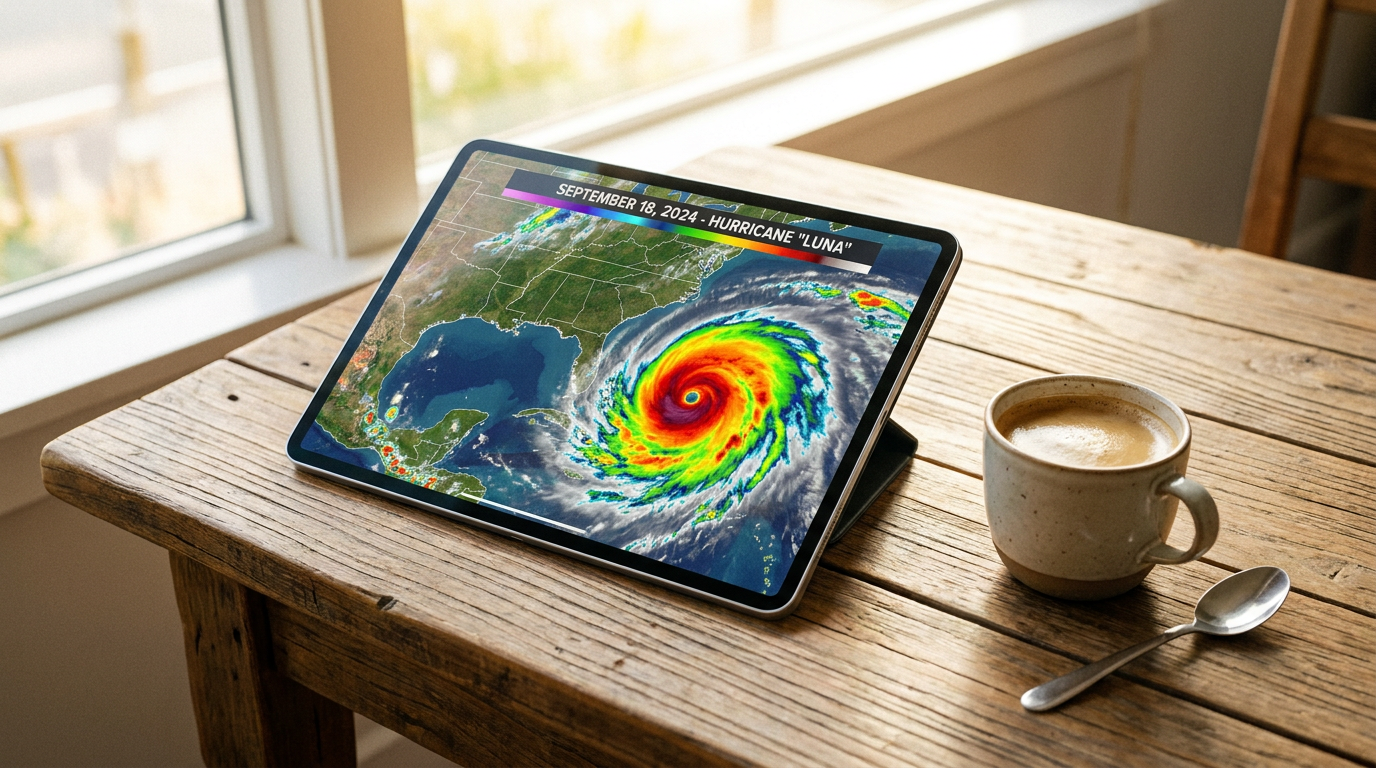
The mechanism relies on objective, third-party data. A policy might be written to trigger if a Category 3 hurricane passes within a 50-mile radius of a property, or if local rainfall drops below 20 millimeters over a 30-day period. Because the payout is tied strictly to the data parameter rather than a subjective assessment of the physical wreckage, the money can be disbursed almost instantly.[6][8]
"The main advantage of parametric is speed of payment," notes consumer advocacy group United Policyholders. While traditional indemnity claims can drag on for months or even years, parametric payouts are typically wired to the policyholder within 14 to 30 days. In some cases, such as the UK-based flood coverage provider FloodFlash, payouts have been executed in under 10 hours following a storm.[2][8][3]

This rapid liquidity is transforming disaster recovery across multiple sectors, starting with agriculture. For the world's smallholder farmers, who produce a third of the global crop supply, traditional insurance has historically been inaccessible due to the high administrative costs of sending adjusters to remote, diverse farms. Parametric policies solve this by using satellite earth observation technology and soil moisture indices to monitor drought and flood conditions from space.[1]
In Australia, berry growers facing increasingly erratic weather—from severe hail to extreme heatwaves—are adopting parametric cover to protect their harvests. Because the policies pay out automatically when a local Bureau of Meteorology station records a triggering event, farmers receive the cash injection exactly when they need it to repair polytunnels or manage cash flow, rather than waiting until the end of the season.[7]
In Australia, berry growers facing increasingly erratic weather—from severe hail to extreme heatwaves—are adopting parametric cover to protect their harvests.
The applications extend far beyond rural agriculture. Coastal homeowners are increasingly using parametric policies to plug the gaping holes in their traditional coverage. A parametric payout can cover immediate evacuation expenses, temporary childcare, or damage to outdoor structures like seawalls and landscaping that standard policies explicitly exclude. For many, it serves as a bridge loan to cover their primary insurance deductible while they wait for the larger indemnity claim to process.[8][2]
At the macroeconomic level, governments and development agencies are utilizing sovereign parametric risk pools to stabilize entire national budgets. The Caribbean Catastrophe Risk Insurance Facility (CCRIF), for example, provides rapid liquidity to member nations following tropical cyclones and earthquakes, having disbursed hundreds of millions of dollars within 14 days of triggering events. This allows governments to fund immediate emergency response efforts without taking on high-interest emergency debt.[3]
Driven by these diverse use cases, the global parametric insurance market is experiencing explosive growth. Valued at $19.4 billion in 2025, the sector is projected to reach $63.8 billion by 2035, expanding at a compound annual growth rate of over 12%. This surge is being catalyzed by advancements in artificial intelligence, predictive analytics, and the proliferation of Internet of Things (IoT) sensors, which provide the high-resolution climate data necessary to underwrite these policies accurately.[5][4]

However, the model is not without its blind spots. The primary limitation of parametric insurance is known as "basis risk"—the potential mismatch between the payout triggered by the data and the actual financial loss experienced by the policyholder. If a policy is designed to pay out when wind speeds hit 100 miles per hour, and the anemometer records 99 miles per hour, the policyholder receives nothing, even if a falling tree destroyed their home.[3][2]
Conversely, a policyholder might receive a $50,000 payout because the wind threshold was met, even if their reinforced home suffered only minor cosmetic damage. Because the payout is decoupled from the actual loss, it requires careful calibration of the triggers and a clear understanding from the buyer that parametric coverage is a blunt instrument, not a precision tool.[2][3]

To mitigate this basis risk, financial experts and consumer advocates generally recommend pairing parametric policies with traditional indemnity insurance rather than using them as a total replacement. In this hybrid approach, the parametric policy acts as a rapid-response financial shock absorber, providing immediate cash to survive the initial crisis, while the traditional policy covers the long-tail costs of total reconstruction.[3][2]
As climate volatility continues to test the limits of the global financial system, the insurance industry is being forced to innovate. By leveraging real-time data to guarantee immediate financial relief, parametric insurance is shifting the paradigm of disaster recovery from a slow, adversarial claims process to a predictable, automated safety net.[4][9]
How we got here
1990s
Parametric policies first emerge, primarily used by commodities traders and energy companies to hedge against weather risks.
2007
The Caribbean Catastrophe Risk Insurance Facility (CCRIF) is formed, becoming the first multi-country sovereign parametric risk pool.
2014
The African Risk Capacity (ARC) launches, providing parametric drought insurance to African Union member states.
2020s
Advances in satellite imagery and IoT sensors begin bringing parametric insurance to individual homeowners and smallholder farmers.
2025
The global parametric insurance market reaches $19.4 billion, driven by rising climate volatility and traditional insurance market withdrawals.
Viewpoints in depth
Climate Resilience Advocates
Focus on the humanitarian and macroeconomic benefits of rapid liquidity.
Organizations focused on global development view parametric insurance as a critical tool for climate justice. By providing immediate cash to vulnerable populations and sovereign governments following a disaster, these policies prevent communities from falling into debt traps or relying on slow-moving humanitarian aid. They argue that the speed of the payout is often more valuable than the exact precision of the reimbursement.
Insurtech & Reinsurers
View the model as a necessary evolution to keep uninsurable risks on the books.
For the financial sector, parametric insurance solves the administrative nightmare of traditional claims processing. By eliminating the need for armies of field adjusters and lengthy investigations, insurers can drastically reduce their overhead costs. Furthermore, the reliance on objective satellite and sensor data allows them to model and price climate risks with mathematical certainty, opening up new markets in agriculture and renewable energy.
Policyholder Advocates
Value the speed but warn consumers about the dangers of basis risk.
Consumer protection groups and agricultural cooperatives are largely optimistic about the fast payouts, which can save a farm or a family from immediate bankruptcy. However, they strongly caution buyers about 'basis risk'—the reality that a devastating storm might just miss the data threshold, leaving the policyholder with catastrophic damage and zero compensation. They advocate for using parametric policies strictly as a supplement to, rather than a replacement for, traditional indemnity coverage.
What we don't know
- How regulators will classify and tax parametric payouts if they consistently exceed the actual physical damage incurred by policyholders.
- Whether the cost of parametric premiums will remain affordable as extreme weather events become more frequent and severe.
- How effectively the industry can close the 'basis risk' gap through hyper-local IoT sensors and better predictive modeling.
Key terms
- Parametric Insurance
- A type of insurance that pays a pre-agreed amount automatically when a specific, measurable event occurs, rather than reimbursing for actual damage.
- Indemnity Insurance
- Traditional insurance that compensates policyholders based on a verified assessment of the actual physical or financial loss incurred.
- Basis Risk
- The potential mismatch in parametric insurance where the payout triggered by the data does not equal the actual financial loss experienced by the policyholder.
- Trigger
- The specific environmental threshold (e.g., wind speed, rainfall amount, earthquake magnitude) that must be met to activate a parametric payout.
- Sovereign Risk Pool
- A mechanism where multiple countries combine their resources to purchase parametric insurance collectively, ensuring rapid liquidity for national disaster response.
Frequently asked
Do I need to prove my house was damaged to get a payout?
No. If the predefined weather trigger (like a specific wind speed at your location) is met, the policy pays out automatically, regardless of your actual physical damage.
Can parametric insurance replace my standard homeowner's policy?
Experts advise against using it as a total replacement due to "basis risk." It is best used as a supplement to cover immediate expenses and deductibles while waiting for traditional claims.
How long does it take to receive the money?
Because there is no claims adjuster process, parametric payouts are typically disbursed within 14 to 30 days, and sometimes in as little as 24 hours.
Who decides if the weather trigger was met?
The policies rely on objective, third-party data from trusted sources, such as national weather services, satellite networks, or verified IoT sensors.
Sources
Source coverage
9 outlets
3 viewpoints surfaced









[1]Swiss ReInsurtech & Reinsurers
Parametric insurance protects vulnerable farmers against climatic disasters globally
Read on Swiss Re →[2]United PolicyholdersPolicyholder Advocates
A New Option for Disaster Insurance: Parametric
Read on United Policyholders →[3]Climate Policy InitiativeClimate Resilience Advocates
Parametric insurance for climate resilience
Read on Climate Policy Initiative →[4]MapfreClimate Resilience Advocates
Parametric insurance is gaining traction in the face of climate risks
Read on Mapfre →[5]ResearchAndMarketsInsurtech & Reinsurers
Parametric Insurance Market Analysis Report 2026
Read on ResearchAndMarkets →[6]Descartes UnderwritingInsurtech & Reinsurers
Parametric Insurance for the Agricultural Industry
Read on Descartes Underwriting →[7]Berries AustraliaPolicyholder Advocates
Parametric insurance: a smarter way to manage extreme weather risk
Read on Berries Australia →[8]ArbolInsurtech & Reinsurers
Parametric insurance for homeowners facing hurricane risk
Read on Arbol →[9]Factlen Editorial Team
Synthesis by Factlen editorial team
Read on Factlen Editorial Team →
Every angle. Every day.
Get finance stories with full source coverage and perspective breakdowns delivered to your inbox.