
The Race to Lucerne: USA Surges in World Rowing Cup Standings Ahead of Grand Finale
Following a dominant 11-medal performance by the United States in Plovdiv, the 2026 World Rowing Cup series heads to a dramatic conclusion in Switzerland, where the Americans will clash with early European leaders.
By Factlen Editorial Team
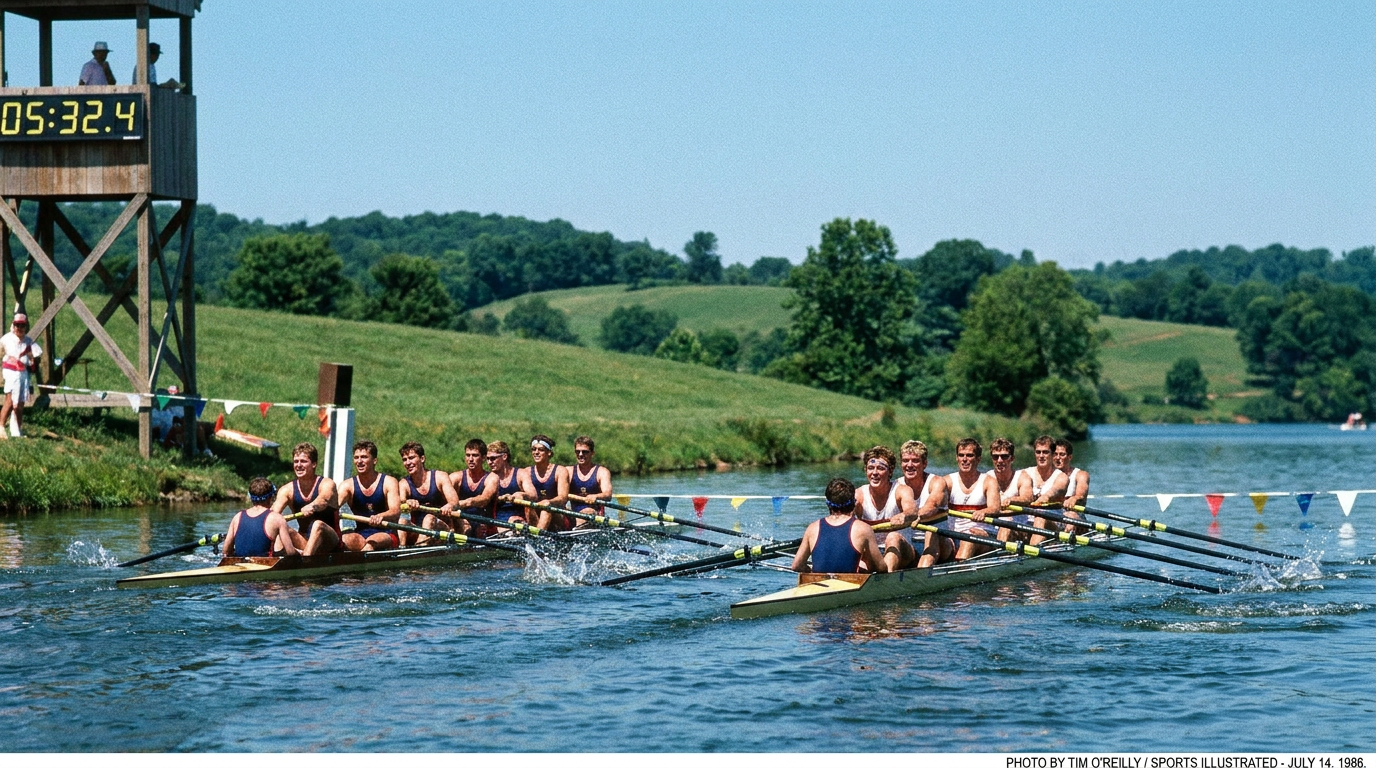
- US National Team
- Focused on building momentum and finalizing fast boat combinations after a dominant debut.
- European Powerhouses
- Prioritizing rest and targeted training blocks to peak for the Lucerne finale and the World Championships.
- Series Organizers
- Highlighting the dramatic convergence of the world's best fleets for the grand finale in Switzerland.
What's not represented
- · Athletes from nations that struggled in the early cups and are facing pressure to perform in Lucerne
- · Local organizers in Lucerne preparing for the influx of international teams
Why this matters
The upcoming Lucerne regatta will crown the overall 2026 World Rowing Cup champion, serving as the ultimate form test before the World Championships in Amsterdam this August. For athletes and federations, these standings dictate momentum and funding heading into the sport's biggest annual showcase.
Key points
- The Netherlands leads the overall World Rowing Cup points standings after a strong showing at Cup I in Seville.
- The United States dominated Cup II in Plovdiv, winning 11 medals, including six golds.
- Several top European teams skipped Cup II to train specifically for the upcoming finale.
- The U.S. achieved a historic 1-2 finish in the men's single sculls with Sam Melvin and Jacob Plihal.
- The overall World Cup winner will be decided at the Lucerne Regatta from June 26-28.
- The series serves as the final test before the 2026 World Championships in Amsterdam this August.
The 2026 international rowing season is barreling toward a spectacular midpoint, setting up a clash of titans at the upcoming World Rowing Cup III in Lucerne, Switzerland. With the first two legs of the series in the books, the global standings reflect a fascinating strategic split between European powerhouses and a surging United States squad.[1][4]
The series began in late May at World Rowing Cup I in Seville, Spain, where traditional European heavyweights established early dominance. The Netherlands surged to the top of the overall points standings with 51 points, backed by three golds and a powerful victory in the men's eight. Great Britain slotted into second place with 40 points, while Germany topped the Seville medal table with four golds.[1][4]
However, the narrative shifted dramatically over the past weekend at World Rowing Cup II in Plovdiv, Bulgaria. Several major European programs—including Great Britain, Germany, and the Netherlands—opted to skip the Bulgarian regatta to train through the block and peak for Lucerne. That opened the door for the United States, making its 2026 World Cup debut, to completely rewrite the momentum of the season.[4]

The American squad delivered a historic performance on the fast Plovdiv water, capturing 11 medals, including six golds and five silvers. The U.S. women were particularly dominant, sweeping gold in the pair, four, quadruple sculls, and eight. Olympians Kate Knifton and Teal Cohen, who helped the USA win the women's four at the 2025 World Championships, transitioned seamlessly to the pair, clocking a blistering 6:50.82 to defeat early-season medalists from Chile and Czechia.[2][3]
The American squad delivered a historic performance on the fast Plovdiv water, capturing 11 medals, including six golds and five silvers.
The most thrilling race of the weekend came in the men's single sculls, which featured an all-American showdown. Paris Olympian Jacob Plihal and former lightweight world champion Sam Melvin went head-to-head in a grueling final. Melvin, utilizing a rejuvenated technique, chased down Plihal in the final 250 meters to win his first senior international gold medal by less than three-tenths of a second, marking the first time the U.S. has ever taken gold and silver in the event at a World Cup.[2][3]

Uzbekistan also made a significant leap in the standings in Plovdiv, finishing second on the medal table with three golds, two silvers, and two bronzes, while Italy took third in their season debut. The results have scrambled the overall points race, setting the stage for a high-stakes convergence of the world's best fleets.[1][4]
All eyes now turn to the "Lake of Gods"—the Rotsee in Lucerne—from June 26 to 28. Known for its notoriously fair racing conditions, the Lucerne Regatta serves as the traditional grand finale of the World Cup series. It is here that the rested European leaders will meet the battle-tested Americans to decide the overall World Rowing Cup winning nation.[5]

The points system heavily rewards top-end speed, granting eight points for a victory, six for second, and scaling down to one point for seventh place. With double points effectively on the line for nations fielding multiple top-tier boats, the overall trophy remains entirely up for grabs.[1]
Beyond the World Cup trophy, Lucerne represents the final major international form test before the 2026 World Rowing Championships. Scheduled for August 24-30, the World Championships will be held at the historic Bosbaan course in Amsterdam, Netherlands. With over 1,200 athletes expected to compete, the results in Switzerland next week will provide the definitive preview of who is on track to claim world titles in August.[5][6]
How we got here
May 29-31, 2026
World Rowing Cup I in Seville sees the Netherlands and Great Britain take the early points lead.
June 12-14, 2026
The United States debuts at World Rowing Cup II in Plovdiv, topping the medal table with 11 podium finishes.
June 26-28, 2026
World Rowing Cup III in Lucerne will crown the overall series champion.
August 24-30, 2026
The 2026 World Rowing Championships will take place at the Bosbaan in Amsterdam.
Viewpoints in depth
The American Surge
The U.S. team is riding high after a historic debut in Plovdiv, utilizing the regatta to build race fitness.
For the United States, World Cup II was a statement of intent. By debuting in Plovdiv rather than Seville, the Americans gave their domestic trials winners extra time to combine into larger boats. The strategy paid off spectacularly, particularly for the women's sweep squad, which dominated its events. The internal competition—highlighted by the fierce sprint between Sam Melvin and Jacob Plihal in the single sculls—demonstrates a depth that the U.S. hopes will translate into podium finishes when the full global fleet reunites in Lucerne.
The European Strategy
Early leaders like the Netherlands and Great Britain opted for a training block over racing in Bulgaria.
The absence of the Netherlands, Great Britain, and Germany in Plovdiv was a calculated move. After establishing their speed and securing the top spots in the points standings at Cup I in Seville, these federations chose to prioritize a heavy training block. By skipping the travel and taper required for Cup II, they aim to arrive at the Rotsee in Lucerne fully rested and peaked, treating the final World Cup as a direct dress rehearsal for the World Championships in Amsterdam.
The Emerging Challengers
Nations like Uzbekistan and Italy are proving they have the top-end speed to disrupt the traditional hierarchy.
World Cup II provided a vital platform for rising programs. Uzbekistan's impressive haul of seven medals, including three golds, signals a growing strength in their sculling program. Similarly, Italy's targeted deployment of crews yielded three golds, proving that they remain a dangerous tactical force. These nations will look to play spoiler in Lucerne, capable of knocking crucial points away from the overall series leaders.
What we don't know
- How the surging U.S. crews will match up against the rested Dutch and British eights in direct competition.
- Whether the European teams' decision to skip Plovdiv will result in race rust or a peak performance in Lucerne.
- Which nations will secure the final Olympic-class boat combinations ahead of the World Championships entry deadline.
Key terms
- Sculls vs. Sweep
- In sculling, each rower uses two oars (one in each hand); in sweep rowing, each rower uses only one oar, requiring pairs or larger crews to balance the boat.
- Regatta
- A series of boat races, typically organized as a championship or cup event over several days.
- Bosbaan
- A historic, artificial rowing course in Amsterdam, built in 1937, which will host the 2026 World Championships.
- Rotsee
- A natural lake in Lucerne, Switzerland, known as the 'Lake of Gods' for its exceptionally fair and calm racing conditions.
Frequently asked
How is the World Rowing Cup winner decided?
The winner is the nation that accumulates the most points across the three World Cup regattas. Points are awarded to the highest-placing boat from each country in each Olympic boat class, with eight points for first place.
Why did some teams skip the Plovdiv regatta?
Many top European programs, including Great Britain and the Netherlands, chose to skip World Cup II to complete a heavy training block and peak specifically for the final regatta in Lucerne.
When are the World Rowing Championships?
The 2026 World Rowing Championships will be held from August 24 to 30 at the Bosbaan in Amsterdam, Netherlands.
Sources
Source coverage
6 outlets
3 viewpoints surfaced






[1]World RowingSeries Organizers
USA top of the medal standings in Plovdiv
Read on World Rowing →[2]USRowingUS National Team
Six Gold, Five Silver Medals Highlight U.S. Performance at World Cup II
Read on USRowing →[3]Rowing NewsUS National Team
Historic Day for U.S. at World Rowing Cup II
Read on Rowing News →[4]Row360European Powerhouses
Plovdiv Preview: USA, Italy make 2026 World Cup debut
Read on Row360 →[5]Lucerne RegattaSeries Organizers
World Rowing Cup 2026: The last big test of form
Read on Lucerne Regatta →[6]2026 World Rowing AmsterdamSeries Organizers
World class, World Rowing, Welcome to Amsterdam
Read on 2026 World Rowing Amsterdam →

More in sports
See all 11 stories →Standings
The Race for Barcelona and Individual Glory: Global Equestrian Standings Heat Up in June
6 sources
Injury
Figure Skating Injury Report: Triumphant Returns and Recovery Timelines Ahead of the 2026-27 Grand Prix
8 sources
Standings
New ISU World Standings and Grand Prix Assignments Set the Stage for Figure Skating's Post-Olympic Era
6 sources
Injury
Petra Vlhova Begins First Healthy Offseason in Two Years, Targeting Full World Cup Return
6 sources
Every angle. Every day.
Get sports stories with full source coverage and perspective breakdowns delivered to your inbox.