
The Neuroscience of the Knockout: How Cognitive Vision Training is Revolutionizing MMA
Elite mixed martial artists are increasingly turning to neurocognitive drills and vision training to bypass biological reaction-time limits, reduce sparring damage, and extend their careers.
By Factlen Editorial Team
- Neurocognitive Specialists
- Argue that vision is a trainable neural skill, not just a fixed optical trait.
- Sports Science Directors
- Focus on quantifying performance data to optimize training and reduce preventable injuries.
- Medical Researchers
- Emphasize the long-term neurological and longevity benefits of optimized training regimens.
- Fighters & Coaches
- Value the practical, in-cage advantages of faster processing and reduced sparring trauma.
What's not represented
- · Traditional boxing purists who favor old-school sparring over digital sports science.
- · Amateur fighters who lack the financial resources to access high-end cognitive training facilities.
Why this matters
As combat sports evolve, the focus is shifting from pure physical toughness to brain health and longevity. This neuro-athletic revolution offers a blueprint for how anyone—from athletes to first responders—can use cognitive training to enhance decision-making under pressure and protect long-term neurological health.
Key points
- Human reaction time is biologically capped at roughly 250 milliseconds, making raw reflexes insufficient for elite combat sports.
- Fighters are using 3D object tracking and cognitive-motor apps to improve pattern recognition and situational awareness.
- Neurocognitive coaches report that consistent vision training can reduce a fighter's functional reaction time by up to 400 milliseconds.
- Cognitive training helps athletes maintain mental clarity and defensive anticipation even when physically exhausted in late rounds.
- The shift toward brain-first preparation allows fighters to absorb less sub-concussive trauma during sparring, promoting career longevity.
The biological limit of human reaction time is roughly 250 milliseconds. In the cage, a high kick or a counter cross can land in less time than that. So how do elite mixed martial artists consistently dodge the unseeable?[1]
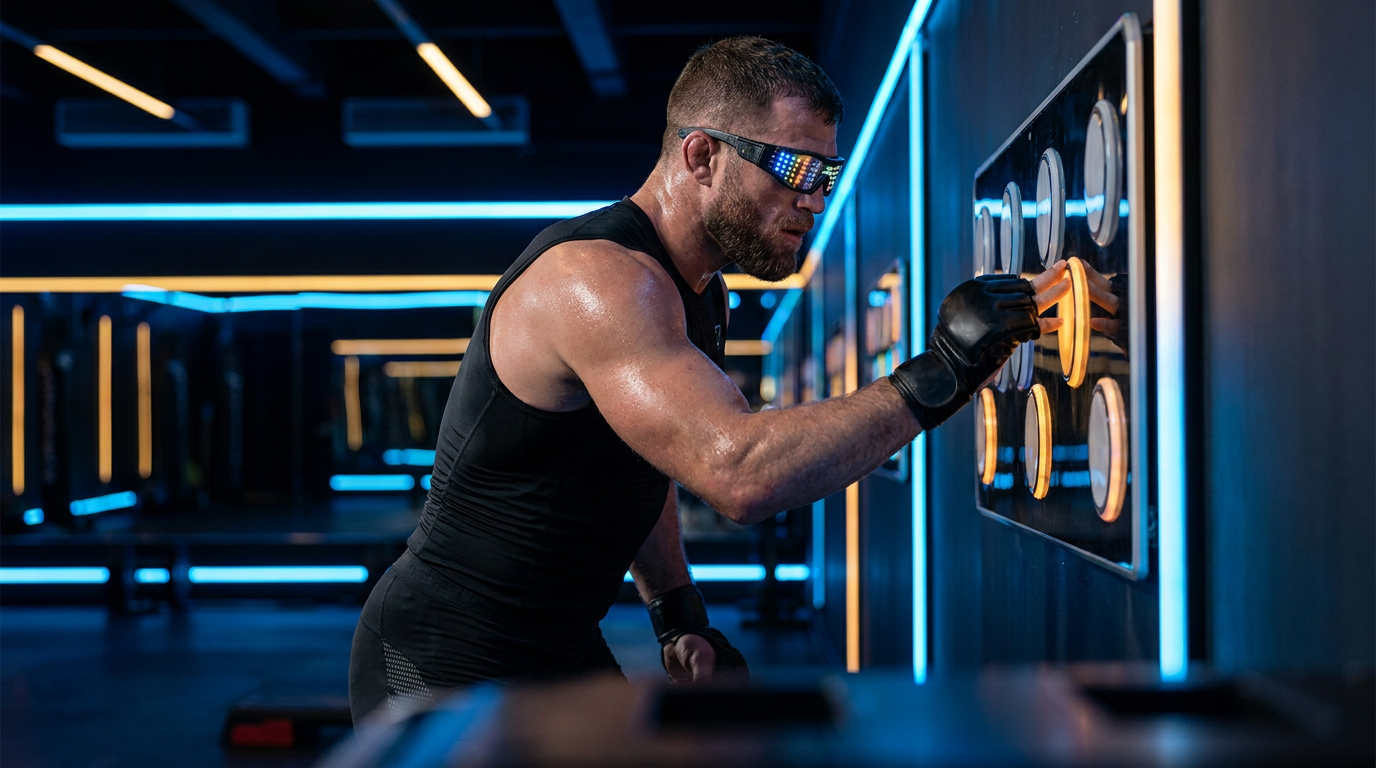
The answer lies in a quiet revolution sweeping through combat sports. Fighters are increasingly stepping away from traditional heavy-bag sparring and stepping in front of light boards, strobe glasses, and cognitive-motor tracking apps.[7]
"Vision training isn't focused on enhancing visual acuity alone—it's about reinforcing how your brain processes visual input," explains Dr. Dan Laby, a sports-vision specialist who works with elite athletes.[1]
The UFC Performance Institute, a state-of-the-art 30,000-square-foot facility in Las Vegas, has been at the forefront of this shift. Since opening, the institute has collected millions of data points to quantify the exact physical and cognitive requirements of the sport.[2][6]

One of the primary tools in this new neuro-athletic arsenal is 3D multiple object tracking. Systems like NeuroTracker force athletes to follow specific moving targets among decoys in a dynamic digital space.[1]
The results are measurable. Elite MMA coaches, such as neurocognitive specialist Dr. Roman Velasquez, report that consistent cognitive training can reduce a fighter's functional reaction time by up to 400 milliseconds.[1]
This improvement does not come from speeding up raw reflexes, which remain biologically capped. Instead, it stems from enhanced pattern recognition and situational awareness.[1][7]
This improvement does not come from speeding up raw reflexes, which remain biologically capped.
By training the brain to process visual cues faster, fighters learn to read the subtle telegraphing of a strike—a shifting hip or a dipped shoulder—allowing them to begin their defense before the attack is fully launched.[1]
Fatigue is the natural enemy of this anticipation. As a fight drags into the championship rounds, physical exhaustion inevitably erodes mental clarity, leading to the late-fight knockouts that highlight reels are built on.[1][7]

To combat this, Cognitive-Motor Training (CMT) platforms like SwitchedOn force athletes to solve randomized visual puzzles while they are physically exhausted, simulating the cognitive load of a grueling fight.[5]
The implications of this training extend far beyond winning championship belts. The ultimate goal of this neuro-athletic shift is career longevity and the preservation of brain health.[7]
A massive 30-year study recently highlighted the profound long-term benefits of strategic physical conditioning, noting that optimal training regimens are linked to a 27% lower risk of death from neurological disease.[4]
By prioritizing cognitive efficiency and visual processing over sheer physical toughness, modern fighters are absorbing significantly less sub-concussive trauma during their gym preparation.[7]

How we got here
2017
The UFC Performance Institute opens in Las Vegas, establishing a centralized hub for MMA sports science.
2018
The UFC PI releases its first comprehensive study analyzing over 30,000 performance metrics to define the physical and cognitive requirements of the sport.
2021
Neurocognitive coaches begin publicly reporting significant reaction-time reductions in elite fighters using 3D object tracking.
2024
Vision training expands rapidly across major sports, with NFL quarterbacks and MLB players adopting MMA-tested cognitive protocols.
2026
Long-term studies confirm that optimized training regimens significantly reduce the risk of neurological decline, reinforcing the shift toward brain-first preparation.
Viewpoints in depth
Neurocognitive Specialists
Focus on neuroplasticity and the brain's ability to process visual data faster.
Specialists in this camp argue that vision is a trainable neural skill, not just a fixed optical trait. By using tools like 3D multiple object tracking, they aim to rewire the brain to process complex visual inputs more efficiently. This approach treats the eyes as an extension of the brain, emphasizing that true reaction speed comes from how quickly the mind can interpret a threat and signal the body to move.
Sports Science Directors
Focus on data collection, injury prevention, and optimizing fight camps.
For sports scientists, the value of cognitive training lies in its measurable impact on performance and safety. Facilities like the UFC Performance Institute collect millions of data points to quantify exactly how fatigue affects decision-making. By integrating cognitive drills with physical conditioning, they can design training regimens that push athletes to their limits without exposing them to unnecessary sub-concussive impacts during sparring.
Fighters & Coaches
Focus on the practical, in-cage advantages of faster processing and reduced trauma.
Inside the cage, the theoretical benefits of neuroscience translate to tangible survival skills. Fighters and their coaches value cognitive training because it allows them to read an opponent's telegraphs earlier and maintain defensive focus even when exhausted in the championship rounds. Crucially, it also offers a way to prepare the brain for the chaos of a fight without taking actual punches to the head in the gym, extending their competitive prime.
What we don't know
- How long the cognitive benefits of vision training persist if an athlete stops the exercises.
- The exact degree to which cognitive training can offset the neurological decline associated with repeated head impacts.
- Whether these neuroplastic adaptations provide a permanent structural change to the brain or require continuous maintenance.
Key terms
- Neuroplasticity
- The brain's ability to reorganize itself by forming new neural connections in response to learning or experience.
- Cognitive-Motor Training (CMT)
- Exercises that require simultaneous physical movement and mental processing, strengthening the mind-body connection.
- Functional Reaction Time
- The total time it takes to perceive a stimulus, process the information, decide on an action, and physically execute it.
Frequently asked
Can you actually speed up your natural reflexes?
No. Human reflexes have a hard biological limit of about 250 milliseconds. Cognitive training improves pattern recognition, allowing fighters to anticipate attacks sooner rather than reacting faster.
What is cognitive-motor training?
It involves pairing a physical task with a cognitive challenge, such as reacting to randomized visual cues. This forces the brain and body to work together under stress.
Do athletes outside of MMA use vision training?
Yes. NFL quarterbacks, MLB batters, and even military first responders increasingly use vision and cognitive training to improve their decision-making under pressure.
Sources
Source coverage
7 outlets
4 viewpoints surfaced






[1]NeuroTrackerNeurocognitive Specialists
Harnessing Mental Focus and Cognitive Performance in Martial Arts
Read on NeuroTracker →[2]UFC Performance InstituteSports Science Directors
The Global Destination for High-Performance in Mixed Martial Arts
Read on UFC Performance Institute →[3]Sports IllustratedFighters & Coaches
Savvy Pro Athletes Are Training This Often Overlooked Muscle
Read on Sports Illustrated →[4]ScienceDailyMedical Researchers
Scientists found the strength training sweet spot for a longer life
Read on ScienceDaily →[5]SwitchedOnNeurocognitive Specialists
SwitchedOn App: Optimize Physical & Cognitive Performance
Read on SwitchedOn →[6]ForbesSports Science Directors
UFC Performance Institute Releases Study On 'What It Takes To Win' In UFC Today
Read on Forbes →[7]Factlen Editorial TeamFighters & Coaches
Synthesis by Factlen editorial team
Read on Factlen Editorial Team →
More in sports
See all 11 stories →Women's Football
Women's Football Shatters Global Attendance Records in 2026
0 sources

Flag Football
The Science and Strategy of 5v5 Flag Football: Inside the Sport's Global Explosion
0 sources
Fighter Safety
How Science and Hydration Testing Are Ending MMA's Dangerous Weight-Cutting Era
0 sources
Fighter Safety
How Hydration Testing is Ending the Dangerous Era of Extreme Weight Cutting in MMA
0 sources
Every angle. Every day.
Get sports stories with full source coverage and perspective breakdowns delivered to your inbox.